

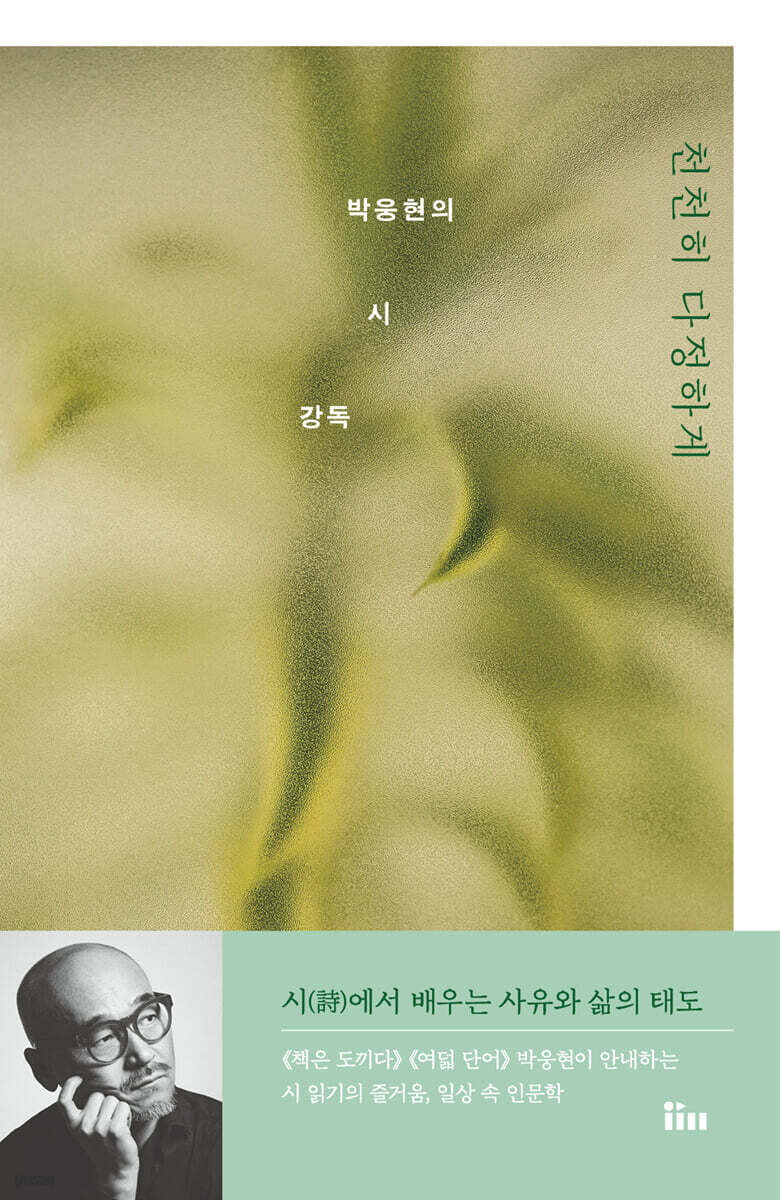
Slowly and Affectionately: A Reading of Park Woong-hyun's Poetry
 |
Description
Book Introduction
『Books are an axe』『Eight words』 Park Woong-hyun
The world of poetry read through one's own reading method
“Reading poetry is reading life.”
Park Woong-hyun, who has served as a guide to life for millions of readers through “Books are Axes” and “Eight Words,” has returned this time with “Reading Poetry.”
"Slowly and Affectionately" is a record of poetry readings the author held with readers, and a book containing thoughts and reflections gained through poetry.
The author, who reads the book meticulously with his own unique reading method, recommends that rather than analyzing or explaining the poem, we stop slowly in front of it and approach it affectionately.
They say that when reading poetry, you have to read it slowly and think of the landscape the poet saw and the times the poet lived in to properly understand the poem.
We read together the poems of poets who have deeply resonated with us, such as Kim Sa-in, Park Jun, Lee Moon-jae, Ban Chil-hwan, Jeon Nam-jin, and Hwang Ji-woo, and unravel the meaning of the times, landscapes, love and pain, life, comfort, and recovery contained in the poems.
Park Woong-hyun says.
“Reading poetry is reading life.”
This new book, "Slowly and Affectionately," is a book that talks about the power of living "slowly and affectionately" that we have lost in this fast-paced and busy era.
The world of poetry read through one's own reading method
“Reading poetry is reading life.”
Park Woong-hyun, who has served as a guide to life for millions of readers through “Books are Axes” and “Eight Words,” has returned this time with “Reading Poetry.”
"Slowly and Affectionately" is a record of poetry readings the author held with readers, and a book containing thoughts and reflections gained through poetry.
The author, who reads the book meticulously with his own unique reading method, recommends that rather than analyzing or explaining the poem, we stop slowly in front of it and approach it affectionately.
They say that when reading poetry, you have to read it slowly and think of the landscape the poet saw and the times the poet lived in to properly understand the poem.
We read together the poems of poets who have deeply resonated with us, such as Kim Sa-in, Park Jun, Lee Moon-jae, Ban Chil-hwan, Jeon Nam-jin, and Hwang Ji-woo, and unravel the meaning of the times, landscapes, love and pain, life, comfort, and recovery contained in the poems.
Park Woong-hyun says.
“Reading poetry is reading life.”
This new book, "Slowly and Affectionately," is a book that talks about the power of living "slowly and affectionately" that we have lost in this fast-paced and busy era.
- You can preview some of the book's contents.
Preview
index
Author's Note | Raising Poetry? 007
1. Meet the poet's gaze
A gaze toward nature and objects / A gaze toward people / A gaze toward the body
2 The Power of Description and Wit
Compassion for the transient, salvation for the perishable / The era depicted by the poet Gihyeongdo
The Landscape of Poverty Drawn by Poetry / The Power of Wit
3 Conversation with Nature
Talk to nature, nature talks to you / Looking at the cycle of life
4 Containing Life
Scenery of life / Scenery of love / Attitude towards life / For those going through difficult times
1. Meet the poet's gaze
A gaze toward nature and objects / A gaze toward people / A gaze toward the body
2 The Power of Description and Wit
Compassion for the transient, salvation for the perishable / The era depicted by the poet Gihyeongdo
The Landscape of Poverty Drawn by Poetry / The Power of Wit
3 Conversation with Nature
Talk to nature, nature talks to you / Looking at the cycle of life
4 Containing Life
Scenery of life / Scenery of love / Attitude towards life / For those going through difficult times
Detailed image
Into the book
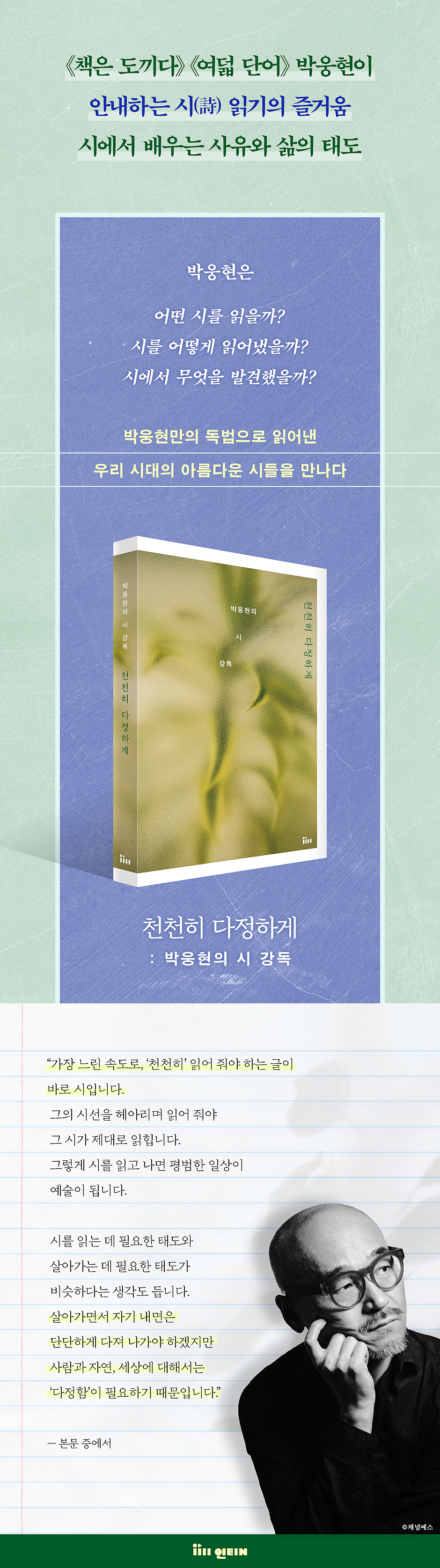
“The poem must be read at the slowest speed possible.”
“I thought that my attitude toward reading poetry and my attitude toward life were similar.”
“Tough for me, soft for others.”
I thought that while I was living, I needed to strengthen my inner self, but I also needed to be 'affectionate' towards people, nature, and the world.
After thinking about it later, I realized that the attitude needed to read poetry and the attitude needed to live are similar.
You need 'slowness' and 'affection'.
--- p.11
When we begin to cultivate a poet-like perspective within ourselves, we too can find art in the midst of our everyday, ordinary days.
--- p.20
When reading the poetry of poets like Seo Jeong-ju and Park Mok-wol, there are some things you need to think about.
Because the words used in the poem are not words of today.
When reading the poetry of such poets, it is good to study their linguistic world and read it while understanding the times they lived in and their emotions.
--- p.106
There are also prerequisites for getting hurt in a relationship.
We only get hurt when we give our heart to someone else.
When you like someone or put in some effort for someone, and the reaction you get is different from what you expected, you get hurt.
So there are times when I try not to give my heart.
The words “You can’t avoid crying unless you get used to anything” in poet Park Jun’s poem “Visit to the Sick” have that meaning.
--- p.146
Children are curious and amazed by everything.
But the old man sitting next to him has probably experienced most of the things a child might wonder about.
So what the old man looks at is not the bread in his hand, but the traces of his steps, the time that has passed.
Should we call it a reversal? If the child's gaze is fixed on the fist clenched in bread, the old man's gaze is fixed on a distant past.
The story of the primitive and myopic as seen by the poet is like that.
--- p.182
When someone says they're having a hard time, telling them to cheer up is just passing the buck to the person who's having a hard time.
When I say, "Shall we eat?" or "Shall we watch a movie?", I mean that I will do it with you.
So, rather than saying "cheer up," those words helped the other person take a step out of the cave.
That is a much more genuine comfort.
--- p.233
Poet Jeon Nam-jin talks about why he writes poetry.
I hope that this shameful collection of poems will be a source of warmth, like a match, to all the poor people who have no choice but to endure the world in an unattractive manner because they have to endure fiercely.
I loved this first part.
(…) He writes poetry with the hope that his poetry can bring warmth, even if only for a moment, to those who fiercely endure each day with an unsightly appearance.
--- p.249
I think our attitude toward children should be like that of poet Do Jong-hwan's "Funeral Time."
On the way home, the cosmos are in full bloom, so instead of going straight home, look at the cosmos to see how many petals it has on its face, and when it waves, wave back. That's how it should be done.
I think that way, there won't be any more vicious people in this society.
--- p.258
I think it is in the same context as poet Kim Sa-in's poem, "Spring Gone."
That's how it is with all human life.
Time goes by like that, and sometimes things you do seem like they will happen but don't, and things seem like they will happen but don't.
I did my best, but if it doesn't work out, it doesn't work out.
You also have to have the mindset to let it go like that.
“I thought that my attitude toward reading poetry and my attitude toward life were similar.”
“Tough for me, soft for others.”
I thought that while I was living, I needed to strengthen my inner self, but I also needed to be 'affectionate' towards people, nature, and the world.
After thinking about it later, I realized that the attitude needed to read poetry and the attitude needed to live are similar.
You need 'slowness' and 'affection'.
--- p.11
When we begin to cultivate a poet-like perspective within ourselves, we too can find art in the midst of our everyday, ordinary days.
--- p.20
When reading the poetry of poets like Seo Jeong-ju and Park Mok-wol, there are some things you need to think about.
Because the words used in the poem are not words of today.
When reading the poetry of such poets, it is good to study their linguistic world and read it while understanding the times they lived in and their emotions.
--- p.106
There are also prerequisites for getting hurt in a relationship.
We only get hurt when we give our heart to someone else.
When you like someone or put in some effort for someone, and the reaction you get is different from what you expected, you get hurt.
So there are times when I try not to give my heart.
The words “You can’t avoid crying unless you get used to anything” in poet Park Jun’s poem “Visit to the Sick” have that meaning.
--- p.146
Children are curious and amazed by everything.
But the old man sitting next to him has probably experienced most of the things a child might wonder about.
So what the old man looks at is not the bread in his hand, but the traces of his steps, the time that has passed.
Should we call it a reversal? If the child's gaze is fixed on the fist clenched in bread, the old man's gaze is fixed on a distant past.
The story of the primitive and myopic as seen by the poet is like that.
--- p.182
When someone says they're having a hard time, telling them to cheer up is just passing the buck to the person who's having a hard time.
When I say, "Shall we eat?" or "Shall we watch a movie?", I mean that I will do it with you.
So, rather than saying "cheer up," those words helped the other person take a step out of the cave.
That is a much more genuine comfort.
--- p.233
Poet Jeon Nam-jin talks about why he writes poetry.
I hope that this shameful collection of poems will be a source of warmth, like a match, to all the poor people who have no choice but to endure the world in an unattractive manner because they have to endure fiercely.
I loved this first part.
(…) He writes poetry with the hope that his poetry can bring warmth, even if only for a moment, to those who fiercely endure each day with an unsightly appearance.
--- p.249
I think our attitude toward children should be like that of poet Do Jong-hwan's "Funeral Time."
On the way home, the cosmos are in full bloom, so instead of going straight home, look at the cosmos to see how many petals it has on its face, and when it waves, wave back. That's how it should be done.
I think that way, there won't be any more vicious people in this society.
--- p.258
I think it is in the same context as poet Kim Sa-in's poem, "Spring Gone."
That's how it is with all human life.
Time goes by like that, and sometimes things you do seem like they will happen but don't, and things seem like they will happen but don't.
I did my best, but if it doesn't work out, it doesn't work out.
You also have to have the mindset to let it go like that.
--- p.274
Publisher's Review
The thoughts and attitudes toward life learned from poetry
"Books are Axes": Park Woong-hyun's first poetry collection
"Slowly and Affectionately" is a new book by Park Woong-hyun, the author of "Books are Axes" and "Eight Words." It is a record of poetry readings he held with readers, and the result of his reflections through reading poetry.
The author, known for his meticulous reading of books using his own unique reading method, talks about his own way of reading poetry and the attitude toward life that can be learned through poetry.
Rather than commenting or analyzing poetry, Park Woong-hyun addresses the question of “how to read poetry.”
Poetry is the densest writing, as the poet carefully selects each word, and therefore it should be read at the slowest speed.
The poem is only fully understood when one reads it while recalling the landscape the poet saw, the times he lived in, and the emotions he felt.
With this attitude, the author reads several poems by poets who resonated with him, such as Kim Sa-in, Park Jun, Lee Moon-jae, Jeon Nam-jin, Hwang Ji-woo, and Do Jong-hwan, and points out his own experiences, the times in which the poems were written, and aspects of life depicted in the poems.
When looking at everyday life through the eyes of a poet
Life becomes art
Part 1, “Meeting the Poet’s Gaze,” examines how to view nature and objects through the poet’s gaze.
Following the poet's gaze toward nature and objects, and toward people and bodies, it shows how small moments reveal the world in a new light.
Park Woong-hyun tells us that a landscape that could easily be overlooked can be transformed into a warm and deep resonance through the poet's language.
Part 2, “The Power of Description and Wit,” examines how poetry captures and reveals transience, extinction, poverty, and the pain of the times.
It focuses on the life of the times conveyed by the poetry of poet Gihyeongdo, and talks about the power of language to transform the poor and bitter moments of life and everyday scenes captured by poets such as Kim Sa-in and Jeon Nam-jin.
Following the author's story of poetry, we go beyond the question of how to read poetry and come to think that reading poetry can be a window that allows us to look at life again.
Thinking through poetry
Learn attitude towards life
Part 3, “Conversation with Nature,” provides a glimpse into how the poet views nature and how he captures its subject matter.
The nature in the poem the author talks about is not a simple background.
The author draws attention to the relationship between humans and nature, reflecting each other through the changing seasons, the cycle of life, and the way to listen to the voice of nature contained in the poem.
Part 4, “Containing Life,” contains stories about love and the various aspects of life shown in poetry, comfort and encouragement for those who suffer, and attitudes toward existence.
The author offers comfort and encouragement to those enduring difficult times by looking into the lives contained in the poem.
Furthermore, through poetry, we are encouraged to face ourselves and our lives with a little more affection.
Author Park Woong-hyun, in his book “Slowly and Affectionately,” tells us about poetry he reads with his own unique reading method, saying, “The attitude toward reading poetry is the same as the attitude toward life.”
In this fast-paced and busy era, we ask ourselves whether what we have lost is the power to live 'slowly and affectionately', and suggest that we live today a little more affectionately at a slower pace with poetry.
"Books are Axes": Park Woong-hyun's first poetry collection
"Slowly and Affectionately" is a new book by Park Woong-hyun, the author of "Books are Axes" and "Eight Words." It is a record of poetry readings he held with readers, and the result of his reflections through reading poetry.
The author, known for his meticulous reading of books using his own unique reading method, talks about his own way of reading poetry and the attitude toward life that can be learned through poetry.
Rather than commenting or analyzing poetry, Park Woong-hyun addresses the question of “how to read poetry.”
Poetry is the densest writing, as the poet carefully selects each word, and therefore it should be read at the slowest speed.
The poem is only fully understood when one reads it while recalling the landscape the poet saw, the times he lived in, and the emotions he felt.
With this attitude, the author reads several poems by poets who resonated with him, such as Kim Sa-in, Park Jun, Lee Moon-jae, Jeon Nam-jin, Hwang Ji-woo, and Do Jong-hwan, and points out his own experiences, the times in which the poems were written, and aspects of life depicted in the poems.
When looking at everyday life through the eyes of a poet
Life becomes art
Part 1, “Meeting the Poet’s Gaze,” examines how to view nature and objects through the poet’s gaze.
Following the poet's gaze toward nature and objects, and toward people and bodies, it shows how small moments reveal the world in a new light.
Park Woong-hyun tells us that a landscape that could easily be overlooked can be transformed into a warm and deep resonance through the poet's language.
Part 2, “The Power of Description and Wit,” examines how poetry captures and reveals transience, extinction, poverty, and the pain of the times.
It focuses on the life of the times conveyed by the poetry of poet Gihyeongdo, and talks about the power of language to transform the poor and bitter moments of life and everyday scenes captured by poets such as Kim Sa-in and Jeon Nam-jin.
Following the author's story of poetry, we go beyond the question of how to read poetry and come to think that reading poetry can be a window that allows us to look at life again.
Thinking through poetry
Learn attitude towards life
Part 3, “Conversation with Nature,” provides a glimpse into how the poet views nature and how he captures its subject matter.
The nature in the poem the author talks about is not a simple background.
The author draws attention to the relationship between humans and nature, reflecting each other through the changing seasons, the cycle of life, and the way to listen to the voice of nature contained in the poem.
Part 4, “Containing Life,” contains stories about love and the various aspects of life shown in poetry, comfort and encouragement for those who suffer, and attitudes toward existence.
The author offers comfort and encouragement to those enduring difficult times by looking into the lives contained in the poem.
Furthermore, through poetry, we are encouraged to face ourselves and our lives with a little more affection.
Author Park Woong-hyun, in his book “Slowly and Affectionately,” tells us about poetry he reads with his own unique reading method, saying, “The attitude toward reading poetry is the same as the attitude toward life.”
In this fast-paced and busy era, we ask ourselves whether what we have lost is the power to live 'slowly and affectionately', and suggest that we live today a little more affectionately at a slower pace with poetry.
GOODS SPECIFICS
- Date of issue: September 5, 2025
- Page count, weight, size: 280 pages | 398g | 130*200*20mm
- ISBN13: 9791193740163
- ISBN10: 1193740169
You may also like
카테고리
korean


korean

![ELLE 엘르 스페셜 에디션 A형 : 12월 [2025]](http://librairie.coreenne.fr/cdn/shop/files/b8e27a3de6c9538896439686c6b0e8fb.jpg?v=1766436872&width=3840)


