

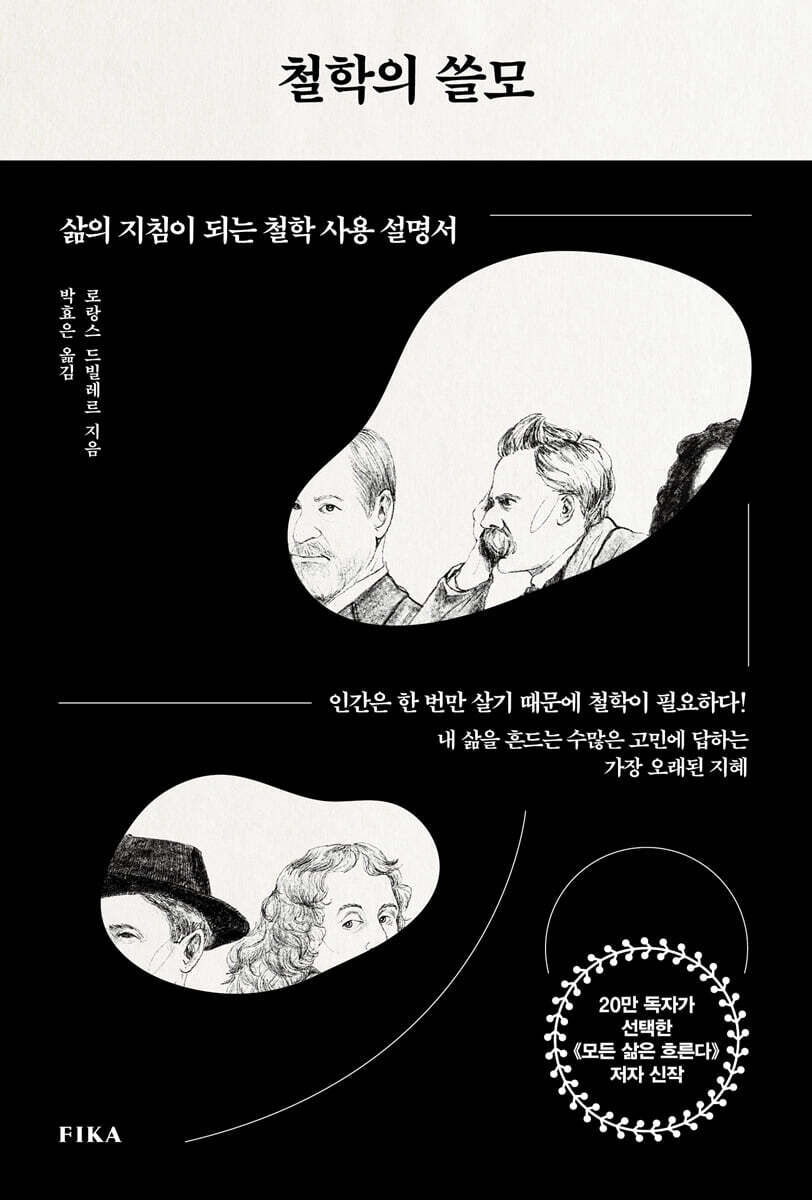
The Usefulness of Philosophy
 |
Description
Book Introduction
- A word from MD
-
Philosophy, a raft across the sea of confession"All life flows" Laurence Devillers talks about the "usefulness of philosophy."
The theme of this book is suffering.
It explores what solutions philosophy can offer to physical pain, spiritual pain, and social pain.
It unravels the thoughts of philosophers, from modern philosophers like Descartes and Kant to contemporary philosophers like Ricoeur and Arendt.
August 27, 2024. Humanities PD Son Min-gyu
“The answer to all the suffering in life lies in philosophy!”
Nietzsche, Descartes, Pascal, Spinoza, and Montaigne answer the questions life posed long ago.
Laurence Devillers, author of "All Life Flows," which sparked a "sea" craze in Korea, including being a bestseller for 40 consecutive weeks after its publication, being named Yes24's "Book of the Year" and the best book of 2023, now talks about the power and usefulness of philosophy itself.
Life itself is already suffering.
So there is no life without pain.
“May our love never die, nor kill us.” This wish of the poet John Donne vividly reflects the situation in which we live our lives.
We always want happiness, love, and success, but the things we want most can make us unhappy.
Because everything in life is impermanent, nothing is predictable, and nothing is irreversible.
When we tackle the difficult challenges of life, is philosophy useful? When we encounter things we desire but find ourselves unhappy, can philosophy help us? Yes, philosophy is useful.
Philosophy is neither a luxury nor the exclusive domain of the uneducated.
Nor does it praise the usefulness of useless things, nor does it praise happiness that serves no purpose.
Rather, nothing that is considered useless is considered useless.
The usefulness of philosophy discussed in this book is twofold.
One is to provide diagnoses and opinions to those of us suffering from various diseases, and the other is to make those of us who believe ourselves to be healthy realize that we are actually sick.
This alone would solve most of the suffering we experience in life.
If you are still wondering about living a human life, you will find the answer to the question, "How should I live my one and only life?" in this book.
Nietzsche, Descartes, Pascal, Spinoza, and Montaigne answer the questions life posed long ago.
Laurence Devillers, author of "All Life Flows," which sparked a "sea" craze in Korea, including being a bestseller for 40 consecutive weeks after its publication, being named Yes24's "Book of the Year" and the best book of 2023, now talks about the power and usefulness of philosophy itself.
Life itself is already suffering.
So there is no life without pain.
“May our love never die, nor kill us.” This wish of the poet John Donne vividly reflects the situation in which we live our lives.
We always want happiness, love, and success, but the things we want most can make us unhappy.
Because everything in life is impermanent, nothing is predictable, and nothing is irreversible.
When we tackle the difficult challenges of life, is philosophy useful? When we encounter things we desire but find ourselves unhappy, can philosophy help us? Yes, philosophy is useful.
Philosophy is neither a luxury nor the exclusive domain of the uneducated.
Nor does it praise the usefulness of useless things, nor does it praise happiness that serves no purpose.
Rather, nothing that is considered useless is considered useless.
The usefulness of philosophy discussed in this book is twofold.
One is to provide diagnoses and opinions to those of us suffering from various diseases, and the other is to make those of us who believe ourselves to be healthy realize that we are actually sick.
This alone would solve most of the suffering we experience in life.
If you are still wondering about living a human life, you will find the answer to the question, "How should I live my one and only life?" in this book.
- You can preview some of the book's contents.
Preview
index
Preface _ Life is never easy
User's Manual for This Book _ Healing My Life
PART 01 _ Physical Pain
About the body
Jacques Derrida's Philosophical Prescription: Facing the Cat's Gaze
About death
A Philosophical Prescription - Refreshing the Mind
About disease
Susan Sontag's Philosophical Prescription: Resisting the Metaphor of Illness
About pain
Paul Ricoeur's Philosophical Prescription - Complaining
About old age
Hannah Arendt's Philosophical Prescription: Jumping into the New
About passion
The Stoic Philosophical Prescription: Rejecting Passion
About pleasure
Albert Camus's Philosophical Prescription: Seeing Reality with the Transparency of Daylight
About the brain and mind
Descartes's Philosophical Prescription: Thinking with Clear Concepts
PART 02 _ The Pain of the Soul
About the soul
About living
Leibniz's Philosophical Prescription: Building Your Own Life
About daily life
Nietzsche's Philosophical Prescription: Pursuing Short-Term Habits
About Weak Will
Pascal's Philosophical Prescription: Harnessing the Unconscious
About fear and terror
Spinoza's Philosophical Prescription: Recognizing Causality
About love
Lucretius's Philosophical Prescription: Love Freely
About comfort
Hans Blumenberg's Philosophical Prescription - Tell Me a Story
On Regret and Self-Reproach
Montaigne's Philosophical Prescription: Becoming Whole through Immersion
On Depression and Boredom
About love at first sight
About Jealousy and Envy
On error, sin, and remorse
Kant's Philosophical Prescription: Following Moral Commands
On failure, setbacks, and frustration
About things that can't be helped
On self-reflection
About Madness
On Solitude and Isolation
About suicide
PART 03 _ Social Pain
About labor
Nietzsche's Philosophical Prescription: Becoming an Unfaithful Worker
About social norms
Thomas Hobbes's Philosophical Prescription - Thoughts on Leviathan
About money
A Philosophical Prescription - Philosophy is not governed by money.
About keeping social distance
About the conversation
About children, friends, and family
About work life
And _ interesting pains
On Excessive Exercise
About aging
On the connection between body and soul
On small pleasures
About eating
About present happiness
About becoming an adult
About the movie
About animals
main
User's Manual for This Book _ Healing My Life
PART 01 _ Physical Pain
About the body
Jacques Derrida's Philosophical Prescription: Facing the Cat's Gaze
About death
A Philosophical Prescription - Refreshing the Mind
About disease
Susan Sontag's Philosophical Prescription: Resisting the Metaphor of Illness
About pain
Paul Ricoeur's Philosophical Prescription - Complaining
About old age
Hannah Arendt's Philosophical Prescription: Jumping into the New
About passion
The Stoic Philosophical Prescription: Rejecting Passion
About pleasure
Albert Camus's Philosophical Prescription: Seeing Reality with the Transparency of Daylight
About the brain and mind
Descartes's Philosophical Prescription: Thinking with Clear Concepts
PART 02 _ The Pain of the Soul
About the soul
About living
Leibniz's Philosophical Prescription: Building Your Own Life
About daily life
Nietzsche's Philosophical Prescription: Pursuing Short-Term Habits
About Weak Will
Pascal's Philosophical Prescription: Harnessing the Unconscious
About fear and terror
Spinoza's Philosophical Prescription: Recognizing Causality
About love
Lucretius's Philosophical Prescription: Love Freely
About comfort
Hans Blumenberg's Philosophical Prescription - Tell Me a Story
On Regret and Self-Reproach
Montaigne's Philosophical Prescription: Becoming Whole through Immersion
On Depression and Boredom
About love at first sight
About Jealousy and Envy
On error, sin, and remorse
Kant's Philosophical Prescription: Following Moral Commands
On failure, setbacks, and frustration
About things that can't be helped
On self-reflection
About Madness
On Solitude and Isolation
About suicide
PART 03 _ Social Pain
About labor
Nietzsche's Philosophical Prescription: Becoming an Unfaithful Worker
About social norms
Thomas Hobbes's Philosophical Prescription - Thoughts on Leviathan
About money
A Philosophical Prescription - Philosophy is not governed by money.
About keeping social distance
About the conversation
About children, friends, and family
About work life
And _ interesting pains
On Excessive Exercise
About aging
On the connection between body and soul
On small pleasures
About eating
About present happiness
About becoming an adult
About the movie
About animals
main
Detailed image

Into the book
Philosophy does not torment us.
Rather, it makes us stronger and even has the power to heal us.
The problem is that we need to know what we want to heal with philosophy.
--- p.15
How can philosophy help us live? Descartes says we should live generously.
He argues that to live a better life, we must be generous, and we must be most generous to ourselves than to anyone else.
It means that you must see broadly, think big, abandon timidity, and be firm and decisive in everything you do.
The 'generosity' he emphasized is not simply a doctrine that asserts that the will is superior to the intellect, but a virtue that requires courage, the will to take risks, a broad perspective, bold action, and overcoming 'indecision', which he pointed out as the worst attitude.
--- p.24~25
Although nothing is eternal and nothing is certain, we can overcome fate and defy destiny through words and actions.
Therefore, we must engrave and keep deep in our hearts the idea that “even though humans face death, they are not born to die, but to be reborn anew every day.”
--- p.83
Life is not about just enduring, it's about building your own.
So, not a single moment of the day should be wasted.
This doesn't mean you have to do a variety of meaningless things.
Just like laying bricks one by one, you must pay attention and focus to build your own life little by little, step by step.
--- p.126
Life is a battle with oneself, the victory of which gives us the most dazzling hope.
Plato said this:
“Of all victories, the most important and brilliant is that over oneself; of all defeats, the most shameful and miserable is that over oneself.”
This means that every human being has an enemy called himself.”
--- p.141
Self-reflection is about facing yourself boldly, without allowing any pretense, lies, or excuses.
It is also a matter of enduring the ordeal of loneliness.
The reason we feel pain when we are alone is not because we are alone, but because we always need to be with ourselves.
--- p.230
Our only concern is ourselves.
If you leave out your own story, there are only a few topics worth talking about.
So we are like instruments that can only make one or two sounds.
To escape this monotonous life, we need to interact with others.
When we interact with others and share our feelings, we perceive ourselves as relaxed and attractive people.
It is for this very reason that we try to isolate ourselves while also trying to form positive relationships with diverse people.
Rather, it makes us stronger and even has the power to heal us.
The problem is that we need to know what we want to heal with philosophy.
--- p.15
How can philosophy help us live? Descartes says we should live generously.
He argues that to live a better life, we must be generous, and we must be most generous to ourselves than to anyone else.
It means that you must see broadly, think big, abandon timidity, and be firm and decisive in everything you do.
The 'generosity' he emphasized is not simply a doctrine that asserts that the will is superior to the intellect, but a virtue that requires courage, the will to take risks, a broad perspective, bold action, and overcoming 'indecision', which he pointed out as the worst attitude.
--- p.24~25
Although nothing is eternal and nothing is certain, we can overcome fate and defy destiny through words and actions.
Therefore, we must engrave and keep deep in our hearts the idea that “even though humans face death, they are not born to die, but to be reborn anew every day.”
--- p.83
Life is not about just enduring, it's about building your own.
So, not a single moment of the day should be wasted.
This doesn't mean you have to do a variety of meaningless things.
Just like laying bricks one by one, you must pay attention and focus to build your own life little by little, step by step.
--- p.126
Life is a battle with oneself, the victory of which gives us the most dazzling hope.
Plato said this:
“Of all victories, the most important and brilliant is that over oneself; of all defeats, the most shameful and miserable is that over oneself.”
This means that every human being has an enemy called himself.”
--- p.141
Self-reflection is about facing yourself boldly, without allowing any pretense, lies, or excuses.
It is also a matter of enduring the ordeal of loneliness.
The reason we feel pain when we are alone is not because we are alone, but because we always need to be with ourselves.
--- p.230
Our only concern is ourselves.
If you leave out your own story, there are only a few topics worth talking about.
So we are like instruments that can only make one or two sounds.
To escape this monotonous life, we need to interact with others.
When we interact with others and share our feelings, we perceive ourselves as relaxed and attractive people.
It is for this very reason that we try to isolate ourselves while also trying to form positive relationships with diverse people.
--- p.271
Publisher's Review
“There is no life without pain!”
Where can we find the answer to the pain of life that shakes us every day?
To live, to feel alive, to exist here and now, some would call this happiness.
Life itself is a gift, and this moment is a mystical magic and a poem.
But life is more complicated than we think, more noisy than we think, and more difficult than we think.
Life is not something that just flows on once it begins, it is something that must continue.
That means we have to live a complicated and noisy life on our own.
We face numerous trials in our daily lives and in reality.
Isn't life itself an unbearable ordeal? But are we truly prepared to face such trials? The vast, silent reality that awaits us mercilessly crushes our desires, or at other times, fulfills them.
There is no life without pain.
We always want happiness, love, and success, but the things we want most can make us unhappy.
Because most of life is impermanent, nothing is predictable, and nothing is irreversible.
The pain of life is not like a weed that can be easily pulled out, which is why it makes us suffer more.
When we face the difficult test of life, which is by no means easy, what should we do?
“Is philosophy useful in life?”
Affectionate and clear philosophical advice on all the pains of life.
When we encounter things we desire but which make us unhappy, can philosophy help us? Is it of any use? The short answer is, "Philosophy is useful."
They say there are no right answers in life, but if you encounter philosophies that have been passed down for hundreds of years, you can get hints that are close to the right answer.
Laurence Debiller, author of "All Life Flows," which was selected as the Book of the Year in 2023 and provided 200,000 readers with profound insights and life wisdom about the ocean, life, and philosophy, now talks about the power and usefulness of philosophy itself.
The author says, “Everyone needs philosophy while living,” and explains how knowing philosophy can benefit us.
Philosophy is neither a luxury nor the exclusive domain of the uneducated.
Nor does it praise the usefulness of useless things, nor does it praise happiness that serves no purpose.
Rather, whatever is deemed useless is not considered worthless.
The author says that philosophy has two uses.
One is to provide diagnoses and opinions to those of us who are suffering from various problems, and the other is to make us realize that we are actually sick even though we believe ourselves to be healthy.
This book talks about both of the usefulness of philosophy.
These wise men and philosophers offer answers to most of the worries and sufferings we experience in life, including the suffering of the soul, the suffering of the body, the suffering of society, and the countless personal sufferings we experience in life.
“If you have your own philosophy while living, you can survive even when it’s hard!”
A User's Manual of Philosophy to Guide Your Life
Philosophy does not provide 'how' methods, does not recommend specific actions, and does not cure dysfunctions.
But life and the act of living itself are healing.
Philosophy is, above all, like aerodynamics to a car.
Just as aerodynamics influences the direction of a car's steering, philosophy helps change our attitude toward reality.
So philosophy doesn't simply heal old wounds or appease future anxieties; it heals the very real, annoying, and obsessive pain of the present.
The advice on how to use philosophy in this book is also concise and realistic.
For example, regarding the fundamental suffering of life, Paul Ricoeur advises not to romanticize the suffering experienced in life, but to “complain” concisely and intuitively, and regarding the sadness of growing old, Hannah Arendt says that even if we face death, we should engrave deep in our hearts and keep in mind that we are not born to die, but to be reborn anew every day, and that we should “jump into something new.”
To those who suffer from the regrets and self-reproach that come crashing down on them every night as they go to bed, Montaigne says, “Become complete by immersing yourself in the moment,” as the regrets and self-reproach that swirl around in your head have no meaning or teaching in life.
If we have just one philosophy of our own to hold us together and keep us from falling whenever we falter in life, we can survive no matter how difficult it may be.
Every day, I wander around with countless worries and pains that I can't tell anyone about, and I can't find the answer.
If you want to live a more ethical and wise life, I recommend this book.
This will be the most needed self-development book and life guidebook in today's world.
Where can we find the answer to the pain of life that shakes us every day?
To live, to feel alive, to exist here and now, some would call this happiness.
Life itself is a gift, and this moment is a mystical magic and a poem.
But life is more complicated than we think, more noisy than we think, and more difficult than we think.
Life is not something that just flows on once it begins, it is something that must continue.
That means we have to live a complicated and noisy life on our own.
We face numerous trials in our daily lives and in reality.
Isn't life itself an unbearable ordeal? But are we truly prepared to face such trials? The vast, silent reality that awaits us mercilessly crushes our desires, or at other times, fulfills them.
There is no life without pain.
We always want happiness, love, and success, but the things we want most can make us unhappy.
Because most of life is impermanent, nothing is predictable, and nothing is irreversible.
The pain of life is not like a weed that can be easily pulled out, which is why it makes us suffer more.
When we face the difficult test of life, which is by no means easy, what should we do?
“Is philosophy useful in life?”
Affectionate and clear philosophical advice on all the pains of life.
When we encounter things we desire but which make us unhappy, can philosophy help us? Is it of any use? The short answer is, "Philosophy is useful."
They say there are no right answers in life, but if you encounter philosophies that have been passed down for hundreds of years, you can get hints that are close to the right answer.
Laurence Debiller, author of "All Life Flows," which was selected as the Book of the Year in 2023 and provided 200,000 readers with profound insights and life wisdom about the ocean, life, and philosophy, now talks about the power and usefulness of philosophy itself.
The author says, “Everyone needs philosophy while living,” and explains how knowing philosophy can benefit us.
Philosophy is neither a luxury nor the exclusive domain of the uneducated.
Nor does it praise the usefulness of useless things, nor does it praise happiness that serves no purpose.
Rather, whatever is deemed useless is not considered worthless.
The author says that philosophy has two uses.
One is to provide diagnoses and opinions to those of us who are suffering from various problems, and the other is to make us realize that we are actually sick even though we believe ourselves to be healthy.
This book talks about both of the usefulness of philosophy.
These wise men and philosophers offer answers to most of the worries and sufferings we experience in life, including the suffering of the soul, the suffering of the body, the suffering of society, and the countless personal sufferings we experience in life.
“If you have your own philosophy while living, you can survive even when it’s hard!”
A User's Manual of Philosophy to Guide Your Life
Philosophy does not provide 'how' methods, does not recommend specific actions, and does not cure dysfunctions.
But life and the act of living itself are healing.
Philosophy is, above all, like aerodynamics to a car.
Just as aerodynamics influences the direction of a car's steering, philosophy helps change our attitude toward reality.
So philosophy doesn't simply heal old wounds or appease future anxieties; it heals the very real, annoying, and obsessive pain of the present.
The advice on how to use philosophy in this book is also concise and realistic.
For example, regarding the fundamental suffering of life, Paul Ricoeur advises not to romanticize the suffering experienced in life, but to “complain” concisely and intuitively, and regarding the sadness of growing old, Hannah Arendt says that even if we face death, we should engrave deep in our hearts and keep in mind that we are not born to die, but to be reborn anew every day, and that we should “jump into something new.”
To those who suffer from the regrets and self-reproach that come crashing down on them every night as they go to bed, Montaigne says, “Become complete by immersing yourself in the moment,” as the regrets and self-reproach that swirl around in your head have no meaning or teaching in life.
If we have just one philosophy of our own to hold us together and keep us from falling whenever we falter in life, we can survive no matter how difficult it may be.
Every day, I wander around with countless worries and pains that I can't tell anyone about, and I can't find the answer.
If you want to live a more ethical and wise life, I recommend this book.
This will be the most needed self-development book and life guidebook in today's world.
GOODS SPECIFICS
- Date of issue: August 20, 2024
- Page count, weight, size: 332 pages | 400g | 135*200*20mm
- ISBN13: 9791193866146
- ISBN10: 1193866146
You may also like
카테고리
korean


korean

![ELLE 엘르 스페셜 에디션 A형 : 12월 [2025]](http://librairie.coreenne.fr/cdn/shop/files/b8e27a3de6c9538896439686c6b0e8fb.jpg?v=1766436872&width=3840)


