

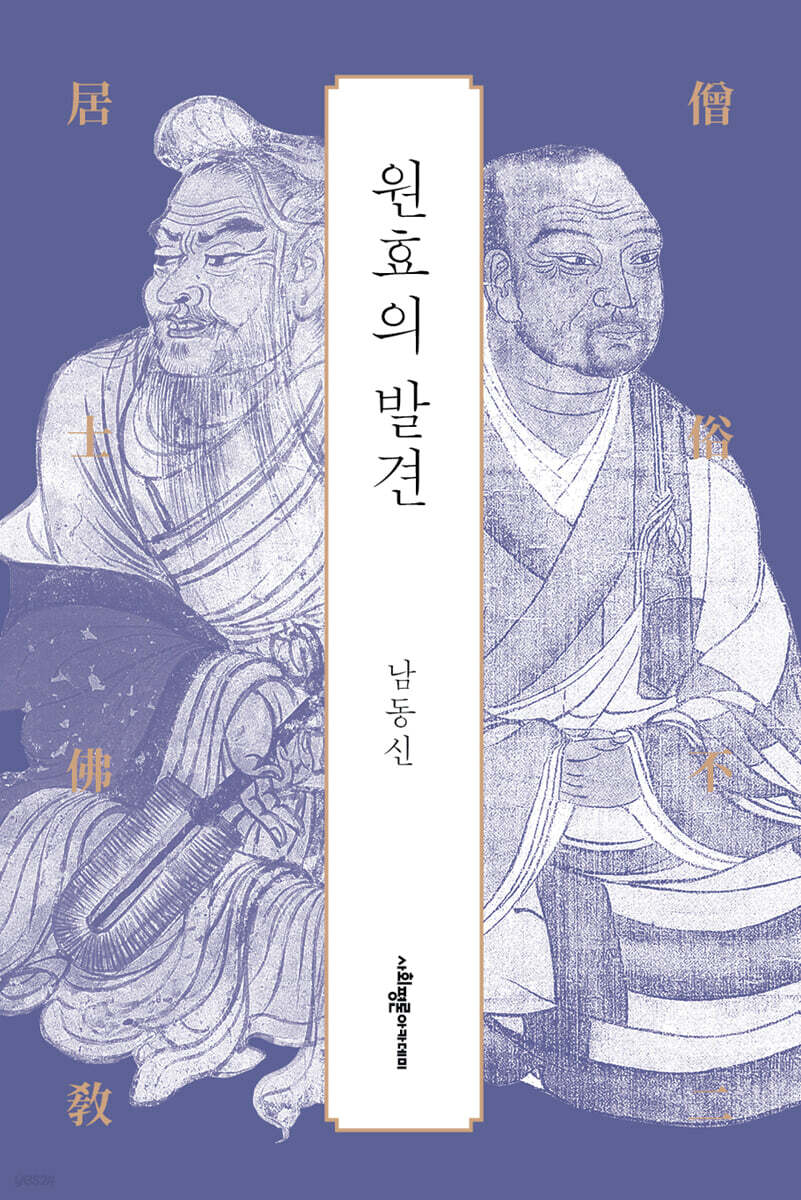
Wonhyo's discovery
 |
Description
Book Introduction
A book that explores the life and thoughts of Wonhyo, a giant of East Asian Buddhism born in Silla in the 7th century.
Wonhyo became a monk at an early age, but after his relationship with Princess Yoseok, he returned to secular life and lived the latter half of his life as a lay Buddhist monk.
He was a great writer who explored the vast Mahayana Buddhist scriptures in search of Buddhist truth and wrote about 70 volumes and 150 books. At the same time, he was a practitioner who dedicated himself to helping the socially disadvantaged through Buddhism.
His writings and thoughts were transmitted to China, Japan, and even India, contributing greatly to the establishment of East Asian scholastic Buddhism.
This book examines the Buddhist thinker Wonhyo in a new light, focusing on the three core concepts of Wonhyo's thought: 'one mind', 'no obstacles', and 'harmony'.
The author, in particular, broke away from the perspective of national history and focused on East Asia, emphasized the historical perspective, and paid attention to Wonhyo's life as a lay Buddhist. Through this research, he reached the conclusion that his Buddhism aimed for 'a Buddhist teaching of lay Buddhists where monks and laymen are not dualistic.'
In that respect, the title of this book, ‘The Discovery of Wonhyo,’ refers to the Buddhist truth discovered by Wonhyo and the Wonhyo discovered by the author of this book.
Wonhyo became a monk at an early age, but after his relationship with Princess Yoseok, he returned to secular life and lived the latter half of his life as a lay Buddhist monk.
He was a great writer who explored the vast Mahayana Buddhist scriptures in search of Buddhist truth and wrote about 70 volumes and 150 books. At the same time, he was a practitioner who dedicated himself to helping the socially disadvantaged through Buddhism.
His writings and thoughts were transmitted to China, Japan, and even India, contributing greatly to the establishment of East Asian scholastic Buddhism.
This book examines the Buddhist thinker Wonhyo in a new light, focusing on the three core concepts of Wonhyo's thought: 'one mind', 'no obstacles', and 'harmony'.
The author, in particular, broke away from the perspective of national history and focused on East Asia, emphasized the historical perspective, and paid attention to Wonhyo's life as a lay Buddhist. Through this research, he reached the conclusion that his Buddhism aimed for 'a Buddhist teaching of lay Buddhists where monks and laymen are not dualistic.'
In that respect, the title of this book, ‘The Discovery of Wonhyo,’ refers to the Buddhist truth discovered by Wonhyo and the Wonhyo discovered by the author of this book.
- You can preview some of the book's contents.
Preview
index
Author's Note
pictorial
Note
introduction
Chapter 1: Beyond the Modern Wonhyo Statue
1.
Modern 'Wonhyo Statue'
2.
A new perspective
Part 1 Life
Chapter 2: Electrical Data and Early Life
1.
Three major electrical sources
2.
Birth and leaving home
3.
Enlightenment
Chapter 3: Ideological Background
1.
A study of Buddhist doctrines from the Middle and Ancient Periods
1) Import of Chinese Confucianism and Buddhist scriptures
2) Understanding of the Tathagatagarbha sutras
2.
Good knowledge
1) Hyesuk, Hyegong, Daean and the thought of Prajna emptiness
2) Langji (朗智), Bodeok (普德) and Ilseungsa (一乘思想)
Chapter 4: Relations with the Middle Royal Family
1.
Relationship with Princess Yao
2.
Kang Seok of the Diamond Samadhi Sutra
3.
Crown of the King: 'Theory of Bodhisattva as King'
Chapter 5: The Evolution of Wonhyo's Perception - From the Portrait of a Layman to the Portrait of a Monk
1.
Raising an issue
2.
The Three Kingdoms: The Character of Bunhwangsa Temple
1) The launch of the queen's regime and the founding of Bunhwangsa Temple
2) Jajang's stay at Bunhwangsa Temple and the dualistic view of monks and laypeople.
3.
Unified Silla Period: The Historical Relationship between Wonhyo and Bunhwangsa Temple
1) The significance of Wonhyo's stay at Bunhwangsa Temple
2) Seol Jung-eop's praise of Wonhyo and the "Goseonsa Temple Monument"
4.
Mid-Goryeo period: Uicheon's praise of Wonhyo and the Bunhwang sect
5.
Wonhyo statue from Samguk Yusa
1) Limitations of the Wonhyo statue: 'Time difference' and 'relics'
2) The compilation and final writing of the 『Commentary on the Avatamsaka Sutra』
3) Statue of Wonhyo
Part 2 Books
Chapter 6: Writing Activities
1.
Writings centered on Mahayana sutras
2.
Chronology of writings through citation relationships
3.
Format of writing
Chapter 7: The Theory of the Arising of Faith and the Thought of the Ilsim
1.
6th-7th century East Asian Buddhism and the Mahayana Awakening of Faith
2.
The theory of the rise of faith
1) Review of related writings on 『Theory of the Arising of Faith』
2) Madhyamaka? Conflict between consciousness-only and the view of the arising of faith
3.
Ilsim thought based on 『Gisinron』
Chapter 8: Commentary on the Diamond Samadhi Sutra
1.
True scripture theory, China founding theory, Silla founding theory
2.
『Diamond Samadhi Sutra』: Old translation of Buddhism centered on the view of emptiness of Prajna
3.
『Discourse on the Diamond Samadhi Sutra』: The Ilsim Thought through the Harmony of New and Old Translations
Part 3 Thought
Chapter 9: The Thought of Peace
1.
aspect
2.
The conflict between Xuanzang's translation of the sutras and the new and old Buddhism
3.
Conflict between new and old consciousness
4.
The conflict between the one vehicle and the three vehicles
5.
The conflict between Madhyamaka and Vijñāna
Chapter 10: View of Precepts and Unhindered Practice
1.
Some problems
2.
Writings centered on the Brahma Net Sutra
3.
The view of precepts centered on the Mahayana Bodhisattva precepts
1) Emphasis on the Brahma Net Precepts
2) Significance in Buddhist history
4.
Unhindered practice: Buddhist teachings of lay Buddhists that do not have a duality with monks and laypeople
Chapter 11: The Avatamsaka Sutra-centered Thought System
1.
Development of the theory of teaching and judgment
2.
The Mahayana-Hinayana dichotomy in the 'Jongyo' style of writing
3.
The Four Teachings of the Commentary on the Avatamsaka Sutra
4.
The Ilsim thought in writings related to the Avatamsaka Sutra
Chapter 12: Relationships with Humanity and the Practice of Saving Living Beings
1.
Raising an issue
2.
Buddhism as Humanism
3.
Buddhist Terms About Humans
4.
Equal human relationships: Ilsim ideology
5.
The Great Master's Way of Saving Living Beings: Unhindered Practice
6.
Historical significance
conclusion
Chapter 13: The Significance of Wonhyo's Thought
1.
Historical background
2.
Wonhyo's life and thoughts
3.
Buddhist historical significance
Appendix 1.
Wonhyo's Chronology
Appendix 2.
Reading of the Oath Banner and Monument of Goseonsa Temple
annotation
References
English abstract
Search
pictorial
Note
introduction
Chapter 1: Beyond the Modern Wonhyo Statue
1.
Modern 'Wonhyo Statue'
2.
A new perspective
Part 1 Life
Chapter 2: Electrical Data and Early Life
1.
Three major electrical sources
2.
Birth and leaving home
3.
Enlightenment
Chapter 3: Ideological Background
1.
A study of Buddhist doctrines from the Middle and Ancient Periods
1) Import of Chinese Confucianism and Buddhist scriptures
2) Understanding of the Tathagatagarbha sutras
2.
Good knowledge
1) Hyesuk, Hyegong, Daean and the thought of Prajna emptiness
2) Langji (朗智), Bodeok (普德) and Ilseungsa (一乘思想)
Chapter 4: Relations with the Middle Royal Family
1.
Relationship with Princess Yao
2.
Kang Seok of the Diamond Samadhi Sutra
3.
Crown of the King: 'Theory of Bodhisattva as King'
Chapter 5: The Evolution of Wonhyo's Perception - From the Portrait of a Layman to the Portrait of a Monk
1.
Raising an issue
2.
The Three Kingdoms: The Character of Bunhwangsa Temple
1) The launch of the queen's regime and the founding of Bunhwangsa Temple
2) Jajang's stay at Bunhwangsa Temple and the dualistic view of monks and laypeople.
3.
Unified Silla Period: The Historical Relationship between Wonhyo and Bunhwangsa Temple
1) The significance of Wonhyo's stay at Bunhwangsa Temple
2) Seol Jung-eop's praise of Wonhyo and the "Goseonsa Temple Monument"
4.
Mid-Goryeo period: Uicheon's praise of Wonhyo and the Bunhwang sect
5.
Wonhyo statue from Samguk Yusa
1) Limitations of the Wonhyo statue: 'Time difference' and 'relics'
2) The compilation and final writing of the 『Commentary on the Avatamsaka Sutra』
3) Statue of Wonhyo
Part 2 Books
Chapter 6: Writing Activities
1.
Writings centered on Mahayana sutras
2.
Chronology of writings through citation relationships
3.
Format of writing
Chapter 7: The Theory of the Arising of Faith and the Thought of the Ilsim
1.
6th-7th century East Asian Buddhism and the Mahayana Awakening of Faith
2.
The theory of the rise of faith
1) Review of related writings on 『Theory of the Arising of Faith』
2) Madhyamaka? Conflict between consciousness-only and the view of the arising of faith
3.
Ilsim thought based on 『Gisinron』
Chapter 8: Commentary on the Diamond Samadhi Sutra
1.
True scripture theory, China founding theory, Silla founding theory
2.
『Diamond Samadhi Sutra』: Old translation of Buddhism centered on the view of emptiness of Prajna
3.
『Discourse on the Diamond Samadhi Sutra』: The Ilsim Thought through the Harmony of New and Old Translations
Part 3 Thought
Chapter 9: The Thought of Peace
1.
aspect
2.
The conflict between Xuanzang's translation of the sutras and the new and old Buddhism
3.
Conflict between new and old consciousness
4.
The conflict between the one vehicle and the three vehicles
5.
The conflict between Madhyamaka and Vijñāna
Chapter 10: View of Precepts and Unhindered Practice
1.
Some problems
2.
Writings centered on the Brahma Net Sutra
3.
The view of precepts centered on the Mahayana Bodhisattva precepts
1) Emphasis on the Brahma Net Precepts
2) Significance in Buddhist history
4.
Unhindered practice: Buddhist teachings of lay Buddhists that do not have a duality with monks and laypeople
Chapter 11: The Avatamsaka Sutra-centered Thought System
1.
Development of the theory of teaching and judgment
2.
The Mahayana-Hinayana dichotomy in the 'Jongyo' style of writing
3.
The Four Teachings of the Commentary on the Avatamsaka Sutra
4.
The Ilsim thought in writings related to the Avatamsaka Sutra
Chapter 12: Relationships with Humanity and the Practice of Saving Living Beings
1.
Raising an issue
2.
Buddhism as Humanism
3.
Buddhist Terms About Humans
4.
Equal human relationships: Ilsim ideology
5.
The Great Master's Way of Saving Living Beings: Unhindered Practice
6.
Historical significance
conclusion
Chapter 13: The Significance of Wonhyo's Thought
1.
Historical background
2.
Wonhyo's life and thoughts
3.
Buddhist historical significance
Appendix 1.
Wonhyo's Chronology
Appendix 2.
Reading of the Oath Banner and Monument of Goseonsa Temple
annotation
References
English abstract
Search
Into the book
Wonhyo once said that our search for truth is like groping for an elephant in the dark.
Those who touched the ears said the elephant resembled a large fan, those who touched the legs said it resembled a round pillar, and those who touched the nose said it resembled a snake.
In that respect, I believe that although each person's claim is not the complete truth, it does not mean that they did not speak to some aspect of the truth.
Through this book, the author explores the life and thoughts of Wonhyo, a giant of East Asian Buddhism in the 7th century, and concludes that Wonhyo's Buddhism aimed for 'a Buddhist teaching where monks and laypeople are not dualistic.'
Although we cannot say for certain that this is Wonhyo's true nature, we hope that this is the right direction toward a complete image of Wonhyo.
And with that meaning in mind, the title of this book was ‘The Discovery of Wonhyo.’
It is the Buddhist truth that Wonhyo discovered, and it is also the Wonhyo that I discovered.
---From the author's note
Since the establishment of modern Buddhist studies, the number of research results on Wonhyo has exceeded 1,000, which is comparable to any other research topic in Korean studies.
Additionally, since the 1990s, volumes of Wonhyo have been published one after another, reflecting the deepening of Wonhyo research.
However, despite the quantitative accumulation, a comprehensive and systematic understanding of Wonhyo's writings and thoughts is still insufficient.
---From “Chapter 1: Beyond the Modern Wonhyo Statue”
The question that remains is whether the union of a monk and a princess, though somewhat unconventional, can be limited to a union of just two people.
Given similar instances in Chinese Buddhist history that have caused controversy, it is questionable whether the meeting between the two could have taken place without the king's consent.
Even looking at the previous story, the first person to understand Wonhyo's meaning after hearing his enigmatic song and responding actively was King Taejong Muyeol.
This suggests that the meeting between the two was not accidental, but planned from the beginning.
Therefore, it can never be ordinary, and it is open to interpretation as more than just a problem between two people.
---From "Chapter 4 Relations with the Royal Family"
When approaching Wonhyo through the Samguk Yusa, the first thing to keep in mind is the issue of 'temporality', which means that not all of the materials mentioned by Iryeon can be considered to accurately reflect the facts of Wonhyo's time.
For example, there are materials from around 100 years after Wonhyo's death, such as the "Golden Hall Ten Sages' Articles of Heungryunsa Temple, Donggyeong" in Volume 3 of the Samguk Yusa, while there are also materials compiled during the Goryeo Dynasty, such as the "Sarijo of the Pre- and Post-war Period" in Volume 3.
During the 600 years that passed between Ilyeon (1206-1289) and Wonhyo (617-686), the materials that Ilyeon encountered were also slightly modified over time.
However, as the biography was lost and the two steles were damaged, the Wonhyo Buddhist Chronicles (hereinafter referred to as “Wonhyo Buddhist Chronicles”) in Volume 4 of Samguk Yusa became the only domestic tradition of Wonhyo’s biography after the Joseon Dynasty.
Therefore, many researchers have used the “Wonhyo Bulgijo” as a standard in restoring Wonhyo’s biography.
---From “Chapter 5: Changes in the Perception of Wonhyo”
With the advancement of modern scholarship, it has become a current fact that the Diamond Sutra is an apocryphal scripture created in Silla in the mid-7th century.
As a result, it no longer had the authority of a Buddhist teaching and became merely an object of academic analysis.
However, the fact that contemporary East Asian Buddhists, including Wonhyo, unanimously revered the Diamond Sutra as a true scripture is also an obvious historical fact.
---From “Chapter 8, Commentary on the Diamond Sutra”
Wonhyo, who deeply reflected on the inner world of humanity, finally concluded that all life, all humanity—Buddhists, of course, but also the Ilcheonje who either knew nothing about Buddhism, or who, even if they knew, did not believe in it, or even criticized it—could be saved by Buddhism.
The task remaining for Wonhyo was the religious mission of realizing in reality the equal human relationship based on the Buddhist ideal.
---From “Chapter 12: Relationships with Humans and the Practice of Saving Living Beings”
Wonhyo did not limit himself to Silla Buddhism, but expanded his horizons of understanding to encompass the entire Mahayana Buddhist scriptures circulating in East Asia in order to respond to changes in the Buddhist community.
Based on a comprehensive understanding of Buddhist scriptures, he advocated the viewpoint of harmonization (和諍主義) that actively sought to reconcile conflicting doctrines, and personally practiced altruism (利他行) to return it to the common people.
In that respect, it can be said that he completely restored the spirit of non-contradiction in the time of Shakyamuni and the Bodhisattva path of Mahayana Buddhism.
The Ilsim thought established through this process is the core of Wonhyo's thought and a reflection of the spirit of the times.
Those who touched the ears said the elephant resembled a large fan, those who touched the legs said it resembled a round pillar, and those who touched the nose said it resembled a snake.
In that respect, I believe that although each person's claim is not the complete truth, it does not mean that they did not speak to some aspect of the truth.
Through this book, the author explores the life and thoughts of Wonhyo, a giant of East Asian Buddhism in the 7th century, and concludes that Wonhyo's Buddhism aimed for 'a Buddhist teaching where monks and laypeople are not dualistic.'
Although we cannot say for certain that this is Wonhyo's true nature, we hope that this is the right direction toward a complete image of Wonhyo.
And with that meaning in mind, the title of this book was ‘The Discovery of Wonhyo.’
It is the Buddhist truth that Wonhyo discovered, and it is also the Wonhyo that I discovered.
---From the author's note
Since the establishment of modern Buddhist studies, the number of research results on Wonhyo has exceeded 1,000, which is comparable to any other research topic in Korean studies.
Additionally, since the 1990s, volumes of Wonhyo have been published one after another, reflecting the deepening of Wonhyo research.
However, despite the quantitative accumulation, a comprehensive and systematic understanding of Wonhyo's writings and thoughts is still insufficient.
---From “Chapter 1: Beyond the Modern Wonhyo Statue”
The question that remains is whether the union of a monk and a princess, though somewhat unconventional, can be limited to a union of just two people.
Given similar instances in Chinese Buddhist history that have caused controversy, it is questionable whether the meeting between the two could have taken place without the king's consent.
Even looking at the previous story, the first person to understand Wonhyo's meaning after hearing his enigmatic song and responding actively was King Taejong Muyeol.
This suggests that the meeting between the two was not accidental, but planned from the beginning.
Therefore, it can never be ordinary, and it is open to interpretation as more than just a problem between two people.
---From "Chapter 4 Relations with the Royal Family"
When approaching Wonhyo through the Samguk Yusa, the first thing to keep in mind is the issue of 'temporality', which means that not all of the materials mentioned by Iryeon can be considered to accurately reflect the facts of Wonhyo's time.
For example, there are materials from around 100 years after Wonhyo's death, such as the "Golden Hall Ten Sages' Articles of Heungryunsa Temple, Donggyeong" in Volume 3 of the Samguk Yusa, while there are also materials compiled during the Goryeo Dynasty, such as the "Sarijo of the Pre- and Post-war Period" in Volume 3.
During the 600 years that passed between Ilyeon (1206-1289) and Wonhyo (617-686), the materials that Ilyeon encountered were also slightly modified over time.
However, as the biography was lost and the two steles were damaged, the Wonhyo Buddhist Chronicles (hereinafter referred to as “Wonhyo Buddhist Chronicles”) in Volume 4 of Samguk Yusa became the only domestic tradition of Wonhyo’s biography after the Joseon Dynasty.
Therefore, many researchers have used the “Wonhyo Bulgijo” as a standard in restoring Wonhyo’s biography.
---From “Chapter 5: Changes in the Perception of Wonhyo”
With the advancement of modern scholarship, it has become a current fact that the Diamond Sutra is an apocryphal scripture created in Silla in the mid-7th century.
As a result, it no longer had the authority of a Buddhist teaching and became merely an object of academic analysis.
However, the fact that contemporary East Asian Buddhists, including Wonhyo, unanimously revered the Diamond Sutra as a true scripture is also an obvious historical fact.
---From “Chapter 8, Commentary on the Diamond Sutra”
Wonhyo, who deeply reflected on the inner world of humanity, finally concluded that all life, all humanity—Buddhists, of course, but also the Ilcheonje who either knew nothing about Buddhism, or who, even if they knew, did not believe in it, or even criticized it—could be saved by Buddhism.
The task remaining for Wonhyo was the religious mission of realizing in reality the equal human relationship based on the Buddhist ideal.
---From “Chapter 12: Relationships with Humans and the Practice of Saving Living Beings”
Wonhyo did not limit himself to Silla Buddhism, but expanded his horizons of understanding to encompass the entire Mahayana Buddhist scriptures circulating in East Asia in order to respond to changes in the Buddhist community.
Based on a comprehensive understanding of Buddhist scriptures, he advocated the viewpoint of harmonization (和諍主義) that actively sought to reconcile conflicting doctrines, and personally practiced altruism (利他行) to return it to the common people.
In that respect, it can be said that he completely restored the spirit of non-contradiction in the time of Shakyamuni and the Bodhisattva path of Mahayana Buddhism.
The Ilsim thought established through this process is the core of Wonhyo's thought and a reflection of the spirit of the times.
---From “Chapter 13: The Significance of Wonhyo’s Thought”
Publisher's Review
A great Buddhist thinker born in Silla in the 7th century
Rediscovering Wonhyo
Wonhyo was a great Buddhist thinker born in Silla in the 7th century.
The 7th century was a very dynamic period in which Silla, after repeated fierce wars with Goguryeo and Baekje, finally unified the three kingdoms. As the wars ended and peace arrived, the Buddhistization of Korean society took place, and in East Asia, Buddhism flourished as the dominant culture as the international order was reorganized around the Tang Dynasty.
During this period, Wonhyo left home early and became a monk, but after his relationship with Princess Yoseok, he returned to secular life and lived the latter half of his life as a lay Buddhist.
He was the greatest writer of his time, exploring the vast Mahayana Buddhist scriptures in search of Buddhist truth and leaving behind approximately 70 volumes and 150 books. At the same time, he was a practitioner dedicated to helping the socially disadvantaged through Buddhism.
Although he himself never left Silla, his writings and thoughts were transmitted to China, Japan, and even India, contributing greatly to the establishment of East Asian scholastic Buddhism.
Wonhyo is an indispensable figure in understanding East Asian scholastic Buddhism, which reached its peak in the late 7th and early 8th centuries.
Wonhyo was devoted not only to the study of doctrine but also to the practice of the Bodhisattva's practice of saving sentient beings. In this respect, he was a pioneer of East Asian Buddhism, which flourished brilliantly in the 8th century, and a Buddhist thinker representing the Buddhist school.
The three core concepts of Wonhyo's thought are 'ilsim (一心),' 'muae (無碍),' and 'hwajaeng (和諍).' In fact, these three concepts are not Wonhyo's unique creations nor are they exclusive to him.
However, Wonhyo's brilliant originality lies in the fact that he organically integrated these three concepts.
This book, "The Discovery of Wonhyo," examines Wonhyo's thought centered on three major concepts, and pays attention to the following three perspectives to reveal its significance in Buddhist history.
First, it expanded the scope of research to East Asian Buddhism, breaking away from the existing nationalistic or national historical perspective.
Since Wonhyo was active during the peak of East Asian Buddhist scholarship, I believe that the historical significance of Wonhyo's thought can only be fully revealed when approached against the backdrop of East Asian Buddhist history.
The second is the historical perspective.
Wonhyo consistently maintained a conciliatory viewpoint in his major writings, which highlights the fact that he lived in an era of ideological conflict and confrontation.
In order to clarify the historical significance of Wonhyo's conflict, this book pays special attention to the conflict and opposition between the new and old versions of Buddhism that was triggered by Xuanzang (玄?) in the mid-7th century.
Thirdly, attention was paid to his life as a lay Buddhist after returning to secular life.
We are generally familiar with the image of Wonhyo as a monk, but in reality, he returned to the secular world after breaking his precepts and lived half his life as a lay monk.
A geosa is an ideal human being in Mahayana Buddhism who pursues Buddhist enlightenment while living a secular life. Wonhyo took the geosa Vimalakirti, the main character of the Vimalakirti Sutra, as his role model.
This book not only approaches historical reality closely by highlighting Wonhyo's life as a great monk, but also rediscovers Wonhyo's thoughts and practices from the perspective of a great monk.
The author, who explored the life and thoughts of Wonhyo, a giant of East Asian Buddhism in the 7th century, came to the conclusion that Wonhyo's Buddhism aimed for 'Gesa Buddhism (居士佛敎) where monks and seculars are not two.'
Although the author cannot say for certain that this is Wonhyo's true nature, he believes that it is the right direction toward a complete image of Wonhyo.
In that sense, the title of this book, ‘Wonhyo’s Discovery,’ refers to the Buddhist truth discovered by Wonhyo, and at the same time, to Wonhyo discovered by the author.
Rediscovering Wonhyo
Wonhyo was a great Buddhist thinker born in Silla in the 7th century.
The 7th century was a very dynamic period in which Silla, after repeated fierce wars with Goguryeo and Baekje, finally unified the three kingdoms. As the wars ended and peace arrived, the Buddhistization of Korean society took place, and in East Asia, Buddhism flourished as the dominant culture as the international order was reorganized around the Tang Dynasty.
During this period, Wonhyo left home early and became a monk, but after his relationship with Princess Yoseok, he returned to secular life and lived the latter half of his life as a lay Buddhist.
He was the greatest writer of his time, exploring the vast Mahayana Buddhist scriptures in search of Buddhist truth and leaving behind approximately 70 volumes and 150 books. At the same time, he was a practitioner dedicated to helping the socially disadvantaged through Buddhism.
Although he himself never left Silla, his writings and thoughts were transmitted to China, Japan, and even India, contributing greatly to the establishment of East Asian scholastic Buddhism.
Wonhyo is an indispensable figure in understanding East Asian scholastic Buddhism, which reached its peak in the late 7th and early 8th centuries.
Wonhyo was devoted not only to the study of doctrine but also to the practice of the Bodhisattva's practice of saving sentient beings. In this respect, he was a pioneer of East Asian Buddhism, which flourished brilliantly in the 8th century, and a Buddhist thinker representing the Buddhist school.
The three core concepts of Wonhyo's thought are 'ilsim (一心),' 'muae (無碍),' and 'hwajaeng (和諍).' In fact, these three concepts are not Wonhyo's unique creations nor are they exclusive to him.
However, Wonhyo's brilliant originality lies in the fact that he organically integrated these three concepts.
This book, "The Discovery of Wonhyo," examines Wonhyo's thought centered on three major concepts, and pays attention to the following three perspectives to reveal its significance in Buddhist history.
First, it expanded the scope of research to East Asian Buddhism, breaking away from the existing nationalistic or national historical perspective.
Since Wonhyo was active during the peak of East Asian Buddhist scholarship, I believe that the historical significance of Wonhyo's thought can only be fully revealed when approached against the backdrop of East Asian Buddhist history.
The second is the historical perspective.
Wonhyo consistently maintained a conciliatory viewpoint in his major writings, which highlights the fact that he lived in an era of ideological conflict and confrontation.
In order to clarify the historical significance of Wonhyo's conflict, this book pays special attention to the conflict and opposition between the new and old versions of Buddhism that was triggered by Xuanzang (玄?) in the mid-7th century.
Thirdly, attention was paid to his life as a lay Buddhist after returning to secular life.
We are generally familiar with the image of Wonhyo as a monk, but in reality, he returned to the secular world after breaking his precepts and lived half his life as a lay monk.
A geosa is an ideal human being in Mahayana Buddhism who pursues Buddhist enlightenment while living a secular life. Wonhyo took the geosa Vimalakirti, the main character of the Vimalakirti Sutra, as his role model.
This book not only approaches historical reality closely by highlighting Wonhyo's life as a great monk, but also rediscovers Wonhyo's thoughts and practices from the perspective of a great monk.
The author, who explored the life and thoughts of Wonhyo, a giant of East Asian Buddhism in the 7th century, came to the conclusion that Wonhyo's Buddhism aimed for 'Gesa Buddhism (居士佛敎) where monks and seculars are not two.'
Although the author cannot say for certain that this is Wonhyo's true nature, he believes that it is the right direction toward a complete image of Wonhyo.
In that sense, the title of this book, ‘Wonhyo’s Discovery,’ refers to the Buddhist truth discovered by Wonhyo, and at the same time, to Wonhyo discovered by the author.
GOODS SPECIFICS
- Publication date: June 13, 2022
- Format: Hardcover book binding method guide
- Page count, weight, size: 496 pages | 846g | 152*225*30mm
- ISBN13: 9791167070593
- ISBN10: 1167070593
You may also like
카테고리
korean


korean

![GQ KOREA Mark (Monthly): December [2025]](http://librairie.coreenne.fr/cdn/shop/files/8ef265dbbfbf186523ed75ba7319009d.jpg?v=1765340328&width=3840)


