

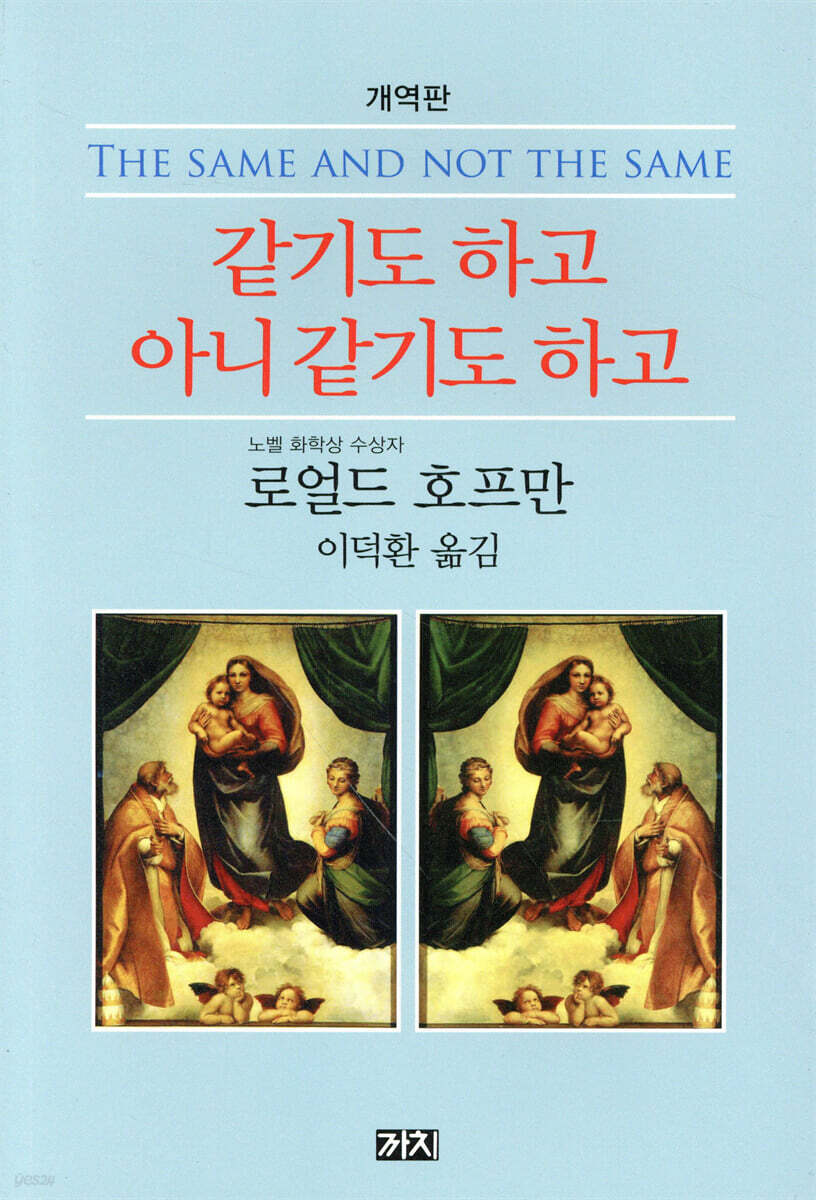
It's similar and it's not similar
 |
Description
Book Introduction
The longest-running bestseller in the chemistry field!
A story from the Nobel Prize winner in Chemistry and the “Poet of Chemistry”
A surprising story that will change our perception of chemistry.
Since its publication in 1996, Roald Hoffman's book has consistently been a bestseller in the chemistry field. It explains what chemistry is and how chemists approach solving chemical problems, using various examples.
This revised edition is a new and refined version of the previous translation and organizes the terminology.
The chemistry we think of is a field far removed from our daily lives, which involves using chemicals in a laboratory.
Additionally, our perception of chemicals is shifting towards negative consequences, such as environmental pollution.
However, chemistry has developed along with the history of mankind, and chemistry is so closely related to our lives that even our life phenomena can be said to be chemistry.
In this book, Professor Roald Hoffmann, a Nobel Prize winner and “poet of chemistry,” helps general readers understand chemistry and explains the world of chemistry in an easy-to-understand way through various examples.
Professor Hoffman argues that modern people must have a basic understanding of chemistry in order to properly understand their lives and participate properly in public opinion decisions as democratic citizens.
This book, written in an easy-to-understand and engaging way, covers the core issues of chemistry, molecular synthesis, and mechanisms, and will help us actively understand the world we live in.
A story from the Nobel Prize winner in Chemistry and the “Poet of Chemistry”
A surprising story that will change our perception of chemistry.
Since its publication in 1996, Roald Hoffman's book has consistently been a bestseller in the chemistry field. It explains what chemistry is and how chemists approach solving chemical problems, using various examples.
This revised edition is a new and refined version of the previous translation and organizes the terminology.
The chemistry we think of is a field far removed from our daily lives, which involves using chemicals in a laboratory.
Additionally, our perception of chemicals is shifting towards negative consequences, such as environmental pollution.
However, chemistry has developed along with the history of mankind, and chemistry is so closely related to our lives that even our life phenomena can be said to be chemistry.
In this book, Professor Roald Hoffmann, a Nobel Prize winner and “poet of chemistry,” helps general readers understand chemistry and explains the world of chemistry in an easy-to-understand way through various examples.
Professor Hoffman argues that modern people must have a basic understanding of chemistry in order to properly understand their lives and participate properly in public opinion decisions as democratic citizens.
This book, written in an easy-to-understand and engaging way, covers the core issues of chemistry, molecular synthesis, and mechanisms, and will help us actively understand the world we live in.
- You can preview some of the book's contents.
Preview
index
preface
Part 1 Identity - Key Issues
1.
Twins' Life
2.
Who are you?
3.
Waterwheel
4.
The fight against reductionism
5.
Fish, bugs, and molecules
6.
Distinguish
7.
isomerism
8.
Are there any identical molecules?
9.
Handshake in the dark
10.
molecular mimicry
Part 2: Expression of Chemistry
11.
Chemistry paper
12.
History of chemistry papers
13.
beneath the surface
14.
The symbolic language of chemistry
15.
What does a molecule look like?
16.
Expression and Reality
17.
Struggle
18.
Expression of id
Part 3: Synthesis of Molecules
19.
Creation and Discovery
20.
Synthetic Hymn
21.
The Art of Cube and Synthesis
22.
Aganiphe Fountain
23.
Natural/Unnatural
24.
lunch
25.
Why I like natural things
26.
Janus and Nonlinearity
Part 4 When Something Goes Wrong
27.
Thalidomide
28.
Social Responsibility of Scientists
Part 5: What on earth will happen?
29.
mechanism
30.
Salieri syndrome
31.
static/dynamic
32.
Equilibrium and perturbation
Part 6: Life in Chemistry
33.
Fritz Haber
Part 7: Sure Magic
34.
catalyst!
35.
Triple solution
36.
carboxypeptidase enzyme
Part 8: Values, Harm, and Democratization
37.
Tyrian purple, blue, indigo
38.
Chemistry and Industry
39.
Athens
40.
The democratizing nature of chemistry
41.
Concern for the environment
42.
Science and Technology in Ancient Democracy
43.
Anti-Platonism: Why Scientists (or Engineers) Shouldn't Rule the World
44.
Answers to environmental issues
45.
Chemistry, Education, and Democracy
Part 9: The Adventures of Diatomic Molecules
46.
C2 in various forms
Part 10: The Living Duality
47.
Creation is difficult
48.
Another duality
49.
Devil's Attributes
50.
Urgent and life-filled chemistry?
51.
Chiron
Acknowledgements
Translator's Note
Look up terms
Find a person's name
Part 1 Identity - Key Issues
1.
Twins' Life
2.
Who are you?
3.
Waterwheel
4.
The fight against reductionism
5.
Fish, bugs, and molecules
6.
Distinguish
7.
isomerism
8.
Are there any identical molecules?
9.
Handshake in the dark
10.
molecular mimicry
Part 2: Expression of Chemistry
11.
Chemistry paper
12.
History of chemistry papers
13.
beneath the surface
14.
The symbolic language of chemistry
15.
What does a molecule look like?
16.
Expression and Reality
17.
Struggle
18.
Expression of id
Part 3: Synthesis of Molecules
19.
Creation and Discovery
20.
Synthetic Hymn
21.
The Art of Cube and Synthesis
22.
Aganiphe Fountain
23.
Natural/Unnatural
24.
lunch
25.
Why I like natural things
26.
Janus and Nonlinearity
Part 4 When Something Goes Wrong
27.
Thalidomide
28.
Social Responsibility of Scientists
Part 5: What on earth will happen?
29.
mechanism
30.
Salieri syndrome
31.
static/dynamic
32.
Equilibrium and perturbation
Part 6: Life in Chemistry
33.
Fritz Haber
Part 7: Sure Magic
34.
catalyst!
35.
Triple solution
36.
carboxypeptidase enzyme
Part 8: Values, Harm, and Democratization
37.
Tyrian purple, blue, indigo
38.
Chemistry and Industry
39.
Athens
40.
The democratizing nature of chemistry
41.
Concern for the environment
42.
Science and Technology in Ancient Democracy
43.
Anti-Platonism: Why Scientists (or Engineers) Shouldn't Rule the World
44.
Answers to environmental issues
45.
Chemistry, Education, and Democracy
Part 9: The Adventures of Diatomic Molecules
46.
C2 in various forms
Part 10: The Living Duality
47.
Creation is difficult
48.
Another duality
49.
Devil's Attributes
50.
Urgent and life-filled chemistry?
51.
Chiron
Acknowledgements
Translator's Note
Look up terms
Find a person's name
GOODS SPECIFICS
- Date of issue: February 8, 2018
- Page count, weight, size: 390 pages | 684g | 155*225*30mm
- ISBN13: 9788972916536
- ISBN10: 8972916536
You may also like
카테고리
korean


korean

![GQ KOREA Mark (Monthly): December [2025]](http://librairie.coreenne.fr/cdn/shop/files/8ef265dbbfbf186523ed75ba7319009d.jpg?v=1765340328&width=3840)


