

Dance with the Devil
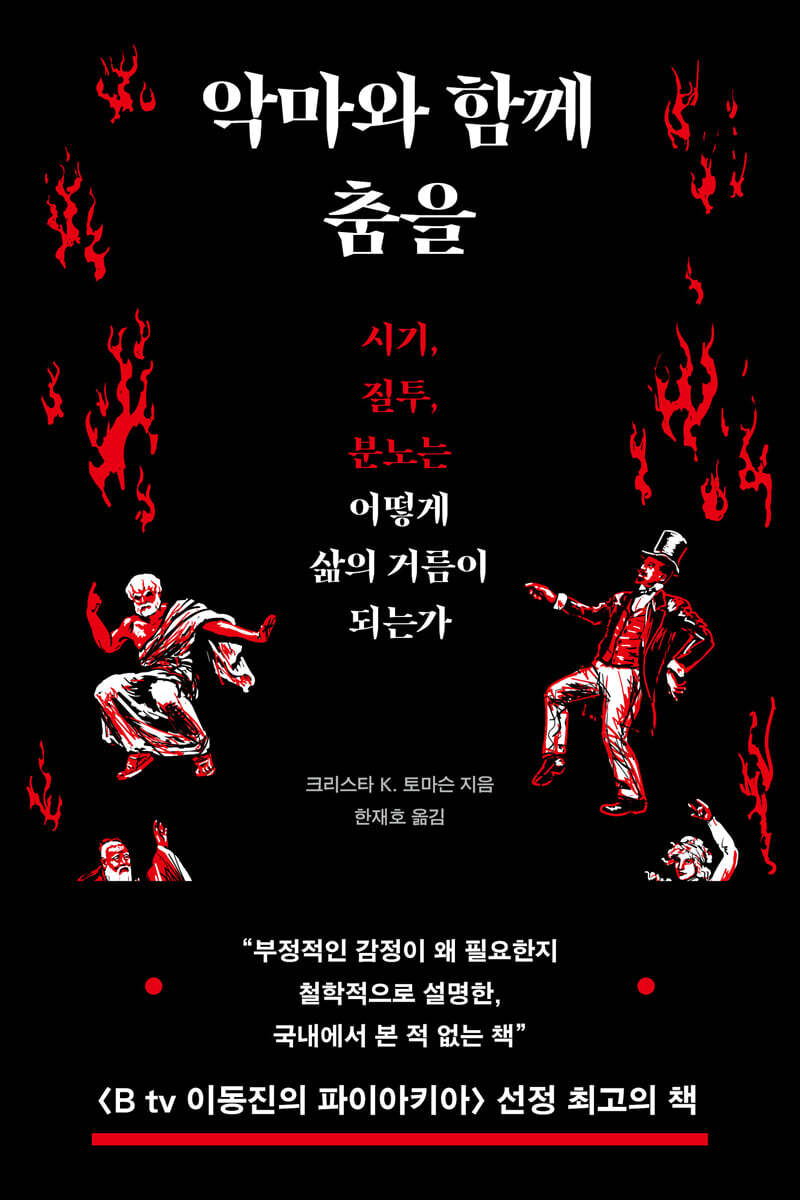 |
Description
Book Introduction
The best book of the month selected by B tv's Lee Dong-jin's Phaeacia!
A defense of this welcome malice, which has been awaited for 2000 years.
Envy, jealousy, anger, contempt, resentment.
A philosopher's solution to making the feeling of 'evil' the fertilizer of life.
Gandhi, Confucius, Goethe, Montaigne… A User's Manual for Bad Emotions from 12 Philosophers
Don't try to shake off your bad feelings!
In a beautiful garden, flowers in full bloom, weeds, and earthworms all live together.
Living is not something where you can just choose to be happy.
Life is such that sometimes happy things happen and sometimes anger, resentment, and jealousy suddenly arise.
We get angry when we feel we are being treated unfairly.
When someone mocks me or belittles me… .
We also feel jealous in different situations.
When it seems like your parents love your younger sibling more than you, when your best friend starts calling your other friend your best friend…
The same goes for other negative emotions.
But this is not wrong.
Being angry when my life is violated is one way of caring for my life, and being jealous and angry at someone who causes a rift in my peaceful relationships is not a bad thing.
But how did these emotions become sinful and misunderstood?
The author of "Dancing with the Devil," a professor of philosophy at Swarthmore College, examines the definitions of negative emotions given by philosophers such as Gandhi, Confucius, Goethe, and Montaigne, and ultimately fiercely confronts the myth that negative emotions must be fought or productively transformed.
The way to live with negative emotions, the author suggests, is to simply let them be.
Accept and feel it.
Of course, it will be painful and not easy.
Still, don't look for a good reason and don't beat yourself up.
Don't try to get rid of it or push it away.
Fertile soil where flowers bloom is full of earthworms.
After reading this book, readers will discover how negative emotions, once misunderstood and condemned, can enrich their lives.
A defense of this welcome malice, which has been awaited for 2000 years.
Envy, jealousy, anger, contempt, resentment.
A philosopher's solution to making the feeling of 'evil' the fertilizer of life.
Gandhi, Confucius, Goethe, Montaigne… A User's Manual for Bad Emotions from 12 Philosophers
Don't try to shake off your bad feelings!
In a beautiful garden, flowers in full bloom, weeds, and earthworms all live together.
Living is not something where you can just choose to be happy.
Life is such that sometimes happy things happen and sometimes anger, resentment, and jealousy suddenly arise.
We get angry when we feel we are being treated unfairly.
When someone mocks me or belittles me… .
We also feel jealous in different situations.
When it seems like your parents love your younger sibling more than you, when your best friend starts calling your other friend your best friend…
The same goes for other negative emotions.
But this is not wrong.
Being angry when my life is violated is one way of caring for my life, and being jealous and angry at someone who causes a rift in my peaceful relationships is not a bad thing.
But how did these emotions become sinful and misunderstood?
The author of "Dancing with the Devil," a professor of philosophy at Swarthmore College, examines the definitions of negative emotions given by philosophers such as Gandhi, Confucius, Goethe, and Montaigne, and ultimately fiercely confronts the myth that negative emotions must be fought or productively transformed.
The way to live with negative emotions, the author suggests, is to simply let them be.
Accept and feel it.
Of course, it will be painful and not easy.
Still, don't look for a good reason and don't beat yourself up.
Don't try to get rid of it or push it away.
Fertile soil where flowers bloom is full of earthworms.
After reading this book, readers will discover how negative emotions, once misunderstood and condemned, can enrich their lives.
- You can preview some of the book's contents.
Preview
index
Recommendation
Part 1.
An invitation to a garden in full bloom
invitation.
The Garden of Evil You and I Hold
The question of 'how to live'
Myth #1: Reason and emotion are incompatible.
Myth 2: Emotions are just chemical reactions in the brain.
Why Philosophers Collect Conventions
I read dead people
Can philosophy save you from evil?
Chapter 1.
People who try to control their emotions
How we deal with emotions
For the Stoics, emotions are
To Gandhi, emotions are
Does letting go of attachment bring peace?
Why life should be comfortable
Chapter 2.
People who try to tame their emotions
To Confucius, emotions are
For Aristotle, emotions are
Normal reactions of a normal person
We are always betrayed by our emotions.
People steeped in positivism
Chapter 3.
Make room for the devil
For me I am angry
Is the ego an illusion?
For Nietzsche, emotion is
Love both joy and pain
Face it without excuses or defenses
Part 2.
Dance with the devil
Chapter 4.
anger
A greater price than the plague?
Advocacy and protest for me
People get irritated by trivial things.
Is there righteous anger?
The Internet is seething with anger
Chapter 5.
Envy and jealousy
The Jealous Woman's Story
Emotions that are everywhere but no one expresses
It's not that I want to monopolize love
The light and dark of the times
I'm jealous, but why can't I just smile?
We generally live by the lines
Chapter 6.
Angsim and Samtong
Spinoza and the emotion of hatred
grumpy person
Montaigne of humor
“Step back from my life”
Bite the hand that feeds you
Chapter 7.
contempt
Rousseau and Wollstonecraft
Feelings poured out on an arrogant fool
The feeling that I am better than that person
Is there such a thing as righteous contempt?
Contempt becomes a part of life
conclusion.
Love earthworms
Life is not about choosing what to cook.
How to live now
main
Part 1.
An invitation to a garden in full bloom
invitation.
The Garden of Evil You and I Hold
The question of 'how to live'
Myth #1: Reason and emotion are incompatible.
Myth 2: Emotions are just chemical reactions in the brain.
Why Philosophers Collect Conventions
I read dead people
Can philosophy save you from evil?
Chapter 1.
People who try to control their emotions
How we deal with emotions
For the Stoics, emotions are
To Gandhi, emotions are
Does letting go of attachment bring peace?
Why life should be comfortable
Chapter 2.
People who try to tame their emotions
To Confucius, emotions are
For Aristotle, emotions are
Normal reactions of a normal person
We are always betrayed by our emotions.
People steeped in positivism
Chapter 3.
Make room for the devil
For me I am angry
Is the ego an illusion?
For Nietzsche, emotion is
Love both joy and pain
Face it without excuses or defenses
Part 2.
Dance with the devil
Chapter 4.
anger
A greater price than the plague?
Advocacy and protest for me
People get irritated by trivial things.
Is there righteous anger?
The Internet is seething with anger
Chapter 5.
Envy and jealousy
The Jealous Woman's Story
Emotions that are everywhere but no one expresses
It's not that I want to monopolize love
The light and dark of the times
I'm jealous, but why can't I just smile?
We generally live by the lines
Chapter 6.
Angsim and Samtong
Spinoza and the emotion of hatred
grumpy person
Montaigne of humor
“Step back from my life”
Bite the hand that feeds you
Chapter 7.
contempt
Rousseau and Wollstonecraft
Feelings poured out on an arrogant fool
The feeling that I am better than that person
Is there such a thing as righteous contempt?
Contempt becomes a part of life
conclusion.
Love earthworms
Life is not about choosing what to cook.
How to live now
main
Detailed image
.jpg)
Into the book
Imagine you have a garden.
It is green and full of beautiful flowers.
But it always needs to be managed.
You go to the garden every day and do your work diligently.
Yet, there is always that guy there.
That's right, 'weed'.
Sometimes I manage to get these guys out, but new weeds always appear in their place.
It seems like these guys will never go away.
(…) This garden is your life, and bad emotions like anger, jealousy, conscience, and contempt are the weeds.
The best garden is a garden without weeds, and the best life is a life without bad feelings.
This is how we think about bad emotions.
But we need to change this way of thinking.
--- 「Invitation.
From "The Garden of Evil You and I"
Bad feelings are an expression of narcissism, and they come about because we invest time and effort into our lives and ourselves.
Envying your neighbor's beautiful home is because you want to have one too, and that's one way of defining success.
The reason I get angry at the sarcasm of my most hated colleague is because I don't think I deserve to be treated that way.
That is because I think people shouldn't treat me carelessly.
If you despise someone, it's because you think you're better than them or that they're not worth your time or attention.
I harbor resentment toward anyone who doubts my abilities or tries to shake me up.
The ego is not a fat, stubborn entity.
It is a fragile and unstable being.
To love oneself is to love an always imperfect and unstable being.
And it is difficult to know how to love such a being.
The real challenge we face is learning to love such beings honestly.
Without making excuses or defending anything.
We must accept our imperfect and precarious existence as it is.
This kind of self-love is the key to living well with negative emotions.
Bad feelings exist in our lives because we pay attention to them, and that's normal.
It is a mistake to try to get rid of or push away bad feelings.
We need bad feelings.
And life is meaningful because it includes bad feelings.
The most important part of a garden is the soil, which is the attachment to life.
If the soil is not rich enough, nothing will grow.
And good soil is full of earthworms.
--- 「Chapter 3.
From "Make Room for the Devil"
Anger is one of the most difficult emotions to endure.
(…) Being honest about your anger doesn't mean you have to feel only the right kind of anger or that your anger always has to be justified.
There is no good anger or bad anger.
There is just anger.
You don't have to beat yourself up or tame your anger to make it behave normally.
We can make anger a tool to fight injustice, a weapon to destroy our enemies, or we can simply learn to feel anger.
--- 「Chapter 4.
From "Anger"
Like other negative emotions, jealousy is painful and difficult to experience honestly.
It's hard to admit that I'm afraid of losing the special attention of someone I love, and it's painful to imagine my special someone in someone else's arms.
If I admit that I'm jealous, I'll start to question whether I'm as lovable as I want to be.
--- 「Chapter 5.
From “Envy and Jealousy”
The thing that makes us feel resentful is when someone tries to barge into our room.
Of course, eating healthy is smart, and I want to do that for myself, but if too many people start shaking their heads at me, I'll do the opposite.
Just to make sure that choice is truly mine.
Because making my own decisions is more important to me than doing something wisely.
Resentment is a way of asserting that my life is mine to live and that I determine who I am.
--- Chapter 6.
From "Angsim and Samtong"
Righteous contempt is directed at those who fail to meet basic standards of character or who lack principles.
The spineless sycophant, the ruthless opportunist, and the pretentious conman are all legitimate targets of contempt because they lack sincerity.
A mean person deserves to be despised.
--- Chapter 7.
From "Contempt"
If you live in this world humanely enough, your mind cannot always be at peace and tranquility.
That is what purity is all about.
Living well without being pure means realizing that as we navigate this world, we will encounter a tremendous amount of complex and difficult emotional experiences.
Emotions are not always positive, and sometimes they shock us and overwhelm us.
But why is this a problem? If you invest time and effort into your life, your emotions will naturally react to everything that happens in your life.
It is green and full of beautiful flowers.
But it always needs to be managed.
You go to the garden every day and do your work diligently.
Yet, there is always that guy there.
That's right, 'weed'.
Sometimes I manage to get these guys out, but new weeds always appear in their place.
It seems like these guys will never go away.
(…) This garden is your life, and bad emotions like anger, jealousy, conscience, and contempt are the weeds.
The best garden is a garden without weeds, and the best life is a life without bad feelings.
This is how we think about bad emotions.
But we need to change this way of thinking.
--- 「Invitation.
From "The Garden of Evil You and I"
Bad feelings are an expression of narcissism, and they come about because we invest time and effort into our lives and ourselves.
Envying your neighbor's beautiful home is because you want to have one too, and that's one way of defining success.
The reason I get angry at the sarcasm of my most hated colleague is because I don't think I deserve to be treated that way.
That is because I think people shouldn't treat me carelessly.
If you despise someone, it's because you think you're better than them or that they're not worth your time or attention.
I harbor resentment toward anyone who doubts my abilities or tries to shake me up.
The ego is not a fat, stubborn entity.
It is a fragile and unstable being.
To love oneself is to love an always imperfect and unstable being.
And it is difficult to know how to love such a being.
The real challenge we face is learning to love such beings honestly.
Without making excuses or defending anything.
We must accept our imperfect and precarious existence as it is.
This kind of self-love is the key to living well with negative emotions.
Bad feelings exist in our lives because we pay attention to them, and that's normal.
It is a mistake to try to get rid of or push away bad feelings.
We need bad feelings.
And life is meaningful because it includes bad feelings.
The most important part of a garden is the soil, which is the attachment to life.
If the soil is not rich enough, nothing will grow.
And good soil is full of earthworms.
--- 「Chapter 3.
From "Make Room for the Devil"
Anger is one of the most difficult emotions to endure.
(…) Being honest about your anger doesn't mean you have to feel only the right kind of anger or that your anger always has to be justified.
There is no good anger or bad anger.
There is just anger.
You don't have to beat yourself up or tame your anger to make it behave normally.
We can make anger a tool to fight injustice, a weapon to destroy our enemies, or we can simply learn to feel anger.
--- 「Chapter 4.
From "Anger"
Like other negative emotions, jealousy is painful and difficult to experience honestly.
It's hard to admit that I'm afraid of losing the special attention of someone I love, and it's painful to imagine my special someone in someone else's arms.
If I admit that I'm jealous, I'll start to question whether I'm as lovable as I want to be.
--- 「Chapter 5.
From “Envy and Jealousy”
The thing that makes us feel resentful is when someone tries to barge into our room.
Of course, eating healthy is smart, and I want to do that for myself, but if too many people start shaking their heads at me, I'll do the opposite.
Just to make sure that choice is truly mine.
Because making my own decisions is more important to me than doing something wisely.
Resentment is a way of asserting that my life is mine to live and that I determine who I am.
--- Chapter 6.
From "Angsim and Samtong"
Righteous contempt is directed at those who fail to meet basic standards of character or who lack principles.
The spineless sycophant, the ruthless opportunist, and the pretentious conman are all legitimate targets of contempt because they lack sincerity.
A mean person deserves to be despised.
--- Chapter 7.
From "Contempt"
If you live in this world humanely enough, your mind cannot always be at peace and tranquility.
That is what purity is all about.
Living well without being pure means realizing that as we navigate this world, we will encounter a tremendous amount of complex and difficult emotional experiences.
Emotions are not always positive, and sometimes they shock us and overwhelm us.
But why is this a problem? If you invest time and effort into your life, your emotions will naturally react to everything that happens in your life.
--- "conclusion.
From "Love the Earthworm"
From "Love the Earthworm"
Publisher's Review
Don't live suppressing negative emotions.
That place will be hell
Dance with the devil, without any excuses or defenses!
Goethe said:
“There is no greater punishment than a heaven without friends.”
And after reading "Dances with the Devil," the reader will realize that "there is no greater punishment than heaven, where one turns a blind eye to negative emotions."
As we go through our daily lives, negative feelings naturally arise.
Anger wells up from deep within, you feel jealous of others, and you feel like a loser when you see someone's misfortune.
“If you live in this world humanely enough, your mind cannot always be at peace and tranquility.
That is what purity is all about.
Living well without being pure means realizing that as we navigate this world, we will have a tremendous amount of complex and difficult emotional experiences.” _From the text
But soon he starts scolding himself.
Feeling such emotions is something that only a small person would do, and how can one feel good about seeing the suffering of others?
I wish people would stop thinking like this.
Furthermore, they try to hide the raw negative emotions they feel from others as much as possible, and even if they do feel them, they believe it is better to use them as fuel for self-development.
And the author points out this very point.
'Why is this even a problem?' 'Why should I use this emotion as fuel for a better life?' Life doesn't always go as planned, and it's difficult to shape the self into something more than what we want.
Negative emotions are a natural part of life.
So, you can accept it without any excuses or defenses.
In "Dancing with the Devil," the author defends these misunderstood negative emotions and offers solutions to how we can live with negativity.
Gandhi, Confucius, Nietzsche, Montaigne…
On envy, jealousy, contempt, and anger, as discussed by twelve philosophers.
A poignant challenge to emotions that were once considered sinful!
Envy, jealousy, contempt, anger… .
If we trace back to when negative emotions, misunderstood and condemned, became sins, we can divide the philosophers who deal with these emotions into two groups.
'Emotionally controlled adults' and 'emotionally nurturing adults'.
Emotionally controlled adults say that the better they are at controlling their emotions, the better their lives will be.
Getting angry and crying over trivial things means you lack the ability to think, choose, decide, and act for yourself.
That is why Gandhi, a representative of the emotionally controlled adult, says that emotions must be controlled.
According to them, we must make a constant effort not to be swept away by our emotions.
On the other hand, emotionally nurturing adults say that feeling emotions in the right way at the right time is a good life.
They reject the idea that emotions are irrational forces that destroy us.
For example, Confucius's grief over the loss of a disciple he cherished greatly was an appropriate expression of emotion for the situation.
If you train yourself a little more, you'll be able to feel a little less anger over trivial things like a long wait at the hospital, and a lot more sadness over the pain of losing a loved one.
In this way, 『Dances with the Devil』 examines how anger, envy and jealousy, resentment and resentment, and contempt have been interpreted by various philosophers.
But the author points out that emotions always betray us.
We can become very angry over trivial things, or we can remain indifferent even when we thought we would feel great sadness.
This means that you can't choose the emotions you want, force yourself to feel emotions you shouldn't, or turn off the emotions you feel like you're turning off a switch.
In this book, the author discusses bad emotions that were once considered sinful, and ultimately convinces readers that there is no need to become an emotionally controlled adult or an emotionally cultivated adult.
Life is a series of tragedies and ecstasies.
Accordingly, our egos are shaking and laughing, creating masterpieces.
“When life’s tragedies and ecstasies strike—the death of a loved one, a life-altering illness, love, and childbirth—the self shatters and we must rebuild it.” In other words, our identity is always in flux.
Sometimes it feels stable, sometimes it feels like a sandcastle.
That is why we must continue the journey of self-discovery and love ourselves.
Loving ourselves honestly means accepting that we are vulnerable.
And when the ego admits its weakness, negative emotions come.
Feeling anger, feeling jealous or envious of others, experiencing emotions such as resentment, resentment, and contempt.
The reason why these feelings are usually criticized is because they 'compare' oneself to others.
By comparing ourselves and establishing superiority over others, we begin to ridicule others and diminish ourselves.
So we often hear advice not to compare ourselves to others.
But it's not a noise that others can easily ignore.
“We are a work in progress and we don’t know if we are creating a masterpiece or a flop.
That's why comparing myself to others helps me measure my progress and gives me clues as to how well I'm doing." _From the text
If comparison isn't a bad thing, and feeling negative emotions isn't the problem, then what is? The real problem is that we ignore these emotions, blame others, and express them in the wrong ways.
For example, you might feel jealous of your best friend and then shake your head and try to ignore this feeling.
Or, in a meeting, I make the person who pointed out my mistake into a villain.
That person has always been wary of me and he was trying to take this opportunity to bring me down.
Furthermore, some people throw stones at their annoying neighbors' cars that cause noise between floors.
But just let your emotions be.
Of course, it will be painful and not easy.
Don't try to find justification for your negative feelings and don't beat yourself up about it.
Don't try to get rid of it or push it away.
The more that happens, the more hell life will become.
Dance with the devil without excuses or defense.
That place will be hell
Dance with the devil, without any excuses or defenses!
Goethe said:
“There is no greater punishment than a heaven without friends.”
And after reading "Dances with the Devil," the reader will realize that "there is no greater punishment than heaven, where one turns a blind eye to negative emotions."
As we go through our daily lives, negative feelings naturally arise.
Anger wells up from deep within, you feel jealous of others, and you feel like a loser when you see someone's misfortune.
“If you live in this world humanely enough, your mind cannot always be at peace and tranquility.
That is what purity is all about.
Living well without being pure means realizing that as we navigate this world, we will have a tremendous amount of complex and difficult emotional experiences.” _From the text
But soon he starts scolding himself.
Feeling such emotions is something that only a small person would do, and how can one feel good about seeing the suffering of others?
I wish people would stop thinking like this.
Furthermore, they try to hide the raw negative emotions they feel from others as much as possible, and even if they do feel them, they believe it is better to use them as fuel for self-development.
And the author points out this very point.
'Why is this even a problem?' 'Why should I use this emotion as fuel for a better life?' Life doesn't always go as planned, and it's difficult to shape the self into something more than what we want.
Negative emotions are a natural part of life.
So, you can accept it without any excuses or defenses.
In "Dancing with the Devil," the author defends these misunderstood negative emotions and offers solutions to how we can live with negativity.
Gandhi, Confucius, Nietzsche, Montaigne…
On envy, jealousy, contempt, and anger, as discussed by twelve philosophers.
A poignant challenge to emotions that were once considered sinful!
Envy, jealousy, contempt, anger… .
If we trace back to when negative emotions, misunderstood and condemned, became sins, we can divide the philosophers who deal with these emotions into two groups.
'Emotionally controlled adults' and 'emotionally nurturing adults'.
Emotionally controlled adults say that the better they are at controlling their emotions, the better their lives will be.
Getting angry and crying over trivial things means you lack the ability to think, choose, decide, and act for yourself.
That is why Gandhi, a representative of the emotionally controlled adult, says that emotions must be controlled.
According to them, we must make a constant effort not to be swept away by our emotions.
On the other hand, emotionally nurturing adults say that feeling emotions in the right way at the right time is a good life.
They reject the idea that emotions are irrational forces that destroy us.
For example, Confucius's grief over the loss of a disciple he cherished greatly was an appropriate expression of emotion for the situation.
If you train yourself a little more, you'll be able to feel a little less anger over trivial things like a long wait at the hospital, and a lot more sadness over the pain of losing a loved one.
In this way, 『Dances with the Devil』 examines how anger, envy and jealousy, resentment and resentment, and contempt have been interpreted by various philosophers.
But the author points out that emotions always betray us.
We can become very angry over trivial things, or we can remain indifferent even when we thought we would feel great sadness.
This means that you can't choose the emotions you want, force yourself to feel emotions you shouldn't, or turn off the emotions you feel like you're turning off a switch.
In this book, the author discusses bad emotions that were once considered sinful, and ultimately convinces readers that there is no need to become an emotionally controlled adult or an emotionally cultivated adult.
Life is a series of tragedies and ecstasies.
Accordingly, our egos are shaking and laughing, creating masterpieces.
“When life’s tragedies and ecstasies strike—the death of a loved one, a life-altering illness, love, and childbirth—the self shatters and we must rebuild it.” In other words, our identity is always in flux.
Sometimes it feels stable, sometimes it feels like a sandcastle.
That is why we must continue the journey of self-discovery and love ourselves.
Loving ourselves honestly means accepting that we are vulnerable.
And when the ego admits its weakness, negative emotions come.
Feeling anger, feeling jealous or envious of others, experiencing emotions such as resentment, resentment, and contempt.
The reason why these feelings are usually criticized is because they 'compare' oneself to others.
By comparing ourselves and establishing superiority over others, we begin to ridicule others and diminish ourselves.
So we often hear advice not to compare ourselves to others.
But it's not a noise that others can easily ignore.
“We are a work in progress and we don’t know if we are creating a masterpiece or a flop.
That's why comparing myself to others helps me measure my progress and gives me clues as to how well I'm doing." _From the text
If comparison isn't a bad thing, and feeling negative emotions isn't the problem, then what is? The real problem is that we ignore these emotions, blame others, and express them in the wrong ways.
For example, you might feel jealous of your best friend and then shake your head and try to ignore this feeling.
Or, in a meeting, I make the person who pointed out my mistake into a villain.
That person has always been wary of me and he was trying to take this opportunity to bring me down.
Furthermore, some people throw stones at their annoying neighbors' cars that cause noise between floors.
But just let your emotions be.
Of course, it will be painful and not easy.
Don't try to find justification for your negative feelings and don't beat yourself up about it.
Don't try to get rid of it or push it away.
The more that happens, the more hell life will become.
Dance with the devil without excuses or defense.
GOODS SPECIFICS
- Date of issue: December 16, 2024
- Page count, weight, size: 300 pages | 402g | 140*210*20mm
- ISBN13: 9788965966814
- ISBN10: 8965966817
You may also like
카테고리
korean


korean

![GQ KOREA Mark (Monthly): December [2025]](http://librairie.coreenne.fr/cdn/shop/files/8ef265dbbfbf186523ed75ba7319009d.jpg?v=1765340328&width=3840)


