

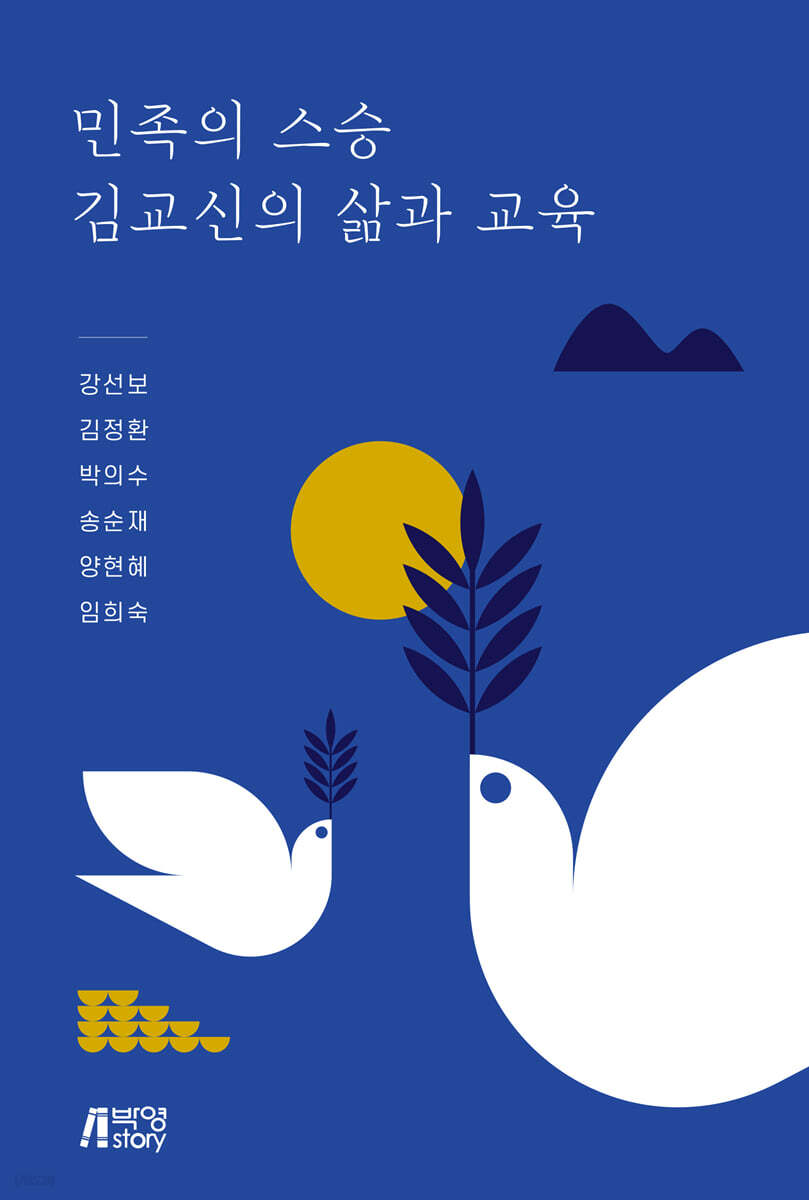
The life and education of Kim Kyo-shin, the nation's teacher
 |
Description
Book Introduction
There was almost no research on the educational dimension that Kim Kyo-shin valued as much as his main occupation, but research began to be conducted little by little starting in the 1970s by Kim Jeong-hwan (then a professor in the Department of Education at Korea University's College of Education).
Thus, the articles on Kim Kyo-shin's education published by Kim Jeong-hwan were inserted into 『Kim Kyo-shin』 (Korea Theological Institute, 1980) and its revised edition 『Kim Kyo-shin: His Life, Faith and Hope』 (Korea Theological Institute, 1994), and were widely introduced.
In particular, while working at Korea University, Kim Jeong-hwan gave passionate and moving lectures on Kim Kyo-shin as a teacher in the Introduction to Education and Teacher Theory classes.
Therefore, all students who took Kim Jeong-hwan's education lectures at Korea University know Kim Kyo-shin as a great teacher.
The anecdote below is related to this and is therefore introduced.
This book is of great significance as it is the first educational publication related to Kim Kyo-shin.
It is true that research on Kim Kyo-shin as an educator has been lacking rather than on Kim Kyo-shin as a religious figure.
I hope that this book will serve as a guide to reveal the full picture of Kim Kyo-shin, who was both a religious figure and an educator, without being biased to one side, and that it will further serve as a prelude to Kim Kyo-shin's full-fledged educational works.
Thus, the articles on Kim Kyo-shin's education published by Kim Jeong-hwan were inserted into 『Kim Kyo-shin』 (Korea Theological Institute, 1980) and its revised edition 『Kim Kyo-shin: His Life, Faith and Hope』 (Korea Theological Institute, 1994), and were widely introduced.
In particular, while working at Korea University, Kim Jeong-hwan gave passionate and moving lectures on Kim Kyo-shin as a teacher in the Introduction to Education and Teacher Theory classes.
Therefore, all students who took Kim Jeong-hwan's education lectures at Korea University know Kim Kyo-shin as a great teacher.
The anecdote below is related to this and is therefore introduced.
This book is of great significance as it is the first educational publication related to Kim Kyo-shin.
It is true that research on Kim Kyo-shin as an educator has been lacking rather than on Kim Kyo-shin as a religious figure.
I hope that this book will serve as a guide to reveal the full picture of Kim Kyo-shin, who was both a religious figure and an educator, without being biased to one side, and that it will further serve as a prelude to Kim Kyo-shin's full-fledged educational works.
index
Kim Kyo-shin's Life 1 Kim Jeong-hwan and Song Sun-jae
National Spiritual Achievement 9: Kim Jeong-hwan
Kim Kyo-shin's Personality, Educational Philosophy, and Educational Practice 17 Park Ui-su
Ⅰ.
Opening Remarks 18
Ⅱ.
Human Kim Kyo-shin 21
1.
Kim Kyo-shin (Self-Portrait) 21
2.
Kim Kyo-shin 27 as seen by others
3.
Kim Kyo-shin's Personality 34
Ⅲ.
Kim Kyo-shin's Education Center 38
1.
Education True to its Essence 39
2.
Faith-Based Education 43
3.
Education Based on Intrinsic Motivation and Interest 45
4.
Education 47: A Thorough Guide to National Consciousness
5.
Open Education Beyond Time and Space 50
Ⅳ.
Kim Kyo-shin's Practice 52
1.
Strict self-discipline and lifelong learning 53
2.
Thorough Housekeeping (齊家) 55
3.
Practice in School Education 56
4.
59 Practices of Diverse Social Education
5.
Education through individual counseling 63
V.
Conclusion 65
Kim Kyo-shin's Philosophy and Methods for Human Education 69 Song Sun-jae
Ⅰ.
Opening Remarks 70
Ⅱ.
The Keynote of Kim Kyo-shin's Thought: Three Fundamentals 72
Ⅲ.
The Nature of Christian Faith 74
1.
Non-church Christianity 74
2.
Joseonsan Christianity 76
3.
Confucian Christianity: Establishing Christianity's Relationship to Confucianism 79
Ⅳ.
Educational Theory 84
1.
School and Teachers? Criticism of Schools and the Academic-Credit Society 85
2.
Basic Characteristics of Educational Philosophy and Methods 93
3.
An Alternative to Modern School Education: A Small Educational Community Tried at Home 114
V.
Conclusion 120
Modern Nationalism and Kim Kyo-shin's National Education 129 Lim Hee-sook
Ⅰ.
Opening Remarks 130
Ⅱ.
The Concept of Nation and the Characteristics of Modern Nationalism 132
1.
The Concept of Nation 132
2.
Characteristics of Modern Nationalism 135
Ⅲ.
The Development of National Education under Japanese Colonialism and the Korean Church 141
1.
National Education from the Enlightenment Period to Japan's Annexation of Korea 142
2.
National Education Before and After the March 1st Movement 143
3.
National Education in the Wartime System 145
Ⅳ.
Understanding Kim Kyo-shin's National Education Thought 145
1.
National Consciousness 146
2.
Historical Consciousness 151
3.
Popular Consciousness 154
V.
Kim Kyo-shin's National Education Methodology 158
1.
Recording and Remembering a History of Suffering: Journaling 158
2.
Life Faith and Life Education 161
3.
Integrated Learning 162
Ⅵ.
Conclusion: An Evaluation of Kim Kyo-shin's Thought and Education 166
Kim Kyo-shin's Christian Thought and Educational Activities 171 Yang Hyeon-hye
Ⅰ.
Opening Remarks 172
Ⅱ.
Kim Kyo-shin's Christian Thought 174
1.
Anarchism and "Faith in Everyday Life" 174
2.
Kim Kyo-shin, Prophetic Historical Consciousness, and Eschatological Hope 181
3.
The Search for "Christianity in Joseon" 191
Ⅲ.
Kim Kyo-shin's Educational Activities 196
1.
Religious Education 197
2.
Educational Activities in the Field of Education 205
Ⅳ.
Conclusion 213
Analysis of Kim Kyo-shin's Characteristics as a Teacher 215 Kim Jeong-hwan
Ⅰ.
Opening Remarks 216
Ⅱ.
Analysis of Teacher Nature 219
1.
Personal Love 220
2.
Teacher-student partnership attitude 222
3.
Urge Self-Discovery 224
4.
Manifestation of the Spirit of Seeking Tao 226
5.
Religious Attitude to Life 229
6.
Love 231
Ⅲ.
Conclusion: Alumni's "Thank You" 232
Kim Kyo-shin, educator of "Encounter" 239 Kang Seon-bo
Kim Kyo-shin's interpretation of Buber's "Encounter" based on his educational philosophy
Ⅰ.
Opening Remarks 240
Ⅱ.
Buber's Philosophy of "Encounter" and Education 243
1.
Buber's Philosophy of "Encounter" 243
2.
Buber's "Encounter" Education 248
Ⅲ.
Kim Kyo-shin, who practiced the education of "encounter" 254
1.
Education of Humanity through Personal Influence 254
2.
A self-proclaimed mentor and spiritual companion 261
3.
Peacemaker as a Religious Pacifist 265
4.
Individuality Education Emphasizing Uniqueness 270
5.
Implementing a Non-Eros-style Education 273
6.
The world itself is a playground for education 275
7.
Guide to "Eternal You" 278
8.
The Practice of Agape Love 279
Ⅳ.
Conclusion 282
Kim Kyo-shin Chronology 287
National Spiritual Achievement 9: Kim Jeong-hwan
Kim Kyo-shin's Personality, Educational Philosophy, and Educational Practice 17 Park Ui-su
Ⅰ.
Opening Remarks 18
Ⅱ.
Human Kim Kyo-shin 21
1.
Kim Kyo-shin (Self-Portrait) 21
2.
Kim Kyo-shin 27 as seen by others
3.
Kim Kyo-shin's Personality 34
Ⅲ.
Kim Kyo-shin's Education Center 38
1.
Education True to its Essence 39
2.
Faith-Based Education 43
3.
Education Based on Intrinsic Motivation and Interest 45
4.
Education 47: A Thorough Guide to National Consciousness
5.
Open Education Beyond Time and Space 50
Ⅳ.
Kim Kyo-shin's Practice 52
1.
Strict self-discipline and lifelong learning 53
2.
Thorough Housekeeping (齊家) 55
3.
Practice in School Education 56
4.
59 Practices of Diverse Social Education
5.
Education through individual counseling 63
V.
Conclusion 65
Kim Kyo-shin's Philosophy and Methods for Human Education 69 Song Sun-jae
Ⅰ.
Opening Remarks 70
Ⅱ.
The Keynote of Kim Kyo-shin's Thought: Three Fundamentals 72
Ⅲ.
The Nature of Christian Faith 74
1.
Non-church Christianity 74
2.
Joseonsan Christianity 76
3.
Confucian Christianity: Establishing Christianity's Relationship to Confucianism 79
Ⅳ.
Educational Theory 84
1.
School and Teachers? Criticism of Schools and the Academic-Credit Society 85
2.
Basic Characteristics of Educational Philosophy and Methods 93
3.
An Alternative to Modern School Education: A Small Educational Community Tried at Home 114
V.
Conclusion 120
Modern Nationalism and Kim Kyo-shin's National Education 129 Lim Hee-sook
Ⅰ.
Opening Remarks 130
Ⅱ.
The Concept of Nation and the Characteristics of Modern Nationalism 132
1.
The Concept of Nation 132
2.
Characteristics of Modern Nationalism 135
Ⅲ.
The Development of National Education under Japanese Colonialism and the Korean Church 141
1.
National Education from the Enlightenment Period to Japan's Annexation of Korea 142
2.
National Education Before and After the March 1st Movement 143
3.
National Education in the Wartime System 145
Ⅳ.
Understanding Kim Kyo-shin's National Education Thought 145
1.
National Consciousness 146
2.
Historical Consciousness 151
3.
Popular Consciousness 154
V.
Kim Kyo-shin's National Education Methodology 158
1.
Recording and Remembering a History of Suffering: Journaling 158
2.
Life Faith and Life Education 161
3.
Integrated Learning 162
Ⅵ.
Conclusion: An Evaluation of Kim Kyo-shin's Thought and Education 166
Kim Kyo-shin's Christian Thought and Educational Activities 171 Yang Hyeon-hye
Ⅰ.
Opening Remarks 172
Ⅱ.
Kim Kyo-shin's Christian Thought 174
1.
Anarchism and "Faith in Everyday Life" 174
2.
Kim Kyo-shin, Prophetic Historical Consciousness, and Eschatological Hope 181
3.
The Search for "Christianity in Joseon" 191
Ⅲ.
Kim Kyo-shin's Educational Activities 196
1.
Religious Education 197
2.
Educational Activities in the Field of Education 205
Ⅳ.
Conclusion 213
Analysis of Kim Kyo-shin's Characteristics as a Teacher 215 Kim Jeong-hwan
Ⅰ.
Opening Remarks 216
Ⅱ.
Analysis of Teacher Nature 219
1.
Personal Love 220
2.
Teacher-student partnership attitude 222
3.
Urge Self-Discovery 224
4.
Manifestation of the Spirit of Seeking Tao 226
5.
Religious Attitude to Life 229
6.
Love 231
Ⅲ.
Conclusion: Alumni's "Thank You" 232
Kim Kyo-shin, educator of "Encounter" 239 Kang Seon-bo
Kim Kyo-shin's interpretation of Buber's "Encounter" based on his educational philosophy
Ⅰ.
Opening Remarks 240
Ⅱ.
Buber's Philosophy of "Encounter" and Education 243
1.
Buber's Philosophy of "Encounter" 243
2.
Buber's "Encounter" Education 248
Ⅲ.
Kim Kyo-shin, who practiced the education of "encounter" 254
1.
Education of Humanity through Personal Influence 254
2.
A self-proclaimed mentor and spiritual companion 261
3.
Peacemaker as a Religious Pacifist 265
4.
Individuality Education Emphasizing Uniqueness 270
5.
Implementing a Non-Eros-style Education 273
6.
The world itself is a playground for education 275
7.
Guide to "Eternal You" 278
8.
The Practice of Agape Love 279
Ⅳ.
Conclusion 282
Kim Kyo-shin Chronology 287
Into the book
Who is Kim Kyo-shin?
Kim Jeong-hwan (former professor emeritus of Korea University, passed away in 2019), who discovered and studied him in our modern history, evaluated Kim Kyo-shin as “a teacher of outstanding ability and thought who considered religion as the foundation of education, sought national Christianity, and, with that understanding, consistently served as a regular teacher of national history throughout his life until his death four months before the liberation of the country,” adding the following.
…When we talk about Kim Kyo-shin, we cannot think of him without religion, and we cannot think of him without education.
In his life, religion and education became one.
He also said, “Religion is my main occupation, and education is my side occupation.”
But I was more passionate about this side job.
And he passed away while working at this side job.
Because I realized that I couldn't achieve my main job without a side job...
As you know, Kim Kyo-shin is a non-church person.
As Kim Jeong-hwan's interpretation and evaluation show, he was a religious person and an educator, but he valued the educational mission as much as the religious mission, because he believed that the fruits of education were as great as the fruits of religion.
Kim Kyo-shin's dedication to education, along with his religious commitment, and the results he achieved were truly unusual and surprising.
Nevertheless, educational research has not delved into any more depth than a dissertation.
It remains regrettable that Kim Kyo-shin's religious life and theology, despite the many twists and turns surrounding non-churchism, have been studied in depth and received a corresponding historical evaluation.
There was almost no research on the educational dimension that Kim Kyo-shin valued as much as his main occupation, but research began to be conducted little by little starting in the 1970s by Kim Jeong-hwan (then a professor in the Department of Education at Korea University's College of Education).
Thus, the articles on Kim Kyo-shin's education published by Kim Jeong-hwan were inserted into 『Kim Kyo-shin』 (Korea Theological Institute, 1980) and its revised edition 『Kim Kyo-shin: His Life, Faith and Hope』 (Korea Theological Institute, 1994), and were widely introduced.
In particular, while working at Korea University, Kim Jeong-hwan gave passionate and moving lectures on Kim Kyo-shin as a teacher in the Introduction to Education and Teacher Theory classes.
Therefore, all students who took Kim Jeong-hwan's education lectures at Korea University know Kim Kyo-shin as a great teacher.
The anecdote below is related to this and is therefore introduced.
In 2015, the “2015 Yangjeong Teacher” Kim Kyo-shin (1901-1945) 70th Anniversary Commemorative Forum” was held at Yangjeong Middle and High School, and Professor Yang Hyeon-hye of Ewha Womans University and Professor Kang Seon-bo of Korea University attended as presenters and commentators.
At the end of the forum, during a question and answer session with the Yangjeong faculty and alumni present at the time, Professor Kang Seon-bo asked, “Is there anyone here who attended a lecture on Kim Kyo-shin during their school days?” and one teacher raised his hand.
So when Professor Kang Seon-bo asked, “Did you graduate from Korea University’s College of Education?” he answered yes.
I attended Professor Kim Jeong-hwan's lecture!
The reason Kim Jeong-hwan's story is somewhat long is because he made pioneering contributions to teaching, researching, and evaluating Kim Kyo-shin from an educational perspective.
As he passionately lectured and presented his research on Kim Kyo-shin at university lecture halls, papers on Kim Kyo-shin's education began to appear in graduate schools of education, general graduate schools, and theological schools across the country starting in the 1970s.
Despite the growing educational interest in Kim Kyo-shin, the authors' shared regret that there is still not a single educational book on Kim Kyo-shin has been published, which led to the creation of this book.
That is, in 2016, Professor Park Eui-soo of Kangnam University and Professor Kang Seon-bo of Korea University presented at the Kim Kyo-shin Memorial Academic Conference (theme: Kim Kyo-shin, Asking the Path of Korean Education) held at Ewha Womans University by the ‘Kim Kyo-shin Memorial Society’, and afterward, while exchanging opinions with Professor Yang Hyeon-hye, they agreed to compile Kim Kyo-shin’s education-related papers and publish an educational book.
Following this, we decided to publish Kim Kyo-shin's educational book in collaboration with Professor Song Soon-jae of Gamsin University and Professor Lim Hee-sook of Hanshin University, who published Kim Kyo-shin's educational thesis.
Of course, the precious manuscript of the late Professor Kim Jeong-hwan was published here with the consent of his bereaved family and the publisher of the Korea Theological Institute, which made it shine even brighter.
I would like to take this opportunity to express my deepest gratitude to the bereaved family and the Korean Theological Institute.
Against this backdrop, I would like to highlight some of the implications of this book.
First of all, as mentioned above, this book is of great significance as it is the first educational book related to Kim Kyo-shin.
It is true that research on Kim Kyo-shin as an educator has been lacking rather than on Kim Kyo-shin as a religious figure.
I hope that this book will serve as a guide to reveal the full picture of Kim Kyo-shin, who was both a religious figure and an educator, without being biased to one side, and that it will further serve as a prelude to Kim Kyo-shin's full-fledged educational works.
Second, it is true that when graduate students or scholars wanted to conduct educational research on Kim Kyo-shin, there was a difficulty in having to write papers based solely on Kim Kyo-shin's original text, as there was not much prior research by scholars.
Accordingly, many researchers have been thinking that it would be good to have a monograph that would serve as a kind of basic data collection for Kim Kyo-shin's educational research, collecting scholars' educational research on Kim Kyo-shin. This book is expected to meet this need and be of great help to early-stage researchers.
Third, the researchers of this book are theologians and educators.
Although they did not conduct joint research on the same topic, they analyzed the educational aspects of Kim Kyo-shin from different perspectives, so in a broad sense, it can be said to be a research collaboration between a theologian and an educationist.
I hope that this will serve as a foundation for theologians and educators to collaborate and explore the full scope of Kim Kyo-shin's work more deeply and broadly.
Korean education today is still in a state of crisis.
Where should we look for a solution? We want to find that ray of hope in Kim Kyo-shin.
If we analyze the etymology of education, we can see that its core is ‘example’ and ‘love.’
Pestalozzi, the saint of education, said, “The best content and method of education is nothing more or less than love.”
Kim Kyo-shin, who lived an exemplary life and had such a deep love for his disciples, was 'the best educational content and method in and of itself'.
If we truly want our education to be a beacon of light for society, teachers like Kim Kyo-shin must emerge from the grassroots in schools.
We all need to identify, nurture, and protect prospective teachers with such qualities.
We saw that possibility in Teacher Kim Kyo-shin, and we hope that this book will contribute even a little to the realization of that possibility.
Finally, I would like to express my deepest gratitude to CEO Noh Hyun of Park Young Story, who readily agreed to the publication of this book and supported its publication, and to the editorial staff who edited it beautifully.
April 20, 2021
By commission of the authors
Written by Kang Seon-bo
Kim Jeong-hwan (former professor emeritus of Korea University, passed away in 2019), who discovered and studied him in our modern history, evaluated Kim Kyo-shin as “a teacher of outstanding ability and thought who considered religion as the foundation of education, sought national Christianity, and, with that understanding, consistently served as a regular teacher of national history throughout his life until his death four months before the liberation of the country,” adding the following.
…When we talk about Kim Kyo-shin, we cannot think of him without religion, and we cannot think of him without education.
In his life, religion and education became one.
He also said, “Religion is my main occupation, and education is my side occupation.”
But I was more passionate about this side job.
And he passed away while working at this side job.
Because I realized that I couldn't achieve my main job without a side job...
As you know, Kim Kyo-shin is a non-church person.
As Kim Jeong-hwan's interpretation and evaluation show, he was a religious person and an educator, but he valued the educational mission as much as the religious mission, because he believed that the fruits of education were as great as the fruits of religion.
Kim Kyo-shin's dedication to education, along with his religious commitment, and the results he achieved were truly unusual and surprising.
Nevertheless, educational research has not delved into any more depth than a dissertation.
It remains regrettable that Kim Kyo-shin's religious life and theology, despite the many twists and turns surrounding non-churchism, have been studied in depth and received a corresponding historical evaluation.
There was almost no research on the educational dimension that Kim Kyo-shin valued as much as his main occupation, but research began to be conducted little by little starting in the 1970s by Kim Jeong-hwan (then a professor in the Department of Education at Korea University's College of Education).
Thus, the articles on Kim Kyo-shin's education published by Kim Jeong-hwan were inserted into 『Kim Kyo-shin』 (Korea Theological Institute, 1980) and its revised edition 『Kim Kyo-shin: His Life, Faith and Hope』 (Korea Theological Institute, 1994), and were widely introduced.
In particular, while working at Korea University, Kim Jeong-hwan gave passionate and moving lectures on Kim Kyo-shin as a teacher in the Introduction to Education and Teacher Theory classes.
Therefore, all students who took Kim Jeong-hwan's education lectures at Korea University know Kim Kyo-shin as a great teacher.
The anecdote below is related to this and is therefore introduced.
In 2015, the “2015 Yangjeong Teacher” Kim Kyo-shin (1901-1945) 70th Anniversary Commemorative Forum” was held at Yangjeong Middle and High School, and Professor Yang Hyeon-hye of Ewha Womans University and Professor Kang Seon-bo of Korea University attended as presenters and commentators.
At the end of the forum, during a question and answer session with the Yangjeong faculty and alumni present at the time, Professor Kang Seon-bo asked, “Is there anyone here who attended a lecture on Kim Kyo-shin during their school days?” and one teacher raised his hand.
So when Professor Kang Seon-bo asked, “Did you graduate from Korea University’s College of Education?” he answered yes.
I attended Professor Kim Jeong-hwan's lecture!
The reason Kim Jeong-hwan's story is somewhat long is because he made pioneering contributions to teaching, researching, and evaluating Kim Kyo-shin from an educational perspective.
As he passionately lectured and presented his research on Kim Kyo-shin at university lecture halls, papers on Kim Kyo-shin's education began to appear in graduate schools of education, general graduate schools, and theological schools across the country starting in the 1970s.
Despite the growing educational interest in Kim Kyo-shin, the authors' shared regret that there is still not a single educational book on Kim Kyo-shin has been published, which led to the creation of this book.
That is, in 2016, Professor Park Eui-soo of Kangnam University and Professor Kang Seon-bo of Korea University presented at the Kim Kyo-shin Memorial Academic Conference (theme: Kim Kyo-shin, Asking the Path of Korean Education) held at Ewha Womans University by the ‘Kim Kyo-shin Memorial Society’, and afterward, while exchanging opinions with Professor Yang Hyeon-hye, they agreed to compile Kim Kyo-shin’s education-related papers and publish an educational book.
Following this, we decided to publish Kim Kyo-shin's educational book in collaboration with Professor Song Soon-jae of Gamsin University and Professor Lim Hee-sook of Hanshin University, who published Kim Kyo-shin's educational thesis.
Of course, the precious manuscript of the late Professor Kim Jeong-hwan was published here with the consent of his bereaved family and the publisher of the Korea Theological Institute, which made it shine even brighter.
I would like to take this opportunity to express my deepest gratitude to the bereaved family and the Korean Theological Institute.
Against this backdrop, I would like to highlight some of the implications of this book.
First of all, as mentioned above, this book is of great significance as it is the first educational book related to Kim Kyo-shin.
It is true that research on Kim Kyo-shin as an educator has been lacking rather than on Kim Kyo-shin as a religious figure.
I hope that this book will serve as a guide to reveal the full picture of Kim Kyo-shin, who was both a religious figure and an educator, without being biased to one side, and that it will further serve as a prelude to Kim Kyo-shin's full-fledged educational works.
Second, it is true that when graduate students or scholars wanted to conduct educational research on Kim Kyo-shin, there was a difficulty in having to write papers based solely on Kim Kyo-shin's original text, as there was not much prior research by scholars.
Accordingly, many researchers have been thinking that it would be good to have a monograph that would serve as a kind of basic data collection for Kim Kyo-shin's educational research, collecting scholars' educational research on Kim Kyo-shin. This book is expected to meet this need and be of great help to early-stage researchers.
Third, the researchers of this book are theologians and educators.
Although they did not conduct joint research on the same topic, they analyzed the educational aspects of Kim Kyo-shin from different perspectives, so in a broad sense, it can be said to be a research collaboration between a theologian and an educationist.
I hope that this will serve as a foundation for theologians and educators to collaborate and explore the full scope of Kim Kyo-shin's work more deeply and broadly.
Korean education today is still in a state of crisis.
Where should we look for a solution? We want to find that ray of hope in Kim Kyo-shin.
If we analyze the etymology of education, we can see that its core is ‘example’ and ‘love.’
Pestalozzi, the saint of education, said, “The best content and method of education is nothing more or less than love.”
Kim Kyo-shin, who lived an exemplary life and had such a deep love for his disciples, was 'the best educational content and method in and of itself'.
If we truly want our education to be a beacon of light for society, teachers like Kim Kyo-shin must emerge from the grassroots in schools.
We all need to identify, nurture, and protect prospective teachers with such qualities.
We saw that possibility in Teacher Kim Kyo-shin, and we hope that this book will contribute even a little to the realization of that possibility.
Finally, I would like to express my deepest gratitude to CEO Noh Hyun of Park Young Story, who readily agreed to the publication of this book and supported its publication, and to the editorial staff who edited it beautifully.
April 20, 2021
By commission of the authors
Written by Kang Seon-bo
---From the "Preface"
GOODS SPECIFICS
- Publication date: April 25, 2021
- Page count, weight, size: 292 pages | 447g | 151*224*20mm
- ISBN13: 9791165191719
- ISBN10: 1165191717
You may also like
카테고리
korean


korean

![GQ KOREA Mark (Monthly): December [2025]](http://librairie.coreenne.fr/cdn/shop/files/8ef265dbbfbf186523ed75ba7319009d.jpg?v=1765340328&width=3840)


