

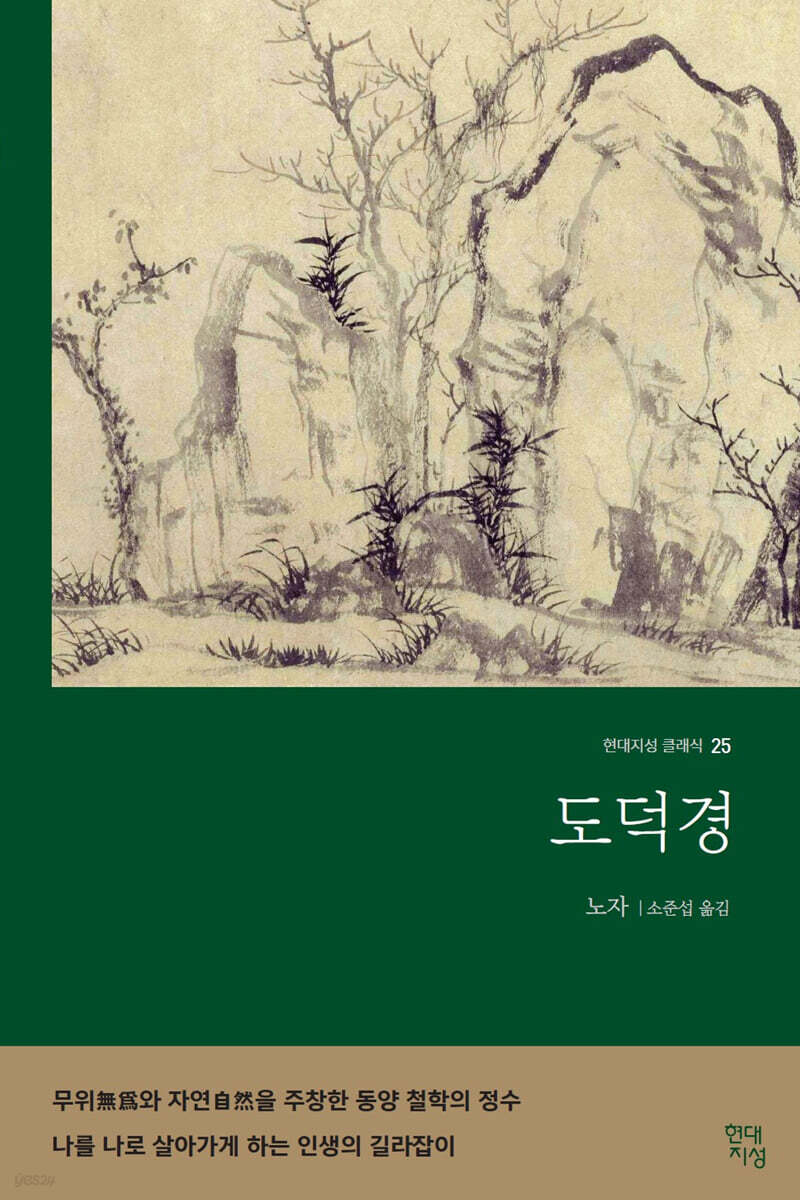
Tao Te Ching
 |
Description
Book Introduction
The essence of Eastern philosophy, which advocates inaction and nature
The Tao Te Ching, along with the I Ching and the Analects of Confucius, is one of the books that has had the most profound influence on the thought and philosophy of East Asia, including China.
The Tao Te Ching, known as the collection of sayings by Lao-tzu, the founder of Taoism, is a relatively short text of about 5,000 characters, but it contains discussions on politics, philosophy, military strategy, science, and even the way to maintain good health, and has been a favorite reading and source of inspiration for countless intellectuals since ancient times.
Dr. So Jun-seop, a Chinese expert, has reinterpreted the Tao Te Ching, and has made every effort to interpret Lao-tzu's thought from the perspective of the "forest" of the entire context, rather than simply focusing on the "tree" of the interpretation of characters and phrases.
In addition, he was careful not to fall into the trap of being overly abstract and pedantic, and to avoid committing the foolishness of 'artificiality' and 'formulation' that Laozi so desperately wanted to avoid.
Today's reality, where 'unnaturalness' and 'anti-naturalness' are increasingly prevalent and greed, artificiality, artifice, ostentation, and deception are rampant, is undoubtedly an era that desperately calls for 'Lao Tzu's thoughts.'
For us living in today's difficult reality, the world that Lao Tzu guides and advises will be a treasure trove of true wisdom and a solid source of nourishment for the mind.
The Tao Te Ching, along with the I Ching and the Analects of Confucius, is one of the books that has had the most profound influence on the thought and philosophy of East Asia, including China.
The Tao Te Ching, known as the collection of sayings by Lao-tzu, the founder of Taoism, is a relatively short text of about 5,000 characters, but it contains discussions on politics, philosophy, military strategy, science, and even the way to maintain good health, and has been a favorite reading and source of inspiration for countless intellectuals since ancient times.
Dr. So Jun-seop, a Chinese expert, has reinterpreted the Tao Te Ching, and has made every effort to interpret Lao-tzu's thought from the perspective of the "forest" of the entire context, rather than simply focusing on the "tree" of the interpretation of characters and phrases.
In addition, he was careful not to fall into the trap of being overly abstract and pedantic, and to avoid committing the foolishness of 'artificiality' and 'formulation' that Laozi so desperately wanted to avoid.
Today's reality, where 'unnaturalness' and 'anti-naturalness' are increasingly prevalent and greed, artificiality, artifice, ostentation, and deception are rampant, is undoubtedly an era that desperately calls for 'Lao Tzu's thoughts.'
For us living in today's difficult reality, the world that Lao Tzu guides and advises will be a treasure trove of true wisdom and a solid source of nourishment for the mind.
- You can preview some of the book's contents.
Preview
index
Preface ○ Journey to True Wisdom | 5
Part 1 - Do-kyung
1 The 'Tao' can be spoken of, but it is not the 'Tao' commonly spoken of in the world. | 21
2 The sage practices non-action and practices the teachings of non-speech | 25
3 If you do not respect the vanity of the wise, the people will not fight among themselves. | 28
The fourth degree may seem empty, but its uses are limitless. | 31
5 Heaven and Earth originally had neither benevolence nor non-benevolence | 34
6 The Valley God Never Dies | 37
The seven heavens and earth exist for a long time | 40
8 The highest good is like water | 43
After completing 9 goals, he retreats on his own | 46
10. Doing and Not Boasting | 49
11 'You' benefits people, 'Nothing' makes things useful | 52
12 Five Colors Blind People's Eyes | 55
13 Both being favored and being insulted are surprising | 58
14 Even if you try to embrace it, you cannot see its head; even if you try to follow it, you cannot see its tail. | 61
15 Because we are not complacent, we are able to renew ourselves. | 64
16 Returning to the roots is called stillness | 67
17 The best ruler is one whose people don't even know he exists. | 70
18 When the Great Way disappears, benevolence and righteousness arise. | 73
19 If you abandon authority and wisdom, the people's benefits will increase a hundredfold. | 76
20 Everyone is bright in everything, but I alone am in the dark. | 79
21 The form of great virtue is determined by the Tao | 82
22 Able to bend is perfect | 85
23 The whirlwind does not blow all morning, nor does the rain last all day. | 88
24 He who stands on tiptoe cannot stand for long. | 91
25 Degrees Imitates Nature | 94
26 If you are careless, you will soon lose your roots. | 98
27 Those who are skilled in action leave no trace | 100
28 Knowing the White and Keeping the Black Becomes the Law of the World | 103
29 Reigning leads to ruin, and monopolizing leads to loss | 106
He who assists the king with 30 degrees will not show his strength to the world. | 109
31 Weapons are an inauspicious thing | 112
32 degrees are forever nameless | 115
33 He who knows himself is truly wise. | 118
34 You Can Be Great Because You Don't Call Yourself Great | 121
35 When the whole world pursues the Tao, the world is at peace. | 124
36 Weakness Overcomes Strength | 126
The 37th degree is always natural inaction, yet there is no inaction. | 129
Part 2 - Deok-gyeong
38 A person of superior virtue does not show off his virtue | 136
39 The greatest honor is no honor | 141
40 All things in the world come from being, and being comes from nothing | 145
41 degrees are hidden and nameless | 147
The 42nd Dao is unique | 150
43 Few people can grasp the teachings of 'nonsense' and the benefits of 'inaction' | 153
44 Knowing how to be content will keep you from being insulted; knowing how to stop will keep you from being in danger. | 155
45 The greatest eloquence appears to be clumsy | 157
There is no greater misfortune than being greedy, and no greater sin than being greedy | 159
47 Know the World Without Leaving Home | 162
48 The more one studies, the more one desires to adorn oneself. | 164
49 The adult is forever selfless and takes the hearts of the people as his own. | 166
50 People Throw Themselves Into the Danger | 169
51 Leading All Things, But Not Dominating | 173
52 Knowing the way of things from the smallest details is called Mingming | 176
53 The broad road is smooth, but the ruler prefers the narrow path of shortcuts | 179
54 The body that has been cultivated has true virtue | 181
Anything that deviates from the 55th degree will lead to immediate death | 184
56 Those who know do not speak, and those who speak do not know | 187
57 Governing the Country Through Inaction | 190
58 Misfortune is the source of blessings, and blessings hide misfortunes. | 194
59 In governing people and serving Heaven, there is nothing more important than frugality. | 197
60 Ruling a great nation is like cooking a simple meal | 200
61 Both great and small nations must obtain what they desire | 203
62 The Tao is the Ruler of All Things | 206
63 The great things in the world always begin in the smallest details | 209
64 Those who act artificially fail, and those who cling to things lose | 212
65 A country is blessed if it is not governed by wisdom. | 216
66 Rivers and seas can be kings of all valleys because they are the lowest. | 219
67 You can be the leader of all things because you don't stand in front of people | 221
68 Great Generals Don't Show Off Their Prowess | 224
69 There is no greater disaster than ignoring the enemy | 226
70 There is a principle in words, and a basis in actions | 229
71 The wisest thing is to know that there is something you do not yet know. | 231
72 Adults Know Their Intelligence, But Don't Reveal It | 233
73 The net of heaven is vast and boundless, yet not a single point escapes. | 236
74 If the people did not fear death | 239
75 The reason it is difficult to govern the people is because the rulers have implemented coercive policies. | 241
76 The weak are superior | 244
77 The Way of Heaven Fills What Is Missing by Removing What Is Surplus | 246
78 Right words are like wrong words | 249
79 The Way of Heaven does not discriminate against people and always treats them well. | 252
80 A small country with few people | 254
81 True words are not beautiful, and beautiful words are not true | 256
Release ○ Today, when 'Lao Tzu's Thoughts' are once again urgently needed | 259
Part 1 - Do-kyung
1 The 'Tao' can be spoken of, but it is not the 'Tao' commonly spoken of in the world. | 21
2 The sage practices non-action and practices the teachings of non-speech | 25
3 If you do not respect the vanity of the wise, the people will not fight among themselves. | 28
The fourth degree may seem empty, but its uses are limitless. | 31
5 Heaven and Earth originally had neither benevolence nor non-benevolence | 34
6 The Valley God Never Dies | 37
The seven heavens and earth exist for a long time | 40
8 The highest good is like water | 43
After completing 9 goals, he retreats on his own | 46
10. Doing and Not Boasting | 49
11 'You' benefits people, 'Nothing' makes things useful | 52
12 Five Colors Blind People's Eyes | 55
13 Both being favored and being insulted are surprising | 58
14 Even if you try to embrace it, you cannot see its head; even if you try to follow it, you cannot see its tail. | 61
15 Because we are not complacent, we are able to renew ourselves. | 64
16 Returning to the roots is called stillness | 67
17 The best ruler is one whose people don't even know he exists. | 70
18 When the Great Way disappears, benevolence and righteousness arise. | 73
19 If you abandon authority and wisdom, the people's benefits will increase a hundredfold. | 76
20 Everyone is bright in everything, but I alone am in the dark. | 79
21 The form of great virtue is determined by the Tao | 82
22 Able to bend is perfect | 85
23 The whirlwind does not blow all morning, nor does the rain last all day. | 88
24 He who stands on tiptoe cannot stand for long. | 91
25 Degrees Imitates Nature | 94
26 If you are careless, you will soon lose your roots. | 98
27 Those who are skilled in action leave no trace | 100
28 Knowing the White and Keeping the Black Becomes the Law of the World | 103
29 Reigning leads to ruin, and monopolizing leads to loss | 106
He who assists the king with 30 degrees will not show his strength to the world. | 109
31 Weapons are an inauspicious thing | 112
32 degrees are forever nameless | 115
33 He who knows himself is truly wise. | 118
34 You Can Be Great Because You Don't Call Yourself Great | 121
35 When the whole world pursues the Tao, the world is at peace. | 124
36 Weakness Overcomes Strength | 126
The 37th degree is always natural inaction, yet there is no inaction. | 129
Part 2 - Deok-gyeong
38 A person of superior virtue does not show off his virtue | 136
39 The greatest honor is no honor | 141
40 All things in the world come from being, and being comes from nothing | 145
41 degrees are hidden and nameless | 147
The 42nd Dao is unique | 150
43 Few people can grasp the teachings of 'nonsense' and the benefits of 'inaction' | 153
44 Knowing how to be content will keep you from being insulted; knowing how to stop will keep you from being in danger. | 155
45 The greatest eloquence appears to be clumsy | 157
There is no greater misfortune than being greedy, and no greater sin than being greedy | 159
47 Know the World Without Leaving Home | 162
48 The more one studies, the more one desires to adorn oneself. | 164
49 The adult is forever selfless and takes the hearts of the people as his own. | 166
50 People Throw Themselves Into the Danger | 169
51 Leading All Things, But Not Dominating | 173
52 Knowing the way of things from the smallest details is called Mingming | 176
53 The broad road is smooth, but the ruler prefers the narrow path of shortcuts | 179
54 The body that has been cultivated has true virtue | 181
Anything that deviates from the 55th degree will lead to immediate death | 184
56 Those who know do not speak, and those who speak do not know | 187
57 Governing the Country Through Inaction | 190
58 Misfortune is the source of blessings, and blessings hide misfortunes. | 194
59 In governing people and serving Heaven, there is nothing more important than frugality. | 197
60 Ruling a great nation is like cooking a simple meal | 200
61 Both great and small nations must obtain what they desire | 203
62 The Tao is the Ruler of All Things | 206
63 The great things in the world always begin in the smallest details | 209
64 Those who act artificially fail, and those who cling to things lose | 212
65 A country is blessed if it is not governed by wisdom. | 216
66 Rivers and seas can be kings of all valleys because they are the lowest. | 219
67 You can be the leader of all things because you don't stand in front of people | 221
68 Great Generals Don't Show Off Their Prowess | 224
69 There is no greater disaster than ignoring the enemy | 226
70 There is a principle in words, and a basis in actions | 229
71 The wisest thing is to know that there is something you do not yet know. | 231
72 Adults Know Their Intelligence, But Don't Reveal It | 233
73 The net of heaven is vast and boundless, yet not a single point escapes. | 236
74 If the people did not fear death | 239
75 The reason it is difficult to govern the people is because the rulers have implemented coercive policies. | 241
76 The weak are superior | 244
77 The Way of Heaven Fills What Is Missing by Removing What Is Surplus | 246
78 Right words are like wrong words | 249
79 The Way of Heaven does not discriminate against people and always treats them well. | 252
80 A small country with few people | 254
81 True words are not beautiful, and beautiful words are not true | 256
Release ○ Today, when 'Lao Tzu's Thoughts' are once again urgently needed | 259
Detailed image

Into the book
I want to take over the world and rule over it, but I know that I cannot do so.
The world is a mysterious entity.
Cannot reign and cannot monopolize.
If you reign, you will be ruined, and if you monopolize, you will lose.
An adult does not perish because he is inactive, and he does not lose because he does not manipulate.
--- pp.106-107
A large tree as tall as a bundle of flowers begins with a tiny sprout the size of a hair's tip, a nine-story tower is built with a handful of dirt, and a journey of a thousand miles begins with a single step.
Those who act artificially will fail, and those who are obsessed will lose.
For this reason, adults act without action and do not fail, and do not become attached and do not lose.
--- p.213
The greatest wisdom is to know that there are things you do not yet know.
Pretending to know everything when you don't is a disease.
If you know a disease as a disease, you will not become a disease.
Adults have no illness.
It is because he knows his illness as an illness.
That's why it doesn't get sick.
--- p.231
When a person is alive, his body is fragile, and when he dies, it becomes hard and rigid.
Plants are soft and weak when alive, but when they die, they become hard and dry.
Therefore, what is hard and strong belongs to death, and what is soft and weak belongs to life.
That is why if an army is too strong, it will perish, and if a tree is too strong, it will be cut down.
The strong are always inferior, and the weak are always superior.
The world is a mysterious entity.
Cannot reign and cannot monopolize.
If you reign, you will be ruined, and if you monopolize, you will lose.
An adult does not perish because he is inactive, and he does not lose because he does not manipulate.
--- pp.106-107
A large tree as tall as a bundle of flowers begins with a tiny sprout the size of a hair's tip, a nine-story tower is built with a handful of dirt, and a journey of a thousand miles begins with a single step.
Those who act artificially will fail, and those who are obsessed will lose.
For this reason, adults act without action and do not fail, and do not become attached and do not lose.
--- p.213
The greatest wisdom is to know that there are things you do not yet know.
Pretending to know everything when you don't is a disease.
If you know a disease as a disease, you will not become a disease.
Adults have no illness.
It is because he knows his illness as an illness.
That's why it doesn't get sick.
--- p.231
When a person is alive, his body is fragile, and when he dies, it becomes hard and rigid.
Plants are soft and weak when alive, but when they die, they become hard and dry.
Therefore, what is hard and strong belongs to death, and what is soft and weak belongs to life.
That is why if an army is too strong, it will perish, and if a tree is too strong, it will be cut down.
The strong are always inferior, and the weak are always superior.
--- p.244
Publisher's Review
The essence of Eastern philosophy, which advocates inaction and nature
Lao Tzu's Tao Te Ching, along with the Book of Changes and the Analects of Confucius, is one of the books that has had the most profound influence on the thought and philosophy of East Asia, including China.
The Tao Te Ching, which focuses on politics and discusses traditional Eastern philosophy, military strategy, science, and the way to maintain good health, consists of 37 chapters in the upper part, the Tao Te Ching, and 44 chapters in the lower part, the De Ching, for a total of 81 chapters.
Lao Tzu, through the Tao Te Ching, declared that the 'Tao' is the origin and mother of all things in the universe from a philosophical perspective, and that from an ethical perspective, it is a virtue that conforms to nature, such as simplicity, purity, humility, selflessness, gentleness, and simplicity.
In addition, from a political perspective, he pursued a policy of inaction domestically and peaceful coexistence and opposition to war and violence externally.
In this way, the Tao Te Ching starts from the 'Tao' of nature and presents not only ethical virtue but also the path to ideal politics.
The philosophy of emptiness that allows one to possess all things
A guide to life that allows me to live as myself
In a society where possessions are obtained through competition and where possessions are considered the measure of success, we struggle and endure each day.
Society is putting more and more pressure on us.
Our current state is that we must do something rather than just sit still, and by doing so, we accumulate more material things, and even go so far as to consider it a virtue to adorn our original appearance with material things.
So we are getting more and more tired.
The Tao Te Ching tells us what it means to live as we are, without trying to fill or decorate ourselves, neither more nor less.
Emptying something doesn't mean it disappears.
The reason we can't see ourselves well is because we are too greedy.
Because it's empty, we can see better.
Lao Tzu presents the philosophy of emptiness to us who are blinded by material things and cannot see ahead.
The Tao Te Ching is a guidebook of wisdom that comforts the hearts of those who must endure the hardships of life day by day, crushed by its weight, and answers the question of what kind of life they should pursue.
Today's reality, where 'unnaturalness' and 'anti-naturalness' are increasingly prevalent and greed, artificiality, artifice, ostentation, and deception are rampant, is undoubtedly an era that desperately calls for 'Lao Tzu's thoughts.'
For us living in today's difficult reality, the world that Lao Tzu guides and advises will be a treasure trove of true wisdom and a solid source of nourishment for the mind.
Why Dr. So Jun-seop's Tao Te Ching?
Dr. So Jun-seop, a Chinese expert, has reinterpreted the Tao Te Ching, and has made every effort to interpret Lao-tzu's thought from the perspective of the "forest" of the entire context, rather than simply focusing on the "tree" of the interpretation of characters and phrases.
In addition, he was careful not to fall into the trap of being overly abstract and pedantic, and to avoid committing the foolishness of 'artificiality' and 'formulation' that Laozi so desperately wanted to avoid.
Additionally, by adding pronunciations to all Chinese characters in the text, we not only increase readers' understanding of the text, but also help them study Chinese characters.
Images that help readers understand the content and the translator's detailed commentary will also provide much enjoyment to readers of the Tao Te Ching.
Lao Tzu's Tao Te Ching, along with the Book of Changes and the Analects of Confucius, is one of the books that has had the most profound influence on the thought and philosophy of East Asia, including China.
The Tao Te Ching, which focuses on politics and discusses traditional Eastern philosophy, military strategy, science, and the way to maintain good health, consists of 37 chapters in the upper part, the Tao Te Ching, and 44 chapters in the lower part, the De Ching, for a total of 81 chapters.
Lao Tzu, through the Tao Te Ching, declared that the 'Tao' is the origin and mother of all things in the universe from a philosophical perspective, and that from an ethical perspective, it is a virtue that conforms to nature, such as simplicity, purity, humility, selflessness, gentleness, and simplicity.
In addition, from a political perspective, he pursued a policy of inaction domestically and peaceful coexistence and opposition to war and violence externally.
In this way, the Tao Te Ching starts from the 'Tao' of nature and presents not only ethical virtue but also the path to ideal politics.
The philosophy of emptiness that allows one to possess all things
A guide to life that allows me to live as myself
In a society where possessions are obtained through competition and where possessions are considered the measure of success, we struggle and endure each day.
Society is putting more and more pressure on us.
Our current state is that we must do something rather than just sit still, and by doing so, we accumulate more material things, and even go so far as to consider it a virtue to adorn our original appearance with material things.
So we are getting more and more tired.
The Tao Te Ching tells us what it means to live as we are, without trying to fill or decorate ourselves, neither more nor less.
Emptying something doesn't mean it disappears.
The reason we can't see ourselves well is because we are too greedy.
Because it's empty, we can see better.
Lao Tzu presents the philosophy of emptiness to us who are blinded by material things and cannot see ahead.
The Tao Te Ching is a guidebook of wisdom that comforts the hearts of those who must endure the hardships of life day by day, crushed by its weight, and answers the question of what kind of life they should pursue.
Today's reality, where 'unnaturalness' and 'anti-naturalness' are increasingly prevalent and greed, artificiality, artifice, ostentation, and deception are rampant, is undoubtedly an era that desperately calls for 'Lao Tzu's thoughts.'
For us living in today's difficult reality, the world that Lao Tzu guides and advises will be a treasure trove of true wisdom and a solid source of nourishment for the mind.
Why Dr. So Jun-seop's Tao Te Ching?
Dr. So Jun-seop, a Chinese expert, has reinterpreted the Tao Te Ching, and has made every effort to interpret Lao-tzu's thought from the perspective of the "forest" of the entire context, rather than simply focusing on the "tree" of the interpretation of characters and phrases.
In addition, he was careful not to fall into the trap of being overly abstract and pedantic, and to avoid committing the foolishness of 'artificiality' and 'formulation' that Laozi so desperately wanted to avoid.
Additionally, by adding pronunciations to all Chinese characters in the text, we not only increase readers' understanding of the text, but also help them study Chinese characters.
Images that help readers understand the content and the translator's detailed commentary will also provide much enjoyment to readers of the Tao Te Ching.
GOODS SPECIFICS
- Date of issue: January 2, 2019
- Page count, weight, size: 276 pages | 414g | 152*225*20mm
- ISBN13: 9791187142676
- ISBN10: 1187142670
You may also like
카테고리
korean


korean

![ELLE 엘르 스페셜 에디션 A형 : 12월 [2025]](http://librairie.coreenne.fr/cdn/shop/files/b8e27a3de6c9538896439686c6b0e8fb.jpg?v=1766436872&width=3840)


