

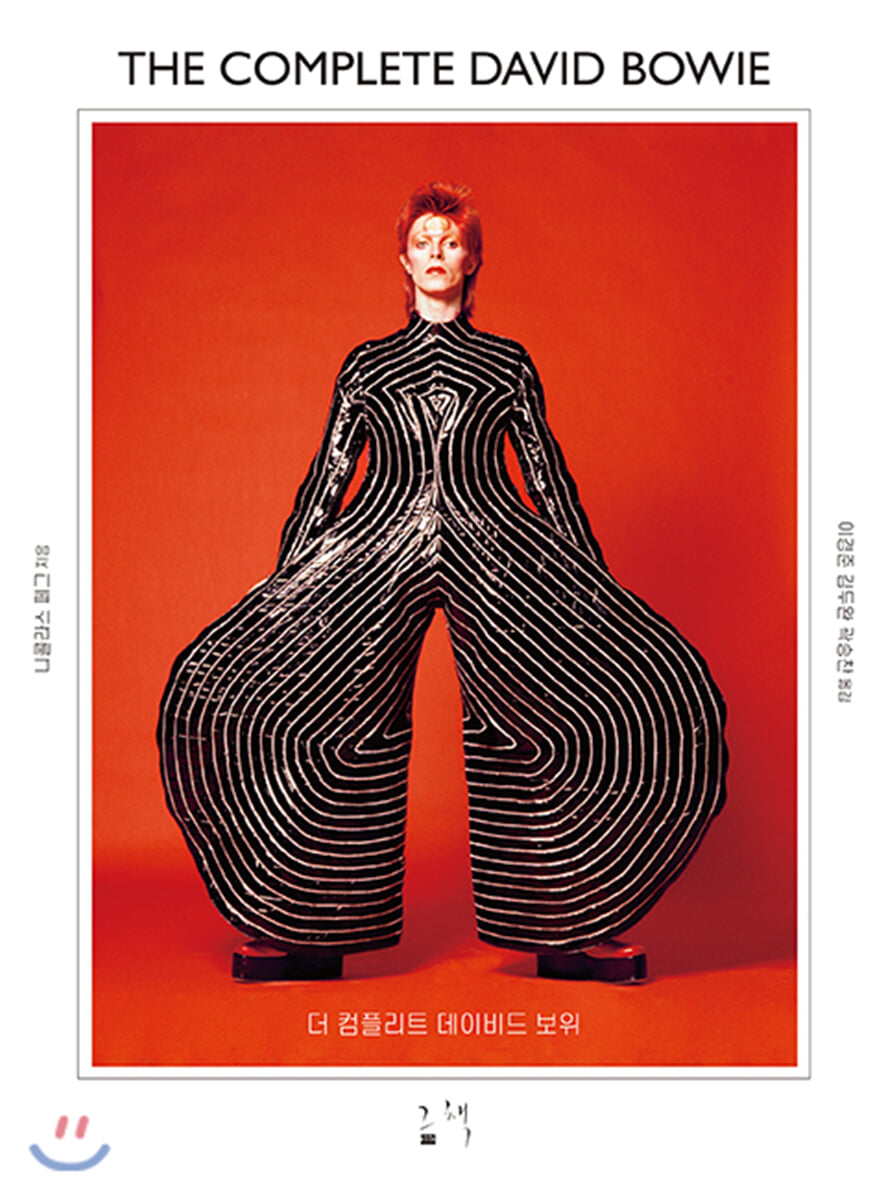
The Complete David Bowie
 |
Description
Book Introduction
“The moment you realize you are on safe ground, you die.
He was finished at that moment.
The situation is over.
“The thing I hated the most was settling down in one place.”
Always longing for change,
And a unique artist who has always led change
The Last Blackout, a record of every moment of David Bowie's life
David Bowie was not only a rock star who captivated the world, but also an actor, painter, fashion icon, trendsetter, and a great artist who discovered talented younger generations.
Bowie's unique characters, such as the sexually alluring 'Ziggy Stardust', the bizarre lightning bolt pattern-clad 'Aladdin Sane', and the apocalyptic 'Shin White Duke', always stood at the top of the agenda and became the object of worldwide acclaim.
Nicholas Pegg spent a long time meticulously researching and documenting Bowie's career and life, resulting in the masterpiece "The Complete David Bowie."
This book details the production of every album Bowie worked on from 1967 until his return to his home in space, and tells the stories of his famous recordings in chronological order from [Abdulmajid] to [Zion], as well as lesser-known, unreleased tracks.
It also includes setlists and biographies of every performance and tour Bowie participated in, highlights Bowie's illustrious acting career on stage and screen, and documents every moment of his career, including music videos, BBC radio sessions, art, exhibitions, and writing.
A timeline of Bowie's recording, filming, performance, and session schedule from 1958 to 2016 is also included.
Through 『The Complete David Bowie』, which is like a Bowie encyclopedia, you can explore the footsteps of this legendary musician's life and feel his breath that will never die out.
He was finished at that moment.
The situation is over.
“The thing I hated the most was settling down in one place.”
Always longing for change,
And a unique artist who has always led change
The Last Blackout, a record of every moment of David Bowie's life
David Bowie was not only a rock star who captivated the world, but also an actor, painter, fashion icon, trendsetter, and a great artist who discovered talented younger generations.
Bowie's unique characters, such as the sexually alluring 'Ziggy Stardust', the bizarre lightning bolt pattern-clad 'Aladdin Sane', and the apocalyptic 'Shin White Duke', always stood at the top of the agenda and became the object of worldwide acclaim.
Nicholas Pegg spent a long time meticulously researching and documenting Bowie's career and life, resulting in the masterpiece "The Complete David Bowie."
This book details the production of every album Bowie worked on from 1967 until his return to his home in space, and tells the stories of his famous recordings in chronological order from [Abdulmajid] to [Zion], as well as lesser-known, unreleased tracks.
It also includes setlists and biographies of every performance and tour Bowie participated in, highlights Bowie's illustrious acting career on stage and screen, and documents every moment of his career, including music videos, BBC radio sessions, art, exhibitions, and writing.
A timeline of Bowie's recording, filming, performance, and session schedule from 1958 to 2016 is also included.
Through 『The Complete David Bowie』, which is like a Bowie encyclopedia, you can explore the footsteps of this legendary musician's life and feel his breath that will never die out.
- You can preview some of the book's contents.
Preview
index
Introduction - Music of the Outsider 006
How to Use the Book 015
Chapter 1 Song 018
Album 2, Volume 398
Chapter 3 Performance 614
Chapter 4 BBC Radio Session 745
Chapter 5 Video 753
Chapter 6: Plays and Films 772
Chapter 7: Art, Exhibitions, and Writing 822
Chapter 8 Interactive 831
Chapter 9: Side Stories and Other Stories 834
Chapter 10: Chronology 844
Chapter 11 Single Discography 915
Chapter 12 Review: Legend of the Future 929
Source 931
Glossary 936
Acknowledgments 941
Translator's Note 943
How to Use the Book 015
Chapter 1 Song 018
Album 2, Volume 398
Chapter 3 Performance 614
Chapter 4 BBC Radio Session 745
Chapter 5 Video 753
Chapter 6: Plays and Films 772
Chapter 7: Art, Exhibitions, and Writing 822
Chapter 8 Interactive 831
Chapter 9: Side Stories and Other Stories 834
Chapter 10: Chronology 844
Chapter 11 Single Discography 915
Chapter 12 Review: Legend of the Future 929
Source 931
Glossary 936
Acknowledgments 941
Translator's Note 943
Detailed image
Into the book
Bowie struggled for a long time before finding fame, but he never tried to confine his color to one style.
“At the time, people used to label the attitude of being interested in all fields as ‘wrong,’” he recalled in 1999.
“It was time to make a decision.
I could have been a folk singer, or a rock singer, or a blues guitarist.
… But I didn’t want to become that kind of musician.
I wanted to keep the possibility open.
“Because there were so many things I really liked,” he explained his creative principles in 2003.
“I kept thinking that things could change.
I didn't believe there was one absolute truth.
I've always instinctively thought that way.
But after reading George Steiner's book, In Bluebeard's Castle, which deals with postmodernism, my thoughts became stronger.
That book confirmed to me that the work I was creating was already based on existing theories.
From then on, I realized that I could like artists who had nothing in common with each other, like Anthony Newley and Little Richard.
There's nothing wrong with liking both.
It's possible to love Igor Stravinsky and the Incredible String Band, the Velvet Underground and Gustav Mahler all at the same time.
“It wasn’t all that strange.”
--- p.7, from “Introduction - Music of Outsiders”
Bowie had heard stories from the Earl of Shaftesbury about the extremely poor children living on the rooftops of the London slums from his father, who worked for the British charity Barnard's.
And it is said that he was somewhat inspired by this story to design the rooftop dwelling for the Diamond Dogs.
“It was a strange image that always stayed in my head.
All these kids living on the rooftops of London.
So I drew the Diamond Dogs as street kids.
They're all really little Johnny Rotten and little Sid Vicious.
And I saw that there was no transportation in that area.
So they all roll around on roller skates with big wheels.
And the wheels are not properly oiled, so they squeak.
So this gang is these loud, roller-skating, vicious, Bowie-knife-wearing, fur-wearing kids.
And because they didn't eat properly, they were all skinny and their hair colors were funny.
In a way, you could say that it was a leader in punk.”
--- p.92, from 「DIAMOND DOGS」
Despite the song's strong personal nature, Bowie was initially lukewarm about "Fame".
He recalled the time in 1990 like this:
“That song was the worst on the album.
Even though John contributed to that song and many other parts.
As with "Let's Dance," I didn't understand how that song could be considered a typical commercial single.
I haven't really known about singles since a long time ago.
I just don't know and don't understand singles.
And “Fame” was a really unexpected song for me.” Ironically, however, “Fame” went on to become a huge hit in America, bringing Bowie great fame on the American mainland.
It reached number one in the US in the summer of 1975, despite David never having topped the charts in his home country, and reached a more modest number 17 in his home country.
--- p.107, from 「FAME」
“Heathen was written very early on in the album,” Bowie said in 2002.
“The lyrics just came out of nowhere.
At the time, I was staying in the studio and I felt very lonely and isolated.
I worked as usual, so it must have been 5 or 6 in the morning.
I was waking up in the studio, waiting for everyone to wake up, and working on what I had to do that day.
Something flashed through my mind.
I had already written a melody in the style I liked.
At that moment, the lyrics suddenly came to mind.
There was nothing I could do.
I knew what it was about.
I didn't want to write it as lyrics.
Because at the time, I wasn't sure I could sing or explain that special thought in detail.
But I couldn't stop.
I had to use it no matter what.
At the end of the work, I was in tears.
It was a moment that would remain as a trauma.
Perhaps you could call it an epiphany.
I don't know much about it, but I looked up 'epiphany' in the dictionary and found out that it was 'epiphany'.
I think that's what a 'traumatic epiphany' is."
--- p.133, from "HEATHEN (THE RAYS)"
This work is also one of his most academic albums.
David was always an insatiable reader, his tastes oscillating between poetry, history, philosophy, and pulp fiction.
And "The Next Day," like "Hunky Dory" and "Station To Station" before it, is the work of someone whose head is full of books.
Has there ever been a rock album that referenced the works of Georges Rodenbach, Yukio Mishima, Vladimir Nabokov, Evelyn Waugh, Erskine Caldwell, and Joseph Stalin's daughter?
During his long musical hiatus, Bowie, according to Tony Visconti, “read a phenomenal amount.
Ancient British history, Russian history, the monarchs of the British Empire, their achievements and failures.
“Everything he read became song lyrics.”
“At the time, people used to label the attitude of being interested in all fields as ‘wrong,’” he recalled in 1999.
“It was time to make a decision.
I could have been a folk singer, or a rock singer, or a blues guitarist.
… But I didn’t want to become that kind of musician.
I wanted to keep the possibility open.
“Because there were so many things I really liked,” he explained his creative principles in 2003.
“I kept thinking that things could change.
I didn't believe there was one absolute truth.
I've always instinctively thought that way.
But after reading George Steiner's book, In Bluebeard's Castle, which deals with postmodernism, my thoughts became stronger.
That book confirmed to me that the work I was creating was already based on existing theories.
From then on, I realized that I could like artists who had nothing in common with each other, like Anthony Newley and Little Richard.
There's nothing wrong with liking both.
It's possible to love Igor Stravinsky and the Incredible String Band, the Velvet Underground and Gustav Mahler all at the same time.
“It wasn’t all that strange.”
--- p.7, from “Introduction - Music of Outsiders”
Bowie had heard stories from the Earl of Shaftesbury about the extremely poor children living on the rooftops of the London slums from his father, who worked for the British charity Barnard's.
And it is said that he was somewhat inspired by this story to design the rooftop dwelling for the Diamond Dogs.
“It was a strange image that always stayed in my head.
All these kids living on the rooftops of London.
So I drew the Diamond Dogs as street kids.
They're all really little Johnny Rotten and little Sid Vicious.
And I saw that there was no transportation in that area.
So they all roll around on roller skates with big wheels.
And the wheels are not properly oiled, so they squeak.
So this gang is these loud, roller-skating, vicious, Bowie-knife-wearing, fur-wearing kids.
And because they didn't eat properly, they were all skinny and their hair colors were funny.
In a way, you could say that it was a leader in punk.”
--- p.92, from 「DIAMOND DOGS」
Despite the song's strong personal nature, Bowie was initially lukewarm about "Fame".
He recalled the time in 1990 like this:
“That song was the worst on the album.
Even though John contributed to that song and many other parts.
As with "Let's Dance," I didn't understand how that song could be considered a typical commercial single.
I haven't really known about singles since a long time ago.
I just don't know and don't understand singles.
And “Fame” was a really unexpected song for me.” Ironically, however, “Fame” went on to become a huge hit in America, bringing Bowie great fame on the American mainland.
It reached number one in the US in the summer of 1975, despite David never having topped the charts in his home country, and reached a more modest number 17 in his home country.
--- p.107, from 「FAME」
“Heathen was written very early on in the album,” Bowie said in 2002.
“The lyrics just came out of nowhere.
At the time, I was staying in the studio and I felt very lonely and isolated.
I worked as usual, so it must have been 5 or 6 in the morning.
I was waking up in the studio, waiting for everyone to wake up, and working on what I had to do that day.
Something flashed through my mind.
I had already written a melody in the style I liked.
At that moment, the lyrics suddenly came to mind.
There was nothing I could do.
I knew what it was about.
I didn't want to write it as lyrics.
Because at the time, I wasn't sure I could sing or explain that special thought in detail.
But I couldn't stop.
I had to use it no matter what.
At the end of the work, I was in tears.
It was a moment that would remain as a trauma.
Perhaps you could call it an epiphany.
I don't know much about it, but I looked up 'epiphany' in the dictionary and found out that it was 'epiphany'.
I think that's what a 'traumatic epiphany' is."
--- p.133, from "HEATHEN (THE RAYS)"
This work is also one of his most academic albums.
David was always an insatiable reader, his tastes oscillating between poetry, history, philosophy, and pulp fiction.
And "The Next Day," like "Hunky Dory" and "Station To Station" before it, is the work of someone whose head is full of books.
Has there ever been a rock album that referenced the works of Georges Rodenbach, Yukio Mishima, Vladimir Nabokov, Evelyn Waugh, Erskine Caldwell, and Joseph Stalin's daughter?
During his long musical hiatus, Bowie, according to Tony Visconti, “read a phenomenal amount.
Ancient British history, Russian history, the monarchs of the British Empire, their achievements and failures.
“Everything he read became song lyrics.”
--- p.559, from "THE NEXT DAY"
Publisher's Review
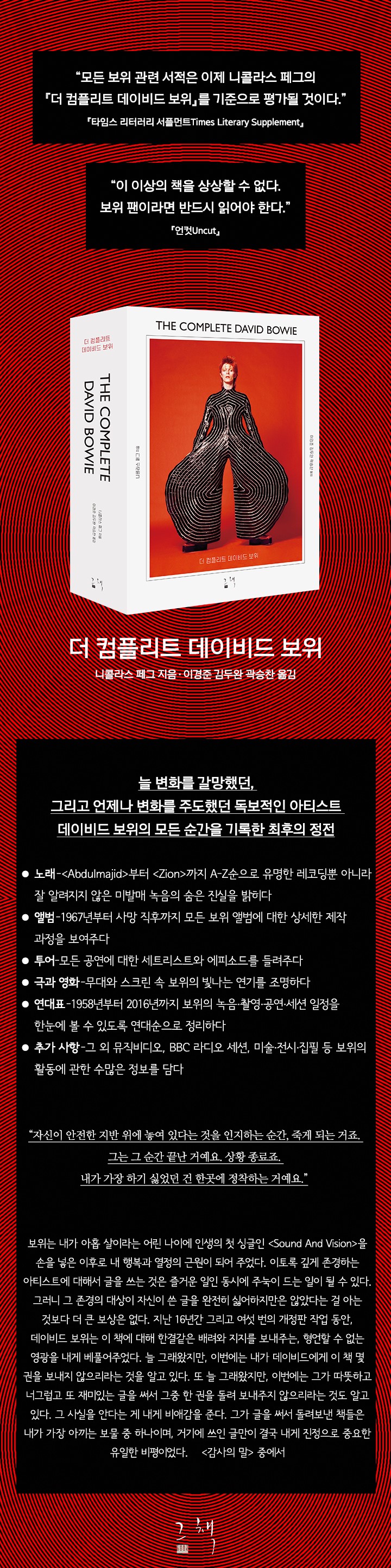
“All books on Bowie will now be judged by Nicholas Pegg’s The Complete David Bowie.”
Times Literary Supplement
“The Complete David Bowie” is a book that lives up to its title.
Peg's persistent and witty prose transforms this book into a rare work.
“As a shining reference.”
『MOJO』
“I can’t imagine a better book than this one.
“A must-read for Bowie fans.”
Uncut
“It’s not just a manual for enthusiasts, but also contains the author’s keen critical intellect.”
Sunday Telegraph
“Thorough, perfect, and even fun.”
BBC Radio 5 Live
Times Literary Supplement
“The Complete David Bowie” is a book that lives up to its title.
Peg's persistent and witty prose transforms this book into a rare work.
“As a shining reference.”
『MOJO』
“I can’t imagine a better book than this one.
“A must-read for Bowie fans.”
Uncut
“It’s not just a manual for enthusiasts, but also contains the author’s keen critical intellect.”
Sunday Telegraph
“Thorough, perfect, and even fun.”
BBC Radio 5 Live
GOODS SPECIFICS
- Publication date: October 15, 2020
- Format: Hardcover book binding method guide
- Page count, weight, size: 948 pages | 1,636g | 178*238*48mm
- ISBN13: 9791188285839
- ISBN10: 1188285831
You may also like
카테고리
korean


korean

![GQ KOREA Mark (Monthly): December [2025]](http://librairie.coreenne.fr/cdn/shop/files/8ef265dbbfbf186523ed75ba7319009d.jpg?v=1765340328&width=3840)


