

Eichmann in Jerusalem
 |
Description
Book Introduction
Nazi war criminal Adolf Eichmann
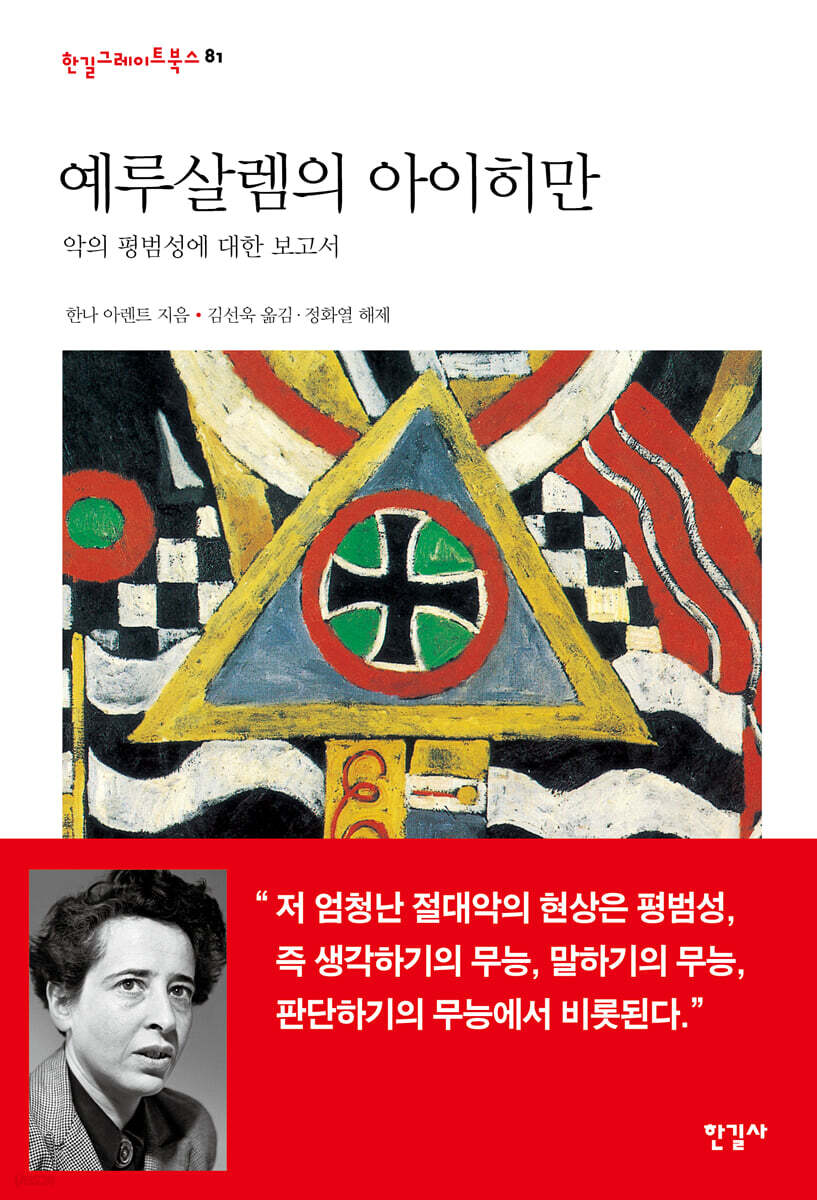
Born in Solingen, Germany, in 1906, Eichmann joined the secret Nazi Party in 1932 and the same year joined the elite SS unit organized by Heinrich Himmler. When Himmler founded the Reich Security Service (RSHA), he was assigned to work in the Jewish Affairs Department in Berlin. In January 1942, high-ranking Nazi officials met near Berlin to discuss the planning and logistical arrangements necessary for the "Final Solution" to the Jewish question. Eichmann was put in charge of this matter, effectively becoming the executor of this Final Solution, which meant mass murder. He identified and rounded up Jews and sent them to concentration camps to die. After the war, Eichmann was captured by American forces, but escaped from a prisoner-of-war camp. After wandering around the Middle East for several years, he was arrested near Buenos Aires in May 1960 and extradited to Israel. The Israeli government held a trial in a special court in Jerusalem, which began on April 11, 1961, and Eichmann was sentenced to death by hanging. Eichmann was surprisingly ordinary. When news of the Holocaust spread around the world after World War II, Hannah Arendt, like many others, did not believe it was true, but eventually she learned that the news was true. However, he hears the news that Adolf Eichmann, the main culprit in the Holocaust, has been captured by the Israeli secret police and will be tried in Jerusalem. Arendt canceled her scheduled university lectures and, with financial support from the American literary magazine The New Yorker, traveled to Jerusalem as a correspondent to observe the trial. This is how this book, Eichmann in Jerusalem, was born. In reporting on the Eichmann trial in Jerusalem, Arendt spoke of the "banality of evil," not as a theory or an ideology, but simply as something very real, a phenomenon of evil committed on a massive scale. This evil cannot be traced to any particular weakness, pathological aspect, or ideological conviction of the evildoer, whose only personal characteristic is perhaps a special degree of superficiality. However monstrous the act, the perpetrator was neither monstrous nor demonic. And the only thing one could detect in his past, as well as in his behavior during the trial and the police interrogation that preceded it, was something entirely negative. It was not stupidity, but an interesting, genuine inability to think. He knew that what he had once considered a duty was now called a crime, and so he accepted these new rules of judgment as if they were just another set of linguistic rules. |
- You can preview some of the book's contents.
Preview
index
Translator's Preface/Kim Seon-wook
The Banality of Evil and Other-Centered Ethics/Jeong Hwa-yeol
A word to our readers
Chapter 1: The House of Justice
Chapter 2 Defendant
Chapter 3: Jewish Issues Experts
Chapter 4: The First Solution: Banishment
Chapter 5: The Second Solution: Acceptance
Chapter 6: The Final Solution: Genocide
Chapter 7: The Council of Anti-Imperialists, or Pontius Pilate
Chapter 8 Citizens' Obligations to Obey the Law
Chapter 9: Deportations from the Empire: Germany, Austria, and the Protectorate
Chapter 10: Migration from Western Europe: France, Belgium, the Netherlands, Denmark, and Italy
Chapter 11: Deportations from the Balkans: Yugoslavia, Bulgaria, Greece, and Romania
Chapter 12: Migration from Central Europe: Hungary and Slovakia
Chapter 13: Eastern Extermination Centers
Chapter 14 Evidence and Testimony
Chapter 15 Judgments, Appeals, and Executions
Epilogue
Reviews
References
Search
The Banality of Evil and Other-Centered Ethics/Jeong Hwa-yeol
A word to our readers
Chapter 1: The House of Justice
Chapter 2 Defendant
Chapter 3: Jewish Issues Experts
Chapter 4: The First Solution: Banishment
Chapter 5: The Second Solution: Acceptance
Chapter 6: The Final Solution: Genocide
Chapter 7: The Council of Anti-Imperialists, or Pontius Pilate
Chapter 8 Citizens' Obligations to Obey the Law
Chapter 9: Deportations from the Empire: Germany, Austria, and the Protectorate
Chapter 10: Migration from Western Europe: France, Belgium, the Netherlands, Denmark, and Italy
Chapter 11: Deportations from the Balkans: Yugoslavia, Bulgaria, Greece, and Romania
Chapter 12: Migration from Central Europe: Hungary and Slovakia
Chapter 13: Eastern Extermination Centers
Chapter 14 Evidence and Testimony
Chapter 15 Judgments, Appeals, and Executions
Epilogue
Reviews
References
Search
Publisher's Review
Hannah Arendt and the Banality of Evil
Hannah Arendt was a philosopher born in Germany.
During a time when Jewish persecution and political oppression were intensifying, he fled to the United States and lived without a nationality. Based on his experiences of being oppressed by the Nazis, he repeatedly completed works of political thought that analyzed the violent political phenomena of the 20th century, such as “The Origins of Totalitarianism,” “Eichmann in Jerusalem,” and “The Crisis of the Republic.”
When news spread that Adolf Eichmann, the mastermind of the Holocaust, had been captured by the Israeli secret police and was being tried in Jerusalem, Arendt obtained a correspondent's license for The New Yorker and went to Jerusalem to observe the trial.
This is how this book, Eichmann in Jerusalem, was born.
Is he an ordinary human or a ruthless demon?
Eichmann was a key figure in the Nazi SS's massacre of Jews.
In 1942, he was responsible for planning and logistics of Nazi Germany's "Final Solution" (mass murder), identifying and rounding up over 6 million Jews and driving them into extermination camps.
Because of this, many people view Eichmann as a Jewish expert, a brutal murderer, and a demon who held the power over the lives and deaths of Jews.
However, the six psychiatrists who examined Eichmann assessed him as “not only normal but also in a desirable condition.”
Surprisingly, Eichmann did not hate Jews.
Rather, he had gotten a job thanks to his Jewish relatives, and he admired the Jewish leader Theodor Herzl so much that he even attended the 35th anniversary of his death.
He was a self-proclaimed supporter of Zionism (the movement for a Jewish homeland) and sought to put “solid ground under the feet of the Jews.”
Although he never killed a single person with his own hands, he was adept at handling the administrative functions of mass murder.
It was not the result of individual hatred or cruelty, but of uncritical compliance with the system and its commands.
Inability to think, inability to speak, inability to judge
Arendt does not view Eichmann as an ideological fanatic or a psychopath, but points out his shallowness and insensitivity.
Eichmann's memories were inaccurate about anything that didn't concern him, and his speech was full of clichés designed to convey a sense of triumph.
He was surprisingly insensitive to the suffering of others.
He actively followed the orders and values of the Third Reich, that is, Hitler.
The massacre of Jews he perpetrated was an 'official act of state,' and this lack of moral judgment, which so annoyed judges and journalists, enabled him to send 'even my father to death if necessary.'
“…under the Nazi legal system that existed at the time, I had done nothing wrong… and since the charges were not crimes but ‘official acts of state,’ no other country could exercise jurisdiction over them, and obedience was… a duty… I simply committed acts that would ‘receive a medal if I won and be hanged if I lost.’” (p. 74)
Hannah Arendt, who saw this trial, proposed the concept of the “banality of evil,” saying, “If people who are incapable of thinking, speaking, and judging follow a given situation without critical thinking, the result can be a terrible disaster.”
Arendt says that anyone can become evil.
After the war, Eichmann learned that what he had once considered a duty was now called a crime.
And the new rules of judgment were accepted as if they were just new language rules.
Arendt warns that Eichmann's case is the most dangerous form of evil in modern society.
Uncritical obedience: Even the ordinary you can become evil.
Eichmann's image of himself as an irresponsible administrator is reminiscent of the bureaucrats and military officials who uncritically followed orders during the martial law situation in the winter of 2024.
When those who carry out orders abandon their own moral judgment and become mere “cogs in the wheel,” as Eichmann did when he carried out mass murder simply on orders, the very foundations of democracy and the rule of law are shaken.
Eichmann in Jerusalem warns not only of the dangers of authoritarian leadership, but also of the social failures that result from the loss of critical thinking.
As Arendt said, great evils arise from mindless conformity.
Hannah Arendt was a philosopher born in Germany.
During a time when Jewish persecution and political oppression were intensifying, he fled to the United States and lived without a nationality. Based on his experiences of being oppressed by the Nazis, he repeatedly completed works of political thought that analyzed the violent political phenomena of the 20th century, such as “The Origins of Totalitarianism,” “Eichmann in Jerusalem,” and “The Crisis of the Republic.”
When news spread that Adolf Eichmann, the mastermind of the Holocaust, had been captured by the Israeli secret police and was being tried in Jerusalem, Arendt obtained a correspondent's license for The New Yorker and went to Jerusalem to observe the trial.
This is how this book, Eichmann in Jerusalem, was born.
Is he an ordinary human or a ruthless demon?
Eichmann was a key figure in the Nazi SS's massacre of Jews.
In 1942, he was responsible for planning and logistics of Nazi Germany's "Final Solution" (mass murder), identifying and rounding up over 6 million Jews and driving them into extermination camps.
Because of this, many people view Eichmann as a Jewish expert, a brutal murderer, and a demon who held the power over the lives and deaths of Jews.
However, the six psychiatrists who examined Eichmann assessed him as “not only normal but also in a desirable condition.”
Surprisingly, Eichmann did not hate Jews.
Rather, he had gotten a job thanks to his Jewish relatives, and he admired the Jewish leader Theodor Herzl so much that he even attended the 35th anniversary of his death.
He was a self-proclaimed supporter of Zionism (the movement for a Jewish homeland) and sought to put “solid ground under the feet of the Jews.”
Although he never killed a single person with his own hands, he was adept at handling the administrative functions of mass murder.
It was not the result of individual hatred or cruelty, but of uncritical compliance with the system and its commands.
Inability to think, inability to speak, inability to judge
Arendt does not view Eichmann as an ideological fanatic or a psychopath, but points out his shallowness and insensitivity.
Eichmann's memories were inaccurate about anything that didn't concern him, and his speech was full of clichés designed to convey a sense of triumph.
He was surprisingly insensitive to the suffering of others.
He actively followed the orders and values of the Third Reich, that is, Hitler.
The massacre of Jews he perpetrated was an 'official act of state,' and this lack of moral judgment, which so annoyed judges and journalists, enabled him to send 'even my father to death if necessary.'
“…under the Nazi legal system that existed at the time, I had done nothing wrong… and since the charges were not crimes but ‘official acts of state,’ no other country could exercise jurisdiction over them, and obedience was… a duty… I simply committed acts that would ‘receive a medal if I won and be hanged if I lost.’” (p. 74)
Hannah Arendt, who saw this trial, proposed the concept of the “banality of evil,” saying, “If people who are incapable of thinking, speaking, and judging follow a given situation without critical thinking, the result can be a terrible disaster.”
Arendt says that anyone can become evil.
After the war, Eichmann learned that what he had once considered a duty was now called a crime.
And the new rules of judgment were accepted as if they were just new language rules.
Arendt warns that Eichmann's case is the most dangerous form of evil in modern society.
Uncritical obedience: Even the ordinary you can become evil.
Eichmann's image of himself as an irresponsible administrator is reminiscent of the bureaucrats and military officials who uncritically followed orders during the martial law situation in the winter of 2024.
When those who carry out orders abandon their own moral judgment and become mere “cogs in the wheel,” as Eichmann did when he carried out mass murder simply on orders, the very foundations of democracy and the rule of law are shaken.
Eichmann in Jerusalem warns not only of the dangers of authoritarian leadership, but also of the social failures that result from the loss of critical thinking.
As Arendt said, great evils arise from mindless conformity.
GOODS SPECIFICS
- Date of issue: October 10, 2006
- Format: Hardcover book binding method guide
- Page count, weight, size: 418 pages | 732g | 153*224*30mm
- ISBN13: 9788935656615
- ISBN10: 8935656615
You may also like
카테고리
korean


korean

![ELLE 엘르 스페셜 에디션 A형 : 12월 [2025]](http://librairie.coreenne.fr/cdn/shop/files/b8e27a3de6c9538896439686c6b0e8fb.jpg?v=1766436872&width=3840)


