

Churchill Factor
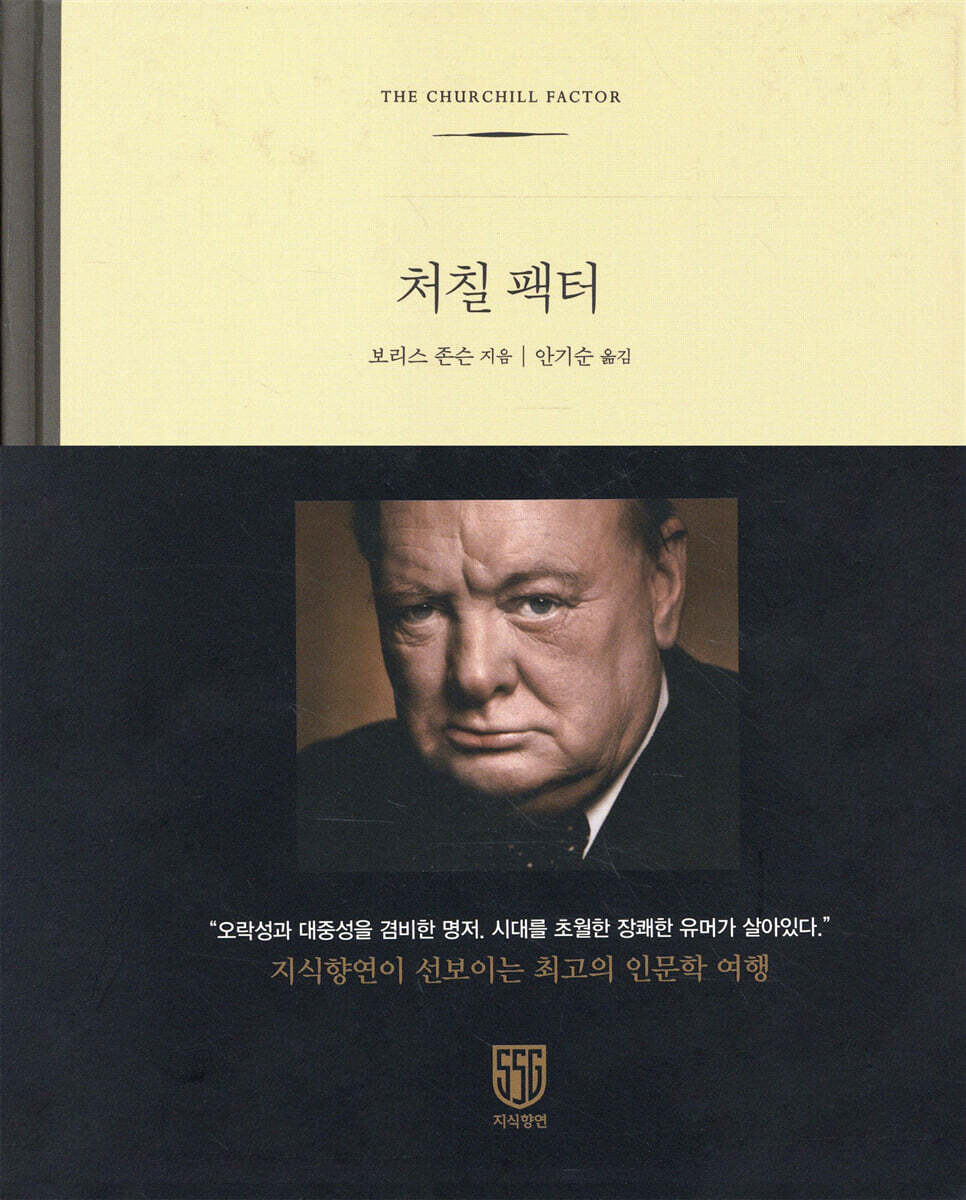 |
Description
Book Introduction
The definitive biography of Churchill, written by leading British politician Boris Johnson.
A masterpiece that illuminates the factors that led to the victory of a great leader who changed the course of world history.
Winston Churchill, chosen by the British as the 'greatest Briton', beating out Newton and Shakespeare.
What factors enabled him to lead the 20th-century world and achieve brilliant achievements across all spheres of politics, economics, and society? How was his unwavering spirit and will forged? Boris Johnson, the journalist and politician who revolutionized British politics, analyzes the factors that shaped Churchill from every angle with sharp insight and vibrant prose in this masterful work! From a school maladjusted dropout to Prime Minister of the British Empire, revered as one of the greatest Britons of all time, this book chronicles the fiery life of Winston Churchill, a man who dedicated himself to his country and people with unwavering determination and brilliant humor despite adversity.
- You can preview some of the book's contents.
Preview
index
Preface
With the publication of "The Churchill Factor"
Introduction: Do you know Churchill? Isn't that the name of the dog in the commercial?
1.
Hitler's proposal
2.
A world without Churchill
3.
arrogant elephant
4.
Father's influence
5.
No act of generosity or nobility can be excessive.
6.
The Great Dictator
7.
Bringing English to Life
8.
warm heart
9.
Dear Clementine
10.
Establishing an image as a representative figure of the British people
11.
The most progressive politician of his time
12.
There is no glory in massacre
13.
walking ship
14.
100 horsepower mental engine
15.
Gamble with history
16.
A cold and ruthless command
17.
woo America
18.
The Giant of the Shrunken Island
19.
How Churchill Won the Cold War
20.
European Churchill
21.
Founder of the modern Middle East
22.
What the name Churchill means today
23.
Churchill factor
Acknowledgements
References
About the source
Acknowledgements for the photos
Churchill's chronology
Churchill's life and major world and Korean history
Search
Into the book
Churchill stressed to Halifax that negotiating with Hitler would be a trap and leave Britain at Hitler's mercy.
Halifax countered that he could not understand what was wrong with the French proposal.
Chamberlain and Greenwood subscribed to the futile argument that both ways, continuing to fight or entering into negotiations, were dangerous.
By five o'clock Halifax had said that there was nothing in his proposal that could be classified as an ultimate surrender.
Churchill argued that the chances of Germany offering Britain acceptable terms were absolutely slim.
The debate reached a stalemate.
According to historians, this was the turning point for Churchill.
(…) Appealing to reason has failed.
But the larger the audience, the more heated the atmosphere, so Churchill appealed to emotions.
Before the entire cabinet, Churchill delivered a brilliant speech that showed none of the intellectual limitations he had exhibited in smaller meetings.
'Horrible nonsense' on steroids.
---「1.
From "Hitler's Proposal"
Of course, Churchill enjoyed showing off not only to his mother, but also to the press and the public, but most of all to himself, who most lovingly and faithfully recorded his actions.
Whatever he said or did, Churchill had the eye for reporting like Julius Caesar.
But such a tendency does not diminish the fact that he is brave.
Strictly speaking, Churchill was so courageous that no one could argue with him, and from 1940 onwards he could confidently call on others to be courageous.
Of course, Attlee and Robert Anthony Eden also fought in the war, but their fame did not reach Churchill's level.
The public knew one thing for sure about Churchill:
He would not ask the British to do something he would not do himself.
And Churchill had an advantage over others.
He had a talent for not only inspiring people by example and performing his duties, but also using language to instill heartfelt emotions and encouragement in people.
---「5.
“A generous or noble act cannot be excessive.”
The French navy had no time to be angry or to gather its wits for the last moment.
When the bombardment began at 5:54 p.m. on July 3, 1940, they were overcome with an air of utter disbelief.
The British warships that had arrived in the morning and received cheers from their own allies, the British warships that had fought alongside them off the coast of Gibraltar and had stained the city with blood, began to fire on them.
France and England were supposed to be friends.
Those British friends made it rain death for 10 minutes.
It was still considered the largest concentrated bombardment in naval history.
(…) Churchill, who appeared in the House of Commons the next day to explain his actions, expected to be attacked from all sides.
Because they were wielding the most lethal modern weapons against a virtually defenseless target, namely the British Navy, not their war adversary.
(…) After Churchill finished saying these words and sat down, a strange phenomenon occurred.
Surprisingly, the MPs did not remain silent and displeased with Churchill's actions, but rather cheered.
The members stood up in unison, waving their agendas in celebration, the atmosphere in the House of Representatives erupting with excitement for the first time in years.
---「16.
From “Cold and Merciless Commands”
Churchill had to drive a wedge that would ensure America's entry into the war.
As soon as Churchill heard the news of Japan's surprise attack on Pearl Harbor, he called Roosevelt and prepared to fly straight to Washington.
After the meeting at Placentia Bay, Roosevelt sensed that Churchill was the type of person who would call a room full of people and then start pushing them against the walls.
Roosevelt suggested they meet in Bermuda rather than at the White House, and Churchill declined.
For three weeks, Churchill was a difficult guest for President and Mrs. Roosevelt.
He deliberately exposed himself naked to President Roosevelt (“The Prime Minister of Great Britain hides nothing from the President of the United States”), suffered a minor heart attack, and culminated in a speech to the House and Senate, in which he displayed a high degree of artfulness and indulged in excessive sentimentality that united Britain and America.
---「17.
From "Courting America"
Churchill's victory in the war gave him the unique status of a national figure who transcended party lines, but he paid the price of electoral defeat.
Churchill, who was confident in his political views, changed his party affiliation repeatedly.
Churchill's achievements did not always benefit the Conservative Party, as they did not always agree with him.
So the Labour Party's political slogan, 'Hail Churchill, Vote Labour', worked in the election.
Perhaps he didn't realize it at the time, but Churchill's defeat was a kind of victory.
The fact that a great war hero and political leader was not driven out by violence, but by a trivial and unassuming vote cast by millions of voters, was a result of the democracy that Churchill had set out to protect.
When Clementine consoled her husband by saying, “Perhaps it is a blessing in disguise as defeat,” Churchill retorted, “Then you have disguised yourself very well.”
When told that voters felt guilty for betraying his favor, Churchill replied, “I don’t think so.
“Haven’t they been through some very difficult times?” he said.
Churchill was a man of such great soul.
---「18.
From "The Giant of the Shrunken Island"
Publisher's Review
“What would Churchill do?”
The definitive biography of Churchill, written by leading British politician Boris Johnson.
A masterpiece that illuminates the factors behind the hero's victory that changed the course of world history.
Even today in Britain, when a national issue calls for wise foresight, articles always appear asking, “What would Churchill do?”
British political columnist Andrew Rawnsley said, “Churchill never followed the masses, he always led them.
He criticized the current political world, saying, “Here is why he is different from politicians who are busy imitating Churchill.”
So why do so many people devote so much unwavering attention to a politician who has been dead for over 50 years? Why, at a time of great transition, with the Fourth Industrial Revolution looming, do we once again turn our attention to a 20th-century hero? What was Churchill's unique quality, and how did these qualities develop?
"The Churchill Factor" is a masterpiece that condenses into one volume the fascinating life journey of Winston Churchill, who laid the crucial foundation for the establishment of democracy and is called the savior of the world.
Boris Johnson, a renowned journalist for The Times and a leading British politician (currently Foreign Secretary), analyzed the various external and internal factors that shaped Churchill as a great man in detail and presented them in a vivid style, with the sharp perspective and fluent writing skills of a journalist and the outstanding insight and vision of a politician.
This is where the specialness of this book lies.
As a prominent journalist and a powerful current politician aspiring to be the next Prime Minister, Boris Johnson's perspective on Churchill is well reflected throughout.
Not only does it keenly capture Churchill's leadership, determination, warm personality, and humorous banter, but it also provides a sober assessment of the political and diplomatic judgments and merits and demerits of the time, and, like a documentary, delicately depicts the key events and moments of intimate agony of the figures in modern history.
From a school dropout to the Prime Minister of the British Empire, revered as the greatest Briton of all time, Winston Churchill's fiery life unfolds in a captivating way, showcasing his unwavering dedication to his country and people through his unwavering challenge and brilliant humor, even in the face of adversity.
What Made Winston Churchill Different? The Defining Moments He Changed Modern History
In his introduction, Boris Johnson poses the following question:
"What enabled Churchill to assume such a formidable role? How was his iron will and mind forged? As William Blake sang, was Churchill's brain like a hammer and chain forged in a furnace? That is the question." To answer these questions, Johnson examines each of the "factors" that shaped Churchill in 23 chapters, drawing on a wealth of historical examples.
The most important factor Johnson cited in Churchill's performance was his 'courage to take risks.'
Churchill's leadership, which was driven forward with honesty according to his convictions, reached its peak in May 1940.
Italy's Mussolini was on Hitler's side and poised to go to war, Russia had agreed to divide Poland with the Nazis, and the United States no longer wanted to get involved in the European war.
Even France, which had been trusted, fell to the Nazis, and Britain was left alone to receive Hitler's final offer of negotiation.
When everyone present at the cabinet meeting supported negotiations, Churchill declared that he would not give in until the end, even though he was accused of being a warmonger.
After several rounds of debate failed to reach a conclusion, Churchill pushed through with the following speech.
“I am convinced that if I ever considered compromise or surrender for even a moment, you would all rise up and pull me out of my position.
“If Britain, an island nation with a long history, must finally meet its end, it will be after we all fall to the ground and choke to death in our own blood (p. 31).”
His characteristically confident attitude and lively wit are also among Churchill's factors.
Through this, his leadership shone even brighter, and he was also excellent at negotiation and persuasion.
At the time, Britain absolutely needed the United States to participate in the war to ensure the Allied victory.
When he was staying at the same hotel while meeting with President Roosevelt, Churchill took off the dressing gown he was wearing and said when Roosevelt came to Churchill's room.
“The British Prime Minister hides nothing from the President of the United States (p. 304).”
Above all, Churchill instilled hope and comfort in the British people who were anxious about the precarious international situation, and protected the country with unwavering conviction and confidence.
His famous speech, “I have nothing to offer but blood, toil, tears, and sweat (page 103),” was enough to win the hearts and raise the morale of the people.
Even after the end of World War II, Churchill warned of the dangers of communism with remarkable foresight and tenacity.
It played a pivotal role in the formation of the Atlantic Alliance, the predecessor of NATO, and in the final defeat of communism throughout Russia and Eastern Europe.
His scientific and innovative vision, which “helped in the invention of tanks and seaplanes and predicted the creation of the atomic bomb (p. 94),” cannot be overlooked.
So, what other factors lie behind Churchill's indomitable courage and mental fortitude that made all this possible? Boris Johnson summarizes them in three points.
First, it is the influence of his father, Randolph.
Churchill suffered from rejection and criticism from his father, was terrified of not living up to his expectations, and after his father's death, wanted to surpass him.
Second is the presence of his mother, Jenny Jerome.
Jenny was a great womanizer who pressured Churchill while also appearing at crucial moments as an excellent assistant to help him.
Third is the historical context.
When Churchill was born, Britain was at its peak, and maintaining the empire required superhuman effort and energy.
It is this background that led Churchill to become a great leader.
In this way, this book not only delves into the process of the birth of the great hero Churchill, covering the entire period from his birth to his death, but also reveals the factors that led to the hero's victory in a turbulent era.
Do times make people? Or do people make times?
In an age of uncertainty, as a new industrial revolution heralds, why should we pay attention to a 20th-century hero? From his election to the Conservative House of Commons at the young age of 25 in 1900 until his death at age 90 in 1965, Churchill's life was a constant struggle, marked by the threat and fear of war.
Without the boundless courage and brilliant insight that confronted the madness of the times, Britain, and indeed the course of human history, could not have been turned into what it is today.
This book provides ample clues and examples of how one man's passion, like Churchill's, can change world history, what kind of leaders we need now, and what kind of leaders we should be guiding the rising generation.
What we must remember here is not the endless praise for Churchill's greatness, but the sublime influence and the course of world history that his presence changed.
This is why we must once again reflect on Churchill, who may be considered the greatest politician and leader of the 20th century.
GOODS SPECIFICS
- Date of issue: April 7, 2018
- Format: Hardcover book binding method guide
- Page count, weight, size: 500 pages | 1,008g | 173*215*30mm
- ISBN13: 9788934978886
- ISBN10: 8934978880
You may also like
카테고리
korean


korean


