

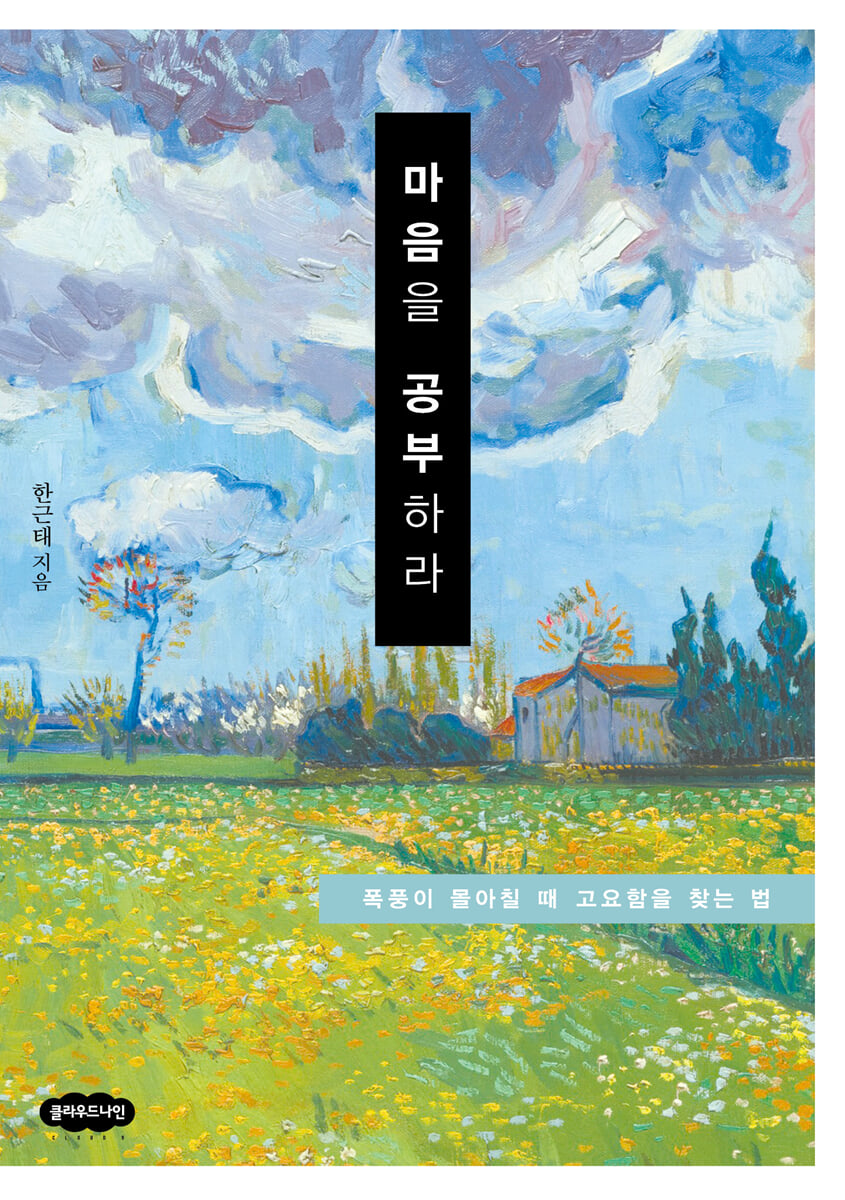
Study your mind
 |
Description
Book Introduction
How to Find Calm When the Storm Rises
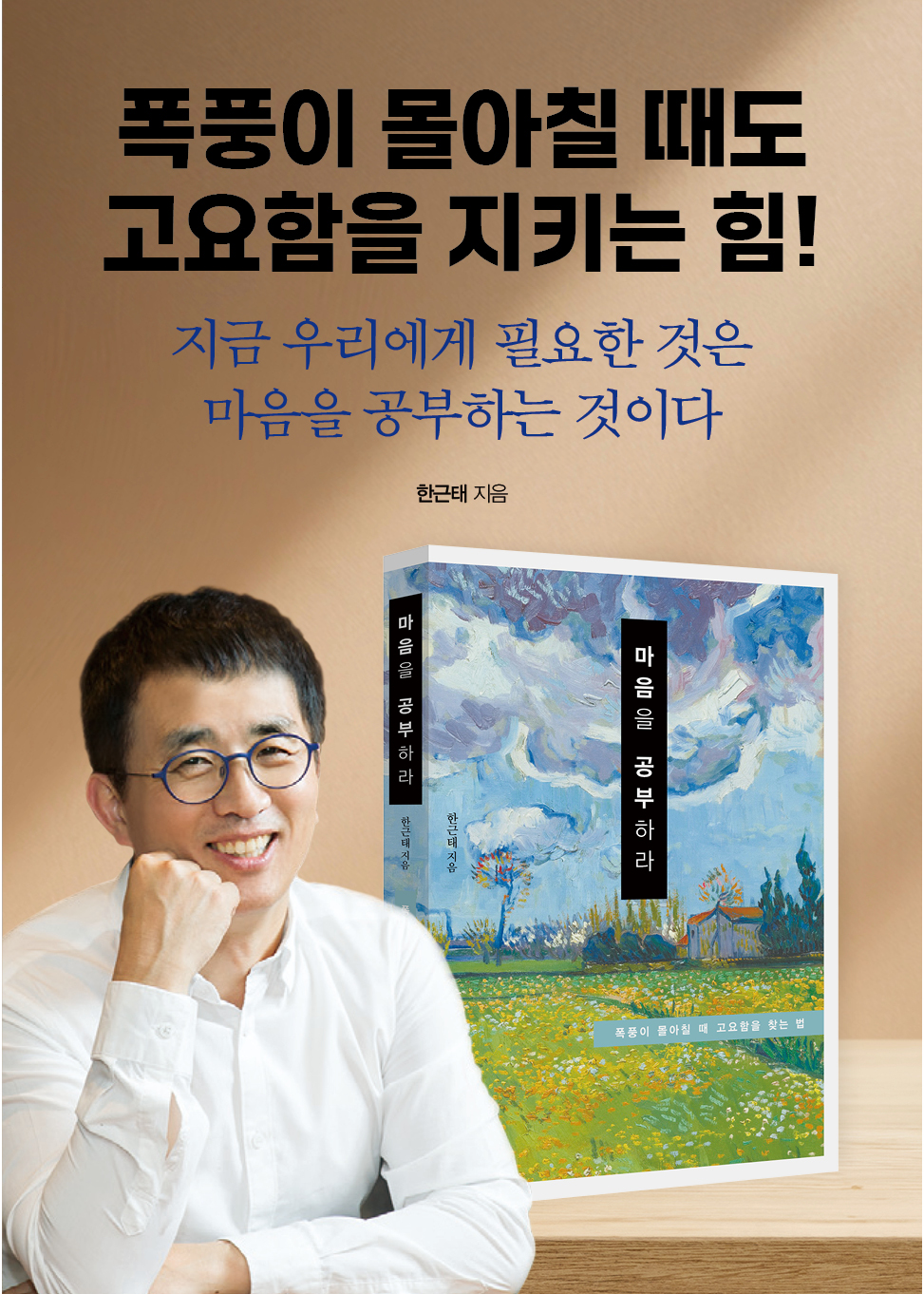
What we need now is to study the mind!
This book teaches you how to find peace without being shaken by anxiety, fear, the gaze of others, or the whirlwind of emotions.
It also presents specific ways to cultivate peace of mind in all areas of life, such as how to live authentically, how to control your emotions, how to practice living simply, and how to train your mind through your body.
The idea is to train ourselves to read fear as a signal, use anxiety as a compass, and remain calm even when the storm rages.
The author of this book, Dr. Geun-Tae Han, allows us to look into our uncomfortable feelings through situations that we all experience in our daily lives.
The moment I hide my true feelings by looking at my boss's face, the moment I can't live my true self because I'm trying to meet other people's expectations, the moment I ignore my anxiety and end up being gripped by even greater fear...
The author calmly discusses how to maintain peace in all these situations.
His conclusion is clear.
Peace of mind is not a static state, but a constant, moving, centered force.
We already know.
That only when you do what you have to do and don't do what you shouldn't do can your mind become peaceful.
It also emphasizes the connection between body and mind.
The habit of training the body will strengthen the mind.
It also provides specific suggestions on how to live with less rather than with too much, how to empty oneself for a more comfortable life, and how to balance intimacy and distance in relationships.
These are all life skills to maintain peace of mind.
“A gentleman has a broad mind and is peaceful, while a petty man is always worried and anxious.”
The author quotes Confucius:
The difference between a person who is not greatly shaken by worldly affairs and a person who loses their balance over trivial matters ultimately comes from the power to control their mind.
We live in an age where anxiety has become a daily occurrence.
That is why what we need now is the study of the mind.
This book goes beyond words of comfort and guides readers through practical exercises they can apply themselves.
What we need now is to study the mind!
This book teaches you how to find peace without being shaken by anxiety, fear, the gaze of others, or the whirlwind of emotions.
It also presents specific ways to cultivate peace of mind in all areas of life, such as how to live authentically, how to control your emotions, how to practice living simply, and how to train your mind through your body.
The idea is to train ourselves to read fear as a signal, use anxiety as a compass, and remain calm even when the storm rages.
The author of this book, Dr. Geun-Tae Han, allows us to look into our uncomfortable feelings through situations that we all experience in our daily lives.
The moment I hide my true feelings by looking at my boss's face, the moment I can't live my true self because I'm trying to meet other people's expectations, the moment I ignore my anxiety and end up being gripped by even greater fear...
The author calmly discusses how to maintain peace in all these situations.
His conclusion is clear.
Peace of mind is not a static state, but a constant, moving, centered force.
We already know.
That only when you do what you have to do and don't do what you shouldn't do can your mind become peaceful.
It also emphasizes the connection between body and mind.
The habit of training the body will strengthen the mind.
It also provides specific suggestions on how to live with less rather than with too much, how to empty oneself for a more comfortable life, and how to balance intimacy and distance in relationships.
These are all life skills to maintain peace of mind.
“A gentleman has a broad mind and is peaceful, while a petty man is always worried and anxious.”
The author quotes Confucius:
The difference between a person who is not greatly shaken by worldly affairs and a person who loses their balance over trivial matters ultimately comes from the power to control their mind.
We live in an age where anxiety has become a daily occurrence.
That is why what we need now is the study of the mind.
This book goes beyond words of comfort and guides readers through practical exercises they can apply themselves.
- You can preview some of the book's contents.
Preview
index
Introduction I decided not to do anything that made me feel uncomfortable.
Chapter 1: Living as Your True Self, Not as Someone Else
Every moment is a climax / Be myself / Be bold and courageous / Love myself unconditionally / Stand tall without being indebted / A heart that is curved, not straight / From mindlessness to mindfulness / Give without expecting anything
Chapter 2: Escape the Emotional Whirlwind
Coping with the waves of emotion / Expressing anger without getting angry / Escape the flames of anger / Managing anxiety wisely / Listening to yourself, not others / Not being shaken at critical moments
Chapter 3: Practicing Simplicity
Take time for yourself / Sometimes do nothing / Be sparse and not too busy / Do tomorrow what you couldn't do today / Live simply and lightly / Establish your own life philosophy / Redefine your relationship with digital devices / Free yourself from unnecessary worries
Chapter 4: Controlling the Mind by Controlling the Body
Change of mind comes from change of body / Listen to what your body says / Possess only the right amount / To live a carefree life / From an unbalanced life to an appropriate life / Possess more than you have / Even if everyone else does it, I won't do it / Training to build six-pack abs in my mind / Refining my body and mind first
Chapter 5: Don't Worry About What Others Think
See events and things as they are / Worry about what needs to be worried about / Put off tomorrow's work until tomorrow / Manage without becoming sharp / Adapt to your own situation
Chapter 6: Maintaining Your Relationship While Remaining True to Yourself
Decide who to invite into your room / Don't be kind and hurt / Take off your mask and reveal your weaknesses / Know how to strategically refuse / Intimacy is like a winter coat / Protect yourself with psychological rankings
Chapter 7: Embracing the Twists and Turns of Life
How to deal with life's tragedies / Learning the most important lessons in life / Only humans think about the future / Discovering the joy that was there before / Nothing in the world is useless / Knowing that everything is temporary / Being moderate and light in winter / Living with conviction without being swayed
Chapter 8: Staying Away from Negative Things
Plow the field of your heart / Peace of mind is happiness / The weakest link breaks first | We influence each other / The time remaining is precious / Let's part ways with negativity
Reference books
Chapter 1: Living as Your True Self, Not as Someone Else
Every moment is a climax / Be myself / Be bold and courageous / Love myself unconditionally / Stand tall without being indebted / A heart that is curved, not straight / From mindlessness to mindfulness / Give without expecting anything
Chapter 2: Escape the Emotional Whirlwind
Coping with the waves of emotion / Expressing anger without getting angry / Escape the flames of anger / Managing anxiety wisely / Listening to yourself, not others / Not being shaken at critical moments
Chapter 3: Practicing Simplicity
Take time for yourself / Sometimes do nothing / Be sparse and not too busy / Do tomorrow what you couldn't do today / Live simply and lightly / Establish your own life philosophy / Redefine your relationship with digital devices / Free yourself from unnecessary worries
Chapter 4: Controlling the Mind by Controlling the Body
Change of mind comes from change of body / Listen to what your body says / Possess only the right amount / To live a carefree life / From an unbalanced life to an appropriate life / Possess more than you have / Even if everyone else does it, I won't do it / Training to build six-pack abs in my mind / Refining my body and mind first
Chapter 5: Don't Worry About What Others Think
See events and things as they are / Worry about what needs to be worried about / Put off tomorrow's work until tomorrow / Manage without becoming sharp / Adapt to your own situation
Chapter 6: Maintaining Your Relationship While Remaining True to Yourself
Decide who to invite into your room / Don't be kind and hurt / Take off your mask and reveal your weaknesses / Know how to strategically refuse / Intimacy is like a winter coat / Protect yourself with psychological rankings
Chapter 7: Embracing the Twists and Turns of Life
How to deal with life's tragedies / Learning the most important lessons in life / Only humans think about the future / Discovering the joy that was there before / Nothing in the world is useless / Knowing that everything is temporary / Being moderate and light in winter / Living with conviction without being swayed
Chapter 8: Staying Away from Negative Things
Plow the field of your heart / Peace of mind is happiness / The weakest link breaks first | We influence each other / The time remaining is precious / Let's part ways with negativity
Reference books
Detailed image
Into the book
You can't disobey your boss just because you don't like him.
I can't just show that kind of expression as I please.
But it is true that I feel conflicted and uncomfortable in my heart.
I feel most comfortable when I live as I am.
Humor works in that case too.
Everyone thought so, but they couldn't bring themselves to express it out loud.
I can laugh when I hear the thoughts of such people.
Humor puts my mind at ease.
If you live as you are, you will achieve results.
Would asking someone who feels a burning sensation inside them when they're still and who feels a sense of relief when they're out and about, to spend all day cooped up in an office filing paperwork, produce any results? In that regard, the story of GE Chairman Jack Welch is instructive.
It was before I became president.
He confided his concerns to the president of Coca-Cola, who was his mentor at the time.
“I have a fiery personality and am very direct in my expressions, so I cause trouble in the organization. What should I do?” The mentor, who had been listening quietly, said something.
“Be yourself.” It means to live as you are.
The point is not to try too hard to imitate other people.
--- p.21
There are mental habits that must be abandoned in order to restore self-esteem.
It's a habit of easily giving up.
Some people often get frustrated and despair in advance, saying, “I’m screwed.”
These habits lower your immunity to stress and gradually lead to a loss of confidence.
It is a state of mind that must also be abandoned.
When we experience negative rewards such as failure, rejection, indifference or cynicism, or when we feel exhausted and lose motivation, we fall into apathy.
In times like these, it's better to move even if you don't want to, even if it's not fun, even if it's meaningless.
You have to move your body instead of thinking.
Sensitivity is also one of the mental habits that harms human relationships.
To shake off sensitivity, you must practice distinguishing between yourself and others.
I need to separate my tasks from his tasks and leave his feelings to him.
--- p.28
What are emotions? What utility do emotions have? Why are our moods influenced by them? The English word for "emotion" is "emotion."
The word 'motion' has an 'e' attached to it, meaning to make something happen.
Isn't it true that emotions are what motivate us to act? Humans are not driven by reason, but by emotion.
Of course, this is a personal opinion without any academic basis.
There is no good or bad in emotions.
There is a reason and purpose for such feelings to arise.
Warn or motivate through emotions.
It makes you pay attention to yourself and decide what to do.
Helps you find your way in life.
Feelings are honest.
It never fools us.
Emotions are like maps.
--- p.47~48
Do you make time for yourself? If so, how many hours a week do you spend alone? Are you constantly surrounded by people from morning until bedtime? Have you recently eaten alone, or would you rather starve than eat alone? If you're alone, what do you usually do during that time?
A college professor discovered something interesting while teaching his students.
Students who take classes alone have higher learning energy and engagement than students who study with friends.
Humans are social animals.
It cannot help but exist among people.
But the more that happens, the more you need time for yourself.
Because people grow when they are alone.
In order to learn or study something, you must first secure time to be alone.
You need to get out of the relationship and stand on your own two feet.
It's the same when I'm reading a book or thinking about something.
You can't read books and think while you're among people.
I can't just show that kind of expression as I please.
But it is true that I feel conflicted and uncomfortable in my heart.
I feel most comfortable when I live as I am.
Humor works in that case too.
Everyone thought so, but they couldn't bring themselves to express it out loud.
I can laugh when I hear the thoughts of such people.
Humor puts my mind at ease.
If you live as you are, you will achieve results.
Would asking someone who feels a burning sensation inside them when they're still and who feels a sense of relief when they're out and about, to spend all day cooped up in an office filing paperwork, produce any results? In that regard, the story of GE Chairman Jack Welch is instructive.
It was before I became president.
He confided his concerns to the president of Coca-Cola, who was his mentor at the time.
“I have a fiery personality and am very direct in my expressions, so I cause trouble in the organization. What should I do?” The mentor, who had been listening quietly, said something.
“Be yourself.” It means to live as you are.
The point is not to try too hard to imitate other people.
--- p.21
There are mental habits that must be abandoned in order to restore self-esteem.
It's a habit of easily giving up.
Some people often get frustrated and despair in advance, saying, “I’m screwed.”
These habits lower your immunity to stress and gradually lead to a loss of confidence.
It is a state of mind that must also be abandoned.
When we experience negative rewards such as failure, rejection, indifference or cynicism, or when we feel exhausted and lose motivation, we fall into apathy.
In times like these, it's better to move even if you don't want to, even if it's not fun, even if it's meaningless.
You have to move your body instead of thinking.
Sensitivity is also one of the mental habits that harms human relationships.
To shake off sensitivity, you must practice distinguishing between yourself and others.
I need to separate my tasks from his tasks and leave his feelings to him.
--- p.28
What are emotions? What utility do emotions have? Why are our moods influenced by them? The English word for "emotion" is "emotion."
The word 'motion' has an 'e' attached to it, meaning to make something happen.
Isn't it true that emotions are what motivate us to act? Humans are not driven by reason, but by emotion.
Of course, this is a personal opinion without any academic basis.
There is no good or bad in emotions.
There is a reason and purpose for such feelings to arise.
Warn or motivate through emotions.
It makes you pay attention to yourself and decide what to do.
Helps you find your way in life.
Feelings are honest.
It never fools us.
Emotions are like maps.
--- p.47~48
Do you make time for yourself? If so, how many hours a week do you spend alone? Are you constantly surrounded by people from morning until bedtime? Have you recently eaten alone, or would you rather starve than eat alone? If you're alone, what do you usually do during that time?
A college professor discovered something interesting while teaching his students.
Students who take classes alone have higher learning energy and engagement than students who study with friends.
Humans are social animals.
It cannot help but exist among people.
But the more that happens, the more you need time for yourself.
Because people grow when they are alone.
In order to learn or study something, you must first secure time to be alone.
You need to get out of the relationship and stand on your own two feet.
It's the same when I'm reading a book or thinking about something.
You can't read books and think while you're among people.
--- p.73
Publisher's Review
The moment I let go of other people's gaze, I started living my own life!
This book contains philosophical thoughts and everyday insights on 'peace of mind,' but it is not simply a psychological prescription for a quiet mind.
The peace of mind this book speaks of is an inner journey of mastering emotions, organizing relationships, resetting life priorities, and ultimately finding "my own way to live."
Through this book, we gain practical guidance such as not comparing, not expecting, and not judging.
At the same time, topics like living with dignity, having time alone, strategic rejection, and inviting people to my room help me re-establish a self-respecting attitude toward life.
The author says that the main enemies that destroy peace of mind in life are fear and anxiety.
But rather than trying to get rid of it, I encourage you to learn from it.
Quoting the 'Six Wonders' of Gyeongju Choi? Self-preservation, love between people, freedom, love, pride, and composure in disappointment?, he teaches 'how to live calmly and composurely no matter what life brings.'
The book consists of a total of 8 chapters.
Chapter 1 deals with ‘living as your true self, not as someone else.’
The greatest misfortune in life is not being able to live as yourself.
The author confesses, “I feel uncomfortable when I act differently from what I really am.”
To those who live as a ‘fake self’ in the face of social stature and the gaze of others, he says, “Live true to yourself, aloof, and courageously.”
In particular, he quotes Jack Welch's words from his mentor, "Be yourself," and emphasizes that true peace begins with the "courage to be myself."
He also explains 'self-esteem' as self-efficacy, self-control, and self-security, and says that the lower the self-esteem, the more insecure love and relationships become.
Instead of blaming yourself, he suggests that telling yourself, “It’s okay, you’re doing well now,” is the first step toward peace of mind.
Chapter 2 deals with 'escaping the emotional vortex'.
Emotions are the source of human movement.
The author says that emotions should be understood and managed rather than suppressed.
Fear is a present emotion, and anxiety is a future emotion.
Fear is a warning signal, anxiety is a message to prepare.
He says, “You can transform the negative energy of fear into energy for growth,” and offers specific exercises to help you stay centered and not get swayed by your emotions.
Chapter 3 covers 'practicing staying in simplicity'.
Simplicity in life is a result of choice.
The author advises, “Live loosely, not tightly.”
It emphasizes the power of time spent doing nothing, leaving a blank space.
Only when we redefine our relationship with digital devices and free ourselves from unnecessary worries can we find peace of mind.
“If you walk too fast, you won’t get to Lhasa.
As the Tibetan proverb goes, “Slowness creates depth in life,”
Chapter 4 deals with ‘controlling the mind by controlling the body.’
Body and mind cannot be separated.
“A change in mind comes from a change in the body.” The author says not to ignore the signals your body sends, but to restore peace of mind through appropriate possessions and a balanced life.
A 'carefree life', 'a moderate life', and 'a life of having less' are the essence of abundance.
Chapter 5 deals with ‘not caring about what others think.’
The gaze of others is the biggest factor that makes us feel uneasy.
The author advises, "Put off tomorrow's work for tomorrow and only worry about what needs to be worried about."
Living according to one's own circumstances without being swayed by the opinions of others is true peace.
Chapter 6 deals with ‘maintaining relationships while maintaining your identity.’
Relationships inevitably leave scars.
However, the author emphasizes “be kind, but not hurtful.”
It teaches you the courage to take off your mask and reveal your vulnerabilities, the ability to strategically refuse, and the skills to protect yourself through 'psychological ranking.'
Chapter 7 deals with 'accepting the twists and turns of life'.
Life cycles like the seasons.
There must be winter before there can be spring.
The author conveys the message that the way one accepts life's tragedies determines one's character.
It also leads readers to discover the joy that was there before and to the realization that nothing in the world is useless.
Chapter 8 deals with 'staying away from negative things'.
Cultivating the field of the mind is the art of peace.
The author warns that “the weakest link breaks first,” and that we must boldly cut off negative relationships, thoughts, and habits.
Bad feelings are the greatest poison to oneself.
This book contains philosophical thoughts and everyday insights on 'peace of mind,' but it is not simply a psychological prescription for a quiet mind.
The peace of mind this book speaks of is an inner journey of mastering emotions, organizing relationships, resetting life priorities, and ultimately finding "my own way to live."
Through this book, we gain practical guidance such as not comparing, not expecting, and not judging.
At the same time, topics like living with dignity, having time alone, strategic rejection, and inviting people to my room help me re-establish a self-respecting attitude toward life.
The author says that the main enemies that destroy peace of mind in life are fear and anxiety.
But rather than trying to get rid of it, I encourage you to learn from it.
Quoting the 'Six Wonders' of Gyeongju Choi? Self-preservation, love between people, freedom, love, pride, and composure in disappointment?, he teaches 'how to live calmly and composurely no matter what life brings.'
The book consists of a total of 8 chapters.
Chapter 1 deals with ‘living as your true self, not as someone else.’
The greatest misfortune in life is not being able to live as yourself.
The author confesses, “I feel uncomfortable when I act differently from what I really am.”
To those who live as a ‘fake self’ in the face of social stature and the gaze of others, he says, “Live true to yourself, aloof, and courageously.”
In particular, he quotes Jack Welch's words from his mentor, "Be yourself," and emphasizes that true peace begins with the "courage to be myself."
He also explains 'self-esteem' as self-efficacy, self-control, and self-security, and says that the lower the self-esteem, the more insecure love and relationships become.
Instead of blaming yourself, he suggests that telling yourself, “It’s okay, you’re doing well now,” is the first step toward peace of mind.
Chapter 2 deals with 'escaping the emotional vortex'.
Emotions are the source of human movement.
The author says that emotions should be understood and managed rather than suppressed.
Fear is a present emotion, and anxiety is a future emotion.
Fear is a warning signal, anxiety is a message to prepare.
He says, “You can transform the negative energy of fear into energy for growth,” and offers specific exercises to help you stay centered and not get swayed by your emotions.
Chapter 3 covers 'practicing staying in simplicity'.
Simplicity in life is a result of choice.
The author advises, “Live loosely, not tightly.”
It emphasizes the power of time spent doing nothing, leaving a blank space.
Only when we redefine our relationship with digital devices and free ourselves from unnecessary worries can we find peace of mind.
“If you walk too fast, you won’t get to Lhasa.
As the Tibetan proverb goes, “Slowness creates depth in life,”
Chapter 4 deals with ‘controlling the mind by controlling the body.’
Body and mind cannot be separated.
“A change in mind comes from a change in the body.” The author says not to ignore the signals your body sends, but to restore peace of mind through appropriate possessions and a balanced life.
A 'carefree life', 'a moderate life', and 'a life of having less' are the essence of abundance.
Chapter 5 deals with ‘not caring about what others think.’
The gaze of others is the biggest factor that makes us feel uneasy.
The author advises, "Put off tomorrow's work for tomorrow and only worry about what needs to be worried about."
Living according to one's own circumstances without being swayed by the opinions of others is true peace.
Chapter 6 deals with ‘maintaining relationships while maintaining your identity.’
Relationships inevitably leave scars.
However, the author emphasizes “be kind, but not hurtful.”
It teaches you the courage to take off your mask and reveal your vulnerabilities, the ability to strategically refuse, and the skills to protect yourself through 'psychological ranking.'
Chapter 7 deals with 'accepting the twists and turns of life'.
Life cycles like the seasons.
There must be winter before there can be spring.
The author conveys the message that the way one accepts life's tragedies determines one's character.
It also leads readers to discover the joy that was there before and to the realization that nothing in the world is useless.
Chapter 8 deals with 'staying away from negative things'.
Cultivating the field of the mind is the art of peace.
The author warns that “the weakest link breaks first,” and that we must boldly cut off negative relationships, thoughts, and habits.
Bad feelings are the greatest poison to oneself.
GOODS SPECIFICS
- Date of issue: September 30, 2025
- Page count, weight, size: 256 pages | 148*210*20mm
- ISBN13: 9791194534433
- ISBN10: 1194534430
You may also like
카테고리
korean


korean

![GQ KOREA Mark (Monthly): December [2025]](http://librairie.coreenne.fr/cdn/shop/files/8ef265dbbfbf186523ed75ba7319009d.jpg?v=1765340328&width=3840)


