

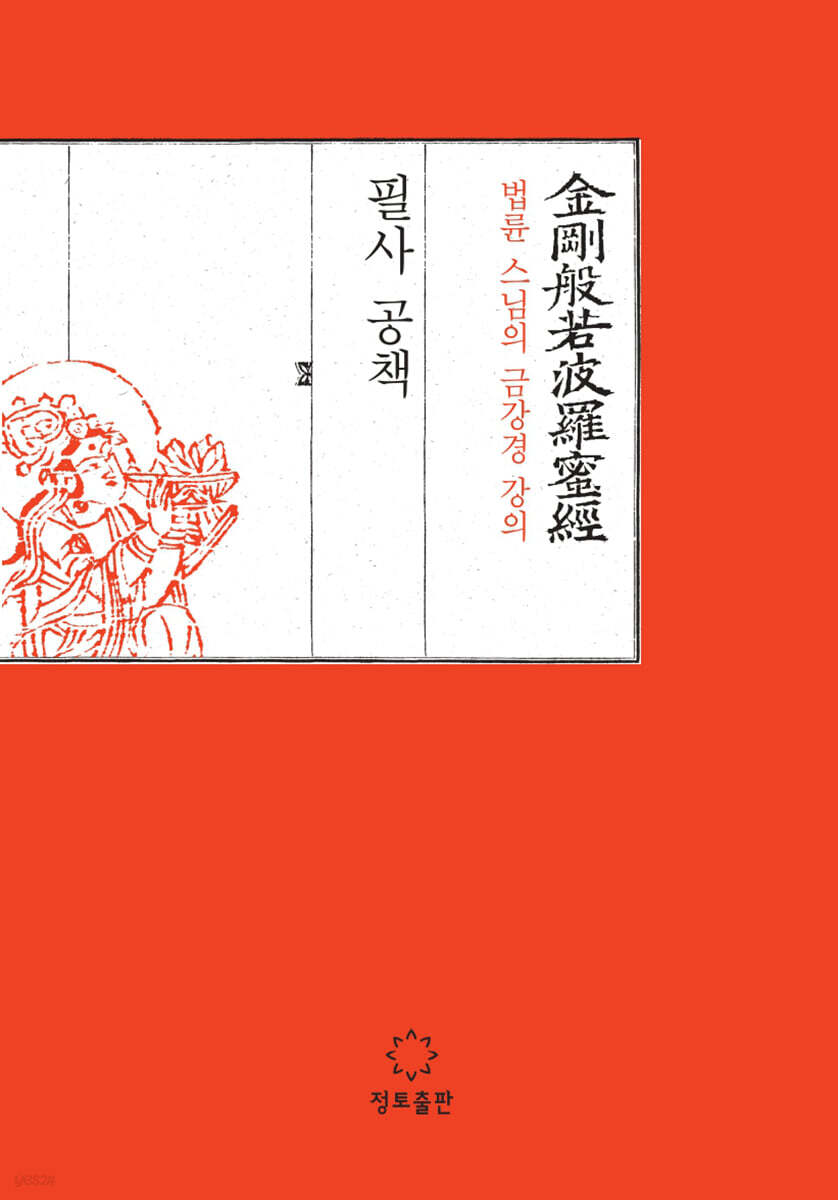
A notebook of Monk Beopryun's Diamond Sutra lectures
 |
Description
Book Introduction
“Transcription Practice through the Diamond Sutra”
Handwriting refers to the act of copying a book by hand.
It is another practice of focusing on the here and now, writing down each sentence while savoring it.
In other words, it is called a copy of the sutra.
Sajyong refers to the transcription of Buddhist scriptures, or books written in this way.
After the Buddha's death, the Buddhist scriptures that his disciples gathered together were first passed down orally and then written down. The transcription of the scriptures began after the scriptures were written down.
Initially, it began with the purpose of learning, widely disseminating, or preserving the contents of the scriptures, but later it changed into a prayer that emphasized their merits.
Because the act of praying for one's life cannot be done without faith and diligence.
『Dharma Wheel Monk's Diamond Sutra Lecture Handwritten Notebook』 is composed of key contents from the Diamond Sutra Lectures, so that they can be used for 100 days.
If you concentrate on writing one chapter a day, you will come to understand the principles of the Diamond Sutra and discover a new world.
I hope you will experience the essence of the Diamond Sutra.
Handwriting refers to the act of copying a book by hand.
It is another practice of focusing on the here and now, writing down each sentence while savoring it.
In other words, it is called a copy of the sutra.
Sajyong refers to the transcription of Buddhist scriptures, or books written in this way.
After the Buddha's death, the Buddhist scriptures that his disciples gathered together were first passed down orally and then written down. The transcription of the scriptures began after the scriptures were written down.
Initially, it began with the purpose of learning, widely disseminating, or preserving the contents of the scriptures, but later it changed into a prayer that emphasized their merits.
Because the act of praying for one's life cannot be done without faith and diligence.
『Dharma Wheel Monk's Diamond Sutra Lecture Handwritten Notebook』 is composed of key contents from the Diamond Sutra Lectures, so that they can be used for 100 days.
If you concentrate on writing one chapter a day, you will come to understand the principles of the Diamond Sutra and discover a new world.
I hope you will experience the essence of the Diamond Sutra.
- You can preview some of the book's contents.
Preview
Into the book
“If the reality of my life right now is painful, I am just momentarily off track.
I am just momentarily forgetting my true nature and fundamental position.
After making a vow to become a Bodhisattva and working hard every day, he came to this world and forgot about it for a while while getting drunk.
Once you wake up from the intoxication, you will clearly realize the true nature of it.
Through our connection to studying the Diamond Sutra, we are already taking the first step toward finding our path.
It only takes a moment for a dark room to become bright.
Whether the room was dark a hundred years ago or yesterday, the darkness disappears in an instant when a single light is turned on.
This is the principle of enlightenment.
No matter how thick the karma, there is not even the slightest discrimination in the principles of Buddhism.
“On the path to enlightenment, the lightness or heaviness of one’s karma, the length or shortness of one’s practice, etc., do not matter.”
“There are countless diseases in this world, and there are just as many prescriptions to treat them.
No matter how effective a prescription may be, it cannot be a panacea.
The same goes for life's problems.
Even if there is a secret method that washes away one person's suffering, there is no guarantee that it will work for another person.
So, the Tathagata's prescriptions are different for each of the countless situations and conditions.
Just as no doctor prescribes the same treatment to every patient, the Buddha's teachings also differ depending on each living being's circumstances and aptitude.
The best prescription is determined by the patient's symptoms, not by a single prescription regardless of the situation or conditions.
That is the law of non-existence, the law of no fixed rules.
I am just momentarily forgetting my true nature and fundamental position.
After making a vow to become a Bodhisattva and working hard every day, he came to this world and forgot about it for a while while getting drunk.
Once you wake up from the intoxication, you will clearly realize the true nature of it.
Through our connection to studying the Diamond Sutra, we are already taking the first step toward finding our path.
It only takes a moment for a dark room to become bright.
Whether the room was dark a hundred years ago or yesterday, the darkness disappears in an instant when a single light is turned on.
This is the principle of enlightenment.
No matter how thick the karma, there is not even the slightest discrimination in the principles of Buddhism.
“On the path to enlightenment, the lightness or heaviness of one’s karma, the length or shortness of one’s practice, etc., do not matter.”
“There are countless diseases in this world, and there are just as many prescriptions to treat them.
No matter how effective a prescription may be, it cannot be a panacea.
The same goes for life's problems.
Even if there is a secret method that washes away one person's suffering, there is no guarantee that it will work for another person.
So, the Tathagata's prescriptions are different for each of the countless situations and conditions.
Just as no doctor prescribes the same treatment to every patient, the Buddha's teachings also differ depending on each living being's circumstances and aptitude.
The best prescription is determined by the patient's symptoms, not by a single prescription regardless of the situation or conditions.
That is the law of non-existence, the law of no fixed rules.
--- From the text
Publisher's Review
A way of speaking that fosters empathy and enlightenment
The Dharma Master Beopryun's Q&A: The Standard for His Answers is the Diamond Sutra
About the Diamond Sutra
The original name of the Diamond Sutra is the Diamond Sutra.
It is known that the sutra representing Mahayana Buddhism was transmitted in the early days of the introduction of Buddhism during the Three Kingdoms period, and it is considered to be one of the minor sutras by Jinul, a national preceptor in the mid-Goryeo period, and especially in Seon Buddhism, it has been regarded as a minor sutra since the Sixth Patriarch Huineng.
It is said that the Diamond Sutra was widely distributed in our country because it was required for those who wished to learn the Vajra Buddhism to read it.
The Diamond Sutra, which consists of a dialogue between the Buddha and his disciple Subhuti, is widely recited by the public along with the Heart Sutra, but its unique development and ideological depth have made it difficult to understand its meaning.
So, while many people have been reciting the Diamond Sutra, they have not properly understood its meaning, and because they do not understand its meaning, they have simply dismissed the Buddha's words as mere words.
Monk Beopryun's lecture on the Diamond Sutra
Monk Beopryun has become familiar to the public through his best-selling books such as “Prayer,” “Enlightenment,” “Monk’s Sermon,” and “Mom’s Class,” as well as his impromptu lectures.
The Buddhist scriptures and sermons of Venerable Pomnyun are not simply word-for-word interpretations or literal explanations, but rather serve as guidelines for resolving difficulties encountered in real life.
To help us use the teachings of Buddha from 2,500 years ago as a compass for those living in this age, the meaning of the sutra is vividly conveyed through a wealth of anecdotes and examples, sometimes as a story, and sometimes as a stern rebuke.
There are five or six Chinese translations of the Diamond Sutra, but the most widely used is Kumarajiva's translation.
In “Dharma Wheel Monk’s Lectures on the Diamond Sutra,” the Chinese version translated by Master Kumarajiva and the Korean version translated by Master Yongseong Jinjong were used.
In particular, there is a special significance in using the Korean version of the Yongseongjinjong investigation.
Yongseong Jinjong, the founder of the Buddhist order, dedicated his life to the independence of our nation, participating as one of the 33 national representatives along with Monk Manhae Han Yong-un during the March 1st Movement. He established the Samjang Translation Society in the late Joseon Dynasty with the goal of intellectualizing, popularizing, and integrating Korean Buddhism into everyday life, and translated over 30 Buddhist scriptures, including the Avatamsaka Sutra and the Diamond Sutra, into Korean.
Although Hunminjeongeum was created and a translated version of the Diamond Sutra was made during the reign of King Sejo in the 15th century, the first person to translate the Diamond Sutra into Korean in modern times was Yongseong Jinjong.
In order to revive that meaning today, this book used as its model the 3rd edition (1937) reprint of the Sangyeok and Haegeumganggyeong translated by Yongseong Jinjong Josa in 1923 and printed and published in 1926.
The facsimile version of the “Sangyeok and Haegeumganggyeong” is currently housed in the Yongseong Memorial Hall of Jangsu Jukrimjeongsa Temple, the birthplace of Yongseongjosa.
The conversation between Buddha and Subhuti is a question and answer about our lives here and now.
The image of Buddha depicted in the scriptures is nothing more than that of a beggar.
The image of Buddha begging for food from house to house with only a bowl and worn-out clothes, and sharing the food he got with his disciples, is the very image of the ordinariness of the poorest person in the world.
Nevertheless, people, regardless of gender, age, wealth, or social standing, appealed to the Buddha about their pain and suffering, and asked him how they could resolve their pain and suffering.
The Buddha taught them the path to liberation and nirvana, and all of this has been passed down in the sutras.
The Diamond Sutra is also a sutra composed of questions Subhuti asked the Buddha at the Savatthi Temple and the Buddha's answers to them.
Subhuti then asked how he could attain complete happiness and freedom by realizing all truths and wisdom like the Buddha, and the Buddha answered his disciple's earnest question.
So what is the answer to the path to enlightenment that the Buddha spoke of? Readers will be able to discover it for themselves as they read this book.
It is as if the direction of one's life changed on the spot after the Great Master Yukjo heard a passage from the Diamond Sutra, "Give birth to your mind without dwelling anywhere."
The best teaching to become the master of your own life
The goal of life is to live happily.
A happy life is only possible when you become the master of your own life.
Because in a life where I am the master, no one and nothing can take away the joy of my life.
So, if you can just figure out how to become the master of your life, that would be the greatest blessing.
In the Diamond Sutra, the Buddha presents the path to liberation that allows anyone to be free from suffering and find happiness here and now, in this very moment.
It is the path of lawlessness that opens up the freedom of my life, a path of lawlessness that is equal for everyone.
If you can only understand the principles of Buddhism, everything becomes a practice, and everyone you meet becomes a Bodhisattva.
In the Diamond Sutra, the Buddha enlightens us that the law is not found deep in the mountains or in the Tripitaka Koreana, but rather in the conditions of our present reality, among the people we encounter every day.
If you want to understand the Diamond Sutra, which consists of a conversation between the Buddha and Subhuti, and use it as a guide for your life, you must know the Buddha's life.
If we come to know what the Buddha was like, what he said, and what kind of life he lived, we will be able to better understand the true meaning hidden between the lines of the Diamond Sutra.
For this reason, I recommend reading together “The Human Buddha - His Great Life and Thought,” which deals with the life of the Buddha.
The Dharma Master Beopryun's Q&A: The Standard for His Answers is the Diamond Sutra
About the Diamond Sutra
The original name of the Diamond Sutra is the Diamond Sutra.
It is known that the sutra representing Mahayana Buddhism was transmitted in the early days of the introduction of Buddhism during the Three Kingdoms period, and it is considered to be one of the minor sutras by Jinul, a national preceptor in the mid-Goryeo period, and especially in Seon Buddhism, it has been regarded as a minor sutra since the Sixth Patriarch Huineng.
It is said that the Diamond Sutra was widely distributed in our country because it was required for those who wished to learn the Vajra Buddhism to read it.
The Diamond Sutra, which consists of a dialogue between the Buddha and his disciple Subhuti, is widely recited by the public along with the Heart Sutra, but its unique development and ideological depth have made it difficult to understand its meaning.
So, while many people have been reciting the Diamond Sutra, they have not properly understood its meaning, and because they do not understand its meaning, they have simply dismissed the Buddha's words as mere words.
Monk Beopryun's lecture on the Diamond Sutra
Monk Beopryun has become familiar to the public through his best-selling books such as “Prayer,” “Enlightenment,” “Monk’s Sermon,” and “Mom’s Class,” as well as his impromptu lectures.
The Buddhist scriptures and sermons of Venerable Pomnyun are not simply word-for-word interpretations or literal explanations, but rather serve as guidelines for resolving difficulties encountered in real life.
To help us use the teachings of Buddha from 2,500 years ago as a compass for those living in this age, the meaning of the sutra is vividly conveyed through a wealth of anecdotes and examples, sometimes as a story, and sometimes as a stern rebuke.
There are five or six Chinese translations of the Diamond Sutra, but the most widely used is Kumarajiva's translation.
In “Dharma Wheel Monk’s Lectures on the Diamond Sutra,” the Chinese version translated by Master Kumarajiva and the Korean version translated by Master Yongseong Jinjong were used.
In particular, there is a special significance in using the Korean version of the Yongseongjinjong investigation.
Yongseong Jinjong, the founder of the Buddhist order, dedicated his life to the independence of our nation, participating as one of the 33 national representatives along with Monk Manhae Han Yong-un during the March 1st Movement. He established the Samjang Translation Society in the late Joseon Dynasty with the goal of intellectualizing, popularizing, and integrating Korean Buddhism into everyday life, and translated over 30 Buddhist scriptures, including the Avatamsaka Sutra and the Diamond Sutra, into Korean.
Although Hunminjeongeum was created and a translated version of the Diamond Sutra was made during the reign of King Sejo in the 15th century, the first person to translate the Diamond Sutra into Korean in modern times was Yongseong Jinjong.
In order to revive that meaning today, this book used as its model the 3rd edition (1937) reprint of the Sangyeok and Haegeumganggyeong translated by Yongseong Jinjong Josa in 1923 and printed and published in 1926.
The facsimile version of the “Sangyeok and Haegeumganggyeong” is currently housed in the Yongseong Memorial Hall of Jangsu Jukrimjeongsa Temple, the birthplace of Yongseongjosa.
The conversation between Buddha and Subhuti is a question and answer about our lives here and now.
The image of Buddha depicted in the scriptures is nothing more than that of a beggar.
The image of Buddha begging for food from house to house with only a bowl and worn-out clothes, and sharing the food he got with his disciples, is the very image of the ordinariness of the poorest person in the world.
Nevertheless, people, regardless of gender, age, wealth, or social standing, appealed to the Buddha about their pain and suffering, and asked him how they could resolve their pain and suffering.
The Buddha taught them the path to liberation and nirvana, and all of this has been passed down in the sutras.
The Diamond Sutra is also a sutra composed of questions Subhuti asked the Buddha at the Savatthi Temple and the Buddha's answers to them.
Subhuti then asked how he could attain complete happiness and freedom by realizing all truths and wisdom like the Buddha, and the Buddha answered his disciple's earnest question.
So what is the answer to the path to enlightenment that the Buddha spoke of? Readers will be able to discover it for themselves as they read this book.
It is as if the direction of one's life changed on the spot after the Great Master Yukjo heard a passage from the Diamond Sutra, "Give birth to your mind without dwelling anywhere."
The best teaching to become the master of your own life
The goal of life is to live happily.
A happy life is only possible when you become the master of your own life.
Because in a life where I am the master, no one and nothing can take away the joy of my life.
So, if you can just figure out how to become the master of your life, that would be the greatest blessing.
In the Diamond Sutra, the Buddha presents the path to liberation that allows anyone to be free from suffering and find happiness here and now, in this very moment.
It is the path of lawlessness that opens up the freedom of my life, a path of lawlessness that is equal for everyone.
If you can only understand the principles of Buddhism, everything becomes a practice, and everyone you meet becomes a Bodhisattva.
In the Diamond Sutra, the Buddha enlightens us that the law is not found deep in the mountains or in the Tripitaka Koreana, but rather in the conditions of our present reality, among the people we encounter every day.
If you want to understand the Diamond Sutra, which consists of a conversation between the Buddha and Subhuti, and use it as a guide for your life, you must know the Buddha's life.
If we come to know what the Buddha was like, what he said, and what kind of life he lived, we will be able to better understand the true meaning hidden between the lines of the Diamond Sutra.
For this reason, I recommend reading together “The Human Buddha - His Great Life and Thought,” which deals with the life of the Buddha.
GOODS SPECIFICS
- Date of issue: July 31, 2025
- Page count, weight, size: 272 pages | 140*200*15mm
- ISBN13: 9791187297901
- ISBN10: 1187297909
You may also like
카테고리
korean


korean

![GQ KOREA Mark (Monthly): December [2025]](http://librairie.coreenne.fr/cdn/shop/files/8ef265dbbfbf186523ed75ba7319009d.jpg?v=1765340328&width=3840)


