

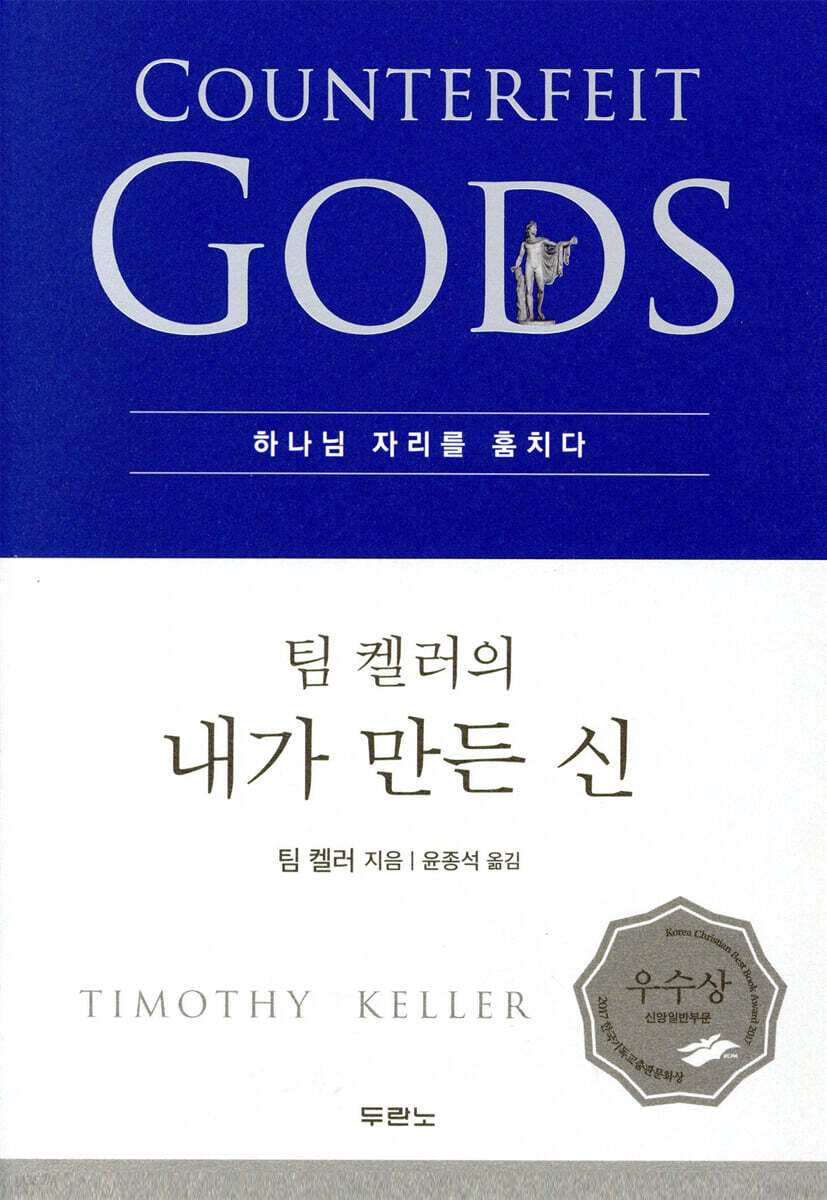
Tim Keller's The God I Made
 |
Description
Book Introduction
This is an era of love, trust and obedience. Declaring a breakup with the 'fake ones' It is a world where I create gods to suit my taste, and enjoy loving, believing, and obeying them. Even if there are no visible statues or images of gods, there are already many false gods that dominate our hearts. They are literally counterfeits, imitating the true God. Tim Keller, renowned for his insightful reading of the Bible and our times, diagnoses modern society dominated by idols in this book and sounds the alarm calling for a return to the one and only God. |
- You can preview some of the book's contents.
Preview
index
prolog.
Idols are much more dangerous than you think.
The god I created
You will definitely betray me
1 The God I Created, My Lifelong Wish
The longer you wish for it, the more desperately you wish for it.
It's easy to become an idol
2 God I created, love
Be deceived and deceived in love
I became a disillusioned slave
3 The God I Created, Money
Even with abundant possessions and consumption
The nakedness of the soul cannot be avoided
4 The God I created, fulfilled
Any success story
You can't overcome 'human limitations'
5 The God I Created, Power
The will to power
Another face of fear
6 Hidden Gods in Masks, Culture and Religion
A gospel without grace
Creating a 'Fake God'
7 Finding Your Place
The whole person is the gospel of Jesus
Must pass
Epilogue.
Declare a breakup with fakes
If you do not replace it with the ‘true God’
The target just keeps changing
Idols are much more dangerous than you think.
The god I created
You will definitely betray me
1 The God I Created, My Lifelong Wish
The longer you wish for it, the more desperately you wish for it.
It's easy to become an idol
2 God I created, love
Be deceived and deceived in love
I became a disillusioned slave
3 The God I Created, Money
Even with abundant possessions and consumption
The nakedness of the soul cannot be avoided
4 The God I created, fulfilled
Any success story
You can't overcome 'human limitations'
5 The God I Created, Power
The will to power
Another face of fear
6 Hidden Gods in Masks, Culture and Religion
A gospel without grace
Creating a 'Fake God'
7 Finding Your Place
The whole person is the gospel of Jesus
Must pass
Epilogue.
Declare a breakup with fakes
If you do not replace it with the ‘true God’
The target just keeps changing
Into the book
Even though the world we live in seems secular, our hearts are actually dominated by the dazzling idols of this age. As the global economy falters, we hear the sound of the many idols we've long worshipped crumbling all around us.
This is also a very good opportunity.
Right now, we are 'waking up from the illusion' for a moment.
Just like in old tales, when the spell cast by an evil sorcerer is broken, a chance to escape comes.
This moment comes to each of us when the plans, events, or people we had hoped for don't keep their promises (as we thought).
It is extremely rare for such an opportunity to come to society as a whole.
--- p.30
God put him into the furnace.
It was to ensure that Abraham's love for God would ultimately 'come out as pure gold.'
It is not difficult to see why He used Isaac as a means.
If God had not intervened, Abraham would undoubtedly have loved his son more than anything in the world.
It may have already been like that.
This is idolatry, and all idolatry brings harm.
From this perspective, God's harsh treatment of Abraham was actually an act of mercy.
Isaac was a wonderful gift to Abraham, but it was not safe to have Isaac if he was not willing to put God first.
Unless he had to choose between 'obeying God' and 'his son', he could not have known that his love was turning into idolatry.
--- p.49
You too can climb that mountain like Abraham and confess:
'Lord, I thought I couldn't live without it, but now it seems you are calling me to a life without it.
But if I have the Lord, I have all I truly need—wealth, health, love, honor, and security—and I can never lose them.' As many have taught, to know that Jesus alone is enough, you must first have nothing left but Him.
Once we have "demoted" the false gods we have created to be below God, it is okay for many, or perhaps most, of them to continue to exist in our lives.
Now it cannot rule us or torment us with anxiety, pride, anger, or impulsivity.
But that doesn't mean we should misunderstand the meaning of this story and think that all we need to do is be willing to abandon our idols.
--- p.57
If you, like Jacob, marry and place all your deepest hopes and longings on your partner, your spouse will crumble under the weight of your expectations.
Your life and your spouse's life will be twisted in many ways.
No one can give you everything your soul needs.
Even the best spouse can't help it.
You may think you've slept with Rachel, but when you wake up, it's always Leah.
This universal disappointment and disillusionment of humanity permeates all aspects of life, and is especially felt in those we most hope for.
--- p.82
One of our church's pastors once counseled a couple who were having a serious conflict over money management.
The wife considered her husband a miser.
One day, while the husband was talking one-on-one with the pastor, he complained about his wife's extravagance.
“It’s really selfish.
“She spends a lot of money on clothes and grooming!” The husband could clearly see that his wife’s desire to look good to others was influencing her spending habits.
The pastor explained to him the concept of superficial idols and fundamental idols.
"Do you realize that hoarding every penny without spending or giving anything is equally selfish? You are now 'spending' every penny on fulfilling your own needs for security, protection, and control."
--- p.116-117
The command, “Just wash yourself,” was so easy that it was difficult.
For Naaman to do so, he had to acknowledge his own weakness and helplessness and accept salvation as a free gift.
Anyone who desires God's grace needs only to have a lack.
That is, there should be nothing.
But it is difficult to bring about this kind of spiritual humility.
When we go to God, we say, 'I've done this much' or 'Look at all the hardships I've endured.'
But God wants us to look only to Him.
You just want to wash.
Naaman had to learn to 'let go of his harmful behavior.'
--- p.145-146
Niebuhr was a prominent American theologian of the mid-20th century.
According to him, all human beings struggle with the feeling of helplessness that they are dependent beings.
The first temptation in the Garden of Eden was to ignore the limits God had set for us (“you must not eat of the fruit of any tree”, Gen. 2:17) and become “like God” (Gen. 3:5) and exercise power over our own destiny.
As a result of yielding to this temptation, it has now become part of our nature.
Instead of accepting our finitude and relying on God, we desperately try to confirm that our lives are still under our control.
But this is just an illusion.
According to Niebuhr, the 'will to power' that arises from this universal anxiety governs our social and political relations.
--- p.163
When idols take control of our hearts, our definitions of success, failure, happiness, and sadness are all distorted.
Reality is redefined according to the standards of idols.
The love, patience, and mercy of Almighty God are good in everyone's eyes.
However, when the power and status of a nation become the ultimate good because of idols, anything that interferes with that naturally turns into evil.
It was out of love that he did not destroy the enemies of Israel, but because of idols, even that love seemed evil to Jonah.
Ultimately, it is because of idols that evil can be called good and good can be called evil.
--- p.218
Have you heard God's blessing from the depths of your being? Are the words, "You are my beloved Son; with you I am well pleased" (Mark 1:11), an endless source of joy and strength? Have you sensed God speaking these words to you through the Holy Spirit? That is the blessing Jacob received.
The blessings of the Holy Spirit are now ours through Christ.
This alone is the panacea for eradicating idolatry.
Only with this blessing can there be no need for idols.
Like Jacob, we often spend our lives 'seeking blessings in all sorts of strange places' and only then discover them.
To finally discover this, you usually have to experience the weakness of stepping on a limb.
This is why so many people who have received the most blessings from God dance with joy on their bare legs.
This is also a very good opportunity.
Right now, we are 'waking up from the illusion' for a moment.
Just like in old tales, when the spell cast by an evil sorcerer is broken, a chance to escape comes.
This moment comes to each of us when the plans, events, or people we had hoped for don't keep their promises (as we thought).
It is extremely rare for such an opportunity to come to society as a whole.
--- p.30
God put him into the furnace.
It was to ensure that Abraham's love for God would ultimately 'come out as pure gold.'
It is not difficult to see why He used Isaac as a means.
If God had not intervened, Abraham would undoubtedly have loved his son more than anything in the world.
It may have already been like that.
This is idolatry, and all idolatry brings harm.
From this perspective, God's harsh treatment of Abraham was actually an act of mercy.
Isaac was a wonderful gift to Abraham, but it was not safe to have Isaac if he was not willing to put God first.
Unless he had to choose between 'obeying God' and 'his son', he could not have known that his love was turning into idolatry.
--- p.49
You too can climb that mountain like Abraham and confess:
'Lord, I thought I couldn't live without it, but now it seems you are calling me to a life without it.
But if I have the Lord, I have all I truly need—wealth, health, love, honor, and security—and I can never lose them.' As many have taught, to know that Jesus alone is enough, you must first have nothing left but Him.
Once we have "demoted" the false gods we have created to be below God, it is okay for many, or perhaps most, of them to continue to exist in our lives.
Now it cannot rule us or torment us with anxiety, pride, anger, or impulsivity.
But that doesn't mean we should misunderstand the meaning of this story and think that all we need to do is be willing to abandon our idols.
--- p.57
If you, like Jacob, marry and place all your deepest hopes and longings on your partner, your spouse will crumble under the weight of your expectations.
Your life and your spouse's life will be twisted in many ways.
No one can give you everything your soul needs.
Even the best spouse can't help it.
You may think you've slept with Rachel, but when you wake up, it's always Leah.
This universal disappointment and disillusionment of humanity permeates all aspects of life, and is especially felt in those we most hope for.
--- p.82
One of our church's pastors once counseled a couple who were having a serious conflict over money management.
The wife considered her husband a miser.
One day, while the husband was talking one-on-one with the pastor, he complained about his wife's extravagance.
“It’s really selfish.
“She spends a lot of money on clothes and grooming!” The husband could clearly see that his wife’s desire to look good to others was influencing her spending habits.
The pastor explained to him the concept of superficial idols and fundamental idols.
"Do you realize that hoarding every penny without spending or giving anything is equally selfish? You are now 'spending' every penny on fulfilling your own needs for security, protection, and control."
--- p.116-117
The command, “Just wash yourself,” was so easy that it was difficult.
For Naaman to do so, he had to acknowledge his own weakness and helplessness and accept salvation as a free gift.
Anyone who desires God's grace needs only to have a lack.
That is, there should be nothing.
But it is difficult to bring about this kind of spiritual humility.
When we go to God, we say, 'I've done this much' or 'Look at all the hardships I've endured.'
But God wants us to look only to Him.
You just want to wash.
Naaman had to learn to 'let go of his harmful behavior.'
--- p.145-146
Niebuhr was a prominent American theologian of the mid-20th century.
According to him, all human beings struggle with the feeling of helplessness that they are dependent beings.
The first temptation in the Garden of Eden was to ignore the limits God had set for us (“you must not eat of the fruit of any tree”, Gen. 2:17) and become “like God” (Gen. 3:5) and exercise power over our own destiny.
As a result of yielding to this temptation, it has now become part of our nature.
Instead of accepting our finitude and relying on God, we desperately try to confirm that our lives are still under our control.
But this is just an illusion.
According to Niebuhr, the 'will to power' that arises from this universal anxiety governs our social and political relations.
--- p.163
When idols take control of our hearts, our definitions of success, failure, happiness, and sadness are all distorted.
Reality is redefined according to the standards of idols.
The love, patience, and mercy of Almighty God are good in everyone's eyes.
However, when the power and status of a nation become the ultimate good because of idols, anything that interferes with that naturally turns into evil.
It was out of love that he did not destroy the enemies of Israel, but because of idols, even that love seemed evil to Jonah.
Ultimately, it is because of idols that evil can be called good and good can be called evil.
--- p.218
Have you heard God's blessing from the depths of your being? Are the words, "You are my beloved Son; with you I am well pleased" (Mark 1:11), an endless source of joy and strength? Have you sensed God speaking these words to you through the Holy Spirit? That is the blessing Jacob received.
The blessings of the Holy Spirit are now ours through Christ.
This alone is the panacea for eradicating idolatry.
Only with this blessing can there be no need for idols.
Like Jacob, we often spend our lives 'seeking blessings in all sorts of strange places' and only then discover them.
To finally discover this, you usually have to experience the weakness of stepping on a limb.
This is why so many people who have received the most blessings from God dance with joy on their bare legs.
--- p.242
Publisher's Review
What idol are you bowing down to today?
This book dissects the empty promises of 'money, sex, power, and success' that hold many modern people captive, and the idols of 'culture and religion' that are cleverly hidden within us.
For this work in particular, I closely observed the stories and inner workings of familiar biblical figures.
We examine the false gods of culture and religion through Abraham and his lifelong desire, Jacob and love, Zacchaeus and money, Naaman and achievement (success), Nebuchadnezzar and power, and finally Jonah.
It is not just their story, but the story of all of us who continue to write even now.
The better something is, the more likely it is to become an idol.
When you place what you need and what is good for you in the ‘place of God’
A spiritual addiction that breeds terrible evil begins.
Anything that is more important to you than God, anything that occupies your thoughts more than God, any attempt to find something else that only God can give you – that is your own god.
Anything can become an idol, and the better it is, the more likely it is to become one.
And that idol inevitably brings disappointment and disillusionment.
Tim Keller wrote, "The human mind is an idol factory."
That is, unless we replace it with the true God, the object will only continue to change.
Identify the true nature of the false gods that reside 'deep in your heart' and 'in the culture we live in.'
And go through the gospel of Jesus with your whole being.
When we place God in His place, all the other good things in life fall into place.
When they fulfill their roles properly, they will be a great blessing to your life!
This book dissects the empty promises of 'money, sex, power, and success' that hold many modern people captive, and the idols of 'culture and religion' that are cleverly hidden within us.
For this work in particular, I closely observed the stories and inner workings of familiar biblical figures.
We examine the false gods of culture and religion through Abraham and his lifelong desire, Jacob and love, Zacchaeus and money, Naaman and achievement (success), Nebuchadnezzar and power, and finally Jonah.
It is not just their story, but the story of all of us who continue to write even now.
The better something is, the more likely it is to become an idol.
When you place what you need and what is good for you in the ‘place of God’
A spiritual addiction that breeds terrible evil begins.
Anything that is more important to you than God, anything that occupies your thoughts more than God, any attempt to find something else that only God can give you – that is your own god.
Anything can become an idol, and the better it is, the more likely it is to become one.
And that idol inevitably brings disappointment and disillusionment.
Tim Keller wrote, "The human mind is an idol factory."
That is, unless we replace it with the true God, the object will only continue to change.
Identify the true nature of the false gods that reside 'deep in your heart' and 'in the culture we live in.'
And go through the gospel of Jesus with your whole being.
When we place God in His place, all the other good things in life fall into place.
When they fulfill their roles properly, they will be a great blessing to your life!
GOODS SPECIFICS
- Date of issue: May 8, 2017
- Page count, weight, size: 280 pages | 282g | 128*180*20mm
- ISBN13: 9788953128286
- ISBN10: 8953128285
You may also like
카테고리
korean


korean

![GQ KOREA Mark (Monthly): December [2025]](http://librairie.coreenne.fr/cdn/shop/files/8ef265dbbfbf186523ed75ba7319009d.jpg?v=1765340328&width=3840)


