

Prompt Engineering for Generative AI
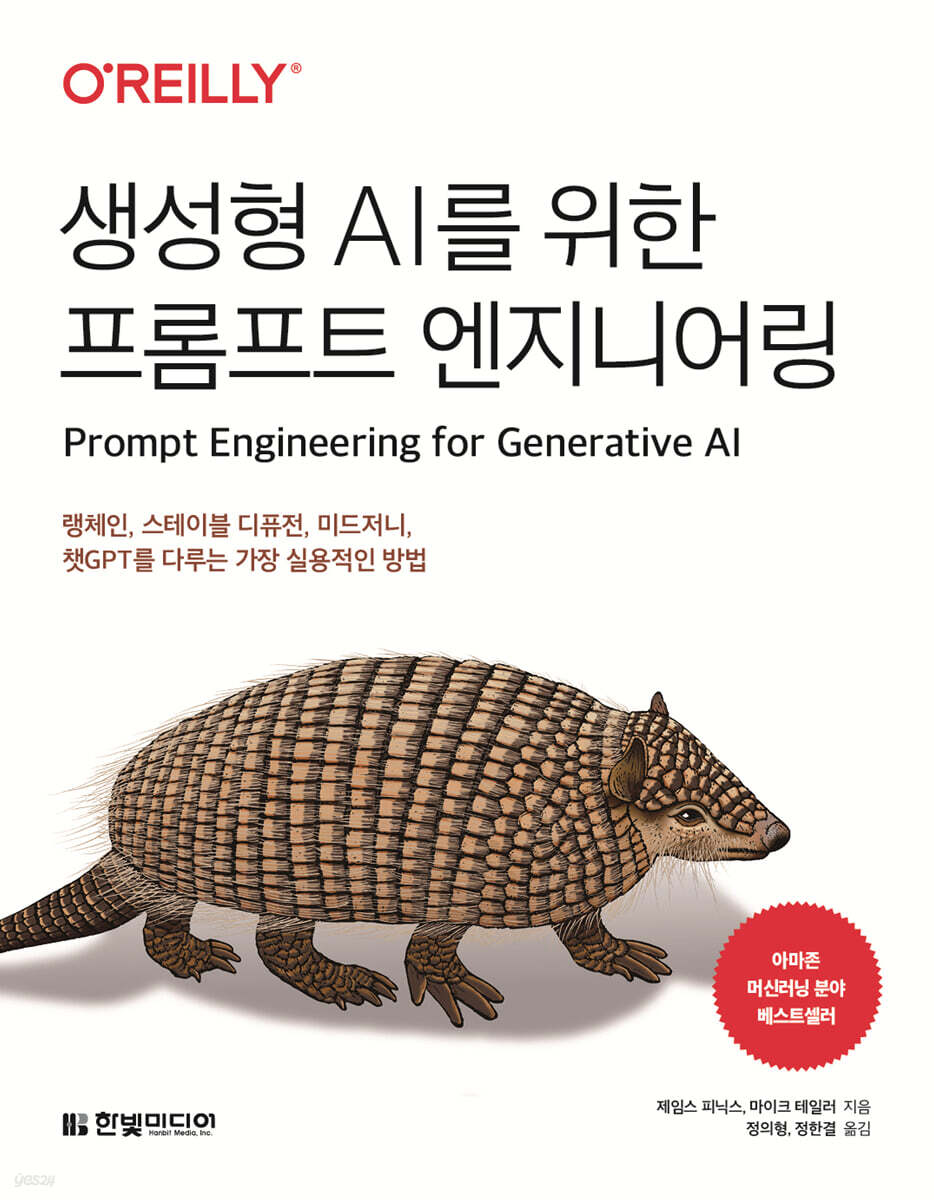 |
Description
Book Introduction
Key technologies that maximize AI's potential
Complete mastery of prompt engineering!
Generative AI is revolutionizing the way we create and use information.
"Prompt Engineering for Generative AI" guides readers through the effective use of LLM and diffusion models, such as ChatGPT and Stable Diffusion. It delves into prompt engineering, a core technique for reliably and efficiently leveraging AI models, and provides principles and examples that can be immediately applied in practice. This book, which aims to improve AI accuracy and ensure its reliable use in automated systems, will be an essential guide for developers, data scientists, and anyone seeking to implement AI in practice.
- You can preview some of the book's contents.
Preview
index
Chapter 1: Five Principles of Prompting
_1.1 Reviewing the Five Principles of Prompts
_1.2 ① Giving instructions
_1.3 ② Setting the format
_1.4 ③ Example
_1.5 ④ Evaluating quality
_1.6 ⑤ Division of work
_1.7 In conclusion
Chapter 2: Introducing Large-Scale Language Models for Text Generation
_2.1 What is a text generation model?
_2.2 Historical Foundations: The Rise of Transformer Architecture
_2.3 OpenAI's GPT
_2.4 GPT-4
_2.5 Google's Gemini
_2.6 Meta's Llama and Open Source
_2.7 Lightweighting and LoRA Utilization
_2.8 Mistral
_2.9 Antropic's Claude
_2.10 GPT-4V(ision)
_2.11 Model Comparison
_2.12 In conclusion
Chapter 3: Generating Text with ChatGPT
_3.1 Creating a list
_3.2 Creating a nested list
_3.3 JSON and YAML
_3.4 Creating various formats using ChatGPT
_3.5 Explaining to a 5 year old
_3.6 Universal Translation through LLM
_3.7 Requesting context
_3.8 Extracting Text Styles
_3.9 Summary
_3.10 Text Chunking
_3.11 encoding
_3.12 Sentiment Analysis
_3.13 Minimum to maximum
_3.14 Role Prompt
_3.15 GPT Prompt Strategy
_3.16 Classification using LLM
_3.17 Evaluate with simple criteria
_3.18 Meta Prompt
_3.19 In closing
Chapter 4: Advanced Prompt Techniques Using Langchain
_4.1 Introduction to Langchain
_4.2 Chat Model
_4.3 Langchain Prompt Template
_4.4 Lang Chain Expression Language (LCEL)
_4.5 Using Prompt Templates in Chat Models
_4.6 Output Parser
_4.7 Rank Chain Evaluation Function
_4.8 Function Call
_4.9 Extracting Data with Langchain
_4.10 Query Plan
_4.11 Creating a Fewshot Prompt Template
_4.12 Saving and Loading LLM Prompts
_4.13 Data Connection
_4.14 Text Splitter
_4.15 Work Decomposition
_4.16 Prompt Chaining
_4.17 In closing
Chapter 5 Vector Databases Using FAISS and Finecon
_5.1 RAG
_5.2 Introduction to Embedding
_5.3 Loading Documents
_5.4 Memory Search via FAISS
_5.5 RAG and Langchain
_5.6 Vector database hosting service including Pinecone
_5.7 Self Query
_5.8 Alternative Search Mechanisms
_5.9 In conclusion
Chapter 6 Autonomous Agents with Memory and Tools
_6.1 Chain of Thoughts
_6.2 Agent
_6.3 Using LLM as an API
_6.4 Comparing OpenAI functions with ReAct
_6.5 Agent Toolkit
_6.6 Custom Agents
_6.7 LCEL's custom agent
_6.8 Understanding and Using Memory
_6.9 Langchain's Memory
_6.10 Popular memory types in Langchain
_6.11 OpenAI Function Agent with Memory
_6.12 Advanced Agent Framework
_6.13 Callback
_6.14 In closing
Chapter 7: Introduction to Diffusion Models for Image Generation
_7.1 OpenAI and DALL·E
_7.2 Midjourney
_7.3 Stable Diffusion
_7.4 Google Gemini
_7.5 Text to Video
_7.6 Model Comparison
_7.7 In conclusion
Chapter 8: Creating Images with Midjourney
_8.1 Formatting
_8.2 Specifying Art Style
_8.3 Reverse engineering prompts
_8.4 Quality Booster
_8.5 Negative prompt
_8.6 Weighting
_8.7 Prompting with an image
_8.8 Inpainting
_8.9 Outpainting
_8.10 Maintaining character consistency
_8.11 Prompt Rewrite
_8.12 Meme Decomposition
_8.13 Meme Mapping
_8.14 Prompt Analysis
_8.15 In closing
Chapter 9: Creating Advanced Images with Stable Diffusion
_9.1 Running Stable Diffusion
_9.2 AUTOMATIC1111 Web User Interface
_9.3 Img2Img
_9.4 Image Upscaling
_9.5 Ask CLIP a question
_9.6 Inpainting and Outpainting
_9.7 ControlNet
_9.8 SAM model
_9.9 Dream Booth Fine Tuning
_9.10 Stable Diffusion XL Refiner
_9.11 In closing
Chapter 10: Building AI-Based Applications
_10.1 Writing AI Blog Posts
_10.2 Topic Research
_10.3 Expert Interview
_10.4 Create an outline
_10.5 Text Generation
_10.6 Writing Style
_10.7 Title Optimization
_10.8 AI Blog Image
_10.9 User Interface
_10.10 In closing
Detailed image

Publisher's Review
In the AI era, true skill lies in 'input'!
A Practical Guide to Generative AI: How a Single Prompt Changes Results
In an age where everyone uses prompts, it's time to learn how to write better.
This book is a practical guide to prompt engineering that delves into "what and how to ask" AI using cutting-edge generative AI tools like ChatGPT, Midjourney, and Stable Diffusion.
Beyond simply introducing how to use it, we'll help you take the quality of your current prompts to the next level by focusing on five prompt engineering principles: "Give Instructions," "Format," "Provide Examples," "Assess Quality," and "Division of Work."
Covering both text and image generation prompts, this book provides systematic learning for beginners and practical strategies applicable to real-world projects for practitioners. It will be the most practical guide for practitioners seeking to improve the quality, efficiency, and reliability of their AI.
※ This book's exercises are based on basic Python grammar and require an OpenAI developer account and a Midjourney account.
Key Contents
● Core concepts and principles of generative AI
● Five Principles of Prompt Engineering
● How to optimize prompts and how to use them in practice
● How to solve AI ethics and trust issues
● Real-world AI project application cases and tool utilization methods
Target audience
● AI practitioners who want to systematically acquire prompt design capabilities
● Marketers, designers, and planners involved in AI service or content planning
● Users who want to create more sophisticated and efficient prompts than the current ones.
● Beginners who want to utilize generative AI in their work and daily life
GOODS SPECIFICS
- Date of issue: June 23, 2025
- Page count, weight, size: 492 pages | 1,130g | 184*235*25mm
- ISBN13: 9791169213998
- ISBN10: 1169213995
You may also like
카테고리
korean


korean


