

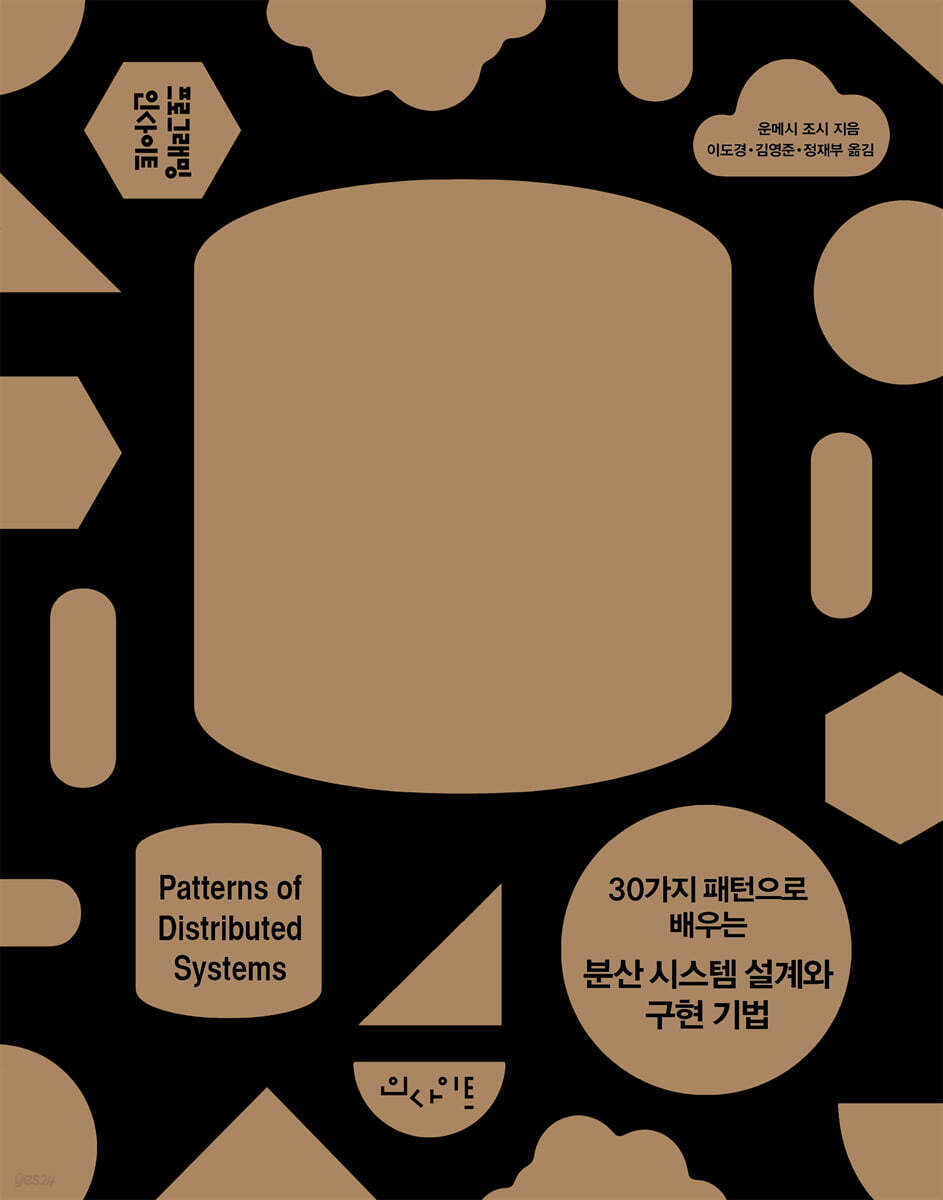
Learn Distributed System Design and Implementation Techniques with 30 Patterns
 |
Description
Book Introduction
Today, many businesses rely on services from cloud service providers like AWS, Microsoft Azure, and GCP.
We also use distributed environments such as Kafka and Kubernetes, as well as distributed databases such as YugabyteDB, Cassandra, MongoDB, and Neo4J.
Because these distributed systems are inherently stateful, enterprise system designers and developers must be prepared for all the potential issues that can arise when storing data across multiple servers.
This book describes a series of patterns observed in mainstream open-source distributed systems.
A pattern is a methodology that describes a specific problem encountered in a software system and a concrete solution that can be implemented in actual code.
The main strength of patterns is their intuitive names and the level of detail they provide at the code level.
Studying common problems and solutions implemented as patterns in the book will help you better understand how systems work and build a solid foundation in the design principles of distributed systems.
For enterprise systems and data architects, as well as software developers using cloud services, these patterns will become essential tools for design, implementation, and communication.
We also use distributed environments such as Kafka and Kubernetes, as well as distributed databases such as YugabyteDB, Cassandra, MongoDB, and Neo4J.
Because these distributed systems are inherently stateful, enterprise system designers and developers must be prepared for all the potential issues that can arise when storing data across multiple servers.
This book describes a series of patterns observed in mainstream open-source distributed systems.
A pattern is a methodology that describes a specific problem encountered in a software system and a concrete solution that can be implemented in actual code.
The main strength of patterns is their intuitive names and the level of detail they provide at the code level.
Studying common problems and solutions implemented as patterns in the book will help you better understand how systems work and build a solid foundation in the design principles of distributed systems.
For enterprise systems and data architects, as well as software developers using cloud services, these patterns will become essential tools for design, implementation, and communication.
- You can preview some of the book's contents.
Preview
index
Translator's Note
Recommendation
Introduction
Part 1: Distributed Systems
Chapter 1: The Promises and Perils of Distributed Systems
Chapter 2 Pattern Overview
Part 2 Data Replication Patterns
Log before writing Chapter 3 (Pattern 1)
Chapter 4 (Pattern 2) Split Log
Chapter 5 (Pattern 3) Low Watermark
Chapter 6 (Pattern 4) Leader Follower
Chapter 7 (Pattern 5) Heartbeat
Chapter 8 (Pattern 6) Majority Quorum
Chapter 9 (Pattern 7) Generational Clock
Chapter 10 (Pattern 8) High Watermark
Chapter 11 (Pattern 9) Paxos
Chapter 12 (Pattern 10) Replication Log
Chapter 13 (Pattern 11) Single Update Queue
Chapter 14 (Pattern 12) Request Waiting List
Chapter 15 (Pattern 13) Idempotent Receivers
Chapter 16 (Pattern 14) Follower Reading
Chapter 17 (Pattern 15) Versioning Values
Chapter 18 (Pattern 16) Version Vector
Part 3 Data Partition Patterns
Chapter 19 (Pattern 17) Fixed Partition
20 (Pattern 18) Key Range Partition
Chapter 21 (Pattern 19) Two-Stage Commit
Part 4: Distributed Time Patterns
Chapter 22 (Pattern 20) Lamport Watch
Chapter 23 (Pattern 21) Hybrid Watch
24 (Pattern 22) Clock-limited waiting
Part 5: Cluster Management Patterns
Chapter 25 (Pattern 23) Consistency Core
Chapter 26 (Pattern 24) Lease
Chapter 27 (Pattern 25) Status Monitoring
Chapter 28 (Pattern 26) Spreading Gossip
Chapter 29 (Pattern 27) Autonomous Leaders
Part 6: Inter-node Communication Patterns
30 sheets (Pattern 28) Single socket channel
Request for a bundle of 31 sheets (Pattern 29)
Chapter 32 (Pattern 30) Request Pipeline
Recommendation
Introduction
Part 1: Distributed Systems
Chapter 1: The Promises and Perils of Distributed Systems
Chapter 2 Pattern Overview
Part 2 Data Replication Patterns
Log before writing Chapter 3 (Pattern 1)
Chapter 4 (Pattern 2) Split Log
Chapter 5 (Pattern 3) Low Watermark
Chapter 6 (Pattern 4) Leader Follower
Chapter 7 (Pattern 5) Heartbeat
Chapter 8 (Pattern 6) Majority Quorum
Chapter 9 (Pattern 7) Generational Clock
Chapter 10 (Pattern 8) High Watermark
Chapter 11 (Pattern 9) Paxos
Chapter 12 (Pattern 10) Replication Log
Chapter 13 (Pattern 11) Single Update Queue
Chapter 14 (Pattern 12) Request Waiting List
Chapter 15 (Pattern 13) Idempotent Receivers
Chapter 16 (Pattern 14) Follower Reading
Chapter 17 (Pattern 15) Versioning Values
Chapter 18 (Pattern 16) Version Vector
Part 3 Data Partition Patterns
Chapter 19 (Pattern 17) Fixed Partition
20 (Pattern 18) Key Range Partition
Chapter 21 (Pattern 19) Two-Stage Commit
Part 4: Distributed Time Patterns
Chapter 22 (Pattern 20) Lamport Watch
Chapter 23 (Pattern 21) Hybrid Watch
24 (Pattern 22) Clock-limited waiting
Part 5: Cluster Management Patterns
Chapter 25 (Pattern 23) Consistency Core
Chapter 26 (Pattern 24) Lease
Chapter 27 (Pattern 25) Status Monitoring
Chapter 28 (Pattern 26) Spreading Gossip
Chapter 29 (Pattern 27) Autonomous Leaders
Part 6: Inter-node Communication Patterns
30 sheets (Pattern 28) Single socket channel
Request for a bundle of 31 sheets (Pattern 29)
Chapter 32 (Pattern 30) Request Pipeline
Publisher's Review
The concept of abstracting complex things into patterns is the most important and fundamental principle in this book.
This book applies a patterns approach to the essential components of modern distributed systems.
The pattern approach names components and describes the behavior of each component and the interactions between them.
This way, you can learn a pattern language that handles distributed systems appropriately, like a set of assembly-ready Lego blocks.
- From a recommendation from NeoForJ Chief Scientist Jim Weber
This book applies a patterns approach to the essential components of modern distributed systems.
The pattern approach names components and describes the behavior of each component and the interactions between them.
This way, you can learn a pattern language that handles distributed systems appropriately, like a set of assembly-ready Lego blocks.
- From a recommendation from NeoForJ Chief Scientist Jim Weber
GOODS SPECIFICS
- Date of issue: April 15, 2025
- Page count, weight, size: 464 pages | 882g | 188*240*22mm
- ISBN13: 9788966264735
You may also like
카테고리
korean


korean

![ELLE 엘르 스페셜 에디션 A형 : 12월 [2025]](http://librairie.coreenne.fr/cdn/shop/files/b8e27a3de6c9538896439686c6b0e8fb.jpg?v=1766436872&width=3840)


