

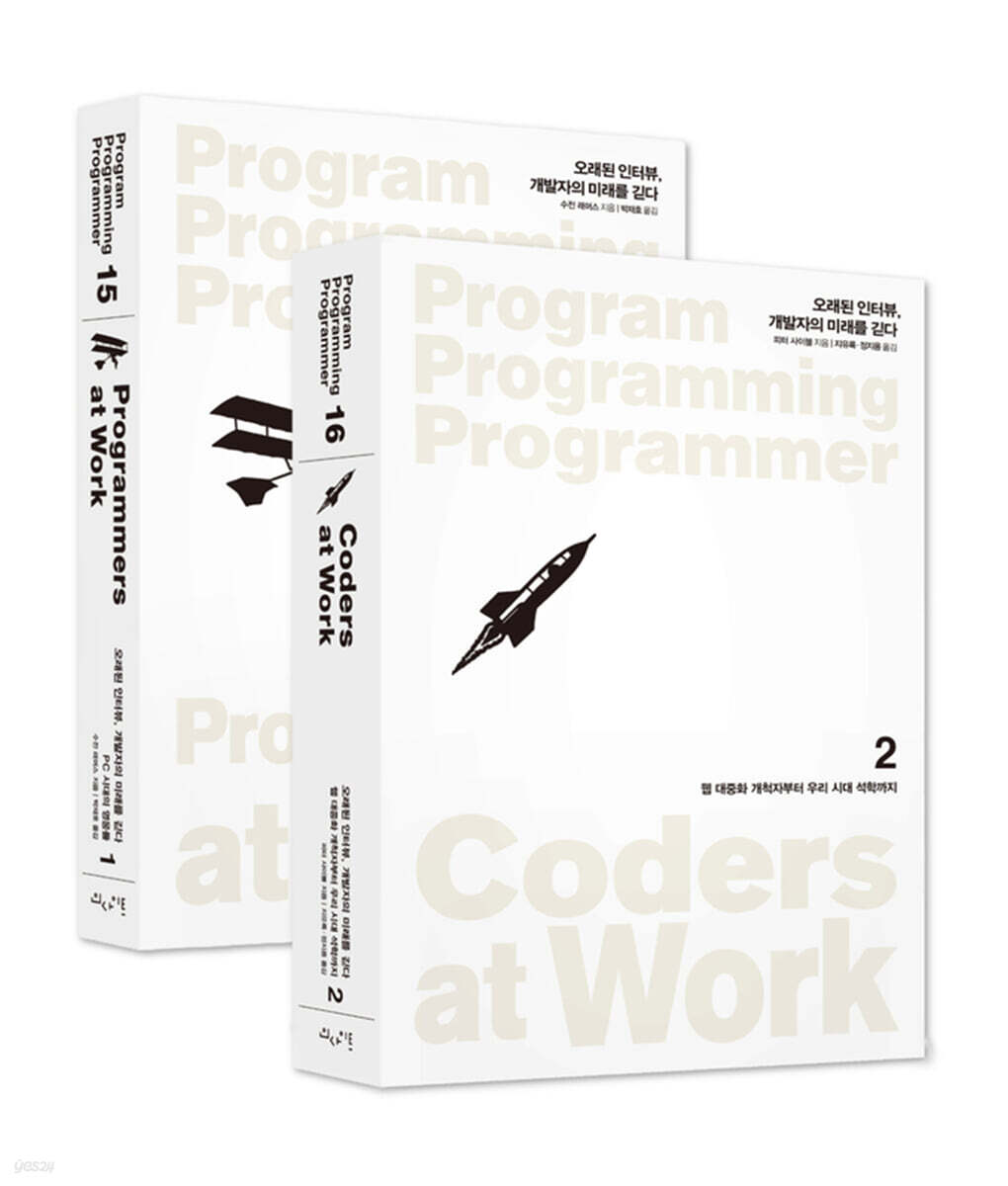
An Old Interview: A Look into the Future of Developers
 |
Description
Book Introduction
[The Thoughts of Our Time's Masters on Rapidly Changing Computing Technology]
If we look at the history of computing technology, we generally find that the complexity of technology is increasing and its lifespan is shortening.
And in recent years, artificial intelligence, the most promising disruptive technology candidate, is further fueling this trend.
Although quality issues still exist, the amount of code generated by AI has now reached a level that humans have difficulty keeping up with.
Some say that programmers have developed a technology that will eat them.
Is that really true?
Blind nostalgia is problematic, but when times change rapidly, people look back to the past and gain insight from it.
The same goes for the field of computing, which has a relatively short history.
It's time to revisit the essence of programming, something that developers today may have forgotten, from a story from decades ago.
"Old Interviews: Exploring the Future of Developers" explores the minds of our time and asks what constitutes unchanging programming in a computing world where countless technologies have emerged and disappeared.
Operating system developers, programming language designers, killer application developers, and academics all come from different fields and have different opinions on specifics, but they discuss the common principles of programming that rarely change.
And this collection of interviews reveals that what truly drives them is not the use of cutting-edge tools or the pursuit of trends, but rather a vibrant curiosity, a spirit of inquiry, and deep thought.
- You can preview some of the book's contents.
Preview
index
[Volume 1]
Recommendation
Translator's Note
preface
Introduction
Chapter 1: Charles Simonyi, Microsoft Office Software Development Leader
Chapter 2: Butler Ramson, developer of the Xerox Alto, who opened a new chapter in the GUI.
Chapter 3: Adobe Founder John Warnock
Chapter 4: CP/M Developer Gary Kildall
Chapter 5: Microsoft Founder Bill Gates
Chapter 6 Information Management Software PFS Series Developer John Page
Chapter 7: dBASE Developer Wayne Ratliff
Chapter 8: VisiCalc Designer Dan Bricklin
Chapter 9: Bob Frankston, VisiCalc Developer
Chapter 10: Jonathan Sachs, Developer of Lotus 1-2-3
Chapter 11: Lotus Symphony Developer Ray Ozzie
Chapter 12 Spreadsheet T/Maker Developer Peter Roizen
Chapter 13 Integrated Office Program Framework Developer Bob Carr
Chapter 14: Silicon Valley's Rebel, Jeff Raskin
Chapter 15: Andy Hertzfeld, Developer of the First Macintosh Operating System
Chapter 16: Toru Iwatani, the father of the classic game Pac-Man
Chapter 17: Digital Creator Scott Kim
Chapter 18: Virtual Reality Pioneer Jaylin Liner
Chapter 19: Michael Holley, Digital Audio Software Developer
Glossary of terms
supplement
Americas
[Volume 2]
Recommendation
Translator's Note
Acknowledgements
Entering
Chapter 1: Netscape Developer Jamie Zawinski
Chapter 2: LiveJournal Developer Brad Fitzpatrick
Chapter 3: Douglas Crockford, the Creator of JSON
Chapter 4: Brendan Eich, Creator of JavaScript
Chapter 5: Java Collections Framework Developer Joshua Bloch
Chapter 6: Joe Armstrong, the founder of Erlang
Chapter 7: Haskell Designer Simon Peyton-Jones
Chapter 8: "Ten Years of Programming Study" by Peter Norvig
Chapter 9: Guy Steele, the Multilingual Computing World
Chapter 10: The Mother of Small Talk, Dan Ingalls
Chapter 11: L. Peter Deutsch, Creator of Ghostscript
Chapter 12: Ken Thompson, the Father of Unix
Chapter 13: Fran Allen, the first female Turing Award winner
Chapter 14: Bernie Cosell, developer of the router's predecessor, IMP
Chapter 15: “Just That” Donald Knuth
References
Americas
Search
Into the book
As you read these books, you will find detailed information about outdated technologies.
…The value of studying history lies in understanding its historical significance, the concerns of the time, the choices made, and the evaluations of later generations.
It's the same.
…I wonder how this story could translate into meaning for me now.
What were the parties thinking and what decisions were made while solving that technical problem?
What is the thinking behind it?
If you read this book actively with these thoughts in mind, the boring story will turn into a lively and vibrant story.
--- From "Recommendations"
From an artistic perspective, the best software comes from the realm of intuition.
--- From "Bob Carr, Chapter 13, Volume 1"
…if people are adventurous about learning, they will go out and explore new technologies as well as old ones, appreciate the value of both, and understand how it all fits into the bigger picture.
While superficial use of computer technology without a full understanding of what's behind it and where it came from is a huge threat, I firmly believe that people will do the right thing, big or small.
--- From "Volume 1, Chapter 19, Michael Holly"
You must be able to suppress your curiosity about what is going on beneath the surface of things.
Curiosity is the foundation of becoming a programmer.
--- From "Jamie Zawinski, Volume 2, Chapter 1"
Don't just read the code of people who code just like you.
--- From "Donald Knuth, Chapter 15, Volume 2"
GOODS SPECIFICS
- Date of issue: October 1, 2025
- Page count, weight, size: 1,276 pages | 1,844g | 152*225*60mm
- ISBN13: 9788966264896
You may also like
카테고리
korean


korean


