

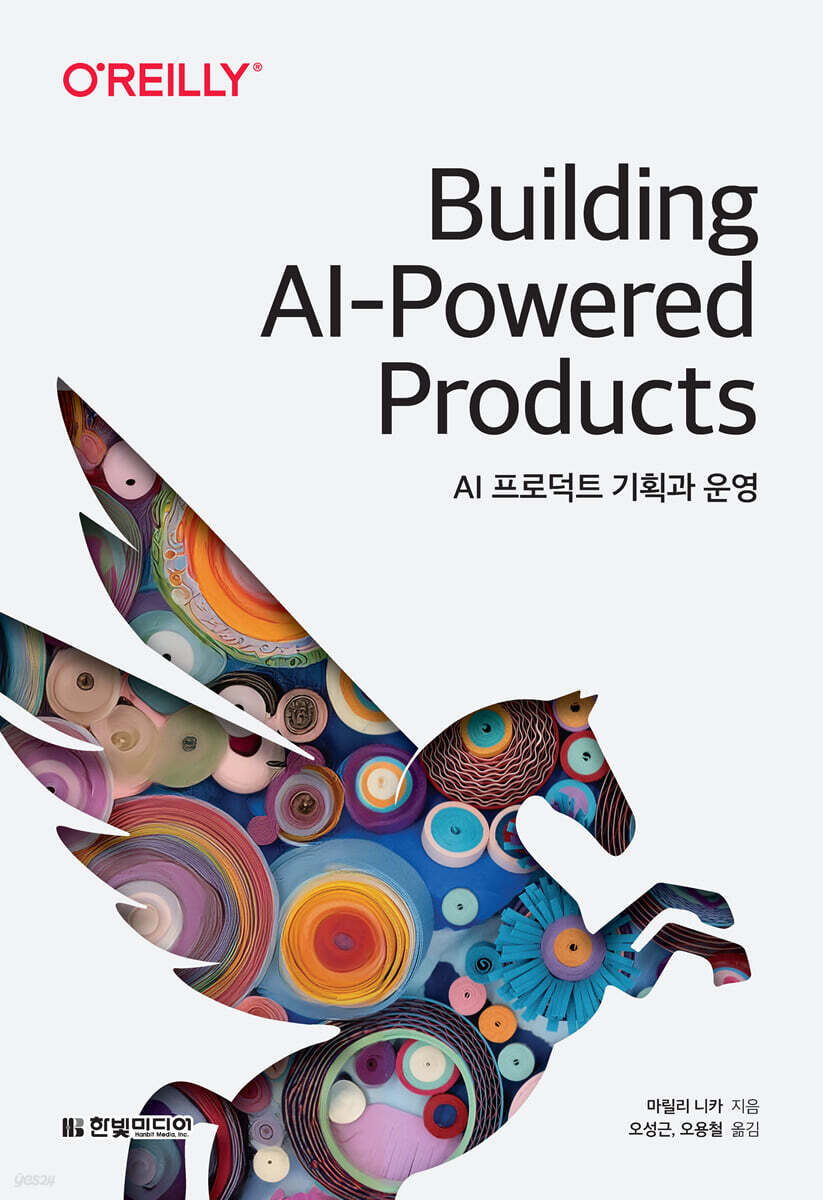
AI product planning and operation
 |
Description
Book Introduction
The era of change brought about by AI,
A Guide for PMs Navigating the New Era
AI is empowering us to solve problems and scale solutions in ways unimaginable just a decade ago, radically transforming the digital landscape and the way we develop products.
The same holds true for products. AI products operate autonomously, learning and evolving through interactions with users, performing diverse and complex tasks ranging from planning and decision-making, to coordinating and executing tasks, and even providing personalized experiences to users.
That's why, in the future, all product managers will become AI product managers (AI PMs).
This book is a guide to connecting complex AI agents and generative AI products to innovation, featuring smart strategies, ready-to-use tools, and real-world examples. Learn how AI PMs leverage AI technology in their products to solve user problems.
Whether you're leading an organization or preparing to become a PM, this guide will help you confidently lead the entire AI product lifecycle, regardless of prior AI knowledge.
Key Contents
● Tools, frameworks, and strategic insights for systematically managing AI product development
How product organizations use agentic and generative AI to solve problems
● Understand various AI models and the algorithms that drive them, determine strategic tradeoffs, and set clear OKRs.
A Guide for PMs Navigating the New Era
AI is empowering us to solve problems and scale solutions in ways unimaginable just a decade ago, radically transforming the digital landscape and the way we develop products.
The same holds true for products. AI products operate autonomously, learning and evolving through interactions with users, performing diverse and complex tasks ranging from planning and decision-making, to coordinating and executing tasks, and even providing personalized experiences to users.
That's why, in the future, all product managers will become AI product managers (AI PMs).
This book is a guide to connecting complex AI agents and generative AI products to innovation, featuring smart strategies, ready-to-use tools, and real-world examples. Learn how AI PMs leverage AI technology in their products to solve user problems.
Whether you're leading an organization or preparing to become a PM, this guide will help you confidently lead the entire AI product lifecycle, regardless of prior AI knowledge.
Key Contents
● Tools, frameworks, and strategic insights for systematically managing AI product development
How product organizations use agentic and generative AI to solve problems
● Understand various AI models and the algorithms that drive them, determine strategic tradeoffs, and set clear OKRs.
- You can preview some of the book's contents.
Preview
index
CHAPTER 1: The Role of the AI Product Manager
_1.1 Stages of AI Evolution
_1.2 Introducing AI into Products
_1.3 Unique Features of AI
_1.4 Superpowers of AI and Generative AI
_1.5 The Role of AI PM
_1.6 AI PM's capabilities
_1.7 Organizational Structure
_1.8 Why do you want to become an AI PM?
_1.9 Roadmap
_1.10 Conclusion
CHAPTER 2: AI Product Development Lifecycle
_2.1 Types of AI Products
_2.2 AI Product Development Lifecycle
_2.3 Conclusion
CHAPTER 3 Essential Knowledge for AI PMs
_3.1 Core Product Management Technologies and Practices
_3.2 How to Develop General Product Management Capabilities
_3.3 Essential Leadership and Collaboration Competencies
_3.4 Engineering Fundamentals for PM
_3.5 Understanding the AI Product Development Lifecycle and Operations
_3.6 Conclusion
CHAPTER 4 AI PM's Work
_4.1 AI PM Career Path
_4.2 The Role of AI PM
_4.3 Conclusion
CHAPTER 5: STRATEGIC THINKING IN AI
_5.1 Business Strategy: Evaluating AI as a Solution
_5.2 AI Strategy: Build or Buy?
_5.3 Data Strategy: Model Building and Adaptation
_5.4 Product Review: Gaining Leadership Support
_5.5 Conclusion
CHAPTER 6 SETTING GOALS AND MEASURING SUCCESS
_6.1 Product Status Indicators
_6.2 System Status Indicators
_6.3 AI Proxy Indicators
_6.4 OKR for AI Products
_6.5 Conclusion
CHAPTER 7 AI TOOLS FOR PM
_7.1 Tools for Strengthening AIPDL
_7.2 Tools for collaboration and inspection
_7.3 Conclusion
CHAPTER 8 Building AI Agents
_8.1 What is an AI agent?
_8.2 Agent-based products
_8.3 Designing AI Agents Suitable for Your Product
_8.4 Design Patterns for Agent Interaction
_8.5 Defining success criteria for agents
_8.6 AI Agent Questionnaire
_8.7 Conclusion
Appendix A Template
Product Review Template
AI Product Requirements Document Template
Worksheet: Assessing AI Adoption Opportunities in Your Organization
Worksheet: AI Implementation Strategy Worksheet
Appendix B Interview
Democratizing Knowledge: Riding the AI Inflection Point
A Machine Learning MVP Completed Through Self-Study and Experimentation
Is AI really necessary?
0-to-1 to turn ideas into reality
The value created by prioritization and focus
PM's fundamentals create great AI products.
Problems discovered through conversations with customers
_1.1 Stages of AI Evolution
_1.2 Introducing AI into Products
_1.3 Unique Features of AI
_1.4 Superpowers of AI and Generative AI
_1.5 The Role of AI PM
_1.6 AI PM's capabilities
_1.7 Organizational Structure
_1.8 Why do you want to become an AI PM?
_1.9 Roadmap
_1.10 Conclusion
CHAPTER 2: AI Product Development Lifecycle
_2.1 Types of AI Products
_2.2 AI Product Development Lifecycle
_2.3 Conclusion
CHAPTER 3 Essential Knowledge for AI PMs
_3.1 Core Product Management Technologies and Practices
_3.2 How to Develop General Product Management Capabilities
_3.3 Essential Leadership and Collaboration Competencies
_3.4 Engineering Fundamentals for PM
_3.5 Understanding the AI Product Development Lifecycle and Operations
_3.6 Conclusion
CHAPTER 4 AI PM's Work
_4.1 AI PM Career Path
_4.2 The Role of AI PM
_4.3 Conclusion
CHAPTER 5: STRATEGIC THINKING IN AI
_5.1 Business Strategy: Evaluating AI as a Solution
_5.2 AI Strategy: Build or Buy?
_5.3 Data Strategy: Model Building and Adaptation
_5.4 Product Review: Gaining Leadership Support
_5.5 Conclusion
CHAPTER 6 SETTING GOALS AND MEASURING SUCCESS
_6.1 Product Status Indicators
_6.2 System Status Indicators
_6.3 AI Proxy Indicators
_6.4 OKR for AI Products
_6.5 Conclusion
CHAPTER 7 AI TOOLS FOR PM
_7.1 Tools for Strengthening AIPDL
_7.2 Tools for collaboration and inspection
_7.3 Conclusion
CHAPTER 8 Building AI Agents
_8.1 What is an AI agent?
_8.2 Agent-based products
_8.3 Designing AI Agents Suitable for Your Product
_8.4 Design Patterns for Agent Interaction
_8.5 Defining success criteria for agents
_8.6 AI Agent Questionnaire
_8.7 Conclusion
Appendix A Template
Product Review Template
AI Product Requirements Document Template
Worksheet: Assessing AI Adoption Opportunities in Your Organization
Worksheet: AI Implementation Strategy Worksheet
Appendix B Interview
Democratizing Knowledge: Riding the AI Inflection Point
A Machine Learning MVP Completed Through Self-Study and Experimentation
Is AI really necessary?
0-to-1 to turn ideas into reality
The value created by prioritization and focus
PM's fundamentals create great AI products.
Problems discovered through conversations with customers
Detailed image

Publisher's Review
Nothing changes just by adding AI.
The real difference comes from experience.
In 2023, with the advent of ChatGPT, users will be able to interact with AI in ways unimaginable just a year ago.
In just one year, a truly diverse range of AI products have emerged, from image generation tools like Midjourney, Stable Diffusion, and DALL-E, to advanced search solutions like DeepSearch, and multimodal generative AI systems like Gemini.
Now, countless companies are trying to integrate AI technology into their products.
Unlike traditional product development, AI products are probabilistic, rely on high-quality data, and require continuous learning and optimization.
Concepts like large-scale language models, augmented search generation, and model fine-tuning are crucial to understanding AI product management, but can feel inaccessible to non-technical PMs.
This book explores the complex AI product development lifecycle, considers strategic and ethical considerations, and offers concrete guidance on developing innovative, user-centric products, complete with practical tools and case studies.
This roadmap helps you navigate the challenges of building AI-powered products, introducing ways to ensure AI truly addresses user needs.
From ideation to execution, this book covers how to build new experiences with AI and generative AI, providing valuable insights for anyone working with technology teams to develop AI products.
The real difference comes from experience.
In 2023, with the advent of ChatGPT, users will be able to interact with AI in ways unimaginable just a year ago.
In just one year, a truly diverse range of AI products have emerged, from image generation tools like Midjourney, Stable Diffusion, and DALL-E, to advanced search solutions like DeepSearch, and multimodal generative AI systems like Gemini.
Now, countless companies are trying to integrate AI technology into their products.
Unlike traditional product development, AI products are probabilistic, rely on high-quality data, and require continuous learning and optimization.
Concepts like large-scale language models, augmented search generation, and model fine-tuning are crucial to understanding AI product management, but can feel inaccessible to non-technical PMs.
This book explores the complex AI product development lifecycle, considers strategic and ethical considerations, and offers concrete guidance on developing innovative, user-centric products, complete with practical tools and case studies.
This roadmap helps you navigate the challenges of building AI-powered products, introducing ways to ensure AI truly addresses user needs.
From ideation to execution, this book covers how to build new experiences with AI and generative AI, providing valuable insights for anyone working with technology teams to develop AI products.
GOODS SPECIFICS
- Date of issue: September 29, 2025
- Page count, weight, size: 240 pages | 153*223*20mm
- ISBN13: 9791169214438
- ISBN10: 1169214436
You may also like
카테고리
korean


korean

![GQ KOREA Mark (Monthly): December [2025]](http://librairie.coreenne.fr/cdn/shop/files/8ef265dbbfbf186523ed75ba7319009d.jpg?v=1765340328&width=3840)


