

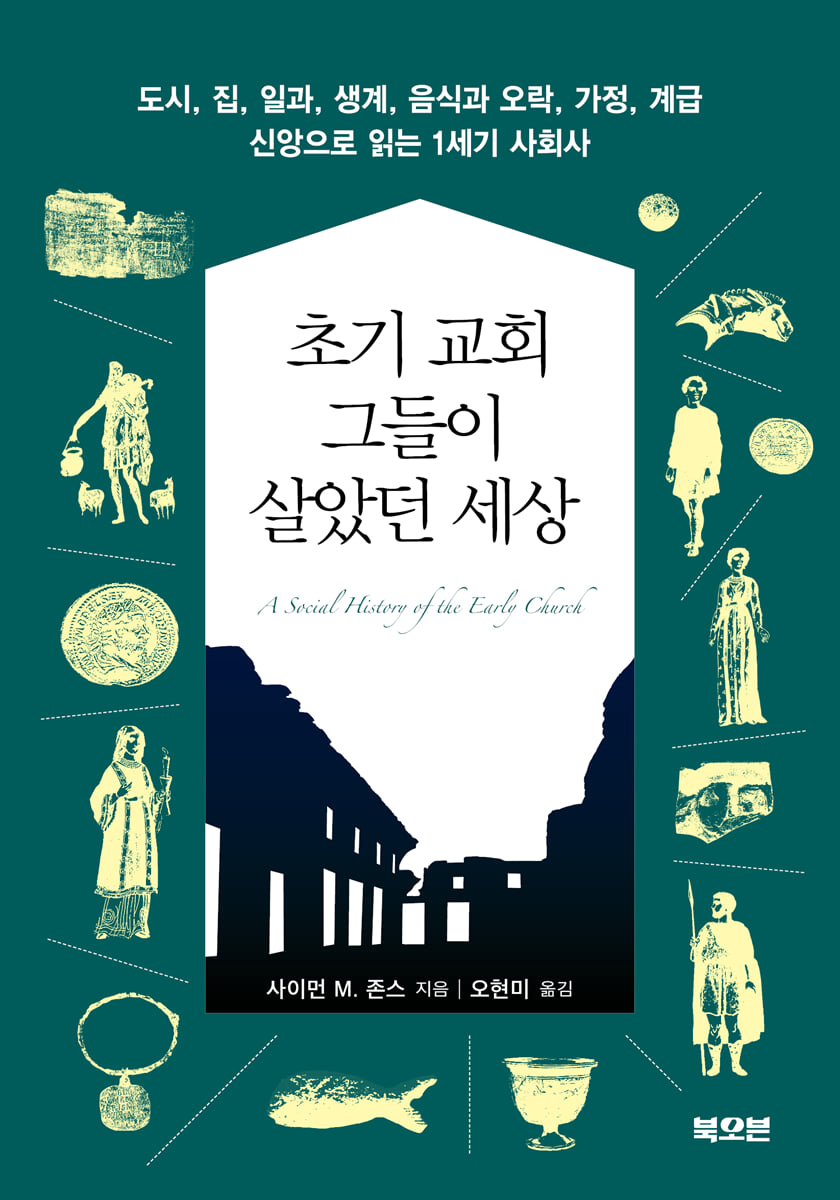
The Early Church and the World They Lived In
 |
Description
Book Introduction
A new and unfamiliar community called 'Followers of Christ'.
In what cities did they live, what did they eat, how did they work, and in what world did they keep their faith?
To understand the beliefs of the early Christians, we must first understand the world in which they lived.
A story of 1st century social history unfolded through 140 topics!
We often hear, “Let’s go back to the early church!”
But there are not many people who really know the spirit of the times.
How can we read the New Testament in a balanced way, across 2,000 years of time and cultural distance?
Drawing on a wealth of historical, archaeological, and literary sources, the author provides a three-dimensional portrait of the lives of early Christians, including cities and housing, labor and economics, family, and worship.
Every scene—from the life of the regions that served as the backdrop for the Acts of the Apostles and Paul's letters, such as Pompeii, Ostia, Ephesus, Corinth, and Antioch, to the smells of the city, the sounds of the market, the family dinner table, and even the rituals of the temple—takes today's readers back to that era.
This book will be a valuable guide to understanding the faith of the early church and interpreting the New Testament.
In what cities did they live, what did they eat, how did they work, and in what world did they keep their faith?
To understand the beliefs of the early Christians, we must first understand the world in which they lived.
A story of 1st century social history unfolded through 140 topics!
We often hear, “Let’s go back to the early church!”
But there are not many people who really know the spirit of the times.
How can we read the New Testament in a balanced way, across 2,000 years of time and cultural distance?
Drawing on a wealth of historical, archaeological, and literary sources, the author provides a three-dimensional portrait of the lives of early Christians, including cities and housing, labor and economics, family, and worship.
Every scene—from the life of the regions that served as the backdrop for the Acts of the Apostles and Paul's letters, such as Pompeii, Ostia, Ephesus, Corinth, and Antioch, to the smells of the city, the sounds of the market, the family dinner table, and even the rituals of the temple—takes today's readers back to that era.
This book will be a valuable guide to understanding the faith of the early church and interpreting the New Testament.
- You can preview some of the book's contents.
Preview
index
*Acknowledgements
At the beginning of the book
A New Era in History/Archaeology, Ancient Cultural Relics, Books/Map showing Paul's journey and the locations of the early churches
Chapter 1: Urban Movement
Earning a living/A closer look/A city tour/A city at night/What language do you speak?/The writing on the wall/Antioch/A multi-class community/In a street like this/A privileged person?/Who is in charge here?
Chapter 2: People's Housing
To the Romans, a home was a castle/A bird's-eye view of a residential building in Pompeii/Welcome to the formal dinner party/Open space for work/Roman apartment life/Work here too/Mixed-use housing system/Meeting neighbors/Bath time/Ephesus/The bath is heated/Where innovation took place/Finding your way in Corinth/Household goods
Chapter 3: Work
Living by farming/A long day dawns/Living by the day/Please pray for me/People employed by physical strength/Women on the front lines of work/Women of means/Technology that is not limited to location/Ship power/Going anywhere with a tool/Working and eating/A life of slavery/Athens/Buying freedom/Workplace as a church/The bill is mine
Chapter 4 Bread and Circuses
Daily Bread/Conversations over Food and Wine/Combinations/Rules of Gathering/A Leisurely Dinner/The Latest Thoughts/A Gathering to Remember Jesus/A Bloody Festival/Aphrodisias/The Emperor's Display of Power/Celebrities of the Century/A Day at the Racecourse/The Theatre is Important/Running for a Healthy Life/A Source of Rich Parables/A Message of Peace/Food, Famine, and Charity/Making the Masses Happy/Crisis? What Crisis?/A Place to Approach and Sit/Was the Food Prepared by the Host or Did Each Person Bring Their Own Food?/A Christian Symposium?
Chapter 5: Position in the World
The Dividing Line/Everyone in Their Place/The Imperial Ladder/Ask for Help/The Roman Social Pyramid/It's All About Seeing the Part/Gallio/Reading the Intention of the Seating Arrangement/Born by Birth/Getting Your Marching Orders/See You at the Club/Taking Your Place/What Should We Call Ourselves?/Greet Your Family/Paul's Social Position/Your Own Choice/Work is Good/Doing Good in Community/The Key to Success
Chapter 6: Family Life
Laying the foundation/Getting married/Separating/Family is a joy to be around/Studying well/Pliny/Trained to serve the empire/Living long and well?/How complicated it is/Life under one roof/Holiness permeating the home/Gathering around the table/Eating and studying/Was there a dress code?/Do I seem arrogant?/Did I know someone?/Don't make a fuss behind someone's back/What's in a name?/How can we tell them apart?/Following Jesus in the home/Give yourselves to one another/Exercise power with grace/Augustus, and St.
Chapter 7: Making a Living
The Farmer's Empire/Land is Power/A Vibrant Market Economy/A Complex Mixed Economy/Middle Class People/What Kind of People Are in the Middle Group/Paul's Friends and Co-workers/A Truly Miscellaneous Gathering/Junia and Andronicus/Money and Etiquette/What's in a Name?/Aspiring to Be a Great Person/Worship and Social Climb/It's Not Hard, You're a Brother/More Than Charity/Don't Be My Guardian/Do Good/Is He One of Us?
Chapter 8: The Supermarket of Faith
Join our group/Understanding the meaning of the world/Gaining God's favor/Fun for the whole family/Message in the guts of the beast?/A nation that worships/A god in every home/Finding God at the crossroads/Curse be upon you/Choose a god/Everyone loves a mystery/Men only/The war of ideas/Epictetus/The allure of Christianity/The center of Christian worship/He is revealed to be God/Who rules?
*Recommended books
*Search
At the beginning of the book
A New Era in History/Archaeology, Ancient Cultural Relics, Books/Map showing Paul's journey and the locations of the early churches
Chapter 1: Urban Movement
Earning a living/A closer look/A city tour/A city at night/What language do you speak?/The writing on the wall/Antioch/A multi-class community/In a street like this/A privileged person?/Who is in charge here?
Chapter 2: People's Housing
To the Romans, a home was a castle/A bird's-eye view of a residential building in Pompeii/Welcome to the formal dinner party/Open space for work/Roman apartment life/Work here too/Mixed-use housing system/Meeting neighbors/Bath time/Ephesus/The bath is heated/Where innovation took place/Finding your way in Corinth/Household goods
Chapter 3: Work
Living by farming/A long day dawns/Living by the day/Please pray for me/People employed by physical strength/Women on the front lines of work/Women of means/Technology that is not limited to location/Ship power/Going anywhere with a tool/Working and eating/A life of slavery/Athens/Buying freedom/Workplace as a church/The bill is mine
Chapter 4 Bread and Circuses
Daily Bread/Conversations over Food and Wine/Combinations/Rules of Gathering/A Leisurely Dinner/The Latest Thoughts/A Gathering to Remember Jesus/A Bloody Festival/Aphrodisias/The Emperor's Display of Power/Celebrities of the Century/A Day at the Racecourse/The Theatre is Important/Running for a Healthy Life/A Source of Rich Parables/A Message of Peace/Food, Famine, and Charity/Making the Masses Happy/Crisis? What Crisis?/A Place to Approach and Sit/Was the Food Prepared by the Host or Did Each Person Bring Their Own Food?/A Christian Symposium?
Chapter 5: Position in the World
The Dividing Line/Everyone in Their Place/The Imperial Ladder/Ask for Help/The Roman Social Pyramid/It's All About Seeing the Part/Gallio/Reading the Intention of the Seating Arrangement/Born by Birth/Getting Your Marching Orders/See You at the Club/Taking Your Place/What Should We Call Ourselves?/Greet Your Family/Paul's Social Position/Your Own Choice/Work is Good/Doing Good in Community/The Key to Success
Chapter 6: Family Life
Laying the foundation/Getting married/Separating/Family is a joy to be around/Studying well/Pliny/Trained to serve the empire/Living long and well?/How complicated it is/Life under one roof/Holiness permeating the home/Gathering around the table/Eating and studying/Was there a dress code?/Do I seem arrogant?/Did I know someone?/Don't make a fuss behind someone's back/What's in a name?/How can we tell them apart?/Following Jesus in the home/Give yourselves to one another/Exercise power with grace/Augustus, and St.
Chapter 7: Making a Living
The Farmer's Empire/Land is Power/A Vibrant Market Economy/A Complex Mixed Economy/Middle Class People/What Kind of People Are in the Middle Group/Paul's Friends and Co-workers/A Truly Miscellaneous Gathering/Junia and Andronicus/Money and Etiquette/What's in a Name?/Aspiring to Be a Great Person/Worship and Social Climb/It's Not Hard, You're a Brother/More Than Charity/Don't Be My Guardian/Do Good/Is He One of Us?
Chapter 8: The Supermarket of Faith
Join our group/Understanding the meaning of the world/Gaining God's favor/Fun for the whole family/Message in the guts of the beast?/A nation that worships/A god in every home/Finding God at the crossroads/Curse be upon you/Choose a god/Everyone loves a mystery/Men only/The war of ideas/Epictetus/The allure of Christianity/The center of Christian worship/He is revealed to be God/Who rules?
*Recommended books
*Search
Into the book
With the exception of the Epistle of James, which was written to the scattered communities of Galilee and Judea, which were rural areas, everything we know about the lives of the early Christians takes place in urban settings.
So we come to the story of Philemon, who lived in Colossae, Timothy, who lived in Ephesus, and Phoebe, who lived in the port city of Cenchreae.
--- From "Chapter 1: Urban Movement"
It is often thought that only the wealthy few in the Roman Empire lived in large, spacious, and well-equipped villas, while the poor masses lived in cramped, poorly built apartment blocks, with entire families crammed into a single room.
There is some truth to this thinking.
But this simple picture does not fit with what archaeologists have discovered through detailed studies of residential ruins across the empire, particularly in Pompeii, Ostia, Corinth, and Ephesus.
--- From "Chapter 2: People's Housing"
About 80 percent of the empire's population lived by farming.
Even in a good harvest, many people barely made a living as tenant farmers on small farms that produced just enough to feed their families.
Many more lived as slaves and day laborers on the commercial farms of the aristocratic elite.
--- From "Chapter 3 Daily Work"
The daily diet of most people was very basic and poor: grains, thin porridge, water, and cheap wine, with the occasional addition of vegetables, fish, and very rarely meat.
Sometimes the collegia would host real banquets, and they could enjoy various entertainments throughout the year, usually provided free of charge by the city's wealthy residents.
--- From Chapter 4, Bread and Circuses
In the Roman world, social status depended on a number of factors.
The basic distinction between people was simple.
Slaves or freemen? Between 16 and 20 percent of the empire's population were slaves.
Of course, in Italy and Rome itself, slaves comprised as much as one-third of the total population.
Slaves had no rights.
They could not own property, could not legally marry, and therefore could not have legitimate children.
Simply put, slaves were the property of their masters.
--- From "Chapter 5: Position in the World"
Marriage was the foundation of family life in the empire.
Roman marriage was an agreement between a man and a woman.
The state played no role in the marriage taking place.
There wasn't even a marriage registry.
Religion also did not play an important role in the wedding ceremony.
Although there were religious rituals centered around the wedding, no priest of any kind officiated at religious marriage ceremonies.
--- From "Chapter 6 Family Life"
An analysis of the names in Romans 16 reveals that at least one-third of them were slaves or descendants of slaves.
It is highly likely that they came to Rome with their families who were enslaved, or moved to Rome in search of a way to make a living after being freed from slavery.
What is almost certain is that these were desperately poor people barely eking out a living at the bottom of the city's food chain.
From Chapter 7, “Making a Living”
The Roman world pursued peace with the gods, the 'pax decorum' (if the Pax Romana united the empire, the 'Pax Decorum' was its spiritual equivalent).
All the calamities that befell the empire were caused by the destruction of its peace (pax) by men's disrespect for the divine order, especially by their failure to worship regularly or by their worship in new forms.
Public ceremonies of offering sacrifices and praying were important events in which all citizens had to participate.
So we come to the story of Philemon, who lived in Colossae, Timothy, who lived in Ephesus, and Phoebe, who lived in the port city of Cenchreae.
--- From "Chapter 1: Urban Movement"
It is often thought that only the wealthy few in the Roman Empire lived in large, spacious, and well-equipped villas, while the poor masses lived in cramped, poorly built apartment blocks, with entire families crammed into a single room.
There is some truth to this thinking.
But this simple picture does not fit with what archaeologists have discovered through detailed studies of residential ruins across the empire, particularly in Pompeii, Ostia, Corinth, and Ephesus.
--- From "Chapter 2: People's Housing"
About 80 percent of the empire's population lived by farming.
Even in a good harvest, many people barely made a living as tenant farmers on small farms that produced just enough to feed their families.
Many more lived as slaves and day laborers on the commercial farms of the aristocratic elite.
--- From "Chapter 3 Daily Work"
The daily diet of most people was very basic and poor: grains, thin porridge, water, and cheap wine, with the occasional addition of vegetables, fish, and very rarely meat.
Sometimes the collegia would host real banquets, and they could enjoy various entertainments throughout the year, usually provided free of charge by the city's wealthy residents.
--- From Chapter 4, Bread and Circuses
In the Roman world, social status depended on a number of factors.
The basic distinction between people was simple.
Slaves or freemen? Between 16 and 20 percent of the empire's population were slaves.
Of course, in Italy and Rome itself, slaves comprised as much as one-third of the total population.
Slaves had no rights.
They could not own property, could not legally marry, and therefore could not have legitimate children.
Simply put, slaves were the property of their masters.
--- From "Chapter 5: Position in the World"
Marriage was the foundation of family life in the empire.
Roman marriage was an agreement between a man and a woman.
The state played no role in the marriage taking place.
There wasn't even a marriage registry.
Religion also did not play an important role in the wedding ceremony.
Although there were religious rituals centered around the wedding, no priest of any kind officiated at religious marriage ceremonies.
--- From "Chapter 6 Family Life"
An analysis of the names in Romans 16 reveals that at least one-third of them were slaves or descendants of slaves.
It is highly likely that they came to Rome with their families who were enslaved, or moved to Rome in search of a way to make a living after being freed from slavery.
What is almost certain is that these were desperately poor people barely eking out a living at the bottom of the city's food chain.
From Chapter 7, “Making a Living”
The Roman world pursued peace with the gods, the 'pax decorum' (if the Pax Romana united the empire, the 'Pax Decorum' was its spiritual equivalent).
All the calamities that befell the empire were caused by the destruction of its peace (pax) by men's disrespect for the divine order, especially by their failure to worship regularly or by their worship in new forms.
Public ceremonies of offering sacrifices and praying were important events in which all citizens had to participate.
--- From "Chapter 8: The Supermarket of Faith"
Publisher's Review
Features of this book
- Introduces various aspects of 1st century society through specific examples.
- Connects the background of Paul's letters and Acts through major cities such as Pompeii and Ephesus.
- Helps understand the New Testament within the context of actual history and culture.
- Unlike ‘church history’ which focuses on the formation of theology and doctrine, it shows “how they actually lived.”
- It awakens us to the weight and meaning of living as a first-century Christian.
- Introduces various aspects of 1st century society through specific examples.
- Connects the background of Paul's letters and Acts through major cities such as Pompeii and Ephesus.
- Helps understand the New Testament within the context of actual history and culture.
- Unlike ‘church history’ which focuses on the formation of theology and doctrine, it shows “how they actually lived.”
- It awakens us to the weight and meaning of living as a first-century Christian.
GOODS SPECIFICS
- Date of issue: October 21, 2025
- Page count, weight, size: 296 pages | 366g | 140*200*18mm
- ISBN13: 9791193766057
- ISBN10: 1193766052
You may also like
카테고리
korean


korean

![GQ KOREA Mark (Monthly): December [2025]](http://librairie.coreenne.fr/cdn/shop/files/8ef265dbbfbf186523ed75ba7319009d.jpg?v=1765340328&width=3840)


