

My country, my marathon
 |
Description
Book Introduction
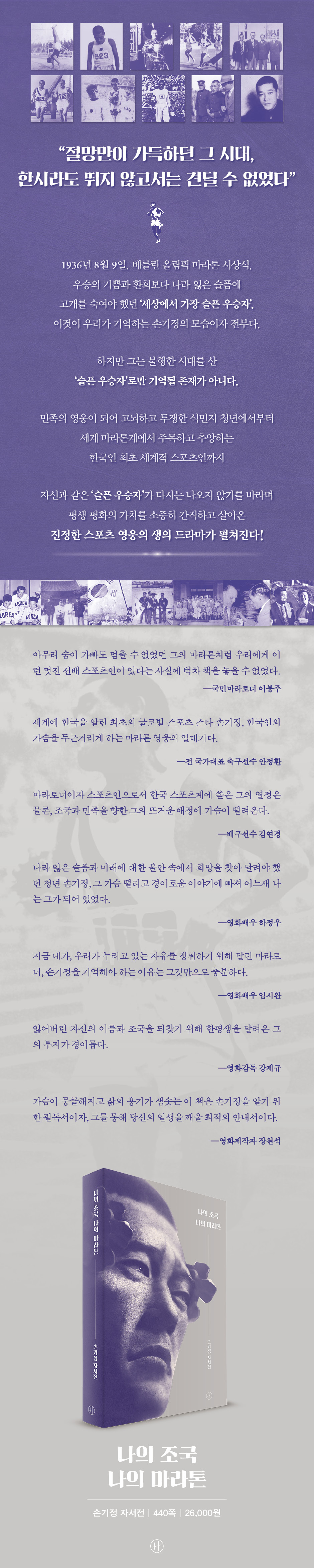
From 'Sad Marathon Runner' to Messenger of Peace Meet Son Ki-chung, the first Korean world-class athlete. Beyond the image of a "sad champion," a look at Son Ki-chung, a Korean athlete admired worldwide. A glimpse into the agony and struggles of a colonial youth who became a national hero. - Discover the face of an outstanding leader and athlete who led the Korean marathon and sports world after liberation. On August 9, 1936, Son Ki-chung, the winner of the marathon at the Berlin Olympics, will not be remembered only as a sad marathoner who lived in an unfortunate era. In November 1935, he set a new world record of 2 hours, 26 minutes, and 42 seconds, and won the 1936 Olympics with a new Olympic record of 2 hours, 29 minutes, and 19.2 seconds. This record remained unbroken for 11 years until Seo Yun-bok set a new record of 2 hours, 25 minutes, and 39 seconds at the 1947 Boston Marathon. He was also a great leader who produced Seo Yun-bok, the winner of the 1947 Boston Marathon, despite the harsh environment immediately after liberation. The autobiography of Son Kee-chung, the first Asian and Korean Olympic marathon gold medalist, My Country, My Marathon, vividly depicts not only the various aspects of Son Kee-chung, the first Korean world-class athlete to receive attention and admiration from the world marathon world, but also the agony, conflict, and struggles of a young man in the colony who rose to a position representing his country. This book contains not only the story of Son Kee-chung in Berlin in 1936, but also honest stories about why he had to run and run again in the dark times when no escape was in sight, the difficult path leading up to the Berlin Olympics, and his life after winning the Olympics. Through the stories of his post-liberation days, when he proudly wore the Taegeukgi on his chest and created the miracle of the Korean marathon, you can encounter everything about this true sports hero that cannot be known through fragmentary stories, such as his outstanding leadership and his passion for the marathon that he never gave up even as he grew older. Let's take a look at the life drama of Son Ki-jeong, who cherished the value of peace throughout his life, hoping that there will never be another "sad winner" like himself. |
- You can preview some of the book's contents.
Preview
index
In publishing the book
prolog
Childhood memories
Face to Face with the Marathon
dark times
Joseon's Olympians
marathon runner Son Ki-jeong
A match of fate
Standing at the top
The shock of the marathon that shook the peninsula
The world of sports shrouded in dark clouds
The day is dawning
Taegeukgi flying in Boston
The Korean Marathon: A Trial and Glory
The tragedy of fratricide
The rapidly changing world of marathons
reproduction
Old Soldier's Wish
Epilogue
Since 1984 · Lee Jun-seung
A great victory of national thought that ran together with the people · Ahn Chun-saeng
Recommending Son Ki-jeong's autobiography · Hong Jong-in
Our hero, Choi Jeong-hee, who couldn't shake off her middle school student image.
Son Ki-jeong's chronology
Notes in the text
prolog
Childhood memories
Face to Face with the Marathon
dark times
Joseon's Olympians
marathon runner Son Ki-jeong
A match of fate
Standing at the top
The shock of the marathon that shook the peninsula
The world of sports shrouded in dark clouds
The day is dawning
Taegeukgi flying in Boston
The Korean Marathon: A Trial and Glory
The tragedy of fratricide
The rapidly changing world of marathons
reproduction
Old Soldier's Wish
Epilogue
Since 1984 · Lee Jun-seung
A great victory of national thought that ran together with the people · Ahn Chun-saeng
Recommending Son Ki-jeong's autobiography · Hong Jong-in
Our hero, Choi Jeong-hee, who couldn't shake off her middle school student image.
Son Ki-jeong's chronology
Notes in the text
Detailed image
Into the book
How can I make time to exercise?
After much thought, I came up with a plan.
I asked a Japanese friend who works at the neighborhood barbershop to wake me up at dawn.
…I was so exhausted that I couldn’t get up on my own after finishing work at midnight.
After consulting with my Japanese friend, I came up with a way to quietly leave the house without making a fuss.
It involved tying a string around one's ankle and hanging one end out the window.
All that guy had to do was pull on the string and my ankle would get pulled, waking me up.
---From "Childhood Memories"
At the Joseon Shingung Games, where all the best archers from across the country gathered, I learned something new.
There was a strange event called the marathon.
…it was amazing.
I had only run about 20 li so far, but 105 li was almost five times the distance.
… Back in Shinuiju, I thought about the appeal of a new race called the marathon.
I also had a desire to try the longest race.
---From "Encountering the Marathon"
Although I moved around from east to west, south to north, and found a place to sleep, the pain of hunger did not go away.
I was so hungry that I couldn't run properly.
My running was to win when I was full and lose when I was hungry.
… I was struggling with hunger alone, so I grabbed my physical education teacher, Mr. Kim Su-gi, and hung on.
“Brother! I’m so hungry I can’t run.
“Please help me.” My teacher readily accepted my bold and absurd request without scolding me.
From that day on, the teacher split his meager salary and gave me 2 won every month to cover my special meal expenses.
---From "Dark Times"
The moment my victory was decided, Japanese newspapers tried to record the marathon winner's comments via international phone calls.
But my indifferent answer must have been quite disappointing.
… Immediately after, [Chosun Ilbo] made an international call.
“Player Son! Tell us how you feel about winning.” But I couldn’t say anything.
What should I say?
The thrill of victory, the sadness of losing my country, my heart clenched, everything came together, and the tears I had barely held back burst out.
I cried and cried while holding the phone.
---From "Standing at the Top"
Until then, I had no idea that the Rising Sun Flag would be raised as a symbol of my victory.
This was because I had not seen the ceremony of raising the flag of the winning country and playing the national anthem until the Olympics.
… It was an unbearable humiliation to look up at the Rising Sun Flag and listen to the Japanese national anthem on the podium.
…I will never run under the Japanese flag again.
But I will let more Koreans know about this bitterness.
---From "Standing at the Top"
Seo Yun-bok dragged his slippery shoes and finally crossed the finish line.
2 hours, 25 minutes, and 39 seconds.
It was a new world record.
Of course, it was far ahead of my world record.
The Taegeukgi (Korean flag) rose high in the Boston sky.
Both Seo Yun-bok, standing on the podium, and I, who was in the audience, were overcome with emotion and shed tears.
It was the first victory achieved while waving the Taegeukgi.
We regained our lost homeland, regained our lost Taegeukgi, and regained our lost name of Korea, thereby letting the world know that our homeland is still alive.
In Boston, Korea made its name known in the marathon world.
---From "The Taegeukgi Waving in Boston"
On April 19, 1950, he ran the Boston Marathon again.
As a coach, I led three players: Choi Yun-chil, Ham Ki-yong, and Song Gil-yun.
… In the North Hamgyong Province Provincial Association, there was an outcry that Choi Yun-chil could not win as long as Son Ki-jeong led the way.
“I think a lot of people are anxious about me becoming a coach.
We are just saying that we are all different and that we are on whose side.
In the US, we only know that three Korean players are coming, but we don't care where in Korea they are from.
The important thing is that one of the Korean players has to win.
…If three men had to fight first, why spend so much money sending three of them to Boston?” After the crushing defeat in London, we had no time to slander and fight each other.
There's a lot of talk about the backwardness of our marathon.
This is also because many young people are turning their attention to other sports in pursuit of money and popularity.
Even marathon runners who set out on their own journey seem more concerned with how to eat and live comfortably.
In an effort to revive the marathon, some people seem to be taking risks, offering to pay 100 million won to anyone who breaks a new record.
…victory is more about the process than the result.
Isn't it impossible to get the correct answer without formal substitution and difficult arithmetic?
"If it weren't for the obsession and stubbornness of a madman, how could a hungry young man from a colony have won the marathon at the Berlin Olympics?" My last wish is to close my eyes while listening to the powerful victory songs of my junior marathoners.
After much thought, I came up with a plan.
I asked a Japanese friend who works at the neighborhood barbershop to wake me up at dawn.
…I was so exhausted that I couldn’t get up on my own after finishing work at midnight.
After consulting with my Japanese friend, I came up with a way to quietly leave the house without making a fuss.
It involved tying a string around one's ankle and hanging one end out the window.
All that guy had to do was pull on the string and my ankle would get pulled, waking me up.
---From "Childhood Memories"
At the Joseon Shingung Games, where all the best archers from across the country gathered, I learned something new.
There was a strange event called the marathon.
…it was amazing.
I had only run about 20 li so far, but 105 li was almost five times the distance.
… Back in Shinuiju, I thought about the appeal of a new race called the marathon.
I also had a desire to try the longest race.
---From "Encountering the Marathon"
Although I moved around from east to west, south to north, and found a place to sleep, the pain of hunger did not go away.
I was so hungry that I couldn't run properly.
My running was to win when I was full and lose when I was hungry.
… I was struggling with hunger alone, so I grabbed my physical education teacher, Mr. Kim Su-gi, and hung on.
“Brother! I’m so hungry I can’t run.
“Please help me.” My teacher readily accepted my bold and absurd request without scolding me.
From that day on, the teacher split his meager salary and gave me 2 won every month to cover my special meal expenses.
---From "Dark Times"
The moment my victory was decided, Japanese newspapers tried to record the marathon winner's comments via international phone calls.
But my indifferent answer must have been quite disappointing.
… Immediately after, [Chosun Ilbo] made an international call.
“Player Son! Tell us how you feel about winning.” But I couldn’t say anything.
What should I say?
The thrill of victory, the sadness of losing my country, my heart clenched, everything came together, and the tears I had barely held back burst out.
I cried and cried while holding the phone.
---From "Standing at the Top"
Until then, I had no idea that the Rising Sun Flag would be raised as a symbol of my victory.
This was because I had not seen the ceremony of raising the flag of the winning country and playing the national anthem until the Olympics.
… It was an unbearable humiliation to look up at the Rising Sun Flag and listen to the Japanese national anthem on the podium.
…I will never run under the Japanese flag again.
But I will let more Koreans know about this bitterness.
---From "Standing at the Top"
Seo Yun-bok dragged his slippery shoes and finally crossed the finish line.
2 hours, 25 minutes, and 39 seconds.
It was a new world record.
Of course, it was far ahead of my world record.
The Taegeukgi (Korean flag) rose high in the Boston sky.
Both Seo Yun-bok, standing on the podium, and I, who was in the audience, were overcome with emotion and shed tears.
It was the first victory achieved while waving the Taegeukgi.
We regained our lost homeland, regained our lost Taegeukgi, and regained our lost name of Korea, thereby letting the world know that our homeland is still alive.
In Boston, Korea made its name known in the marathon world.
---From "The Taegeukgi Waving in Boston"
On April 19, 1950, he ran the Boston Marathon again.
As a coach, I led three players: Choi Yun-chil, Ham Ki-yong, and Song Gil-yun.
… In the North Hamgyong Province Provincial Association, there was an outcry that Choi Yun-chil could not win as long as Son Ki-jeong led the way.
“I think a lot of people are anxious about me becoming a coach.
We are just saying that we are all different and that we are on whose side.
In the US, we only know that three Korean players are coming, but we don't care where in Korea they are from.
The important thing is that one of the Korean players has to win.
…If three men had to fight first, why spend so much money sending three of them to Boston?” After the crushing defeat in London, we had no time to slander and fight each other.
There's a lot of talk about the backwardness of our marathon.
This is also because many young people are turning their attention to other sports in pursuit of money and popularity.
Even marathon runners who set out on their own journey seem more concerned with how to eat and live comfortably.
In an effort to revive the marathon, some people seem to be taking risks, offering to pay 100 million won to anyone who breaks a new record.
…victory is more about the process than the result.
Isn't it impossible to get the correct answer without formal substitution and difficult arithmetic?
"If it weren't for the obsession and stubbornness of a madman, how could a hungry young man from a colony have won the marathon at the Berlin Olympics?" My last wish is to close my eyes while listening to the powerful victory songs of my junior marathoners.
---From "Standing at the Top"
Publisher's Review
Encountering Son Ki-jeong's life
20th Century Korean and World History
-From the Japanese colonial period to the present, from Hitler to Kim Gu, Son Kee-chung's life unfolds alongside modern and contemporary history.
A look at modern and contemporary Korean sports, a record of its growth.
His life, which has endured the turbulent waves of history from the Japanese colonial period to liberation, the Korean War, division, and even the rise of modern South Korea as the host of the Olympics, allows us to look back on the modern and contemporary history of 20th-century Korea through the lens of one individual's life.
Furthermore, as he was a world-class sportsperson, following his footsteps will also lead you to encounter major events in world history.
In that sense, this book vividly demonstrates the connection between an individual's life and history, and reveals its value as a historical record beyond a simple record of an individual's life.
This book features a large number of characters, and names that you've only seen in history books or textbooks often pop up.
While attending Yangjeong High School, he studied under the Korean language scholar Ji Seok-yeong, and after winning the Berlin Olympics, he met Ahn Bong-geun, a cousin of Ahn Jung-geun who was living in Berlin, and saw the Taegeukgi for the first time. Afterwards, he broadened his horizons by meeting Koreans living abroad.
He also had deep connections with political and social figures of the time.
They include Yeo Un-hyeong, Kim Gu, and Syngman Rhee.
Yeo Un-hyeong, also known as the 'Father of Joseon Sports', was so active in sports that he served as the president of the Joseon Sports Association and the Seoul Athletics Federation, and developed a relationship with Son Kee-chung. After liberation, Kim Gu and Syngman Rhee attended events such as the Berlin Marathon victory celebration to encourage and congratulate Son Kee-chung.
In the turbulent times of liberation, Son Ki-jeong worked to improve the relationship between Kim Gu and Syngman Rhee, and was also heartbroken by the deaths of Yeo Un-hyeong and Kim Gu.
Through these anecdotes of his interactions with numerous contemporary figures, we can gain a deeper understanding of Son Ki-jeong's life, from the formation of national consciousness to preserving national pride and striving to make his name and nationality known until the very end.
The story of Son Ki-chung receiving congratulations from Hitler after participating in the Berlin Olympics and his long friendship with Leni Riefenstahl, the director of [Olympia], are also not left out.
In addition, it introduces anecdotes of famous world marathon runners such as Emil Zátopek, Jesse Owens, and Abebe Bikila, with whom he interacted while participating in the Olympics and various world competitions.
This book also includes the preface by Ahn Jae-hong, then chairman of the Independence Hall of Korea Construction Promotion Committee, which was first published in 1983, and the recommendations written by Hong Jong-in, a reporter for the Chosun Ilbo, and novelist Choi Jeong-hee, allowing readers to see how his contemporaries remembered Son Ki-jeong.
In particular, reporter Hong Jong-in's article, which tells the story of a telephone interview with Son during the Berlin Olympics and the publication of a special edition to report the news of his victory, is very vivid and interesting, as if the newspaper scene at the time is unfolding before your eyes.
As this is an autobiography of a marathon runner, the history of modern and contemporary Korean sports cannot be left out.
You can see the history of the Korean marathon at a glance through the stories of the seniors who ran alongside Son Ki-jeong during his active days and led him to the marathon (Kwon Tae-ha, Kim Eun-bae, Nam Seung-ryong, etc.), as well as the juniors who later worked with him as coaches (Seo Yun-bok, Choi Yun-chil, Lee Chang-hoon, etc.).
In addition to track and field, it also records and introduces Korean athletes who were active in various fields such as soccer, basketball, and boxing.
It details the growth of the Korean marathon after liberation, efforts to participate in the Olympics and world competitions, the first inter-Korean sports talks, and the process of hosting the 1988 Seoul Olympics, all of which contributed to the growth of the Korean sports world from a barren land, making it a valuable record of modern Korean sports history.
It was a time of tragedy.
It was a long, dark tunnel with no hope or dreams.
In those days when only despair was present, the marathon was what I chose.
It was good even if it was an escape route to hope, and it was good even if it was a path to destruction.
I couldn't stand not running for even a moment.
…what I finally tasted at the top of the marathon world was endless frustration.
Winning the marathon brought home to me the sorrow of my people, the sorrow of my people.
For a man without a country, the glory of victory was nothing more than a vain, unworthy gesture. --- From "Preface" pp. 4-5
Despite the various unfavorable and difficult conditions, the Korean athletes competed against the Japanese athletes and defeated them with their outstanding skills in various events.
…exercise was the last breath left for the youth of Joseon.
It was a time when any activity that promoted Korean national consciousness or slandered the Japanese Empire was not permitted.
The Japanese people could not even stop physical exercise such as running and jumping.
And they did not realize how many young Koreans, through their movement, suppressed Japan, shouted for joy, and became aware of the survival of the Korean people.
---From "Encountering the Marathon," pp. 60-61
I gradually began to pave my way as a marathon runner.
…The goal was to become the best marathon runner in Joseon, no, the best in the world, following in the footsteps of Kwon Tae-ha and Kim Eun-bae.
My dream was to win the Olympic marathon, something my seniors had tried but failed to do.
'There are only three years left until the next Olympics in 1936.
'In the meantime, I must first become the best player in Korea and the best player in all of Japan.' I recalled the harsh trials and racial discrimination my seniors had endured.
…we had to achieve a complete victory so that no one could find fault with us.
---From "Marathon Runner Son Ki-jeong," pp. 107-108
We were invited to the home of Mr. Bong-Geun Ahn, who lives in Berlin.
… Mr. Ahn Bong-geun was the cousin of independence fighter Dr. Ahn Jung-geun.
At Mr. Ahn Bong-geun's house, I saw the Taegeukgi for the first time in my life.
Yin and yang divided into vivid colors, and a trigram surrounding the Taegeuk.
'This is the Taegeukgi.
'This is our flag.' I shivered as if electricity was running through my body.
It felt like I was facing the face of a lost homeland, a dead homeland.
---From "Standing at the Top" p.181
With liberation, the sports world was experiencing vibrant days in its own way.
When the Japanese-led Joseon Sports Association and Sports Promotion Association both disappeared, athletes were busy forming organizations for their respective sports.
… (However) there was no peaceful day because everyone was involved in political movements and fought each other, each putting forward their own side’s argument.
Sports are constantly tainted and exploited by politics, but they sometimes have the power to open up a space for political harmony.
…The rebuilt Joseon Sports Association held a national sports competition to commemorate liberation.
For the first time, all of Joseon's athletes gathered in the liberated land.
With the liberation of the country, sports activities were also revived.
---From "The Day is Dawning" pp. 252-253
Mr. Kim Gu's congratulatory speech still rings in my ears.
“I have cried three times today because of Son Ki-jeong and Nam Seung-ryong, who have conquered the world.
Ten years ago, in a dark room in Nanjing, I saw in the newspaper a young man without a country competing against young people from the world's great powers and winning, but he was a Korean, but he couldn't wear the Japanese flag on his chest and act like a Korean. I cried with heartache.
When the Pacific War broke out, people in Chongqing wept in resentment upon hearing the news that a young Korean man, Son Ki-jeong, had volunteered for the Japanese army and died in battle in the Philippine Islands.
“I cannot help but cry with emotion as I meet again today the late Son, who was said to have died, in our liberated homeland and share this meaningful occasion with him.” --- From “The Day is Dawning” pp. 261-262
August 9th, the day of victory,
The 1983 first edition presents itself to readers in a new guise.
- A revised edition will be released on August 9, 2022, commemorating the anniversary of the Berlin Olympic marathon victory on August 9, 1936.
- Includes over 100 photos, supplemented with memoirs from 1984 onward.
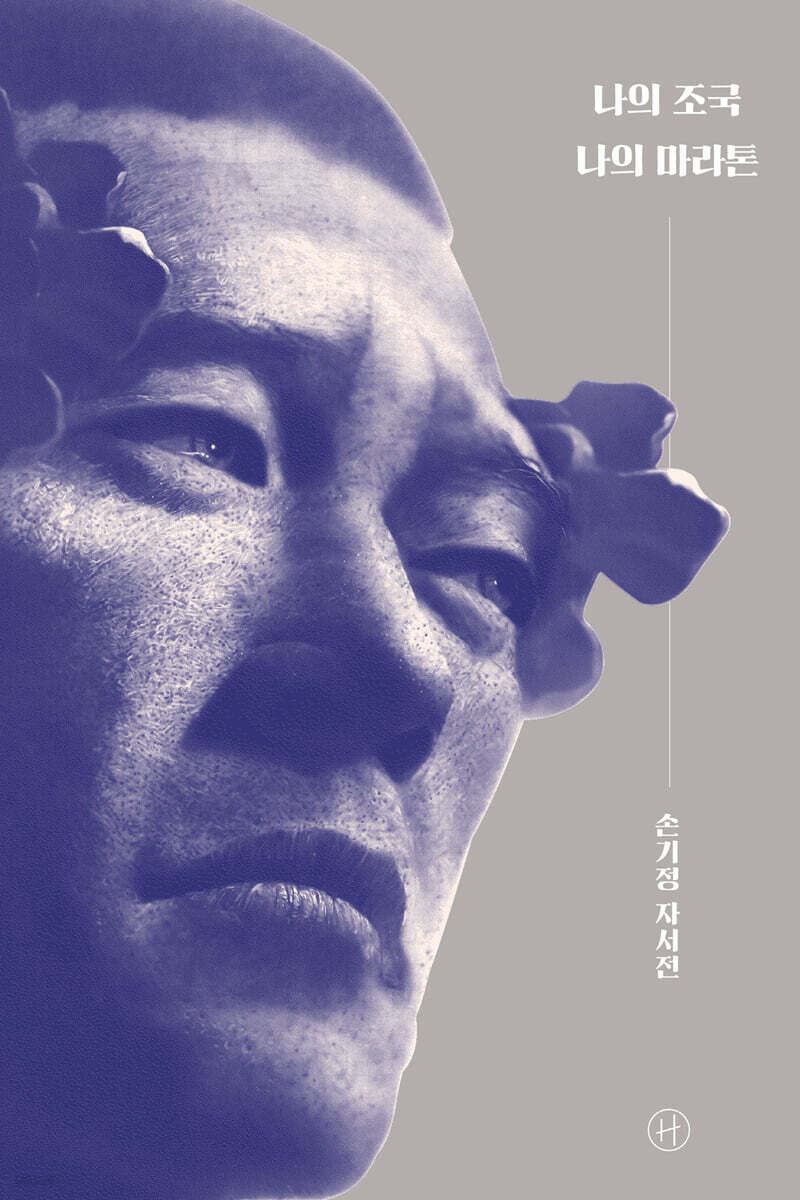
-The cover painting is “Our Hands” by Western painter Kang Hyung-gu.
This book is a revised and expanded edition of "My Country, My Marathon," published by the Hankook Ilbo in 1983, and will be published on August 9, 2022, to commemorate the victory in the marathon at the Berlin Olympics on August 9, 1936.
Coincidentally, 2022 marks the 110th anniversary of Son Ki-jeong's birth and the 20th anniversary of his death.
Also, the movie [Boston 1947], which features the leader Son Kee-chung (directed by Kang Je-gyu, starring Ha Jung-woo, Bae Sung-woo, and Im Si-wan), is about to be released, and a movie highlighting Son Kee-chung at the 1936 Berlin Olympics is in preparation, showing a growing movement to pay attention to Son Kee-chung, the first Korean Wave sports hero.
In Japan, research and exposure of Son Ki-jeong continues to grow, with even a biography of Son Ki-jeong being published. However, it is regrettable that no significant research has been conducted in Korea.
To this end, we are republishing Son Ki-jeong's autobiography, "My Country, My Marathon," to stimulate domestic interest in Son Ki-jeong and his era and to stimulate new research.
In addition to the photos from the Son Kee-chung Memorial Hall, this newly published expanded edition includes over 100 photos of artifacts and history, and includes the memoirs of Lee Jun-seung, the Secretary General of the Son Kee-chung Memorial Foundation and Son Kee-chung's grandson, from the publication of his autobiography in 1984 to the return of the Greek bronze helmet, the 1988 Seoul Olympic torch relay, and his passing in 2002, providing a more three-dimensional and richer portrayal of Son Kee-chung's life.
The eye-catching painting on the cover is “Our Son” by artist Kang Hyung-gu.
Artist Kang Hyung-gu, famous for his detailed depictions of the faces of people bearing the expressions of history and the times on large canvases, was fascinated by Son Kee-chung's expression during the Berlin Olympics and has been collecting materials related to Son Kee-chung since the 1990s and drawing Son Kee-chung's face.
"Our Hands," currently on display at the Son Kee-chung Memorial Hall, depicts Son Kee-chung at the awards ceremony after winning the 1936 Berlin Olympics. Rather than joy and glory, sadness, a sense of despair, and a suppressed heart are depicted throughout his face.
In the actual painting, the glory of victory pours down on Son Ki-jeong's face in golden light, but there is a dark shadow cast on one side, making the sorrow of losing one's country feel vivid.
In 1986, the 50th anniversary of the Berlin Olympics, the West German Olympic Committee returned the bronze helmet to Son Kee-chung.
In this way, the grandfather was delighted to have regained his second gold medal, another symbol of glory, given to himself and to our people.
My grandfather knew better than anyone that South Korea's national prestige had risen in the mid-1980s as a country scheduled to host the Olympics, and that this had allowed him to get his helmet back.
The grandfather entrusted the bronze helmet to the Independence Hall of Korea, saying, “It is not mine alone, but belongs to our people.”
In 1994, it was donated to the National Museum of Korea and is now on display for all citizens to see.
---From "Son Ki-jeong after 1984," pp. 391-392
In 1987, I started living with my grandfather in a public apartment in Sanggye-dong.
The living room and bedroom were filled with various pictures, framed photos, and Olympic memorabilia.
Not only was my grandfather very attached to the collected data, but it was also in preparation for interviews with foreign media outlets following the Seoul Olympics.
One day, with a little over a year left until the opening of the Seoul Olympics, my grandfather asked me to start running with him at dawn.
He anticipated that he would be the torch bearer at the Olympic opening ceremony and wanted to show the world the proud Korean Son Kee-chung, the winner of the Berlin Olympic marathon.
---From "Son Ki-jeong after 1984," p.392
In 2005, several people who liked Son Ki-chung came together to establish the Son Ki-chung Memorial Foundation.
The family of Son Ki-jeong donated personal belongings, with 22 paintings by artist Kang Hyung-gu as the basic assets.
… Since the foundation’s first year of establishment, the Son Kee-chung Peace Marathon has been held annually, and the Son Kee-chung Peace Concert has been held to share various stories about the grandfather.
When naming a marathon or concert, I thought of words that would match 'Son Ki-jeong'.
Challenge, overcoming, love of country… Then I thought about what my grandfather needed most in his life.
That was 'peace'.
If it weren't for the Japanese colonial period, Son Ki-chung would have been wearing the gold medal around his neck with joy like other Olympic winners, rather than being a "sad winner."
Also, if the North and South had not gone to war and been divided, he would have been remembered as a hero of the Korean people on the Korean Peninsula.
---From "Son Ki-jeong after 1984," pp. 405-406
20th Century Korean and World History
-From the Japanese colonial period to the present, from Hitler to Kim Gu, Son Kee-chung's life unfolds alongside modern and contemporary history.
A look at modern and contemporary Korean sports, a record of its growth.
His life, which has endured the turbulent waves of history from the Japanese colonial period to liberation, the Korean War, division, and even the rise of modern South Korea as the host of the Olympics, allows us to look back on the modern and contemporary history of 20th-century Korea through the lens of one individual's life.
Furthermore, as he was a world-class sportsperson, following his footsteps will also lead you to encounter major events in world history.
In that sense, this book vividly demonstrates the connection between an individual's life and history, and reveals its value as a historical record beyond a simple record of an individual's life.
This book features a large number of characters, and names that you've only seen in history books or textbooks often pop up.
While attending Yangjeong High School, he studied under the Korean language scholar Ji Seok-yeong, and after winning the Berlin Olympics, he met Ahn Bong-geun, a cousin of Ahn Jung-geun who was living in Berlin, and saw the Taegeukgi for the first time. Afterwards, he broadened his horizons by meeting Koreans living abroad.
He also had deep connections with political and social figures of the time.
They include Yeo Un-hyeong, Kim Gu, and Syngman Rhee.
Yeo Un-hyeong, also known as the 'Father of Joseon Sports', was so active in sports that he served as the president of the Joseon Sports Association and the Seoul Athletics Federation, and developed a relationship with Son Kee-chung. After liberation, Kim Gu and Syngman Rhee attended events such as the Berlin Marathon victory celebration to encourage and congratulate Son Kee-chung.
In the turbulent times of liberation, Son Ki-jeong worked to improve the relationship between Kim Gu and Syngman Rhee, and was also heartbroken by the deaths of Yeo Un-hyeong and Kim Gu.
Through these anecdotes of his interactions with numerous contemporary figures, we can gain a deeper understanding of Son Ki-jeong's life, from the formation of national consciousness to preserving national pride and striving to make his name and nationality known until the very end.
The story of Son Ki-chung receiving congratulations from Hitler after participating in the Berlin Olympics and his long friendship with Leni Riefenstahl, the director of [Olympia], are also not left out.
In addition, it introduces anecdotes of famous world marathon runners such as Emil Zátopek, Jesse Owens, and Abebe Bikila, with whom he interacted while participating in the Olympics and various world competitions.
This book also includes the preface by Ahn Jae-hong, then chairman of the Independence Hall of Korea Construction Promotion Committee, which was first published in 1983, and the recommendations written by Hong Jong-in, a reporter for the Chosun Ilbo, and novelist Choi Jeong-hee, allowing readers to see how his contemporaries remembered Son Ki-jeong.
In particular, reporter Hong Jong-in's article, which tells the story of a telephone interview with Son during the Berlin Olympics and the publication of a special edition to report the news of his victory, is very vivid and interesting, as if the newspaper scene at the time is unfolding before your eyes.
As this is an autobiography of a marathon runner, the history of modern and contemporary Korean sports cannot be left out.
You can see the history of the Korean marathon at a glance through the stories of the seniors who ran alongside Son Ki-jeong during his active days and led him to the marathon (Kwon Tae-ha, Kim Eun-bae, Nam Seung-ryong, etc.), as well as the juniors who later worked with him as coaches (Seo Yun-bok, Choi Yun-chil, Lee Chang-hoon, etc.).
In addition to track and field, it also records and introduces Korean athletes who were active in various fields such as soccer, basketball, and boxing.
It details the growth of the Korean marathon after liberation, efforts to participate in the Olympics and world competitions, the first inter-Korean sports talks, and the process of hosting the 1988 Seoul Olympics, all of which contributed to the growth of the Korean sports world from a barren land, making it a valuable record of modern Korean sports history.
It was a time of tragedy.
It was a long, dark tunnel with no hope or dreams.
In those days when only despair was present, the marathon was what I chose.
It was good even if it was an escape route to hope, and it was good even if it was a path to destruction.
I couldn't stand not running for even a moment.
…what I finally tasted at the top of the marathon world was endless frustration.
Winning the marathon brought home to me the sorrow of my people, the sorrow of my people.
For a man without a country, the glory of victory was nothing more than a vain, unworthy gesture. --- From "Preface" pp. 4-5
Despite the various unfavorable and difficult conditions, the Korean athletes competed against the Japanese athletes and defeated them with their outstanding skills in various events.
…exercise was the last breath left for the youth of Joseon.
It was a time when any activity that promoted Korean national consciousness or slandered the Japanese Empire was not permitted.
The Japanese people could not even stop physical exercise such as running and jumping.
And they did not realize how many young Koreans, through their movement, suppressed Japan, shouted for joy, and became aware of the survival of the Korean people.
---From "Encountering the Marathon," pp. 60-61
I gradually began to pave my way as a marathon runner.
…The goal was to become the best marathon runner in Joseon, no, the best in the world, following in the footsteps of Kwon Tae-ha and Kim Eun-bae.
My dream was to win the Olympic marathon, something my seniors had tried but failed to do.
'There are only three years left until the next Olympics in 1936.
'In the meantime, I must first become the best player in Korea and the best player in all of Japan.' I recalled the harsh trials and racial discrimination my seniors had endured.
…we had to achieve a complete victory so that no one could find fault with us.
---From "Marathon Runner Son Ki-jeong," pp. 107-108
We were invited to the home of Mr. Bong-Geun Ahn, who lives in Berlin.
… Mr. Ahn Bong-geun was the cousin of independence fighter Dr. Ahn Jung-geun.
At Mr. Ahn Bong-geun's house, I saw the Taegeukgi for the first time in my life.
Yin and yang divided into vivid colors, and a trigram surrounding the Taegeuk.
'This is the Taegeukgi.
'This is our flag.' I shivered as if electricity was running through my body.
It felt like I was facing the face of a lost homeland, a dead homeland.
---From "Standing at the Top" p.181
With liberation, the sports world was experiencing vibrant days in its own way.
When the Japanese-led Joseon Sports Association and Sports Promotion Association both disappeared, athletes were busy forming organizations for their respective sports.
… (However) there was no peaceful day because everyone was involved in political movements and fought each other, each putting forward their own side’s argument.
Sports are constantly tainted and exploited by politics, but they sometimes have the power to open up a space for political harmony.
…The rebuilt Joseon Sports Association held a national sports competition to commemorate liberation.
For the first time, all of Joseon's athletes gathered in the liberated land.
With the liberation of the country, sports activities were also revived.
---From "The Day is Dawning" pp. 252-253
Mr. Kim Gu's congratulatory speech still rings in my ears.
“I have cried three times today because of Son Ki-jeong and Nam Seung-ryong, who have conquered the world.
Ten years ago, in a dark room in Nanjing, I saw in the newspaper a young man without a country competing against young people from the world's great powers and winning, but he was a Korean, but he couldn't wear the Japanese flag on his chest and act like a Korean. I cried with heartache.
When the Pacific War broke out, people in Chongqing wept in resentment upon hearing the news that a young Korean man, Son Ki-jeong, had volunteered for the Japanese army and died in battle in the Philippine Islands.
“I cannot help but cry with emotion as I meet again today the late Son, who was said to have died, in our liberated homeland and share this meaningful occasion with him.” --- From “The Day is Dawning” pp. 261-262
August 9th, the day of victory,
The 1983 first edition presents itself to readers in a new guise.
- A revised edition will be released on August 9, 2022, commemorating the anniversary of the Berlin Olympic marathon victory on August 9, 1936.
- Includes over 100 photos, supplemented with memoirs from 1984 onward.
-The cover painting is “Our Hands” by Western painter Kang Hyung-gu.
This book is a revised and expanded edition of "My Country, My Marathon," published by the Hankook Ilbo in 1983, and will be published on August 9, 2022, to commemorate the victory in the marathon at the Berlin Olympics on August 9, 1936.
Coincidentally, 2022 marks the 110th anniversary of Son Ki-jeong's birth and the 20th anniversary of his death.
Also, the movie [Boston 1947], which features the leader Son Kee-chung (directed by Kang Je-gyu, starring Ha Jung-woo, Bae Sung-woo, and Im Si-wan), is about to be released, and a movie highlighting Son Kee-chung at the 1936 Berlin Olympics is in preparation, showing a growing movement to pay attention to Son Kee-chung, the first Korean Wave sports hero.
In Japan, research and exposure of Son Ki-jeong continues to grow, with even a biography of Son Ki-jeong being published. However, it is regrettable that no significant research has been conducted in Korea.
To this end, we are republishing Son Ki-jeong's autobiography, "My Country, My Marathon," to stimulate domestic interest in Son Ki-jeong and his era and to stimulate new research.
In addition to the photos from the Son Kee-chung Memorial Hall, this newly published expanded edition includes over 100 photos of artifacts and history, and includes the memoirs of Lee Jun-seung, the Secretary General of the Son Kee-chung Memorial Foundation and Son Kee-chung's grandson, from the publication of his autobiography in 1984 to the return of the Greek bronze helmet, the 1988 Seoul Olympic torch relay, and his passing in 2002, providing a more three-dimensional and richer portrayal of Son Kee-chung's life.
The eye-catching painting on the cover is “Our Son” by artist Kang Hyung-gu.
Artist Kang Hyung-gu, famous for his detailed depictions of the faces of people bearing the expressions of history and the times on large canvases, was fascinated by Son Kee-chung's expression during the Berlin Olympics and has been collecting materials related to Son Kee-chung since the 1990s and drawing Son Kee-chung's face.
"Our Hands," currently on display at the Son Kee-chung Memorial Hall, depicts Son Kee-chung at the awards ceremony after winning the 1936 Berlin Olympics. Rather than joy and glory, sadness, a sense of despair, and a suppressed heart are depicted throughout his face.
In the actual painting, the glory of victory pours down on Son Ki-jeong's face in golden light, but there is a dark shadow cast on one side, making the sorrow of losing one's country feel vivid.
In 1986, the 50th anniversary of the Berlin Olympics, the West German Olympic Committee returned the bronze helmet to Son Kee-chung.
In this way, the grandfather was delighted to have regained his second gold medal, another symbol of glory, given to himself and to our people.
My grandfather knew better than anyone that South Korea's national prestige had risen in the mid-1980s as a country scheduled to host the Olympics, and that this had allowed him to get his helmet back.
The grandfather entrusted the bronze helmet to the Independence Hall of Korea, saying, “It is not mine alone, but belongs to our people.”
In 1994, it was donated to the National Museum of Korea and is now on display for all citizens to see.
---From "Son Ki-jeong after 1984," pp. 391-392
In 1987, I started living with my grandfather in a public apartment in Sanggye-dong.
The living room and bedroom were filled with various pictures, framed photos, and Olympic memorabilia.
Not only was my grandfather very attached to the collected data, but it was also in preparation for interviews with foreign media outlets following the Seoul Olympics.
One day, with a little over a year left until the opening of the Seoul Olympics, my grandfather asked me to start running with him at dawn.
He anticipated that he would be the torch bearer at the Olympic opening ceremony and wanted to show the world the proud Korean Son Kee-chung, the winner of the Berlin Olympic marathon.
---From "Son Ki-jeong after 1984," p.392
In 2005, several people who liked Son Ki-chung came together to establish the Son Ki-chung Memorial Foundation.
The family of Son Ki-jeong donated personal belongings, with 22 paintings by artist Kang Hyung-gu as the basic assets.
… Since the foundation’s first year of establishment, the Son Kee-chung Peace Marathon has been held annually, and the Son Kee-chung Peace Concert has been held to share various stories about the grandfather.
When naming a marathon or concert, I thought of words that would match 'Son Ki-jeong'.
Challenge, overcoming, love of country… Then I thought about what my grandfather needed most in his life.
That was 'peace'.
If it weren't for the Japanese colonial period, Son Ki-chung would have been wearing the gold medal around his neck with joy like other Olympic winners, rather than being a "sad winner."
Also, if the North and South had not gone to war and been divided, he would have been remembered as a hero of the Korean people on the Korean Peninsula.
---From "Son Ki-jeong after 1984," pp. 405-406
GOODS SPECIFICS
- Date of issue: August 2, 2022
- Format: Paperback book binding method guide
- Page count, weight, size: 440 pages | 668g | 140*210*26mm
- ISBN13: 9791160808803
- ISBN10: 1160808805
You may also like
카테고리
korean


korean

![GQ KOREA Mark (Monthly): December [2025]](http://librairie.coreenne.fr/cdn/shop/files/8ef265dbbfbf186523ed75ba7319009d.jpg?v=1765340328&width=3840)


