

Ancient Roman Anatomy Atlas
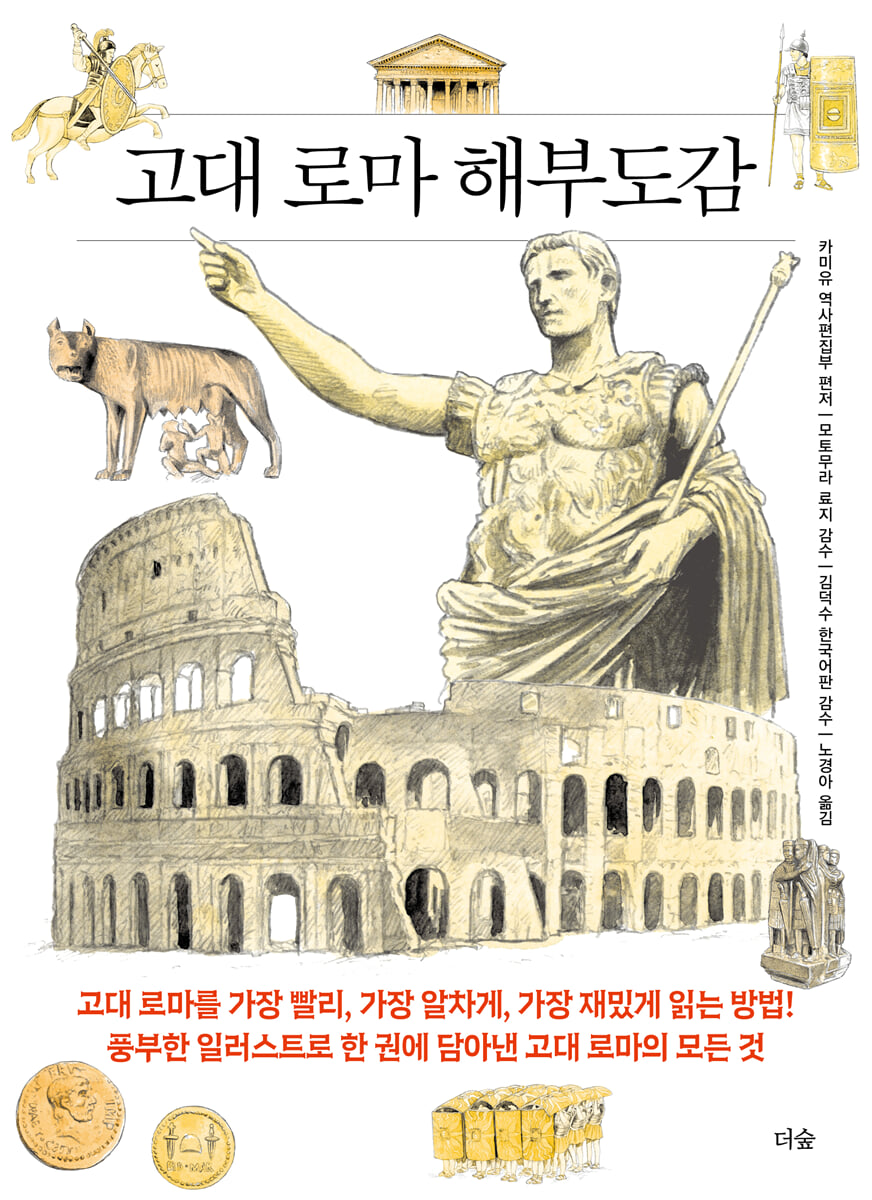 |
Description
Book Introduction
The fastest, most informative, and most enjoyable way to read about Ancient Rome!
Everything about ancient Rome in one volume, richly illustrated.
Roman history is so vast that it seems endless, but if you want to quickly grasp the core in one volume, the recently published 『Anatomy of Ancient Rome』 is the most reliable guide.
Ancient Rome was a country that grew from a small city-state into an empire that dominated the Mediterranean world, and if you include the Eastern Roman Empire, it was a vast country that existed in various forms for a whopping 2,000 years.
The story of ancient Rome's splendid civilization, including its Senate politics that offered a glimpse into the balance of power and symbols of authority, gladiatorial games that unfolded on the edge of fierce life and death, the culture of gigantic baths that served as a refuge for ancient people, and its sophisticated technologically connected neural networks and water supply systems, is still being recreated on the most dramatic stages through movies, news, and games even after 2,000 years.
How did ancient Rome attract so much attention for so long?
The recently published 『Ancient Roman Anatomy Atlas』 is the second book in the Daesup Historical Anatomy Atlas series, which dissects history in an easy and fun way through illustrations.
This book contains a detailed account of ancient Rome's vast history, politics, people, wars, architecture, and lifestyle from its founding to its fall, all presented in a single volume, richly illustrated.
Why was Caesar assassinated? What are the secrets of Roman architecture? How did the Western Roman Empire fall? What were the tactics of the Roman army, once the world's most powerful? Readers can delve into ancient Rome in the fastest, most informative, and most entertaining way possible by following these intriguing questions.
A close look at ancient Rome not only offers a glimpse into the lives of the Romans of that time, but also reveals that many of the things we enjoy today, such as the democratic institutions, legal systems, architectural styles, and urban infrastructure that formed the foundation of their lives, also originated in ancient Rome.
"Anatomy of Ancient Rome" unfolds Rome's long journey through vivid illustrations and stories, from familiar to lesser-known aspects, allowing us to discover a mirror reflecting our own society.
The introduction of the book summarizes the vast history of Rome at a glance with a map of the Roman Empire's largest territory at its peak and a chronological table covering the two thousand years of ancient Rome, including Eastern Rome.
A chronology corresponding to each content is also provided at the bottom of the text to help readers intuitively and easily understand the flow of history.
The "One Step Further" section, which appears at the end of each topic, meticulously conveys rich knowledge about ancient Rome, enhancing readers' understanding and immersion.
This book provides even more solid and in-depth knowledge through the joint review of Professor Emeritus Kim Deok-su of the Department of History Education at Seoul National University, who has studied ancient Rome for over 30 years, and Professor Emeritus Kim Deok-su of the Department of History Education at the University of Tokyo, who has been studying ancient Rome for over 30 years.
Everything about ancient Rome in one volume, richly illustrated.
Roman history is so vast that it seems endless, but if you want to quickly grasp the core in one volume, the recently published 『Anatomy of Ancient Rome』 is the most reliable guide.
Ancient Rome was a country that grew from a small city-state into an empire that dominated the Mediterranean world, and if you include the Eastern Roman Empire, it was a vast country that existed in various forms for a whopping 2,000 years.
The story of ancient Rome's splendid civilization, including its Senate politics that offered a glimpse into the balance of power and symbols of authority, gladiatorial games that unfolded on the edge of fierce life and death, the culture of gigantic baths that served as a refuge for ancient people, and its sophisticated technologically connected neural networks and water supply systems, is still being recreated on the most dramatic stages through movies, news, and games even after 2,000 years.
How did ancient Rome attract so much attention for so long?
The recently published 『Ancient Roman Anatomy Atlas』 is the second book in the Daesup Historical Anatomy Atlas series, which dissects history in an easy and fun way through illustrations.
This book contains a detailed account of ancient Rome's vast history, politics, people, wars, architecture, and lifestyle from its founding to its fall, all presented in a single volume, richly illustrated.
Why was Caesar assassinated? What are the secrets of Roman architecture? How did the Western Roman Empire fall? What were the tactics of the Roman army, once the world's most powerful? Readers can delve into ancient Rome in the fastest, most informative, and most entertaining way possible by following these intriguing questions.
A close look at ancient Rome not only offers a glimpse into the lives of the Romans of that time, but also reveals that many of the things we enjoy today, such as the democratic institutions, legal systems, architectural styles, and urban infrastructure that formed the foundation of their lives, also originated in ancient Rome.
"Anatomy of Ancient Rome" unfolds Rome's long journey through vivid illustrations and stories, from familiar to lesser-known aspects, allowing us to discover a mirror reflecting our own society.
The introduction of the book summarizes the vast history of Rome at a glance with a map of the Roman Empire's largest territory at its peak and a chronological table covering the two thousand years of ancient Rome, including Eastern Rome.
A chronology corresponding to each content is also provided at the bottom of the text to help readers intuitively and easily understand the flow of history.
The "One Step Further" section, which appears at the end of each topic, meticulously conveys rich knowledge about ancient Rome, enhancing readers' understanding and immersion.
This book provides even more solid and in-depth knowledge through the joint review of Professor Emeritus Kim Deok-su of the Department of History Education at Seoul National University, who has studied ancient Rome for over 30 years, and Professor Emeritus Kim Deok-su of the Department of History Education at the University of Tokyo, who has been studying ancient Rome for over 30 years.
- You can preview some of the book's contents.
Preview
index
Entering
Reviewer's note
Map of the Roman Empire's largest territory
A Chronological Look at Two Thousand Years of Ancient Rome
Chapter 1: Two Thousand Years of Ancient Rome
The beginning of ancient Rome from its founding to monarchy and republic.
From brilliant victories to bitter power struggles, the Punic Wars and the 'Century of Civil War'
Caesar, the lifelong dictator who led the triumvirate and rose to the top
The Second Triumvirate and the End of the Republic: The Rise of the Roman Emperor Augustus
The era of the Five Good Emperors, a period of peace in the Mediterranean realized by Rome at its peak
The era of the military emperors, a time of chaos in which everyone claimed to be emperor by force.
The Tetrarchy and Imperial Revival, driven by strong leadership and reforms
The establishment of Christianity as the state religion after over 300 years of oppression
The division of the Eastern and Western Roman Empires, weakened by the onslaught of the Germanic tribes, and the fall of the Western Roman Empire.
The end of the Eastern Roman Empire and the Roman Empire, which lasted until the 15th century
"One Step Further 1" The Tragedy of Lucretia, Which Led to the Introduction of the Roman Republic
Chapter 2: Lives of the Major Figures and Emperors of Ancient Rome
Scipio, the hero who defeated his archenemy Carthage
Pompey, Rome's most powerful and popular man
Caesar, the great hero who laid the foundation of the empire
Antony, who lost the race to become Caesar's successor
Augustus, the first emperor who deified himself
Nero, the most famous tyrant in Roman history
The Five Good Emperors who brought about a happy era
Diocletian, from a mere soldier to a reformer who unified the world
Constantine, the baptized defender of Christianity
"One Step Further 2": Boudicca and Zenobia, the Women Who Revolted Against Rome
Chapter 3: The War with the Strongest Roman Legions
The ancient Roman army's fighting style, divided into three formations to face the enemy
Traditional yet powerful weapons and armor
The Roman Navy's maritime technology that defeated Carthage
Siege weapons that mercilessly destroyed the city
Forts and walls built as battlefields rather than defensive strongholds
The First Punic War, which led to the creation of the Roman fleet
The Second Punic War, which pitted Hannibal against war elephants
The Macedonian Wars, a stepping stone to the conquest of the Hellenistic Empire
Caesar's Gallic campaign, won by the rapid construction of a blockade by his engineers
The First Jewish War, a Jewish revolt under the slogan of "Temple"
"One Step Further 3" The Germanic Invasion That Drives the Roman Empire into a Corner
Chapter 4: Architecture and Civil Engineering in Ancient Rome
A circular arena where life-or-death fights unfold
Circus Maximus, a chariot stadium where fierce chariot races were popular
A theater where public entertainment has been monopolized by the public
Aqueducts, outstanding architectural techniques that enriched the city
A public bathhouse used by many people regardless of social status
A temple that reveals awe and deep faith in the gods
Forum, a public square where citizens gather
The Emperor's Palace, a symbol of authority built by the most powerful person of the time
A luxurious villa where the wealthy enjoy their leisure time
The Arc de Triomphe and the Monument commemorating the victory in war
The road transportation network that supported Rome's development
"One Step Further 4" What does the word 'SPQR', which symbolizes Rome, mean?
Chapter 5: Life and Culture of Roman Citizens
"Bread and circuses" is a term used to mock Roman citizens who traded their right to vote for food and entertainment.
Dress code and hairstyle according to social status
The meals and banquets of the upper class, where they enjoyed delicacies from the mountains and seas while lying down
A simple meal for the common people at a restaurant
Domus, a single-family home for the wealthy, inhabited only by the upper class
Insula, the world's first high-rise apartment complex for the common people
A day in the life of a Roman citizen who worked hard, ate well, and played well
The slave system that supported the lives of Roman citizens
The lives and education of women seeking freedom within patriarchy
Roman sexual culture, fascinated by infidelity, homosexuality, and eroticism
The Roman religion developed widely by accepting the gods of other peoples.
Roman funerals and cemeteries, where people believed that life is fleeting and that death returns to nothingness.
"One Step Further 5" Pliny's "Natural History": A Book Written by a Great Scholar
Chapter 6: Pompeii, the Reviving City
The Tragedy of Mount Vesuvius's Eruption and the Excavations
Pompeii's urban plan, encompassing the city's various functions
A bustling public facility symbolizing the prosperity of the city of Pompeii
Are private mansions evidence of privilege? Citizens' residences
The convenient and affluent life of the Pompeians
The Mysterious Mansion with murals depicting Dionysian rituals
Key References
Reviewer's note
Map of the Roman Empire's largest territory
A Chronological Look at Two Thousand Years of Ancient Rome
Chapter 1: Two Thousand Years of Ancient Rome
The beginning of ancient Rome from its founding to monarchy and republic.
From brilliant victories to bitter power struggles, the Punic Wars and the 'Century of Civil War'
Caesar, the lifelong dictator who led the triumvirate and rose to the top
The Second Triumvirate and the End of the Republic: The Rise of the Roman Emperor Augustus
The era of the Five Good Emperors, a period of peace in the Mediterranean realized by Rome at its peak
The era of the military emperors, a time of chaos in which everyone claimed to be emperor by force.
The Tetrarchy and Imperial Revival, driven by strong leadership and reforms
The establishment of Christianity as the state religion after over 300 years of oppression
The division of the Eastern and Western Roman Empires, weakened by the onslaught of the Germanic tribes, and the fall of the Western Roman Empire.
The end of the Eastern Roman Empire and the Roman Empire, which lasted until the 15th century
"One Step Further 1" The Tragedy of Lucretia, Which Led to the Introduction of the Roman Republic
Chapter 2: Lives of the Major Figures and Emperors of Ancient Rome
Scipio, the hero who defeated his archenemy Carthage
Pompey, Rome's most powerful and popular man
Caesar, the great hero who laid the foundation of the empire
Antony, who lost the race to become Caesar's successor
Augustus, the first emperor who deified himself
Nero, the most famous tyrant in Roman history
The Five Good Emperors who brought about a happy era
Diocletian, from a mere soldier to a reformer who unified the world
Constantine, the baptized defender of Christianity
"One Step Further 2": Boudicca and Zenobia, the Women Who Revolted Against Rome
Chapter 3: The War with the Strongest Roman Legions
The ancient Roman army's fighting style, divided into three formations to face the enemy
Traditional yet powerful weapons and armor
The Roman Navy's maritime technology that defeated Carthage
Siege weapons that mercilessly destroyed the city
Forts and walls built as battlefields rather than defensive strongholds
The First Punic War, which led to the creation of the Roman fleet
The Second Punic War, which pitted Hannibal against war elephants
The Macedonian Wars, a stepping stone to the conquest of the Hellenistic Empire
Caesar's Gallic campaign, won by the rapid construction of a blockade by his engineers
The First Jewish War, a Jewish revolt under the slogan of "Temple"
"One Step Further 3" The Germanic Invasion That Drives the Roman Empire into a Corner
Chapter 4: Architecture and Civil Engineering in Ancient Rome
A circular arena where life-or-death fights unfold
Circus Maximus, a chariot stadium where fierce chariot races were popular
A theater where public entertainment has been monopolized by the public
Aqueducts, outstanding architectural techniques that enriched the city
A public bathhouse used by many people regardless of social status
A temple that reveals awe and deep faith in the gods
Forum, a public square where citizens gather
The Emperor's Palace, a symbol of authority built by the most powerful person of the time
A luxurious villa where the wealthy enjoy their leisure time
The Arc de Triomphe and the Monument commemorating the victory in war
The road transportation network that supported Rome's development
"One Step Further 4" What does the word 'SPQR', which symbolizes Rome, mean?
Chapter 5: Life and Culture of Roman Citizens
"Bread and circuses" is a term used to mock Roman citizens who traded their right to vote for food and entertainment.
Dress code and hairstyle according to social status
The meals and banquets of the upper class, where they enjoyed delicacies from the mountains and seas while lying down
A simple meal for the common people at a restaurant
Domus, a single-family home for the wealthy, inhabited only by the upper class
Insula, the world's first high-rise apartment complex for the common people
A day in the life of a Roman citizen who worked hard, ate well, and played well
The slave system that supported the lives of Roman citizens
The lives and education of women seeking freedom within patriarchy
Roman sexual culture, fascinated by infidelity, homosexuality, and eroticism
The Roman religion developed widely by accepting the gods of other peoples.
Roman funerals and cemeteries, where people believed that life is fleeting and that death returns to nothingness.
"One Step Further 5" Pliny's "Natural History": A Book Written by a Great Scholar
Chapter 6: Pompeii, the Reviving City
The Tragedy of Mount Vesuvius's Eruption and the Excavations
Pompeii's urban plan, encompassing the city's various functions
A bustling public facility symbolizing the prosperity of the city of Pompeii
Are private mansions evidence of privilege? Citizens' residences
The convenient and affluent life of the Pompeians
The Mysterious Mansion with murals depicting Dionysian rituals
Key References
Detailed image

Into the book
The era of the Five Good Emperors, the golden age of the Roman Empire, began.
The first of these emperors, Nerva, was a popular man elected by the Senate.
The second, Trajan, won many wars and expanded the territory of the Roman Empire to its maximum.
The third, Hadrian, toured the vast territory and displayed the empire's grandeur.
The fourth, Antoninus Pius, did not wage war against other countries for 23 years, and the fifth, Marcus Aurelius Antoninus, preferred learning to military affairs.
The era ruled by this Five Wise Emperor is called 'Pax Romana (Roman Peace)'.
Emperor Trajan expanded the empire's territory to its maximum, and the next emperor, Hadrian, built a great wall to prevent invasion by barbarians.
Because the Pax Romana continued during the reign of Emperor Antoninus Pius, some people say that “there was no history during the time of Antoninus.”
--- From "The Greatest Territory of the Roman Empire"
Brutus is known to be a descendant of Brutus the Elder, the first consul.
He lost his father at a young age, but received support from Caesar, who was his mother's lover.
When the Senate declared Caesar an 'enemy of the Republic', he joined Pompey's army, but later followed Caesar's orders.
Instead of punishing him, Caesar keeps Brutus close and treats him generously until the end.
However, Brutus eventually participated in the assassination of Caesar, and at this time, Caesar made the famous remark, “Even you, Brutus.”
Afterwards, he was defeated by Antony during the Second Triumvirate and committed suicide.
--- From "Brutus, who personally assassinated Caesar, who was like a father to him"
In 27 BC, Augustus was given the honorific title 'Augustus' by the Senate and became the first emperor. He succeeded in a new attempt to realize a dictatorship while maintaining the republican system.
He rebuilt the imperial capital, Rome, to make it fire-resistant and stabilized the grain supply by turning Egypt into a direct imperial territory.
He left behind the words, “I took Rome, a city of bricks, and turned it into a city of marble.”
--- From "Augustus, the First Emperor Who Deified Himself"
It is said that Roman soldiers were originally expected to provide their own equipment, and since heavy infantry was the norm, even just procuring basic equipment would have cost a considerable amount of money.
The equipment of veteran soldiers was more expensive than that of new recruits, and commanders at the level of centurion had to add extravagant decorations.
So there were also citizens who did not participate in the war because they could not afford the equipment.
In other words, war was a 'privilege' of the nobility and the wealthy.
--- From "Traditional but powerful weapons and armor"
Although most of the fighting was naval, Rome did not originally have a navy and did not begin building its first large fleet until three years after the war began.
Nevertheless, the final victory went to Rome.
Rome was able to win naval battles that they were not familiar with because they transformed naval battles into infantry battles by using a boarding device called 'Corvus' for naval combat.
Thus, after Rome won the Punic Wars that lasted for over 20 years, it officially launched its navy and took control of the Mediterranean.
--- From "The First Punic War, Which Led to the Creation of the Roman Fleet"
Bathing was essential to the life of ancient Romans.
However, since ordinary houses did not have bathrooms, citizens used nearby public bathhouses.
(…) Building such a complex required the use of concrete.
The first public baths were built in the 2nd century BC, the year Roman concrete was invented, and every emperor since then has ordered the construction of baths.
Regardless of social status, most Romans sweated in public baths.
--- From "Public bathhouses used by many people regardless of social status"
Roman citizens had the right to free food and entertainment, but there was an unspoken rule that in return they had to politically support the influential people who bestowed the benefits.
That is, in exchange for bread and circuses, you have to vote when a powerful person runs for public office.
Therefore, the term 'bread and circuses' was a mocking term for Roman citizens who gave up the right to vote, the greatest privilege of citizens, in exchange for filling their stomachs with food distributed by the powerful and enjoying entertainment.
The first of these emperors, Nerva, was a popular man elected by the Senate.
The second, Trajan, won many wars and expanded the territory of the Roman Empire to its maximum.
The third, Hadrian, toured the vast territory and displayed the empire's grandeur.
The fourth, Antoninus Pius, did not wage war against other countries for 23 years, and the fifth, Marcus Aurelius Antoninus, preferred learning to military affairs.
The era ruled by this Five Wise Emperor is called 'Pax Romana (Roman Peace)'.
Emperor Trajan expanded the empire's territory to its maximum, and the next emperor, Hadrian, built a great wall to prevent invasion by barbarians.
Because the Pax Romana continued during the reign of Emperor Antoninus Pius, some people say that “there was no history during the time of Antoninus.”
--- From "The Greatest Territory of the Roman Empire"
Brutus is known to be a descendant of Brutus the Elder, the first consul.
He lost his father at a young age, but received support from Caesar, who was his mother's lover.
When the Senate declared Caesar an 'enemy of the Republic', he joined Pompey's army, but later followed Caesar's orders.
Instead of punishing him, Caesar keeps Brutus close and treats him generously until the end.
However, Brutus eventually participated in the assassination of Caesar, and at this time, Caesar made the famous remark, “Even you, Brutus.”
Afterwards, he was defeated by Antony during the Second Triumvirate and committed suicide.
--- From "Brutus, who personally assassinated Caesar, who was like a father to him"
In 27 BC, Augustus was given the honorific title 'Augustus' by the Senate and became the first emperor. He succeeded in a new attempt to realize a dictatorship while maintaining the republican system.
He rebuilt the imperial capital, Rome, to make it fire-resistant and stabilized the grain supply by turning Egypt into a direct imperial territory.
He left behind the words, “I took Rome, a city of bricks, and turned it into a city of marble.”
--- From "Augustus, the First Emperor Who Deified Himself"
It is said that Roman soldiers were originally expected to provide their own equipment, and since heavy infantry was the norm, even just procuring basic equipment would have cost a considerable amount of money.
The equipment of veteran soldiers was more expensive than that of new recruits, and commanders at the level of centurion had to add extravagant decorations.
So there were also citizens who did not participate in the war because they could not afford the equipment.
In other words, war was a 'privilege' of the nobility and the wealthy.
--- From "Traditional but powerful weapons and armor"
Although most of the fighting was naval, Rome did not originally have a navy and did not begin building its first large fleet until three years after the war began.
Nevertheless, the final victory went to Rome.
Rome was able to win naval battles that they were not familiar with because they transformed naval battles into infantry battles by using a boarding device called 'Corvus' for naval combat.
Thus, after Rome won the Punic Wars that lasted for over 20 years, it officially launched its navy and took control of the Mediterranean.
--- From "The First Punic War, Which Led to the Creation of the Roman Fleet"
Bathing was essential to the life of ancient Romans.
However, since ordinary houses did not have bathrooms, citizens used nearby public bathhouses.
(…) Building such a complex required the use of concrete.
The first public baths were built in the 2nd century BC, the year Roman concrete was invented, and every emperor since then has ordered the construction of baths.
Regardless of social status, most Romans sweated in public baths.
--- From "Public bathhouses used by many people regardless of social status"
Roman citizens had the right to free food and entertainment, but there was an unspoken rule that in return they had to politically support the influential people who bestowed the benefits.
That is, in exchange for bread and circuses, you have to vote when a powerful person runs for public office.
Therefore, the term 'bread and circuses' was a mocking term for Roman citizens who gave up the right to vote, the greatest privilege of citizens, in exchange for filling their stomachs with food distributed by the powerful and enjoying entertainment.
--- From "Bread and Circuses," a mocking term for Roman citizens who traded their right to vote for food and entertainment
Publisher's Review
History and culture, political systems, globalization and military power, architecture and art.
All roads still lead to Rome!
With this one book, you too can now become a 'Rome expert'!
In the beginning, the flow of the vast 2,000-year history of Rome, from monarchy to republic and empire to Eastern Rome, is organized in an easy and clear manner centered on events.
If we trace the major turning points such as the founding myth of Romulus, the establishment of the Republic by Brutus, and the assassination of Caesar, we will see that the rise and fall of the Roman Empire was a turning point in world history.
Additionally, this book focuses on figures and emperors who left important marks on history, such as Scipio, Caesar, Augustus, Nero, and Constantine, and connects them to the flow of history, colorfully showing the light and dark sides and dramatic fate of the empire.
The military and war technology that underpinned Rome's power are also key topics in this book.
It vividly depicts how Rome came to dominate the Mediterranean world at the time, covering the unbroken triple battle line, the cutting-edge Greek technology such as weapons and ships, and the military power that was developed by actively adopting Macedonian siege weapon technology, and the tumultuous wars such as the Punic Wars and the Macedonian Wars that were fought using that military power.
It also details the architectural and civil engineering technologies that reveal the practicality and public nature of ancient Rome, such as the amphitheater, aqueduct, roads, and forum, and details the complex aspects of ancient Roman society, such as clothing and housing styles according to social status, the slave system, and the reality of women's education.
It also covers a wide range of stories about the lives and culture of Roman citizens, including their religion embracing various gods and their free sexual culture, revealing how the lives of ancient people influenced politics and society.
This book tells the story of the tragedy of Pompeii, which was destroyed by the eruption of Mount Vesuvius, and the results of subsequent excavations, vividly reconstructing the life of the ancient city of Pompeii two thousand years ago.
This book also contains stories of historical sites, such as the murals remaining on the road from the center of Pompeii to the outskirts, allowing you to vividly experience the culture as if you were traveling through ancient Rome.
How did ancient Rome survive for so long?
Ancient Rome: More Dramatic Than Games: Why You Should Explore It Today
The reason why we must read ancient Rome in this era is simple.
Because Rome is not just an empire of the past, but a ‘present stage’ that lives on to this day.
Knowing ancient Rome can help you understand the roots of modern civilization.
The human drama of power struggles, the rise and fall of empires, and the intertwining of heroes and tyrants makes us reflect on modern society, and it is endlessly revived in popular culture, including movies, dramas, and games, re-amplifying our imagination.
This book vividly shows, in the easiest and most entertaining way, that such ancient history still breathes in our lives and culture today.
Whether you're a traveler reminiscing about ancient Rome, a student of history, or a game developer, I encourage anyone, anywhere, to pick up this book.
In the future, The Forest will continue to publish a series of historical anatomy books, following 『Ancient Roman Anatomy Book』 and 『Ancient Egyptian Anatomy Book』.
All roads still lead to Rome!
With this one book, you too can now become a 'Rome expert'!
In the beginning, the flow of the vast 2,000-year history of Rome, from monarchy to republic and empire to Eastern Rome, is organized in an easy and clear manner centered on events.
If we trace the major turning points such as the founding myth of Romulus, the establishment of the Republic by Brutus, and the assassination of Caesar, we will see that the rise and fall of the Roman Empire was a turning point in world history.
Additionally, this book focuses on figures and emperors who left important marks on history, such as Scipio, Caesar, Augustus, Nero, and Constantine, and connects them to the flow of history, colorfully showing the light and dark sides and dramatic fate of the empire.
The military and war technology that underpinned Rome's power are also key topics in this book.
It vividly depicts how Rome came to dominate the Mediterranean world at the time, covering the unbroken triple battle line, the cutting-edge Greek technology such as weapons and ships, and the military power that was developed by actively adopting Macedonian siege weapon technology, and the tumultuous wars such as the Punic Wars and the Macedonian Wars that were fought using that military power.
It also details the architectural and civil engineering technologies that reveal the practicality and public nature of ancient Rome, such as the amphitheater, aqueduct, roads, and forum, and details the complex aspects of ancient Roman society, such as clothing and housing styles according to social status, the slave system, and the reality of women's education.
It also covers a wide range of stories about the lives and culture of Roman citizens, including their religion embracing various gods and their free sexual culture, revealing how the lives of ancient people influenced politics and society.
This book tells the story of the tragedy of Pompeii, which was destroyed by the eruption of Mount Vesuvius, and the results of subsequent excavations, vividly reconstructing the life of the ancient city of Pompeii two thousand years ago.
This book also contains stories of historical sites, such as the murals remaining on the road from the center of Pompeii to the outskirts, allowing you to vividly experience the culture as if you were traveling through ancient Rome.
How did ancient Rome survive for so long?
Ancient Rome: More Dramatic Than Games: Why You Should Explore It Today
The reason why we must read ancient Rome in this era is simple.
Because Rome is not just an empire of the past, but a ‘present stage’ that lives on to this day.
Knowing ancient Rome can help you understand the roots of modern civilization.
The human drama of power struggles, the rise and fall of empires, and the intertwining of heroes and tyrants makes us reflect on modern society, and it is endlessly revived in popular culture, including movies, dramas, and games, re-amplifying our imagination.
This book vividly shows, in the easiest and most entertaining way, that such ancient history still breathes in our lives and culture today.
Whether you're a traveler reminiscing about ancient Rome, a student of history, or a game developer, I encourage anyone, anywhere, to pick up this book.
In the future, The Forest will continue to publish a series of historical anatomy books, following 『Ancient Roman Anatomy Book』 and 『Ancient Egyptian Anatomy Book』.
GOODS SPECIFICS
- Date of issue: November 7, 2025
- Page count, weight, size: 165 pages | 304g | 152*209*14mm
- ISBN13: 9791194273264
- ISBN10: 1194273262
You may also like
카테고리
korean


korean

![GQ KOREA Mark (Monthly): December [2025]](http://librairie.coreenne.fr/cdn/shop/files/8ef265dbbfbf186523ed75ba7319009d.jpg?v=1765340328&width=3840)


