

The secret of the paintings you see while standing in line
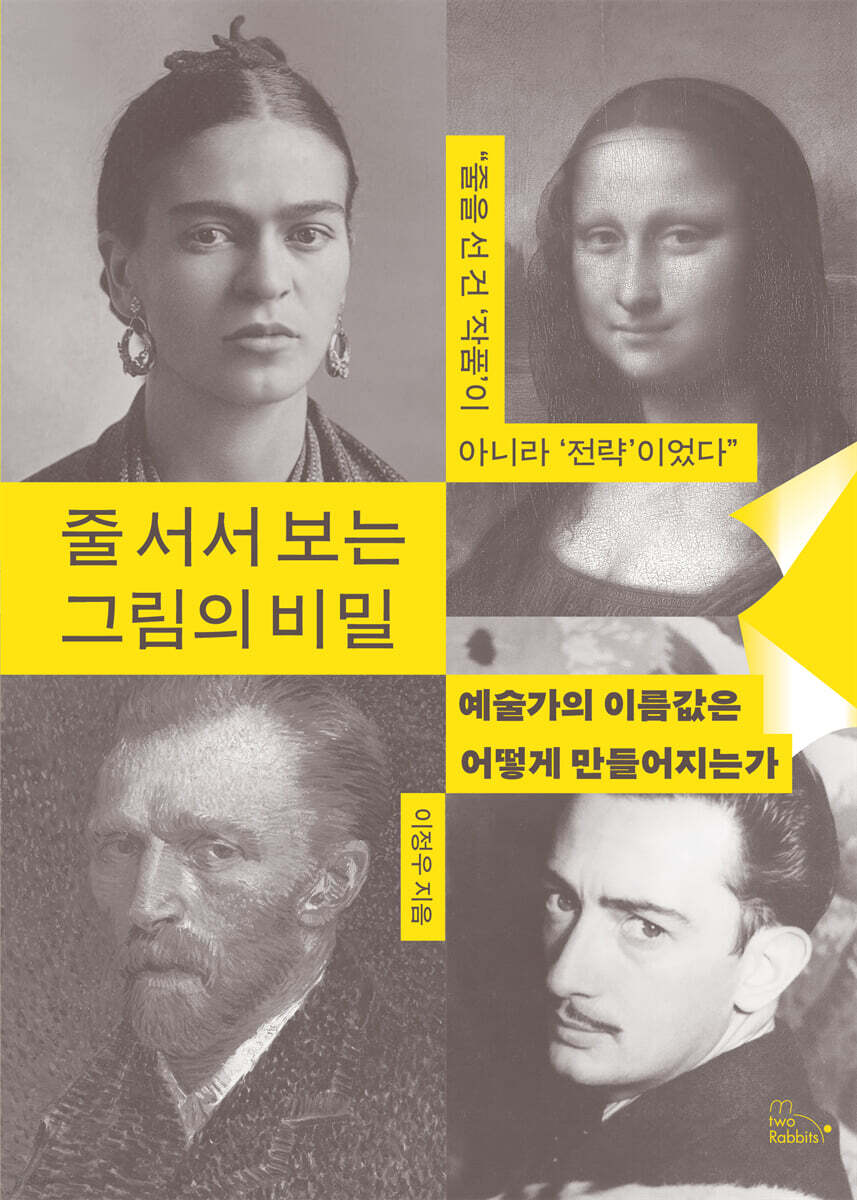 |
Description
Book Introduction
“Why does everyone stop and line up in front of certain paintings?”
The book that answers that question most clearly now
★ "Jo Seung-yeon's Exploratory Life" by MMM and Mickey Kim highly recommended
Art galleries that are packed every weekend, Instagram overflowing with exhibition photos, and strangely enough… the long lines in front of paintings that particularly draw people in.
Is it because the painting itself is special? Or is it because it was designed to look special? "The Secret of the Painting You Stand in Line to See" confronts this question head-on, a question we've often overlooked amidst the exhibition craze.
And by going through the 'strategic choices' of timeless artists such as Rembrandt, Van Gogh, Cézanne, and Banksy, one by one, it meticulously analyzes how works of art became 'brands'.
For example, if we look back at why Paul Cézanne was so obsessed with a single apple, why Van Gogh painted his own face dozens of times, and why Banksy tore up a 1.5 billion won painting, we can see that all of these choices contained intentions that went beyond mere artistic expression.
Their repetitive images, groundbreaking performances, and the way they branded their own faces were all strategies for 'being remembered' and emotional devices that still make people line up to this day.
This book is neither a simple art commentary nor an appreciation guide.
Instead of explaining the 'meaning' of the work, it explores how the work 'appears meaningful', that is, how the artists branded 'themselves'.
The reason we still line up for them today is not because we like the pictures, but because they are brand experiences designed to make us feel that emotion.
A book that unravels why we are drawn to certain images, how we are moved, and how brands engineer emotions.
After you close the book, not only famous paintings, but also advertisements, social media, and even yourself in the mirror will look completely different.
The book that answers that question most clearly now
★ "Jo Seung-yeon's Exploratory Life" by MMM and Mickey Kim highly recommended
Art galleries that are packed every weekend, Instagram overflowing with exhibition photos, and strangely enough… the long lines in front of paintings that particularly draw people in.
Is it because the painting itself is special? Or is it because it was designed to look special? "The Secret of the Painting You Stand in Line to See" confronts this question head-on, a question we've often overlooked amidst the exhibition craze.
And by going through the 'strategic choices' of timeless artists such as Rembrandt, Van Gogh, Cézanne, and Banksy, one by one, it meticulously analyzes how works of art became 'brands'.
For example, if we look back at why Paul Cézanne was so obsessed with a single apple, why Van Gogh painted his own face dozens of times, and why Banksy tore up a 1.5 billion won painting, we can see that all of these choices contained intentions that went beyond mere artistic expression.
Their repetitive images, groundbreaking performances, and the way they branded their own faces were all strategies for 'being remembered' and emotional devices that still make people line up to this day.
This book is neither a simple art commentary nor an appreciation guide.
Instead of explaining the 'meaning' of the work, it explores how the work 'appears meaningful', that is, how the artists branded 'themselves'.
The reason we still line up for them today is not because we like the pictures, but because they are brand experiences designed to make us feel that emotion.
A book that unravels why we are drawn to certain images, how we are moved, and how brands engineer emotions.
After you close the book, not only famous paintings, but also advertisements, social media, and even yourself in the mirror will look completely different.
- You can preview some of the book's contents.
Preview
index
PROLOGUE.
Why does the world only remember some artists?
PART 1.
Why was Rembrandt so obsessed with D?
Why did this painting sell for 200 billion won?
· Why are some names remembered for a long time?
· How to rebuild your reputation after a downfall
■ Art Note: The strategy that created Rembrandt's reputation
PART 2.
The Hand that Planned Power, Jacques-Louis David
· Why was he so beloved during these turbulent times?
When art becomes the most powerful politics
■ Art Note The strategy that created the reputation of Jacques-Louis David
PART 3.
How Paul Cézanne's Apples Changed Art History
- Changing the market landscape with a single perspective
- Things you only see when you're lost
- MVP focused on the essence
■ Art Note The strategy that created the reputation of Paul Cézanne
PART 4.
Why Van Gogh's authenticity still sells today
· A person who has made his entire life a brand
· The best marketing content called "Letters of the Soul"
· There are rules to the narrative that lines people up.
■ Art Note The strategy that created Van Gogh's reputation
PART 5.
Toilet? No, it's art! Marcel Duchamp
- A destroyer of form armed with wit
- The youngest son of an elite family's quirky entry into the art world
- First creative director
■ Art Note The strategy that created Marcel Duchamp's reputation
PART 6.
Salvador Dali: How Much of It Was Just a Show?
· Celebrity marketing that has continued for over 100 years
· Dali grew up pursuing greater interests
· A strategy that turns crisis into opportunity and opportunity into victory.
■ Art Note The strategy that created the name value of Salvador Dali
PART 7.
Frida Kahlo, with her scars as her signature
· Transforming pain into your own aesthetics
· An artist who showed why authenticity is consumed
· Develop a humanistic eye for reading pictures
■ Art Note The strategy that created Frida Kahlo's reputation
PART 8.
Was Jackson Pollock art or capital?
· When everything is in place, the most important thing is timing.
· 'Jack the Dripper', the beginning of primitive art
· External elements that complete the brand
■ Art Note The strategy that created Jackson Pollock's reputation
PART 9.
Andy Warhol: Turning Media into Money
· The most expensive art and the strategy behind it
· A skinny, white nerd decides to become an artist.
· Captivating both galleries and auction houses
■ Art Note The strategy that created Andy Warhol's reputation
PART 10.
Is Takashi Murakami an artist or a CEO?
- The End of Branding: When the Artist's Name Becomes a Strategy
- An unknown rookie, formulating a strategy
- How to kill two birds with one stone: popularity and artistry.
■ Art Note The strategy that created Takashi Murakami's reputation
PART 11.
Why Banksy Tore Up a $1.5 Million Artwork
- You have to break the existing order to become a brand.
Only those who have suffered can truly offer comfort.
- The most successful brand pivot
■ Art Note: The strategy that created Banksy's reputation
Why does the world only remember some artists?
PART 1.
Why was Rembrandt so obsessed with D?
Why did this painting sell for 200 billion won?
· Why are some names remembered for a long time?
· How to rebuild your reputation after a downfall
■ Art Note: The strategy that created Rembrandt's reputation
PART 2.
The Hand that Planned Power, Jacques-Louis David
· Why was he so beloved during these turbulent times?
When art becomes the most powerful politics
■ Art Note The strategy that created the reputation of Jacques-Louis David
PART 3.
How Paul Cézanne's Apples Changed Art History
- Changing the market landscape with a single perspective
- Things you only see when you're lost
- MVP focused on the essence
■ Art Note The strategy that created the reputation of Paul Cézanne
PART 4.
Why Van Gogh's authenticity still sells today
· A person who has made his entire life a brand
· The best marketing content called "Letters of the Soul"
· There are rules to the narrative that lines people up.
■ Art Note The strategy that created Van Gogh's reputation
PART 5.
Toilet? No, it's art! Marcel Duchamp
- A destroyer of form armed with wit
- The youngest son of an elite family's quirky entry into the art world
- First creative director
■ Art Note The strategy that created Marcel Duchamp's reputation
PART 6.
Salvador Dali: How Much of It Was Just a Show?
· Celebrity marketing that has continued for over 100 years
· Dali grew up pursuing greater interests
· A strategy that turns crisis into opportunity and opportunity into victory.
■ Art Note The strategy that created the name value of Salvador Dali
PART 7.
Frida Kahlo, with her scars as her signature
· Transforming pain into your own aesthetics
· An artist who showed why authenticity is consumed
· Develop a humanistic eye for reading pictures
■ Art Note The strategy that created Frida Kahlo's reputation
PART 8.
Was Jackson Pollock art or capital?
· When everything is in place, the most important thing is timing.
· 'Jack the Dripper', the beginning of primitive art
· External elements that complete the brand
■ Art Note The strategy that created Jackson Pollock's reputation
PART 9.
Andy Warhol: Turning Media into Money
· The most expensive art and the strategy behind it
· A skinny, white nerd decides to become an artist.
· Captivating both galleries and auction houses
■ Art Note The strategy that created Andy Warhol's reputation
PART 10.
Is Takashi Murakami an artist or a CEO?
- The End of Branding: When the Artist's Name Becomes a Strategy
- An unknown rookie, formulating a strategy
- How to kill two birds with one stone: popularity and artistry.
■ Art Note The strategy that created Takashi Murakami's reputation
PART 11.
Why Banksy Tore Up a $1.5 Million Artwork
- You have to break the existing order to become a brand.
Only those who have suffered can truly offer comfort.
- The most successful brand pivot
■ Art Note: The strategy that created Banksy's reputation
Detailed image

Into the book
Banksy, the artist with the most Instagram followers of his generation, says:
“Success in the art world is different from success in other art fields.”
The argument is that it is much more difficult to succeed as an artist than as an actor, novelist, or singer.
According to Banksy, when we watch movies, TV shows, or listen to music, we are presented with a variety of choices.
There is a ton of content uploaded on Netflix, and you can listen to a variety of music from all over the world on Spotify.
If you make good use of YouTube or Instagram, you can easily meet new actors and singers.
But art is a little different.
The audience must passively view the works of artists selected by the ‘museum curator’ based on ‘internal criteria.’
Exhibition space is limited, competition among artists is fierce, and the standards of art world officials are closed.
The works of art accessible to the audience are extremely limited.
You might think, "Why can't artists also make good use of social media?" However, the difference between seeing a work of art in person and viewing it on a screen is quite significant compared to other art genres.
That's why new artists have to put in a lot of time and effort to present their work to the audience.
--- From the "Prologue"
Among the artists living in our time, there are superhero-like figures like this.
It's Banksy.
Banksy is also an artist who, without revealing his face, is making the world a more beautiful place through his work.
It is also quite popular.
Banksy's Instagram (@banksy) followers number 13.35 million (as of June 2025), ranking him first among living contemporary artists.
The price of the work is also dramatic.
His work, “Girl with Balloon,” which was sold for approximately 1.5 billion won in 2018, attracted people’s attention as it was sold out immediately after being sold.
In 2021, the work was sold for approximately 30 billion won, more than 20 times its original price in just three years.
It is highly unusual for prices to rise so dramatically in such a short period of time in the art market.
--- From "Why Banksy Tore Up a 1.5 Billion Won Artwork"
Who is the most successful Asian artist in the art market? Without a doubt, it's Takashi Murakami (村上隆, Murakami Takashi, 1962-).
You might ask, 'How can he be so sure?' But his career has been a monumental success, balancing the three elements of popularity, commerciality, and artistry.
Anyone who is a modern person today, who uses media as if it were their daily life, has probably seen Takashi's work at least once.
Even if you are someone who has no interest in art at all.
Takashi says that being Japanese is a weakness in the battlefield of modern art, and says, “Still, I have no choice.
“Because I’m Japanese,” he says weakly.
But this lament is actually a sophisticated business strategy.
There is a saying that a weakling hides his weaknesses, a middling reveals his weaknesses, and a master exploits his weaknesses.
Takashi actively exploited his weakness as a Japanese person.
--- From "Is Takashi Murakami an Artist or a CEO?"
Duchamp's first strategy for branding himself as an artist was to utilize 'wit'.
He started his artistic career as an illustrator doing illustration work.
At the time, illustrations were considered as snack content that provided entertainment with simple pictures and text.
Since Duchamp was not a very good artist, he had to be able to make his writing very entertaining.
So I started drawing illustrations that were a mix of puns, slang, and wit.
This was an attempt that ran counter to the prevailing sentiments of the time.
At that time, France was going through the Belle Epoque period and was highly valuing visual beauty.
Duchamp's paintings were far from being the kind of paintings that looked pretty at first glance.
Rather, it was a unique style that revealed wit the more you looked into it.
“Success in the art world is different from success in other art fields.”
The argument is that it is much more difficult to succeed as an artist than as an actor, novelist, or singer.
According to Banksy, when we watch movies, TV shows, or listen to music, we are presented with a variety of choices.
There is a ton of content uploaded on Netflix, and you can listen to a variety of music from all over the world on Spotify.
If you make good use of YouTube or Instagram, you can easily meet new actors and singers.
But art is a little different.
The audience must passively view the works of artists selected by the ‘museum curator’ based on ‘internal criteria.’
Exhibition space is limited, competition among artists is fierce, and the standards of art world officials are closed.
The works of art accessible to the audience are extremely limited.
You might think, "Why can't artists also make good use of social media?" However, the difference between seeing a work of art in person and viewing it on a screen is quite significant compared to other art genres.
That's why new artists have to put in a lot of time and effort to present their work to the audience.
--- From the "Prologue"
Among the artists living in our time, there are superhero-like figures like this.
It's Banksy.
Banksy is also an artist who, without revealing his face, is making the world a more beautiful place through his work.
It is also quite popular.
Banksy's Instagram (@banksy) followers number 13.35 million (as of June 2025), ranking him first among living contemporary artists.
The price of the work is also dramatic.
His work, “Girl with Balloon,” which was sold for approximately 1.5 billion won in 2018, attracted people’s attention as it was sold out immediately after being sold.
In 2021, the work was sold for approximately 30 billion won, more than 20 times its original price in just three years.
It is highly unusual for prices to rise so dramatically in such a short period of time in the art market.
--- From "Why Banksy Tore Up a 1.5 Billion Won Artwork"
Who is the most successful Asian artist in the art market? Without a doubt, it's Takashi Murakami (村上隆, Murakami Takashi, 1962-).
You might ask, 'How can he be so sure?' But his career has been a monumental success, balancing the three elements of popularity, commerciality, and artistry.
Anyone who is a modern person today, who uses media as if it were their daily life, has probably seen Takashi's work at least once.
Even if you are someone who has no interest in art at all.
Takashi says that being Japanese is a weakness in the battlefield of modern art, and says, “Still, I have no choice.
“Because I’m Japanese,” he says weakly.
But this lament is actually a sophisticated business strategy.
There is a saying that a weakling hides his weaknesses, a middling reveals his weaknesses, and a master exploits his weaknesses.
Takashi actively exploited his weakness as a Japanese person.
--- From "Is Takashi Murakami an Artist or a CEO?"
Duchamp's first strategy for branding himself as an artist was to utilize 'wit'.
He started his artistic career as an illustrator doing illustration work.
At the time, illustrations were considered as snack content that provided entertainment with simple pictures and text.
Since Duchamp was not a very good artist, he had to be able to make his writing very entertaining.
So I started drawing illustrations that were a mix of puns, slang, and wit.
This was an attempt that ran counter to the prevailing sentiments of the time.
At that time, France was going through the Belle Epoque period and was highly valuing visual beauty.
Duchamp's paintings were far from being the kind of paintings that looked pretty at first glance.
Rather, it was a unique style that revealed wit the more you looked into it.
--- From "Toilet? No, It's Art!, Marcel Duchamp"
Publisher's Review
Cezanne's apples, Banksy's shredder—it was all 'strategy.'
“Is art a realm of emotion or a language of strategy?”
A book that uncovers the secrets of artists who line up in front of art galleries around the world, "The Secret of Paintings You Have to Stand in Line to See," has been published.
Author Lee Jeong-woo majored in painting and is now a visual culture content director who interprets art through a unique perspective of translating images into text.
As the chief editor of 'Culture and Arts for You' and the editor-in-chief of the contemporary art web magazine BidPiece, he has been conveying art in an easy yet profound language. In this book, he interprets art not as confined to the world of emotions, but from the perspective of meticulous strategy and branding.
From why Rembrandt changed the spelling of his name, to the sincerity Van Gogh poured into his letters, to Dali's celebrity marketing, to Banksy tearing up a $1.5 million piece of art.
The book tells a compelling story of how eleven artists, from Rembrandt to Banksy, developed their own strategies to turn their "name value" into a brand.
What is most noteworthy is the author's experience as a 'friendly editor'.
Even difficult modern art, when it falls into his hands, is unraveled in everyday language, and difficult art historical contexts are reborn as stories that anyone can nod their head to.
He does not simply 'explain' art.
Instead, as a storyteller who builds a bridge between art and readers, he translates the strategies within art into language that anyone can understand.
Therefore, 『The Secret of the Paintings You See While Standing in Line』 is not a commentary only for experts, but is also a book that is accessible to readers who love art but have felt a bit distant from it.
And this book goes one step further.
Now that exhibitions are consumed as "cultural currency," artists' strategies are directly linked to our strategies for living today.
Why are we drawn to certain images, how do we consume emotions, and what remains in our memories?
"The Secret of the Painting You See While Standing in Line" proves through this question that art is strategy itself, ultimately offering insight to all those contemplating their own personal brand.
Artists are natural strategists.
Know how to be remembered, sold, and stand in line!
"The Secret of the Paintings You See While Standing in Line" is not simply a book that collects anecdotes from art history.
The author rereads 11 artists, including Van Gogh, Cezanne, Rembrandt, Dali, Andy Warhol, and Banksy, from the perspective of ‘strategy’ rather than ‘work.’
It traces how their repeated image experiments, intentional self-direction, and groundbreaking performances left a lasting impression on the public, connecting scenes from art history to contemporary cultural phenomena.
For example, Van Gogh's series of self-portraits is no different from today's 'selfie culture' on social media.
He constantly recorded his face and branded himself.
Dali's eccentricities and showmanship overlap with today's viral marketing strategies, and Andy Warhol's "factory" system bears striking similarities to today's creator studio model.
And Banksy's art-shredding performance is a typical example of 'shock strategy content' that is still relevant today.
In this way, the book sheds new light on each artist through the lens of a 'strategist,' a 'storyteller,' and a 'brand designer.'
Going beyond the traditional view that 'art is a world of emotion', Lee Jeong-woo interprets art not as a language of senses but as a 'language of strategy', and shows how it still functions as a force that makes people stand in line even after hundreds of years.
Therefore, 『The Secret of the Paintings You See While Standing in Line』 is a book that allows us to see through the art of the past to the essence of the advertisements, SNS content, and personal branding that we consume today.
Beyond mere art enthusiasts, it offers timely and practical inspiration to creators and marketers who seek to leverage art as a creative asset, and anyone who wants to build their own brand.
“Is art a realm of emotion or a language of strategy?”
A book that uncovers the secrets of artists who line up in front of art galleries around the world, "The Secret of Paintings You Have to Stand in Line to See," has been published.
Author Lee Jeong-woo majored in painting and is now a visual culture content director who interprets art through a unique perspective of translating images into text.
As the chief editor of 'Culture and Arts for You' and the editor-in-chief of the contemporary art web magazine BidPiece, he has been conveying art in an easy yet profound language. In this book, he interprets art not as confined to the world of emotions, but from the perspective of meticulous strategy and branding.
From why Rembrandt changed the spelling of his name, to the sincerity Van Gogh poured into his letters, to Dali's celebrity marketing, to Banksy tearing up a $1.5 million piece of art.
The book tells a compelling story of how eleven artists, from Rembrandt to Banksy, developed their own strategies to turn their "name value" into a brand.
What is most noteworthy is the author's experience as a 'friendly editor'.
Even difficult modern art, when it falls into his hands, is unraveled in everyday language, and difficult art historical contexts are reborn as stories that anyone can nod their head to.
He does not simply 'explain' art.
Instead, as a storyteller who builds a bridge between art and readers, he translates the strategies within art into language that anyone can understand.
Therefore, 『The Secret of the Paintings You See While Standing in Line』 is not a commentary only for experts, but is also a book that is accessible to readers who love art but have felt a bit distant from it.
And this book goes one step further.
Now that exhibitions are consumed as "cultural currency," artists' strategies are directly linked to our strategies for living today.
Why are we drawn to certain images, how do we consume emotions, and what remains in our memories?
"The Secret of the Painting You See While Standing in Line" proves through this question that art is strategy itself, ultimately offering insight to all those contemplating their own personal brand.
Artists are natural strategists.
Know how to be remembered, sold, and stand in line!
"The Secret of the Paintings You See While Standing in Line" is not simply a book that collects anecdotes from art history.
The author rereads 11 artists, including Van Gogh, Cezanne, Rembrandt, Dali, Andy Warhol, and Banksy, from the perspective of ‘strategy’ rather than ‘work.’
It traces how their repeated image experiments, intentional self-direction, and groundbreaking performances left a lasting impression on the public, connecting scenes from art history to contemporary cultural phenomena.
For example, Van Gogh's series of self-portraits is no different from today's 'selfie culture' on social media.
He constantly recorded his face and branded himself.
Dali's eccentricities and showmanship overlap with today's viral marketing strategies, and Andy Warhol's "factory" system bears striking similarities to today's creator studio model.
And Banksy's art-shredding performance is a typical example of 'shock strategy content' that is still relevant today.
In this way, the book sheds new light on each artist through the lens of a 'strategist,' a 'storyteller,' and a 'brand designer.'
Going beyond the traditional view that 'art is a world of emotion', Lee Jeong-woo interprets art not as a language of senses but as a 'language of strategy', and shows how it still functions as a force that makes people stand in line even after hundreds of years.
Therefore, 『The Secret of the Paintings You See While Standing in Line』 is a book that allows us to see through the art of the past to the essence of the advertisements, SNS content, and personal branding that we consume today.
Beyond mere art enthusiasts, it offers timely and practical inspiration to creators and marketers who seek to leverage art as a creative asset, and anyone who wants to build their own brand.
GOODS SPECIFICS
- Date of issue: September 20, 2025
- Page count, weight, size: 308 pages | 528g | 150*210*17mm
- ISBN13: 9791199056381
You may also like
카테고리
korean


korean

![GQ KOREA Mark (Monthly): December [2025]](http://librairie.coreenne.fr/cdn/shop/files/8ef265dbbfbf186523ed75ba7319009d.jpg?v=1765340328&width=3840)


