

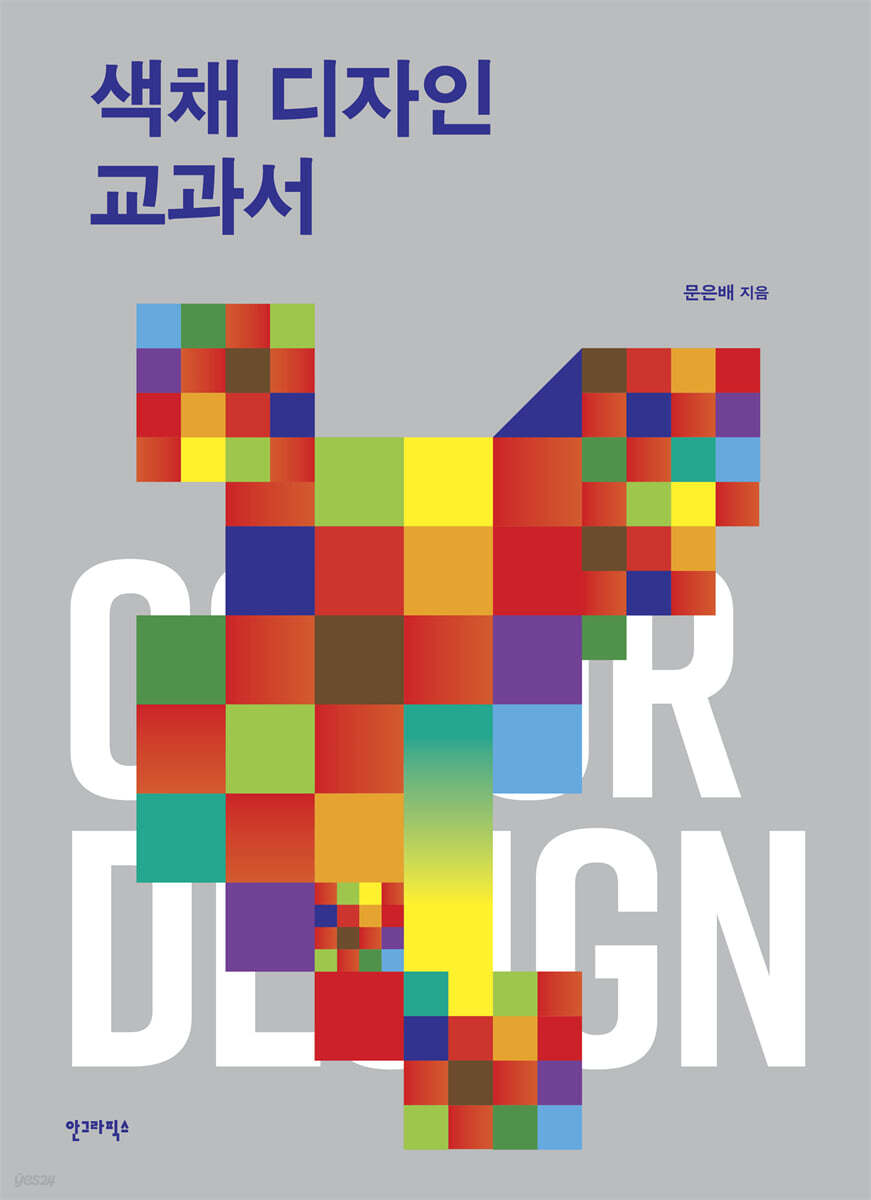
Color Design Textbook
 |
Description
Book Introduction
Color is a representative fusion discipline where technology, art, science, and design meet.
『Color Design Textbook』 is Korea's first comprehensive color theory book that covers both academic depth and practical application of color.
This book is a revised edition of the "Color Design Textbook," which has established itself as an essential reference in color research, education, and design for the past decade. It fully reflects the official Korean standard terminology of the International Electrotechnical Commission (IEC) in 2025, presenting a future-oriented and internationalized color standard.
Beginning with the question, "What is color?", it faithfully organizes color-related terminology and describes the basic concepts of color in general, the historical development of color, and its future direction.
In particular, it contains the author's research and field experience accumulated over 30 years, including color terminology, visual perception principles, color naming systems, color psychology, universal design, color harmony theory, history of color research, color standards and management, and digital color.
『Color Design Textbook』 is Korea's first comprehensive color theory book that covers both academic depth and practical application of color.
This book is a revised edition of the "Color Design Textbook," which has established itself as an essential reference in color research, education, and design for the past decade. It fully reflects the official Korean standard terminology of the International Electrotechnical Commission (IEC) in 2025, presenting a future-oriented and internationalized color standard.
Beginning with the question, "What is color?", it faithfully organizes color-related terminology and describes the basic concepts of color in general, the historical development of color, and its future direction.
In particular, it contains the author's research and field experience accumulated over 30 years, including color terminology, visual perception principles, color naming systems, color psychology, universal design, color harmony theory, history of color research, color standards and management, and digital color.
- You can preview some of the book's contents.
Preview
index
Header
Note
Chapter 1 Color and Colors
1. Humanistic Definition of Color
2 Physical Definition of Color
3. Generation and properties of light
Chapter 2 Color Perception
1 Eyes and Colors
2 Physiological perception phenomena
Influence of three color stimulus properties
4 Color Perception Theory
Chapter 3 Color Names
1 Understanding color names
2 Color naming system (object color)
3 Color name system (light source color)
4 ISCC-NBS (system color name)
Chapter 4: Color Psychology
1. Overview of Color Psychology
2. Phenomenon of color psychology
3 Color Associations
4 Color Symbols
5 Color association forms and color culture
Chapter 5 Color Universal
1 Overview of Color Universal
2 Color scheme for color vision deficiencies
3 Pseudocolors for Universal Design
Chapter 6: Color Harmony and Color Scheme
1 Understanding Color Harmony
2 Color Harmony
3 Applications of Color Harmony
Chapter 7: The History of Color
1 History of Color Studies
2 History of color systems
3 Chronology of Color Systems
Chapter 8 Color Scheme
1 Color Standard
2 Color Standard System
3 Other color systems
Chapter 9 Color Management
1 Overview of Color Management
2 Understanding Color Measurement
3 Light sources for color measurement
4 Color Measurement Practice
5 Colorimeter
6 color differences
7 color combinations
8 color materials
Chapter 10 Digital Color
1. The concept of digital
2 Device-dependent color spaces
3 mixed colors
4 Understanding Digital Color
5 Digital Color Management
References
Note
Chapter 1 Color and Colors
1. Humanistic Definition of Color
2 Physical Definition of Color
3. Generation and properties of light
Chapter 2 Color Perception
1 Eyes and Colors
2 Physiological perception phenomena
Influence of three color stimulus properties
4 Color Perception Theory
Chapter 3 Color Names
1 Understanding color names
2 Color naming system (object color)
3 Color name system (light source color)
4 ISCC-NBS (system color name)
Chapter 4: Color Psychology
1. Overview of Color Psychology
2. Phenomenon of color psychology
3 Color Associations
4 Color Symbols
5 Color association forms and color culture
Chapter 5 Color Universal
1 Overview of Color Universal
2 Color scheme for color vision deficiencies
3 Pseudocolors for Universal Design
Chapter 6: Color Harmony and Color Scheme
1 Understanding Color Harmony
2 Color Harmony
3 Applications of Color Harmony
Chapter 7: The History of Color
1 History of Color Studies
2 History of color systems
3 Chronology of Color Systems
Chapter 8 Color Scheme
1 Color Standard
2 Color Standard System
3 Other color systems
Chapter 9 Color Management
1 Overview of Color Management
2 Understanding Color Measurement
3 Light sources for color measurement
4 Color Measurement Practice
5 Colorimeter
6 color differences
7 color combinations
8 color materials
Chapter 10 Digital Color
1. The concept of digital
2 Device-dependent color spaces
3 mixed colors
4 Understanding Digital Color
5 Digital Color Management
References
Into the book
Color is an interdisciplinary field that brings together technology, art, and other specialized fields.
Even if you start out in engineering, you must learn art, and even if you start out in art, you must study engineering to reach the interdisciplinary study of color.
Thomas Young did it, Maxwell did it, Helmholtz did it.
Ostwald studied painting under the Impressionist painters, and Munsell studied color engineering and created a colorimeter.
And they all became legends in the world of color.
Therefore, artists must study science and mathematics, and natural scientists must have a deep understanding of art.
Although there are many difficulties, we can also understand each other and develop our own fields through interdisciplinary research.
--- p.4, from the “Introduction”
Color is not something that can be felt only by seeing it with your eyes or experiencing it directly.
Anyone who has ever experienced color visually can also perceive color through sound or other stimuli.
This is called the color-tone phenomenon due to synesthesia.
The phenomenon of chromatic perception refers to the ability to associate a color with another sensation or stimulus that accompanies the experience of color even after the color has disappeared. It was mentioned by pioneers in color research such as Newton and Goethe.
--- p.21, from “Chapter 1 Color and Colors”
Color names convey the name and color of a color, but more importantly, they convey emotions as well.
For example, when we say the color rose, we are conveying not only the simple color of rose, but also the emotional image contained in the associations and linguistic meaning of rose.
In this way, color names convey emotions and also show the culture of a region, ethnicity, or group.
The number of colors classified in daily life is usually around 20-30, and if classified professionally, it is around 300.
--- p.86, from “Chapter 3 Color Names”
Color symbolism is a concept applied to the use of color as an expression of various cultures from an artistic and anthropological perspective.
In general, colors represent certain specific meanings.
Although it is common to each country, its meaning can be completely different depending on national traditions and customs.
We can see that there are many established color symbols in color preferences, religious meanings, feudal hierarchy, and grades.
This is Frank H. Manke, President of the International Association of Color Consultants (IACC).
Mahnke's six stages of color experience: stage 1 biological response, stage 2 collective unconsciousness, stage 3 conscious symbolization association, stage 4 regional influences and mannerism, stage 5 artistic trends, and stage 6 personal relationships.
It often has completely different meanings across time and region. When red is used in traffic signals, it means prohibition or caution, but on birthdays and Christmas, it means celebration.
The use of colors to consciously convey meaning in place of language is called symbolism.
--- p.147, from “Chapter 4: Color Psychology”
Color systems encompass all the study of the three elements that deal with color: light source, object, and receptor.
Color studies is a vast world of knowledge, with an endless chain of knowledge links, more so than any other field.
The field of color, which has been studied continuously throughout history, extends to art, philosophy, physics, chemistry, psychology, physiology, ophthalmology, neurology, optometry, and even computer science.
There have been many studies over the centuries, all stemming from three questions: What in light shows the diversity of colors? What determines the color of an object? How do humans perceive color?
By the late 20th century, interest and research in color science had shifted to a third, human-centered question: "How do humans perceive color?" or, in other words, "How do we create images in our brains when we see objects?"
Our ancestors considered both aesthetic and scientific aspects in their vision and sense of color.
European prehistoric cave paintings, as well as ancient temples, houses, and tombs, are all decorated with color, and they clearly show the purpose and method of color use that continues to this day.
The red, yellow, brown, and black used in the Altamira cave paintings and the late Paleolithic murals of Spain are also examples of our ancestors' vision and sense of color.
--- p.262, from “Chapter 6: History of Color”
The beginning of color measurement began with Newton.
In a graph that represented color combinations as two-dimensional colors, Newton divided the spectrum into seven primary colors and placed them around a circle.
And we calculated the result of mixing two or more primary colors as if we were measuring the center of two or more color positions.
Newton's spectral reproduction and experiments mixing different types of light provided the basic idea for color measurement in a spectrophotometer.
Newton wrote about light and color in Opticks in 1704, indicating the need for color analysis and color measurement.
“If we wish to analyze any color, we can do nothing else than to consider how the rays of the sun are divided and mixed by reflection, refraction, or other causes, or else to know what kinds of rays of light are composed in what proportion to make the color.”
--- p.386, from “Chapter 9 Color Management”
Digital color management is now evolving beyond the simple engineering of measurement and correction into a transdisciplinary platform connecting people, the environment, creation, and culture.
Future research will open new horizons encompassing real-time, distributed, and intelligent color networks, biometric and culturally-based color databases, and the social implications of color, including ethical and copyright issues.
All these changes remind us that color is not just something we 'see', but something we 'feel' and, furthermore, something we 'connect'.
This is the prelude to a new color civilization in which digital color transcends technology and becomes a core language of art, culture, and communication.
Even if you start out in engineering, you must learn art, and even if you start out in art, you must study engineering to reach the interdisciplinary study of color.
Thomas Young did it, Maxwell did it, Helmholtz did it.
Ostwald studied painting under the Impressionist painters, and Munsell studied color engineering and created a colorimeter.
And they all became legends in the world of color.
Therefore, artists must study science and mathematics, and natural scientists must have a deep understanding of art.
Although there are many difficulties, we can also understand each other and develop our own fields through interdisciplinary research.
--- p.4, from the “Introduction”
Color is not something that can be felt only by seeing it with your eyes or experiencing it directly.
Anyone who has ever experienced color visually can also perceive color through sound or other stimuli.
This is called the color-tone phenomenon due to synesthesia.
The phenomenon of chromatic perception refers to the ability to associate a color with another sensation or stimulus that accompanies the experience of color even after the color has disappeared. It was mentioned by pioneers in color research such as Newton and Goethe.
--- p.21, from “Chapter 1 Color and Colors”
Color names convey the name and color of a color, but more importantly, they convey emotions as well.
For example, when we say the color rose, we are conveying not only the simple color of rose, but also the emotional image contained in the associations and linguistic meaning of rose.
In this way, color names convey emotions and also show the culture of a region, ethnicity, or group.
The number of colors classified in daily life is usually around 20-30, and if classified professionally, it is around 300.
--- p.86, from “Chapter 3 Color Names”
Color symbolism is a concept applied to the use of color as an expression of various cultures from an artistic and anthropological perspective.
In general, colors represent certain specific meanings.
Although it is common to each country, its meaning can be completely different depending on national traditions and customs.
We can see that there are many established color symbols in color preferences, religious meanings, feudal hierarchy, and grades.
This is Frank H. Manke, President of the International Association of Color Consultants (IACC).
Mahnke's six stages of color experience: stage 1 biological response, stage 2 collective unconsciousness, stage 3 conscious symbolization association, stage 4 regional influences and mannerism, stage 5 artistic trends, and stage 6 personal relationships.
It often has completely different meanings across time and region. When red is used in traffic signals, it means prohibition or caution, but on birthdays and Christmas, it means celebration.
The use of colors to consciously convey meaning in place of language is called symbolism.
--- p.147, from “Chapter 4: Color Psychology”
Color systems encompass all the study of the three elements that deal with color: light source, object, and receptor.
Color studies is a vast world of knowledge, with an endless chain of knowledge links, more so than any other field.
The field of color, which has been studied continuously throughout history, extends to art, philosophy, physics, chemistry, psychology, physiology, ophthalmology, neurology, optometry, and even computer science.
There have been many studies over the centuries, all stemming from three questions: What in light shows the diversity of colors? What determines the color of an object? How do humans perceive color?
By the late 20th century, interest and research in color science had shifted to a third, human-centered question: "How do humans perceive color?" or, in other words, "How do we create images in our brains when we see objects?"
Our ancestors considered both aesthetic and scientific aspects in their vision and sense of color.
European prehistoric cave paintings, as well as ancient temples, houses, and tombs, are all decorated with color, and they clearly show the purpose and method of color use that continues to this day.
The red, yellow, brown, and black used in the Altamira cave paintings and the late Paleolithic murals of Spain are also examples of our ancestors' vision and sense of color.
--- p.262, from “Chapter 6: History of Color”
The beginning of color measurement began with Newton.
In a graph that represented color combinations as two-dimensional colors, Newton divided the spectrum into seven primary colors and placed them around a circle.
And we calculated the result of mixing two or more primary colors as if we were measuring the center of two or more color positions.
Newton's spectral reproduction and experiments mixing different types of light provided the basic idea for color measurement in a spectrophotometer.
Newton wrote about light and color in Opticks in 1704, indicating the need for color analysis and color measurement.
“If we wish to analyze any color, we can do nothing else than to consider how the rays of the sun are divided and mixed by reflection, refraction, or other causes, or else to know what kinds of rays of light are composed in what proportion to make the color.”
--- p.386, from “Chapter 9 Color Management”
Digital color management is now evolving beyond the simple engineering of measurement and correction into a transdisciplinary platform connecting people, the environment, creation, and culture.
Future research will open new horizons encompassing real-time, distributed, and intelligent color networks, biometric and culturally-based color databases, and the social implications of color, including ethical and copyright issues.
All these changes remind us that color is not just something we 'see', but something we 'feel' and, furthermore, something we 'connect'.
This is the prelude to a new color civilization in which digital color transcends technology and becomes a core language of art, culture, and communication.
--- p.505, from “Chapter 10 Digital Color”
Publisher's Review
Dissecting the essence of color, encompassing theory and practice
The most detailed and precise textbook on color
The question, 'What is color?' has long been debated among philosophers and scientists.
What we call 'color' is a complex experience that goes beyond a simple visual phenomenon that can be seen with the eyes. The word 'color' has various meanings, from a material phenomenon to a linguistic dimension that expresses human emotions.
Physically, color is a phenomenon perceived when light of a specific wavelength is reflected or transmitted from an object and reaches the retina of the eye. At the same time, it is also a symbol that expresses human emotions and thoughts within a cultural and social context.
This is why even the same light can be perceived differently depending on the viewing environment, social context, and individual experience.
Ultimately, color can be said to be the result of the natural phenomenon of light being transformed through human perception and interpretation into a way of perceiving and expressing the world.
So what does color mean in design? If design is considered a "visual language," then color is the most powerful element that constitutes that language.
Color is not simply the appearance of an object; it defines the identity of a product and a brand, completes the atmosphere of a space, and even changes the behavior of users.
In other words, color has the power to move human emotions and perception most quickly and intuitively, so it is not simply an aesthetic decoration, but the essence and core of design.
This is precisely why color theory is a necessary academic foundation and practical tool for designers, researchers, and practitioners alike.
"Color Design Textbook" is a book that explains the essence of "color," an essential element in design, from an academic perspective and practical perspective.
The author, who has explored traditional Korean colors for decades and systematized them theoretically, pioneering a unique research horizon in color science, presents a standard for color design education based on this research.
『Color Design Textbook』 covers everything from the fundamental understanding of color to practical application, history and standards, and digital color management.
This revised edition does not simply supplement existing content; it fully reflects the international IEC 2025 standard Korean terminology and has been completely reorganized to align with the latest research findings and international trends.
In particular, it contributes to academic development as well as social practice by systematically presenting future-oriented topics such as color universal design and digital color.
The theories, diagrams, color systems, and experimental results contained herein are all the result of the author's direct research and verification, and are reliable results based on official data.
Therefore, this 2025 revised edition can be said to be a culmination of interdisciplinary and integrated color research results.
The approach to color science is multi-layered, encompassing linguistic, physical, chemical, physiological, psychological, psychophysical, aesthetic, folk, environmental architectural, computer engineering, and even digital color approaches.
This book synthesizes these diverse approaches to provide a framework for comprehensively understanding, planning, and utilizing color.
Above all, this book clearly explains the principles of color and organically connects theory and practice, thereby simultaneously providing academic depth and practical application.
It provides a systematic academic foundation for specialists, strategies that can be applied immediately in the field for practitioners, and guidance for general readers to understand and develop a sense of color.
Studying color is not simply a process of finding ‘pretty colors.’
It's about understanding the precise language of color and developing the ability to choose persuasive colors that fit the context.
For designers, color is not just about visual beauty; it is a key tool for conveying messages and designing user experiences.
Therefore, designers must be able to handle color based on scientific evidence and systematic knowledge, rather than relying solely on their senses and intuition.
This is a prerequisite for designers to demonstrate their expertise and creativity.
『Color Design Textbook』 explores how color works and gives meaning to human life.
We explore the essence of color by viewing it as a scientific language, an artistic sensibility, and a historical structure.
Through this, readers will gain the power to understand and utilize color in a new way.
The most detailed and precise textbook on color
The question, 'What is color?' has long been debated among philosophers and scientists.
What we call 'color' is a complex experience that goes beyond a simple visual phenomenon that can be seen with the eyes. The word 'color' has various meanings, from a material phenomenon to a linguistic dimension that expresses human emotions.
Physically, color is a phenomenon perceived when light of a specific wavelength is reflected or transmitted from an object and reaches the retina of the eye. At the same time, it is also a symbol that expresses human emotions and thoughts within a cultural and social context.
This is why even the same light can be perceived differently depending on the viewing environment, social context, and individual experience.
Ultimately, color can be said to be the result of the natural phenomenon of light being transformed through human perception and interpretation into a way of perceiving and expressing the world.
So what does color mean in design? If design is considered a "visual language," then color is the most powerful element that constitutes that language.
Color is not simply the appearance of an object; it defines the identity of a product and a brand, completes the atmosphere of a space, and even changes the behavior of users.
In other words, color has the power to move human emotions and perception most quickly and intuitively, so it is not simply an aesthetic decoration, but the essence and core of design.
This is precisely why color theory is a necessary academic foundation and practical tool for designers, researchers, and practitioners alike.
"Color Design Textbook" is a book that explains the essence of "color," an essential element in design, from an academic perspective and practical perspective.
The author, who has explored traditional Korean colors for decades and systematized them theoretically, pioneering a unique research horizon in color science, presents a standard for color design education based on this research.
『Color Design Textbook』 covers everything from the fundamental understanding of color to practical application, history and standards, and digital color management.
This revised edition does not simply supplement existing content; it fully reflects the international IEC 2025 standard Korean terminology and has been completely reorganized to align with the latest research findings and international trends.
In particular, it contributes to academic development as well as social practice by systematically presenting future-oriented topics such as color universal design and digital color.
The theories, diagrams, color systems, and experimental results contained herein are all the result of the author's direct research and verification, and are reliable results based on official data.
Therefore, this 2025 revised edition can be said to be a culmination of interdisciplinary and integrated color research results.
The approach to color science is multi-layered, encompassing linguistic, physical, chemical, physiological, psychological, psychophysical, aesthetic, folk, environmental architectural, computer engineering, and even digital color approaches.
This book synthesizes these diverse approaches to provide a framework for comprehensively understanding, planning, and utilizing color.
Above all, this book clearly explains the principles of color and organically connects theory and practice, thereby simultaneously providing academic depth and practical application.
It provides a systematic academic foundation for specialists, strategies that can be applied immediately in the field for practitioners, and guidance for general readers to understand and develop a sense of color.
Studying color is not simply a process of finding ‘pretty colors.’
It's about understanding the precise language of color and developing the ability to choose persuasive colors that fit the context.
For designers, color is not just about visual beauty; it is a key tool for conveying messages and designing user experiences.
Therefore, designers must be able to handle color based on scientific evidence and systematic knowledge, rather than relying solely on their senses and intuition.
This is a prerequisite for designers to demonstrate their expertise and creativity.
『Color Design Textbook』 explores how color works and gives meaning to human life.
We explore the essence of color by viewing it as a scientific language, an artistic sensibility, and a historical structure.
Through this, readers will gain the power to understand and utilize color in a new way.
GOODS SPECIFICS
- Date of issue: August 30, 2025
- Page count, weight, size: 508 pages | 1,160g | 178*245*26mm
- ISBN13: 9791168231115
You may also like
카테고리
korean


korean

![GQ KOREA Mark (Monthly): December [2025]](http://librairie.coreenne.fr/cdn/shop/files/8ef265dbbfbf186523ed75ba7319009d.jpg?v=1765340328&width=3840)


