

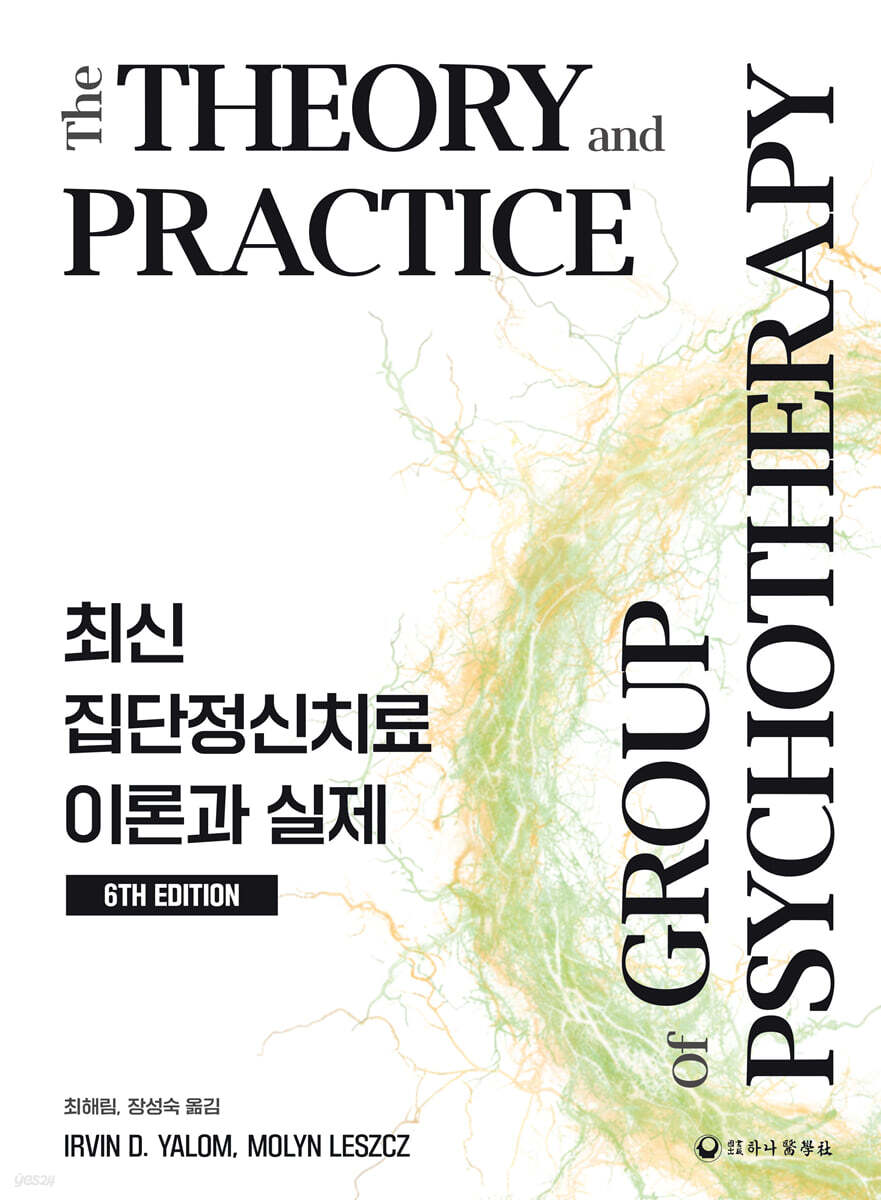
Latest group psychotherapy theory and practice
 |
Description
Book Introduction
The first and last bible of group psychotherapy! Irvin D.
Yalom and Molyn Leszcz's "Modern Group Psychotherapy Theory and Practice" has been revised and published in its 6th edition after 15 years.
This book, which has been revised six times over many years, can be said to contain the essence of group therapy and group counseling.
After COVID-19, a contactless society emerged, and new forms of non-face-to-face groups became active.
Competition, conflict, and extinction in a shrinking society...
Interpersonal conflicts have intensified in various forms, and the difficulties many people face today are none other than conflicts in interpersonal relationships.
Excessive competition is making things difficult, and the closeness between family members is not what it used to be.
So, surprisingly, many people find it difficult to interact with each other, so they live scattered and lonely lives.
This sixth edition provides an opportunity to practice and learn how to interact and connect with people through group therapy and counseling, which form a miniature society in this modern world.
We've added the latest data and clinical research throughout, and we've also added a section on online therapy groups to reflect the new forms of non-face-to-face groups that have become active due to the global pandemic of COVID-19.
The author worked long and hard to add new material, cutting out old material and quotations, hoping to avoid an overly voluminous book that would easily end up on a bookshelf.
I hope that this book, a testament to the author's hard work, will serve as a timely and up-to-date reference that will be helpful to all those studying this field for the next 15 years and beyond.
Yalom and Molyn Leszcz's "Modern Group Psychotherapy Theory and Practice" has been revised and published in its 6th edition after 15 years.
This book, which has been revised six times over many years, can be said to contain the essence of group therapy and group counseling.
After COVID-19, a contactless society emerged, and new forms of non-face-to-face groups became active.
Competition, conflict, and extinction in a shrinking society...
Interpersonal conflicts have intensified in various forms, and the difficulties many people face today are none other than conflicts in interpersonal relationships.
Excessive competition is making things difficult, and the closeness between family members is not what it used to be.
So, surprisingly, many people find it difficult to interact with each other, so they live scattered and lonely lives.
This sixth edition provides an opportunity to practice and learn how to interact and connect with people through group therapy and counseling, which form a miniature society in this modern world.
We've added the latest data and clinical research throughout, and we've also added a section on online therapy groups to reflect the new forms of non-face-to-face groups that have become active due to the global pandemic of COVID-19.
The author worked long and hard to add new material, cutting out old material and quotations, hoping to avoid an overly voluminous book that would easily end up on a bookshelf.
I hope that this book, a testament to the author's hard work, will serve as a timely and up-to-date reference that will be helpful to all those studying this field for the next 15 years and beyond.
- You can preview some of the book's contents.
Preview
index
Preface to the 6th Edition
Translator's Preface
Acknowledgements
[Chapter 1] Therapeutic Factors
Instilling hope
catholicity
Information transmission
altruism
Corrective reenactment of the early family
Development of social skills
imitative behavior
[Chapter 2] Interpersonal Learning
The importance of interpersonal relationships
Corrective emotional experience
The group as a miniature society
Miniature Society: Dynamic Interactions
Awareness of behavioral patterns in a reduced society
Is this a shrinking society?
Transference and Insight
survey
[Chapter 3] Group Cohesion
The importance of group cohesion
Mechanism of action
summation
[Chapter 4] Therapeutic Factors: Integration
The Relative Value of Therapeutic Factors: The Patient's Perspective
The Relative Value of Therapeutic Factors: Differences in Perspectives Between Therapists and Patients
Therapeutic factors: the power to correct
[Chapter 5] Therapist: Basic Tasks
Formation and maintenance of groups
Cultural formation
How do leaders create norms?
Treatment group norms
[Chapter 6] The Healer: Being Here and Now
Definition of process
Process Focus: The Dynamics of the Group
The Healer's Task in the Here and Now
Technology that activates the here and now
The art of process clarification
Helping patients navigate the process
Helping patients accept process clarification statements
Process Notes: Theoretical Overview
past usage
Process statement for the entire group
[Chapter 7] The Healer: Transference and Transparency
Metastasis in the treatment group
Therapists and Transparency
[Chapter 8] Patient Selection and Group Composition
Exclusion criteria
Inclusion criteria
Summary: Patient Screening
Group composition
Predicting patient behavior within a group
Summary: Predicting patient behavior
Principles of group composition
Homogeneity or heterogeneity
General clinical considerations
Summary: Group composition
[Chapter 9] The Creation of the Group
physical conditions
short-term group therapy
Preparing for group therapy
[Chapter 10] The Beginning of the Group
Group formation stage
Client factors and other factors that influence group development
Group membership problems
[Chapter 11] Advanced Groups
How does interpersonal learning occur?
Subgroup formation
Conflict in treatment groups
self-disclosure
closing
[Chapter 12] Problem Group Members
monopolist
Silent client
Boring client
Complainer who refuses help
Acute psychotic client
schizophrenic clients
Clients with difficult personalities
[Chapter 13] Aids to Specialized Forms and Procedures
Collaboration between individual and group therapy
Combining group therapy and 12-step groups
joint treatment
dream
audiovisual technology
Summary
Group therapy outcome and process monitoring
structured activities
Documenting group therapy
[Chapter 14] Online Therapy Groups
VTC Group: Initial Findings
Guidelines for Group Therapists
Challenges and Opportunities for VTC Groups
[Chapter 15] Special Treatment Groups
Modifications for Special Clinical Situations: Basic Steps
Acute inpatient treatment group
Groups for people with illness
Application of cognitive behavioral therapy [CBT] and interpersonal therapy [IPT] in group therapy
Self-help groups and online support groups
[Chapter 16] Group Therapist Training
Observation by a skilled clinician
training director
Group experience for practitioners
Individual psychotherapy
summation
Beyond therapeutic techniques
Appendix: [Example] Group Therapy Guidelines and Guidelines for Patients
Americas
Translator's Preface
Acknowledgements
[Chapter 1] Therapeutic Factors
Instilling hope
catholicity
Information transmission
altruism
Corrective reenactment of the early family
Development of social skills
imitative behavior
[Chapter 2] Interpersonal Learning
The importance of interpersonal relationships
Corrective emotional experience
The group as a miniature society
Miniature Society: Dynamic Interactions
Awareness of behavioral patterns in a reduced society
Is this a shrinking society?
Transference and Insight
survey
[Chapter 3] Group Cohesion
The importance of group cohesion
Mechanism of action
summation
[Chapter 4] Therapeutic Factors: Integration
The Relative Value of Therapeutic Factors: The Patient's Perspective
The Relative Value of Therapeutic Factors: Differences in Perspectives Between Therapists and Patients
Therapeutic factors: the power to correct
[Chapter 5] Therapist: Basic Tasks
Formation and maintenance of groups
Cultural formation
How do leaders create norms?
Treatment group norms
[Chapter 6] The Healer: Being Here and Now
Definition of process
Process Focus: The Dynamics of the Group
The Healer's Task in the Here and Now
Technology that activates the here and now
The art of process clarification
Helping patients navigate the process
Helping patients accept process clarification statements
Process Notes: Theoretical Overview
past usage
Process statement for the entire group
[Chapter 7] The Healer: Transference and Transparency
Metastasis in the treatment group
Therapists and Transparency
[Chapter 8] Patient Selection and Group Composition
Exclusion criteria
Inclusion criteria
Summary: Patient Screening
Group composition
Predicting patient behavior within a group
Summary: Predicting patient behavior
Principles of group composition
Homogeneity or heterogeneity
General clinical considerations
Summary: Group composition
[Chapter 9] The Creation of the Group
physical conditions
short-term group therapy
Preparing for group therapy
[Chapter 10] The Beginning of the Group
Group formation stage
Client factors and other factors that influence group development
Group membership problems
[Chapter 11] Advanced Groups
How does interpersonal learning occur?
Subgroup formation
Conflict in treatment groups
self-disclosure
closing
[Chapter 12] Problem Group Members
monopolist
Silent client
Boring client
Complainer who refuses help
Acute psychotic client
schizophrenic clients
Clients with difficult personalities
[Chapter 13] Aids to Specialized Forms and Procedures
Collaboration between individual and group therapy
Combining group therapy and 12-step groups
joint treatment
dream
audiovisual technology
Summary
Group therapy outcome and process monitoring
structured activities
Documenting group therapy
[Chapter 14] Online Therapy Groups
VTC Group: Initial Findings
Guidelines for Group Therapists
Challenges and Opportunities for VTC Groups
[Chapter 15] Special Treatment Groups
Modifications for Special Clinical Situations: Basic Steps
Acute inpatient treatment group
Groups for people with illness
Application of cognitive behavioral therapy [CBT] and interpersonal therapy [IPT] in group therapy
Self-help groups and online support groups
[Chapter 16] Group Therapist Training
Observation by a skilled clinician
training director
Group experience for practitioners
Individual psychotherapy
summation
Beyond therapeutic techniques
Appendix: [Example] Group Therapy Guidelines and Guidelines for Patients
Americas
GOODS SPECIFICS
- Date of issue: January 31, 2025
- Format: Hardcover book binding method guide
- Page count, weight, size: 800 pages | 188*257*40mm
- ISBN13: 9791191658545
- ISBN10: 1191658546
You may also like
카테고리
korean


korean

![ELLE 엘르 스페셜 에디션 A형 : 12월 [2025]](http://librairie.coreenne.fr/cdn/shop/files/b8e27a3de6c9538896439686c6b0e8fb.jpg?v=1766436872&width=3840)


