

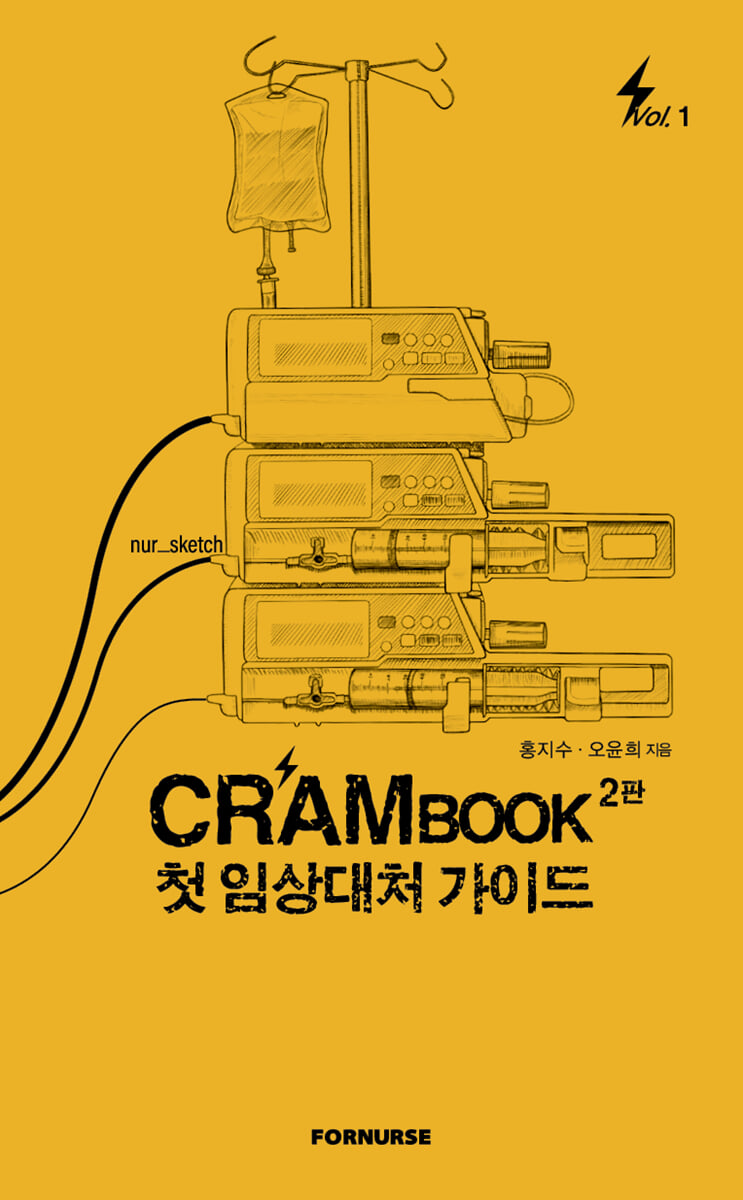
CRAMBOOK 1: A First Clinical Response Guide
 |
Description
Book Introduction
One of the most challenging aspects for new and inexperienced nurses is the anxiety they feel about not being able to properly respond to a variety of emergencies and deteriorating patients. This clinical nursing core tips notebook will provide a powerful boost to combat this anxiety!
index
1.
Blood pressure (BP)
Pre Study
01 When blood pressure is high: Hypertension
02 Hypertension Management
03 When blood pressure is low: Hypotension
04 Hypotension Management
2.
Heart rate (HR)
Pre Study
Understanding Heart Rhythm
01 When the heart rate is fast or slow: Tachycardia & Bradycardia
02 Tachycardia Management
03 Bradycardia Management
Commonly occurring tachycardia
3.
Respiratory rate (RR)
Pre Study
01 When breathing rate is fast or slow: Tachypnea or Bradypnea
Essentials Before Understanding Oxygen Therapy
02 Shortness of breath Manage
Responding to Respiratory Distress: A Case Study! Acute Respiratory Distress Syndrome (ARDS)
ABGA arterial blood gas analysis
Managing Dyspnea: A Case in Point! Chronic Obstructive Pulmonary Disease (COPD)
Oxygen Delivery Devices From low-flow oxygen supply devices to high-flow oxygen supply devices
04 Prone Position
4.
Cardiac Arrest
Cardiac arrest: The heart that generates blood pressure and pulse isn't beating?! Resuscitation!!
5.
Body Temperature (BT)
Pre Study Body Temperature
01 When body temperature is high: Hyperthermia, Fever
02 Fever: Fever Management
Multidrug-resistant bacteria
03 When body temperature is low: Hypothermia
Hypothermia Case Study! Hypothermia Therapy for Patients with Cerebral Infarction
6.
Fluid therapy
Fluid therapy
7.
ventilator
Principles of Human Respiration “To understand ventilators, you must first understand the principles of respiration..”
Understanding Ventilator Operating Variables
PEEP (positive end-expiratory pressure) "You're both difficult and easy..."
Inspiration and expiration ratio, I:E ratio
Surprisingly important breathing time
Basic Ventilator Setting
The first step to understanding graphs is resistance.
Understanding the Power of Seeing Ventilated Patients Well
Ventilator monitoring
VC vs. PC
Understanding Triggers
SIMV Setting can be a bit complicated
Spontaneous breathing mode PSV.
What if I can't breathe spontaneously?
There are so many Ventilator modes
Ventilator complications.
Know the basis and prepare!
Ventilator, let's stop now..
Weaning
Dealing with major alarms on the ventilator
8.
Radiology study
Types and Interpretation of Appendix Imaging Tests
Chest X-ray & Abdomen X-ray
X-ray Case! ileus and pleural effusion
X-rays are used in various ways
Brain CT & MRI
9.
continuous renal replacement therapy (CRRT)
Pre Study Renal Replacement Therapy
HD vs CRRT
CRRT with kidney transplantation
Filter's own function) Adsorption! "Adsorption"
Essential Concept 1) Understanding the CRRT CVVHDF mode prescription dosage
Essential Concept 2) NO Filter clot! anticoagulation
Essential Concept 3) Catheter for CRRT
CRRT procedure!
First, the really important alarm! Access & Return pressure alarm
10.
Extracorporeal membrane oxygenation (ECMO)
Pre Study Extracorporeal Membrane Oxidizer
ECMO components
How the ECMO machine works
ECMO application method (mode) that varies depending on the situation
1.
Heart Failure: VA ECMO
2.
Respiratory Failure: VV ECMO "Let's catch our breath, this is a little easier."
3.
Hybrid Mode: VAV, VVA ECMO
4.
Extracorporeal CPR (ECPR)
Respiratory Failure: VV ECMO CASE!
Maintenance (titration) is important for ECMO complications care!
Tips for applying VA ECMO
Monitoring during ECMO treatment
When to wean ECMO
IABP and ventricular assist devices (VADs)
Extended ECMO application (ECMO + CRRT)
Blood pressure (BP)
Pre Study
01 When blood pressure is high: Hypertension
02 Hypertension Management
03 When blood pressure is low: Hypotension
04 Hypotension Management
2.
Heart rate (HR)
Pre Study
Understanding Heart Rhythm
01 When the heart rate is fast or slow: Tachycardia & Bradycardia
02 Tachycardia Management
03 Bradycardia Management
Commonly occurring tachycardia
3.
Respiratory rate (RR)
Pre Study
01 When breathing rate is fast or slow: Tachypnea or Bradypnea
Essentials Before Understanding Oxygen Therapy
02 Shortness of breath Manage
Responding to Respiratory Distress: A Case Study! Acute Respiratory Distress Syndrome (ARDS)
ABGA arterial blood gas analysis
Managing Dyspnea: A Case in Point! Chronic Obstructive Pulmonary Disease (COPD)
Oxygen Delivery Devices From low-flow oxygen supply devices to high-flow oxygen supply devices
04 Prone Position
4.
Cardiac Arrest
Cardiac arrest: The heart that generates blood pressure and pulse isn't beating?! Resuscitation!!
5.
Body Temperature (BT)
Pre Study Body Temperature
01 When body temperature is high: Hyperthermia, Fever
02 Fever: Fever Management
Multidrug-resistant bacteria
03 When body temperature is low: Hypothermia
Hypothermia Case Study! Hypothermia Therapy for Patients with Cerebral Infarction
6.
Fluid therapy
Fluid therapy
7.
ventilator
Principles of Human Respiration “To understand ventilators, you must first understand the principles of respiration..”
Understanding Ventilator Operating Variables
PEEP (positive end-expiratory pressure) "You're both difficult and easy..."
Inspiration and expiration ratio, I:E ratio
Surprisingly important breathing time
Basic Ventilator Setting
The first step to understanding graphs is resistance.
Understanding the Power of Seeing Ventilated Patients Well
Ventilator monitoring
VC vs. PC
Understanding Triggers
SIMV Setting can be a bit complicated
Spontaneous breathing mode PSV.
What if I can't breathe spontaneously?
There are so many Ventilator modes
Ventilator complications.
Know the basis and prepare!
Ventilator, let's stop now..
Weaning
Dealing with major alarms on the ventilator
8.
Radiology study
Types and Interpretation of Appendix Imaging Tests
Chest X-ray & Abdomen X-ray
X-ray Case! ileus and pleural effusion
X-rays are used in various ways
Brain CT & MRI
9.
continuous renal replacement therapy (CRRT)
Pre Study Renal Replacement Therapy
HD vs CRRT
CRRT with kidney transplantation
Filter's own function) Adsorption! "Adsorption"
Essential Concept 1) Understanding the CRRT CVVHDF mode prescription dosage
Essential Concept 2) NO Filter clot! anticoagulation
Essential Concept 3) Catheter for CRRT
CRRT procedure!
First, the really important alarm! Access & Return pressure alarm
10.
Extracorporeal membrane oxygenation (ECMO)
Pre Study Extracorporeal Membrane Oxidizer
ECMO components
How the ECMO machine works
ECMO application method (mode) that varies depending on the situation
1.
Heart Failure: VA ECMO
2.
Respiratory Failure: VV ECMO "Let's catch our breath, this is a little easier."
3.
Hybrid Mode: VAV, VVA ECMO
4.
Extracorporeal CPR (ECPR)
Respiratory Failure: VV ECMO CASE!
Maintenance (titration) is important for ECMO complications care!
Tips for applying VA ECMO
Monitoring during ECMO treatment
When to wean ECMO
IABP and ventricular assist devices (VADs)
Extended ECMO application (ECMO + CRRT)
Detailed image
.jpg)

GOODS SPECIFICS
- Date of issue: September 1, 2025
- Page count, weight, size: 272 pages | 130*210*20mm
- ISBN13: 9791166273469
- ISBN10: 1166273466
You may also like
카테고리
korean


korean

![ELLE 엘르 스페셜 에디션 A형 : 12월 [2025]](http://librairie.coreenne.fr/cdn/shop/files/b8e27a3de6c9538896439686c6b0e8fb.jpg?v=1766436872&width=3840)


