

family counseling
 |
Description
Book Introduction
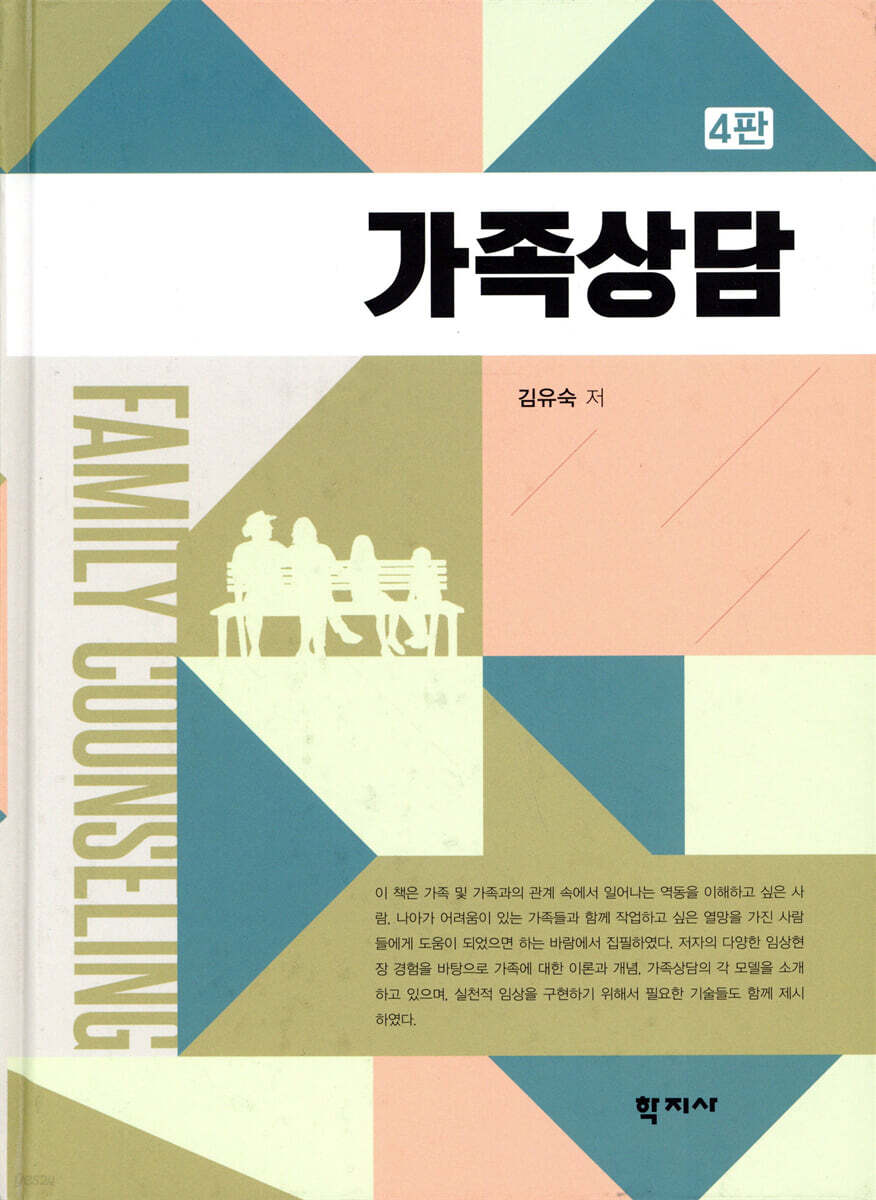
"Family Counseling" was written with the hope that it would be helpful to those who want to understand the dynamics that occur within families and their relationships, and further, to those who have a desire to work with families experiencing difficulties.
First, I introduced theories and concepts of family and each model of family counseling based on my experience teaching family counseling to juniors for a long time and meeting various families in clinical settings.
In addition, the technologies necessary to implement practical clinical trials were also presented.
First, I introduced theories and concepts of family and each model of family counseling based on my experience teaching family counseling to juniors for a long time and meeting various families in clinical settings.
In addition, the technologies necessary to implement practical clinical trials were also presented.
index
Preface to the 4th Edition
Part 1: Understanding Family Counseling
Chapter 1 Families in Need of Family Counseling
1.
History of Family Counseling
2.
family as a whole
3.
Characteristics of a functional family
Chapter 2 Family Life Cycle
1.
History of the Family Life Cycle
2.
Family life cycle from a systems perspective
Chapter 3 Family Conflict and Family Stress
1.
family conflict
2.
family stress
3.
Korean family problems
Chapter 4 Topics of Family Counseling
1.
Problems during the family formation period
2.
Problems with various family types
3.
Problems in raising children
4.
Problems of adolescent children
5.
The problem of adult children leaving home
6.
Problems of adulthood
7.
Problems of old age
Part 2 Family Counseling Model
Chapter 5: Basic Concepts of Family Counseling
1.
An ecological systems perspective
2.
A social constructivist approach
Chapter 6 Multigenerational Model
1.
Key Concepts
2.
Counseling techniques
Chapter 7 Structural Model
1.
Key Concepts
2.
Counseling techniques
Chapter 8 Empirical Models
1.
Key Concepts
2.
Counseling techniques
Chapter 9: Solution-Focused Model
1.
Key Concepts
2.
Counseling techniques
Chapter 10: Narrative Model
1.
Key Concepts
2.
Counseling techniques
Chapter 11: The Emotion-Centered Model
1.
Basic Concepts / 225
2.
Counseling Techniques / 228
Part 3: Family Counseling in Practice
Chapter 12 Family Assessment
1.
quantitative evaluation
2.
qualitative evaluation
Chapter 13: Description of Family Counseling Intervention Plans
1.
Counselor's attitude
2.
Questioning techniques based on circular epistemology
3.
Family Case Conceptualization
Chapter 14: Practical Issues in Family Counseling Intervention
1.
Things to consider before a consultation
2.
First session counseling process
3.
Communication problems during the counseling process
4.
Techniques for bringing about change
5.
Special family issues that should be addressed during the counseling process
6.
Dealing with unexpected problems
7.
End of consultation
Chapter 15: Couples Counseling: Resolving Unresolved Issues in the Family of Origin
1.
Case Overview
2.
Counseling process
Chapter 16: Remarriage Family Counseling Using Family Play Therapy
1.
Case Overview
2.
Counseling process
References
Search
Part 1: Understanding Family Counseling
Chapter 1 Families in Need of Family Counseling
1.
History of Family Counseling
2.
family as a whole
3.
Characteristics of a functional family
Chapter 2 Family Life Cycle
1.
History of the Family Life Cycle
2.
Family life cycle from a systems perspective
Chapter 3 Family Conflict and Family Stress
1.
family conflict
2.
family stress
3.
Korean family problems
Chapter 4 Topics of Family Counseling
1.
Problems during the family formation period
2.
Problems with various family types
3.
Problems in raising children
4.
Problems of adolescent children
5.
The problem of adult children leaving home
6.
Problems of adulthood
7.
Problems of old age
Part 2 Family Counseling Model
Chapter 5: Basic Concepts of Family Counseling
1.
An ecological systems perspective
2.
A social constructivist approach
Chapter 6 Multigenerational Model
1.
Key Concepts
2.
Counseling techniques
Chapter 7 Structural Model
1.
Key Concepts
2.
Counseling techniques
Chapter 8 Empirical Models
1.
Key Concepts
2.
Counseling techniques
Chapter 9: Solution-Focused Model
1.
Key Concepts
2.
Counseling techniques
Chapter 10: Narrative Model
1.
Key Concepts
2.
Counseling techniques
Chapter 11: The Emotion-Centered Model
1.
Basic Concepts / 225
2.
Counseling Techniques / 228
Part 3: Family Counseling in Practice
Chapter 12 Family Assessment
1.
quantitative evaluation
2.
qualitative evaluation
Chapter 13: Description of Family Counseling Intervention Plans
1.
Counselor's attitude
2.
Questioning techniques based on circular epistemology
3.
Family Case Conceptualization
Chapter 14: Practical Issues in Family Counseling Intervention
1.
Things to consider before a consultation
2.
First session counseling process
3.
Communication problems during the counseling process
4.
Techniques for bringing about change
5.
Special family issues that should be addressed during the counseling process
6.
Dealing with unexpected problems
7.
End of consultation
Chapter 15: Couples Counseling: Resolving Unresolved Issues in the Family of Origin
1.
Case Overview
2.
Counseling process
Chapter 16: Remarriage Family Counseling Using Family Play Therapy
1.
Case Overview
2.
Counseling process
References
Search
Publisher's Review
This book is divided into three parts.
Part 1, 'Understanding Family Counseling', includes the history of family counseling, the concept of family, the family life cycle, and family stress theory that would be helpful for counselors working with families to know.
Understanding the changes, developments, and stresses that occur throughout the life cycle, especially from the birth of a new family through marriage to the loss of a family member through the death of a spouse, will be very helpful when meeting diverse families.
Part 2, ‘Family Counseling Models’, introduces various models of family counseling.
To understand family counseling models, it is important to know family systems theory and social constructivism perspectives.
Readers who are not familiar with terms like cybernetics, circular epistemology, and discourse may find them somewhat unfamiliar and difficult to understand at first, but if they make these theories their own, they can shift their existing paradigms, which will help them grow not only as a counselor but also as a person.
It will also be of great help.
Part 3, ‘Family Counseling in Practice,’ presents various techniques that are helpful when practicing family counseling.
Before meeting with families, the clinical attitude and circular questioning technique that a family counselor should have were introduced, and various methods of family assessment and family case conceptualization through these were mentioned.
In addition, we attempted to increase the possibility of readers' practice by providing explanations and examples of various situations that should be kept in mind during specific counseling processes.
Part 1, 'Understanding Family Counseling', includes the history of family counseling, the concept of family, the family life cycle, and family stress theory that would be helpful for counselors working with families to know.
Understanding the changes, developments, and stresses that occur throughout the life cycle, especially from the birth of a new family through marriage to the loss of a family member through the death of a spouse, will be very helpful when meeting diverse families.
Part 2, ‘Family Counseling Models’, introduces various models of family counseling.
To understand family counseling models, it is important to know family systems theory and social constructivism perspectives.
Readers who are not familiar with terms like cybernetics, circular epistemology, and discourse may find them somewhat unfamiliar and difficult to understand at first, but if they make these theories their own, they can shift their existing paradigms, which will help them grow not only as a counselor but also as a person.
It will also be of great help.
Part 3, ‘Family Counseling in Practice,’ presents various techniques that are helpful when practicing family counseling.
Before meeting with families, the clinical attitude and circular questioning technique that a family counselor should have were introduced, and various methods of family assessment and family case conceptualization through these were mentioned.
In addition, we attempted to increase the possibility of readers' practice by providing explanations and examples of various situations that should be kept in mind during specific counseling processes.
GOODS SPECIFICS
- Publication date: March 10, 2022
- Format: Hardcover book binding method guide
- Page count, weight, size: 392 pages | 772g | 180*243*20mm
- ISBN13: 9788999726347
- ISBN10: 8999726347
You may also like
카테고리
korean


korean

![ELLE 엘르 스페셜 에디션 A형 : 12월 [2025]](http://librairie.coreenne.fr/cdn/shop/files/b8e27a3de6c9538896439686c6b0e8fb.jpg?v=1766436872&width=3840)


