

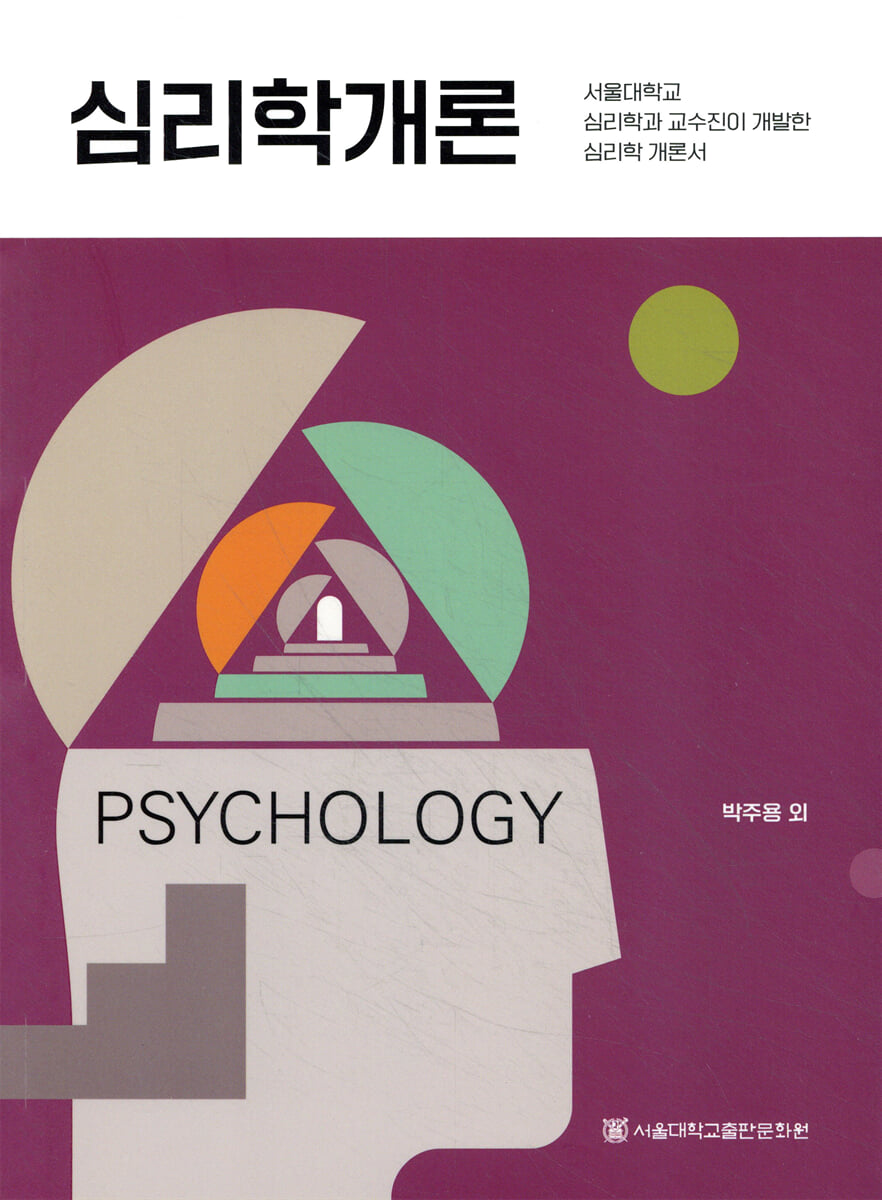
Introduction to Psychology
 |
Description
Book Introduction
Psychology, as the word suggests, is a discipline that studies the principles (logos) of the mind (psyche).
In reality, people are interested in their own minds as well as the minds of others, and try to understand their minds and predict their behavior in some way.
Psychology studies and explains mental phenomena using scientific methods.
This book systematically examines and organizes various questions related to the human mind and behavior, categorized into neuroscience, sensation and perception, learning, thinking and problem solving, language and intelligence, motivation and emotion, personality, developmental psychology, social psychology, stress and health, abnormal behavior and mental disorders, and psychotherapy.
In reality, people are interested in their own minds as well as the minds of others, and try to understand their minds and predict their behavior in some way.
Psychology studies and explains mental phenomena using scientific methods.
This book systematically examines and organizes various questions related to the human mind and behavior, categorized into neuroscience, sensation and perception, learning, thinking and problem solving, language and intelligence, motivation and emotion, personality, developmental psychology, social psychology, stress and health, abnormal behavior and mental disorders, and psychotherapy.
- You can preview some of the book's contents.
Preview
index
preface
Chapter 1: Contents and Methods of Psychological Research
1.
What is psychology?
2.
Psychological research methods
3.
Measurement of the mind
4.
History of Psychology
5.
The Role and Influence of Psychology
6.
The relationship between neuroscience and psychology
Chapter 2 Neuroscience
1.
Nervous System and Behavior
2.
Neurotransmitters and Behavior
3.
Brain and Behavior
4.
Left and right brain
5.
Interaction between brain and body
6.
brain development
7.
Genetics and Behavior
Chapter 3: Sense and Perception
1.
Stimulus and sensation
2.
Organization and Recognition
3.
integration of senses
4.
Perception and movement
5.
Perception and Self
Chapter 4 Learning
1.
How do we learn?
2.
How can we learn predicted associations?
3.
The Impact of Learning on Phobias and Addictions
4.
operant conditioning
5.
Factors affecting operant conditioning
6.
observational learning
Chapter 5: Thinking and Problem Solving
1.
Thinking as a process that goes beyond given information
2.
Elements of Thought
3.
normative thinking
4.
inductive thinking
5.
Problem solving
6.
creativity
Chapter 6: Understanding Language and Intelligence
1.
Understanding and producing language
2.
Language and Thought
3.
Psychometrics
4.
intelligence
Chapter 7: Motivation and Emotion
1.
Where does motivation come from?
2.
Activation of biological motivation
3.
How does psychological motivation work?
4.
How does extrinsic motivation affect intrinsic motivation?
5.
Do people really need emotions?
6.
What is emotion in psychology?
7.
Physiological factors of emotion
8.
Emotions and Decision-Making
9.
Expression and regulation of emotions
Chapter 8: Understanding Personality
1.
What is personality?
2.
trait theory of personality
3.
How do you measure personality?
4.
How is personality determined?
5.
How does personality function through psychological structures and dynamics?
6.
How does personality affect a person's life?
Chapter 9 Developmental Psychology
1.
What is Developmental Psychology?: Lifespan Developmental Psychology
2.
Sensory and perceptual development
3.
cognitive development
4.
Social cognitive and social development
5.
moral development
6.
Occupations and activities related to developmental psychology
Chapter 10 Social Psychology
1.
Social Cognition: Reflection or Construction?
2.
How do attitudes and behaviors influence each other?
3.
How are our behavior influenced by others?
4.
social relationships
Chapter 11: Stress and Health
1.
What is stress?
2.
Where does stress come from?
3.
What happens when you get stressed?
4.
How to deal with stress?
5.
Health and Psychology
6.
Conclusion
Chapter 12: Understanding Abnormal Behavior and Mental Disorders
1.
How are abnormal behavior and mental disorders diagnosed?
2.
How are mental disorders classified?
3.
Causes of abnormal behavior and mental disorders
4.
Psychological disorders related to anxiety
5.
Mood-related psychological disorders
6.
Psychological disorders related to accidents
7.
Psychological disorders related to personality
8.
Various other psychological disorders
Chapter 13 Psychotherapy
1.
What is psychotherapy?
2.
Who provides psychotherapy?
3.
Goals and Process of Psychotherapy
4.
Main therapeutic approaches
5.
Recent trends in psychotherapy
6.
Is psychotherapy effective?
7.
Conclusion
References
Search
Chapter 1: Contents and Methods of Psychological Research
1.
What is psychology?
2.
Psychological research methods
3.
Measurement of the mind
4.
History of Psychology
5.
The Role and Influence of Psychology
6.
The relationship between neuroscience and psychology
Chapter 2 Neuroscience
1.
Nervous System and Behavior
2.
Neurotransmitters and Behavior
3.
Brain and Behavior
4.
Left and right brain
5.
Interaction between brain and body
6.
brain development
7.
Genetics and Behavior
Chapter 3: Sense and Perception
1.
Stimulus and sensation
2.
Organization and Recognition
3.
integration of senses
4.
Perception and movement
5.
Perception and Self
Chapter 4 Learning
1.
How do we learn?
2.
How can we learn predicted associations?
3.
The Impact of Learning on Phobias and Addictions
4.
operant conditioning
5.
Factors affecting operant conditioning
6.
observational learning
Chapter 5: Thinking and Problem Solving
1.
Thinking as a process that goes beyond given information
2.
Elements of Thought
3.
normative thinking
4.
inductive thinking
5.
Problem solving
6.
creativity
Chapter 6: Understanding Language and Intelligence
1.
Understanding and producing language
2.
Language and Thought
3.
Psychometrics
4.
intelligence
Chapter 7: Motivation and Emotion
1.
Where does motivation come from?
2.
Activation of biological motivation
3.
How does psychological motivation work?
4.
How does extrinsic motivation affect intrinsic motivation?
5.
Do people really need emotions?
6.
What is emotion in psychology?
7.
Physiological factors of emotion
8.
Emotions and Decision-Making
9.
Expression and regulation of emotions
Chapter 8: Understanding Personality
1.
What is personality?
2.
trait theory of personality
3.
How do you measure personality?
4.
How is personality determined?
5.
How does personality function through psychological structures and dynamics?
6.
How does personality affect a person's life?
Chapter 9 Developmental Psychology
1.
What is Developmental Psychology?: Lifespan Developmental Psychology
2.
Sensory and perceptual development
3.
cognitive development
4.
Social cognitive and social development
5.
moral development
6.
Occupations and activities related to developmental psychology
Chapter 10 Social Psychology
1.
Social Cognition: Reflection or Construction?
2.
How do attitudes and behaviors influence each other?
3.
How are our behavior influenced by others?
4.
social relationships
Chapter 11: Stress and Health
1.
What is stress?
2.
Where does stress come from?
3.
What happens when you get stressed?
4.
How to deal with stress?
5.
Health and Psychology
6.
Conclusion
Chapter 12: Understanding Abnormal Behavior and Mental Disorders
1.
How are abnormal behavior and mental disorders diagnosed?
2.
How are mental disorders classified?
3.
Causes of abnormal behavior and mental disorders
4.
Psychological disorders related to anxiety
5.
Mood-related psychological disorders
6.
Psychological disorders related to accidents
7.
Psychological disorders related to personality
8.
Various other psychological disorders
Chapter 13 Psychotherapy
1.
What is psychotherapy?
2.
Who provides psychotherapy?
3.
Goals and Process of Psychotherapy
4.
Main therapeutic approaches
5.
Recent trends in psychotherapy
6.
Is psychotherapy effective?
7.
Conclusion
References
Search
Into the book
In psychology, hypotheses and theories about the mind can be very abstract.
But psychology theorizes the mind in concrete terms and finds ways to investigate it systematically.
Let's take an example from research on how we store objects or events we experience in our minds.
For example, one could consider two theories about whether it is stored in linguistic form or whether it is also possible to store images.
In other words, it is about whether it is stored as a digital code or an analog code.
--- p.18
The nervous system is the basis of everything a person thinks, feels, and does.
In a sense, the human being itself can be said to be a nervous system.
The basic unit of the nervous system is the nerve cell called a neuron.
These cells play a role in receiving, integrating, and transmitting information within the nervous system.
Although the activities of individual neurons are very simple, within the nervous system, nerve cells are connected to numerous other nerve cells to form neural networks, and these neural networks form the basis of human thoughts, emotions, and behavior.
--- pp.45-46
Psychologists distinguish between primary and secondary emotions.
Primary emotions are innate and evolutionarily adaptive responses.
Therefore, primary emotions are not culturally specific but are biologically distinct.
These primary emotions include anger, fear, sadness, disgust, happiness, and surprise.
Secondary emotions are more complex because they are a mixture of primary emotions.
Emotions such as regret, guilt, obedience, shame, love, and jealousy are secondary emotions.
--- p.159
How can we understand an individual's personality? Understanding the diversity and complexity of personality is a challenging task.
Classification is a method commonly used by humans to understand diverse and complex phenomena in a simpler way.
It is to simplify a complex phenomenon into several chunks based on similarity.
Personality typology is a method of classifying various human personalities into several types and considering an individual as belonging to one of those personality types in order to understand that person's overall personality.
--- p.259
Mental disorders are often caused by a negative event in a person who was adapting to reality relatively well.
However, in contrast, there are cases where an individual's personality traits are so unique that they lead to a persistent maladaptive life.
When psychological characteristics that develop gradually from childhood and become fixed as an individual's personality in adulthood show maladaptive aspects, it is called a personality disorder.
But psychology theorizes the mind in concrete terms and finds ways to investigate it systematically.
Let's take an example from research on how we store objects or events we experience in our minds.
For example, one could consider two theories about whether it is stored in linguistic form or whether it is also possible to store images.
In other words, it is about whether it is stored as a digital code or an analog code.
--- p.18
The nervous system is the basis of everything a person thinks, feels, and does.
In a sense, the human being itself can be said to be a nervous system.
The basic unit of the nervous system is the nerve cell called a neuron.
These cells play a role in receiving, integrating, and transmitting information within the nervous system.
Although the activities of individual neurons are very simple, within the nervous system, nerve cells are connected to numerous other nerve cells to form neural networks, and these neural networks form the basis of human thoughts, emotions, and behavior.
--- pp.45-46
Psychologists distinguish between primary and secondary emotions.
Primary emotions are innate and evolutionarily adaptive responses.
Therefore, primary emotions are not culturally specific but are biologically distinct.
These primary emotions include anger, fear, sadness, disgust, happiness, and surprise.
Secondary emotions are more complex because they are a mixture of primary emotions.
Emotions such as regret, guilt, obedience, shame, love, and jealousy are secondary emotions.
--- p.159
How can we understand an individual's personality? Understanding the diversity and complexity of personality is a challenging task.
Classification is a method commonly used by humans to understand diverse and complex phenomena in a simpler way.
It is to simplify a complex phenomenon into several chunks based on similarity.
Personality typology is a method of classifying various human personalities into several types and considering an individual as belonging to one of those personality types in order to understand that person's overall personality.
--- p.259
Mental disorders are often caused by a negative event in a person who was adapting to reality relatively well.
However, in contrast, there are cases where an individual's personality traits are so unique that they lead to a persistent maladaptive life.
When psychological characteristics that develop gradually from childhood and become fixed as an individual's personality in adulthood show maladaptive aspects, it is called a personality disorder.
--- p.427
Publisher's Review
From psychological research content and methods to psychotherapy
An introductory psychology book that covers everything about psychology.
〓
Psychology, as the word suggests, is a discipline that studies the principles (logos) of the mind (psyche).
In reality, people are interested in their own minds as well as the minds of others, and try to understand their minds and predict their behavior in some way.
Psychology studies and explains mental phenomena using scientific methods.
This book systematically examines and organizes various questions related to the human mind and behavior, categorized into neuroscience, sensation and perception, learning, thinking and problem solving, language and intelligence, motivation and emotion, personality, developmental psychology, social psychology, stress and health, abnormal behavior and mental disorders, and psychotherapy.
Developed by professors of psychology at Seoul National University
『Introduction to Psychology』 published!
Psychology, just by its name, piques people's curiosity.
Because I believe that our words and actions come from our hearts, even though they are invisible to our eyes.
In fact, people constantly ask questions to understand their own minds as well as the minds of others.
This book examines questions related to the human mind and behavior and attempts to organize them systematically.
Considering the Korean context, we aimed to incorporate the latest research findings while also facilitating communication between various subfields within psychology.
Written by seven professors from the Department of Psychology at Seoul National University, this book is divided into 13 chapters by area of expertise. Readers will not only be able to satisfy their curiosity about psychology, but also experience academic rigor and practicality.
An introductory psychology book that covers everything about psychology.
〓
Psychology, as the word suggests, is a discipline that studies the principles (logos) of the mind (psyche).
In reality, people are interested in their own minds as well as the minds of others, and try to understand their minds and predict their behavior in some way.
Psychology studies and explains mental phenomena using scientific methods.
This book systematically examines and organizes various questions related to the human mind and behavior, categorized into neuroscience, sensation and perception, learning, thinking and problem solving, language and intelligence, motivation and emotion, personality, developmental psychology, social psychology, stress and health, abnormal behavior and mental disorders, and psychotherapy.
Developed by professors of psychology at Seoul National University
『Introduction to Psychology』 published!
Psychology, just by its name, piques people's curiosity.
Because I believe that our words and actions come from our hearts, even though they are invisible to our eyes.
In fact, people constantly ask questions to understand their own minds as well as the minds of others.
This book examines questions related to the human mind and behavior and attempts to organize them systematically.
Considering the Korean context, we aimed to incorporate the latest research findings while also facilitating communication between various subfields within psychology.
Written by seven professors from the Department of Psychology at Seoul National University, this book is divided into 13 chapters by area of expertise. Readers will not only be able to satisfy their curiosity about psychology, but also experience academic rigor and practicality.
GOODS SPECIFICS
- Date of issue: May 10, 2021
- Page count, weight, size: 516 pages | 172*245*35mm
- ISBN13: 9788952129628
- ISBN10: 8952129628
You may also like
카테고리
korean


korean

![ELLE 엘르 스페셜 에디션 A형 : 12월 [2025]](http://librairie.coreenne.fr/cdn/shop/files/b8e27a3de6c9538896439686c6b0e8fb.jpg?v=1766436872&width=3840)


