

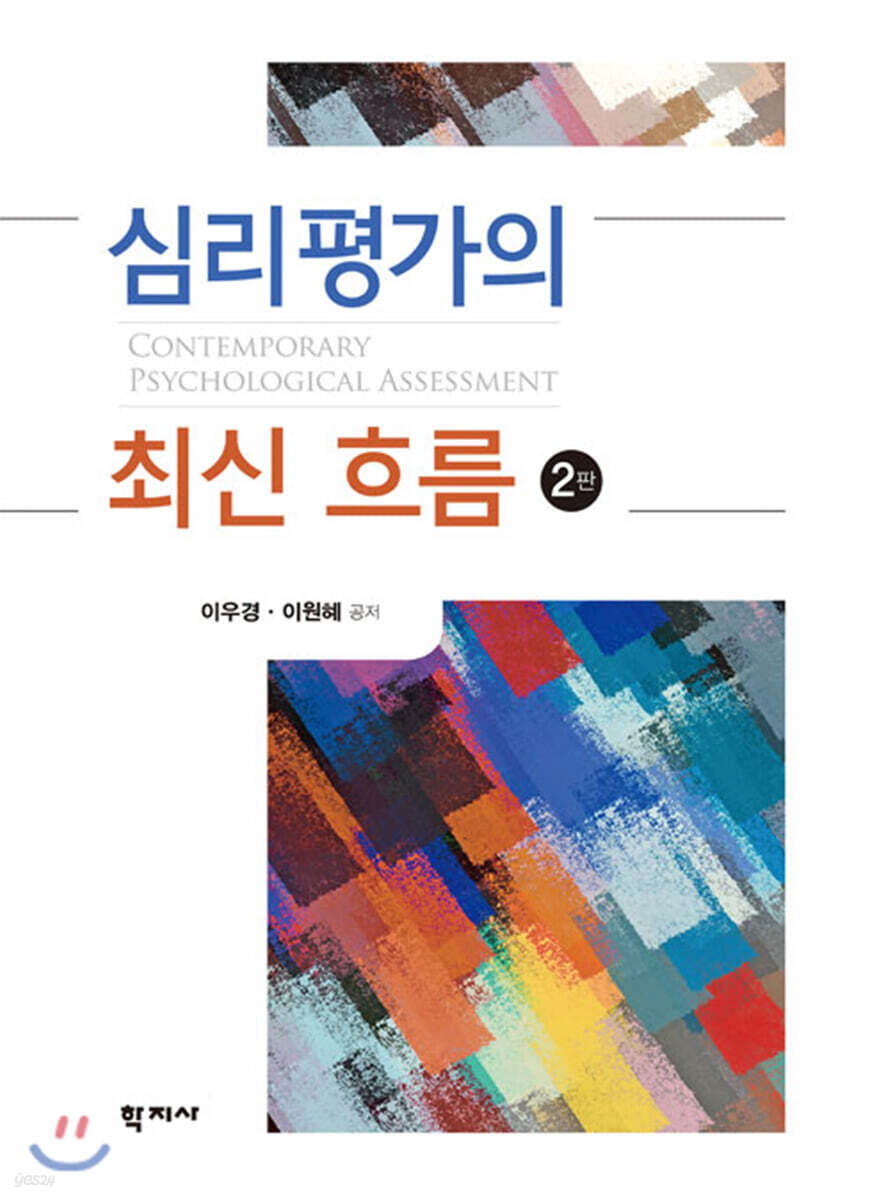
Latest trends in psychological assessment
 |
Description
Book Introduction
The first chapter of this book, like the first edition, emphasizes the basic concepts of psychological assessment, as well as the individual considerations that must be made in various psychological assessment situations, and the ethical aspects of assessment.
In terms of overall composition, it includes well-known basic psychological tests as well as psychological evaluations for children and adolescents, and neuropsychological evaluations to help understand the relationship between the brain and behavior, areas of psychological evaluation that have recently been gaining importance.
Wechsler Intelligence Scale, WISC-V, which is currently undergoing the most active revision among intelligence tests, was newly organized with a focus on real-life cases.
The latter part of this book describes how to write psychological evaluation reports, focusing on various cases using the latest psychological evaluation techniques.
The final chapter includes new content on evidence-based psychological assessment (EBPA), which can be considered a new trend in the field of psychological assessment, and the latest trends in psychological assessment used in legal settings such as adoptive parents and adult guardians.
In terms of overall composition, it includes well-known basic psychological tests as well as psychological evaluations for children and adolescents, and neuropsychological evaluations to help understand the relationship between the brain and behavior, areas of psychological evaluation that have recently been gaining importance.
Wechsler Intelligence Scale, WISC-V, which is currently undergoing the most active revision among intelligence tests, was newly organized with a focus on real-life cases.
The latter part of this book describes how to write psychological evaluation reports, focusing on various cases using the latest psychological evaluation techniques.
The final chapter includes new content on evidence-based psychological assessment (EBPA), which can be considered a new trend in the field of psychological assessment, and the latest trends in psychological assessment used in legal settings such as adoptive parents and adult guardians.
index
Preface to the 2nd edition
Preface to the 1st edition
Chapter 1: Fundamentals of Psychological Assessment
1.
What is a psychological evaluation?
2.
Choosing a Psychological Test
3.
Stages of psychological evaluation
4.
Ethical Issues Related to Psychological Assessment
5.
Qualifications of the evaluator
Chapter 2: Evaluation Interviews and Behavioral Assessments
1.
History and Development of the Evaluation Interview
2.
Evaluation Interviews and Case Studies
3.
Mental status examination
4.
Structured/Semi-structured Diagnostic Interview
5.
Behavioral assessment
Chapter 3 Intelligence Tests: Wechsler Intelligence Scale
1.
Intelligence is
2.
History and development of intelligence tests
3.
General characteristics of the Wechsler Intelligence Scale
4. WAIS-IV
5.
Use of the Wechsler Intelligence Scale
Chapter 4 Multiphasic Personality Inventory (MMPI-2)
1. History of the MMPI
2. Advantages and Limitations of the MMPI
3. Administration of the MMPI-2
4. MMPI-2 interpretation procedure
5.
Interpretation of individual scales
6.
Interpretation by code type
7. MMPI-2 content scales, supplementary scales, and other scales
Chapter 5: House-Tree-Person Test (HTP) and Sentence Completion Test (SCT)
1.
House-Tree-Person Test (HTP)
2. How to implement HTP
3. Interpretation of HTP
4.
Sentence Completion Test (SCT)
Chapter 6 Rorschach test
1.
History of the Rorschach test
2.
Reliability and validity of the Rorschach test
3.
Advantages and Disadvantages of the Rorschach Test
4.
Characteristics of the Rorschach test
5.
Method and procedure for conducting the Rorschach test
6.
The role of projection in the reaction process and the general meaning of the Rorschach cards
7.
An interpretive approach to the Rorschach test
8.
Scoring steps of the Rorschach test
9.
Structural Summary
10.
Interpretation of structural variables
11.
A Psychoanalytic Approach to the Rorschach Test
12.
Integration of quantitative and qualitative approaches
Chapter 7 Thematic Apperception Test (TAT)
1. History and development of TAT
2.
Theoretical background
3.
Reliability and validity
4. How to implement TAT
5. General themes of TAT plates
6. TAT Scoring
7. Interpretation of TAT
8.
Pain Test for Children
Chapter 8 Neuropsychological Assessment
1.
Purpose and Use of Neuropsychological Assessment
2.
Neuropsychological evaluation procedures
3.
Major neuropsychological tests
Chapter 9 Psychological Assessment of Infants, Toddlers, Children, and Adolescents
1.
Things to keep in mind when evaluating the psychology of infants, children, and adolescents
2.
Interview Evaluation
3.
Behavior Rating Scale for Parents (Teachers)
4.
self-report test
5.
Intelligence tests for children
6.
Developmental assessment
Chapter 10 Psychological Evaluation Report
1.
General Guidelines for Writing Psychological Evaluation Reports
2.
Structure of a Psychological Evaluation Report
3.
Example of a psychological evaluation report
Chapter 11: New Trends in Psychological Assessment
1.
Use of a simple psychological test tool
2.
Computerized psychological assessment
3.
Psychological assessment in general medical settings
4.
Psychological assessment in legal settings
5.
Psychological evaluation at a psychological counseling center or research institute
6.
Therapeutic Use of Psychological Assessment
7.
Evidence-based psychological assessment
Search
Preface to the 1st edition
Chapter 1: Fundamentals of Psychological Assessment
1.
What is a psychological evaluation?
2.
Choosing a Psychological Test
3.
Stages of psychological evaluation
4.
Ethical Issues Related to Psychological Assessment
5.
Qualifications of the evaluator
Chapter 2: Evaluation Interviews and Behavioral Assessments
1.
History and Development of the Evaluation Interview
2.
Evaluation Interviews and Case Studies
3.
Mental status examination
4.
Structured/Semi-structured Diagnostic Interview
5.
Behavioral assessment
Chapter 3 Intelligence Tests: Wechsler Intelligence Scale
1.
Intelligence is
2.
History and development of intelligence tests
3.
General characteristics of the Wechsler Intelligence Scale
4. WAIS-IV
5.
Use of the Wechsler Intelligence Scale
Chapter 4 Multiphasic Personality Inventory (MMPI-2)
1. History of the MMPI
2. Advantages and Limitations of the MMPI
3. Administration of the MMPI-2
4. MMPI-2 interpretation procedure
5.
Interpretation of individual scales
6.
Interpretation by code type
7. MMPI-2 content scales, supplementary scales, and other scales
Chapter 5: House-Tree-Person Test (HTP) and Sentence Completion Test (SCT)
1.
House-Tree-Person Test (HTP)
2. How to implement HTP
3. Interpretation of HTP
4.
Sentence Completion Test (SCT)
Chapter 6 Rorschach test
1.
History of the Rorschach test
2.
Reliability and validity of the Rorschach test
3.
Advantages and Disadvantages of the Rorschach Test
4.
Characteristics of the Rorschach test
5.
Method and procedure for conducting the Rorschach test
6.
The role of projection in the reaction process and the general meaning of the Rorschach cards
7.
An interpretive approach to the Rorschach test
8.
Scoring steps of the Rorschach test
9.
Structural Summary
10.
Interpretation of structural variables
11.
A Psychoanalytic Approach to the Rorschach Test
12.
Integration of quantitative and qualitative approaches
Chapter 7 Thematic Apperception Test (TAT)
1. History and development of TAT
2.
Theoretical background
3.
Reliability and validity
4. How to implement TAT
5. General themes of TAT plates
6. TAT Scoring
7. Interpretation of TAT
8.
Pain Test for Children
Chapter 8 Neuropsychological Assessment
1.
Purpose and Use of Neuropsychological Assessment
2.
Neuropsychological evaluation procedures
3.
Major neuropsychological tests
Chapter 9 Psychological Assessment of Infants, Toddlers, Children, and Adolescents
1.
Things to keep in mind when evaluating the psychology of infants, children, and adolescents
2.
Interview Evaluation
3.
Behavior Rating Scale for Parents (Teachers)
4.
self-report test
5.
Intelligence tests for children
6.
Developmental assessment
Chapter 10 Psychological Evaluation Report
1.
General Guidelines for Writing Psychological Evaluation Reports
2.
Structure of a Psychological Evaluation Report
3.
Example of a psychological evaluation report
Chapter 11: New Trends in Psychological Assessment
1.
Use of a simple psychological test tool
2.
Computerized psychological assessment
3.
Psychological assessment in general medical settings
4.
Psychological assessment in legal settings
5.
Psychological evaluation at a psychological counseling center or research institute
6.
Therapeutic Use of Psychological Assessment
7.
Evidence-based psychological assessment
Search
GOODS SPECIFICS
- Date of issue: August 30, 2019
- Page count, weight, size: 654 pages | 1,304g | 189*255*35mm
- ISBN13: 9788999718878
- ISBN10: 8999718875
You may also like
카테고리
korean


korean

![ELLE 엘르 스페셜 에디션 A형 : 12월 [2025]](http://librairie.coreenne.fr/cdn/shop/files/b8e27a3de6c9538896439686c6b0e8fb.jpg?v=1766436872&width=3840)


