

Citizens who read books are the answer.
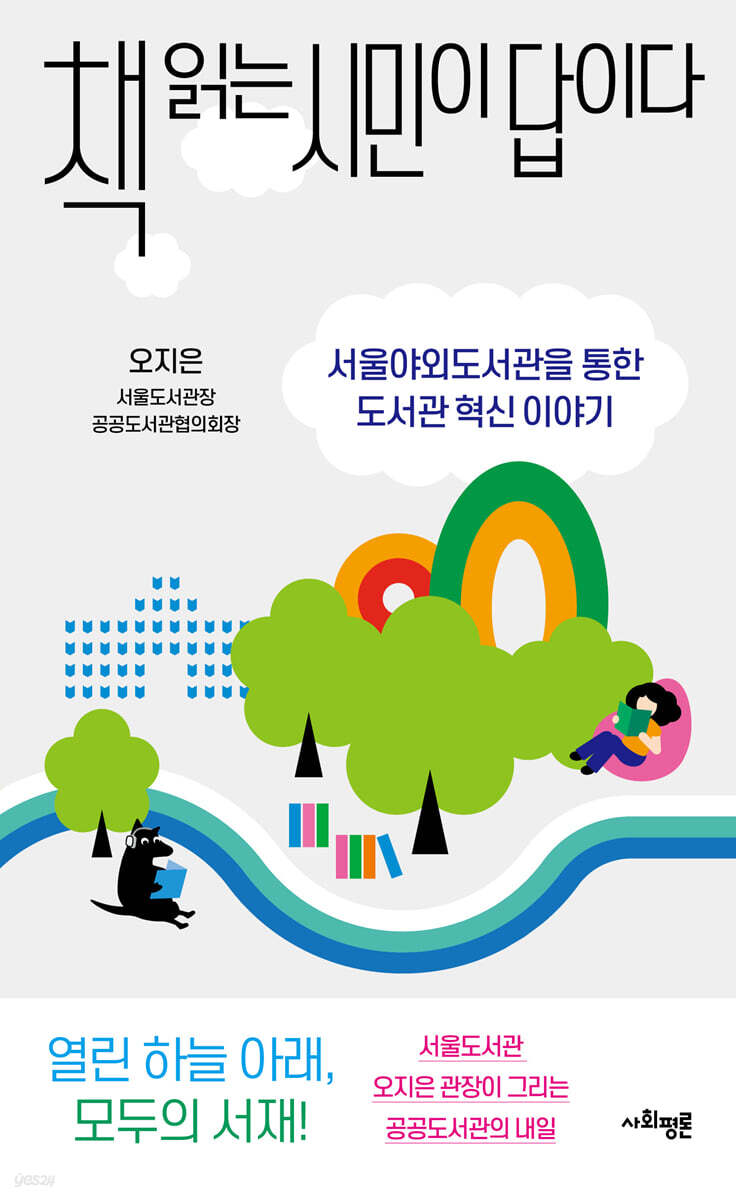 |
Description
Book Introduction
A book under the sky,
Discover the future of public libraries in the heart of the city!
All About the Seoul Outdoor Library, According to Director Oh Ji-eun of the Seoul Metropolitan Library
Here, there is a library that opens out onto the square and street.
Lying down in the middle of Seoul, reading a book, and listening to music with your feet dipped in Cheonggyecheon.
A scene where people of all ages gather together to take pictures and chat with colorful lights and bean bags.
This small but somehow unfamiliar sight soon becomes part of the daily life of the 'Seoul Outdoor Library'.
This special library service, presented annually by the Seoul Metropolitan Library, is not just a simple outdoor reading event.
This project is a vision for the future of public libraries, located in Seoul Plaza, Gwanghwamun Plaza, and Cheonggyecheon, and aims to spread an innovative reading culture.
The designer and leader of this fascinating experiment, Oh Ji-eun, director of the Seoul Metropolitan Library, is an expert with over 30 years of experience in the public library field.
In particular, since taking office as the director of the Seoul Metropolitan Library in 2022, he has been putting into practice a new vision for public libraries, advocating for a "building-less library."
This book vividly captures the planning background of the Seoul Outdoor Library Project, which he personally planned and promoted, from its implementation strategy to the challenges and achievements he encountered on site.
Furthermore, based on the question, "What changes can libraries bring about at the intersection of urban space, culture, and publicness?", specific cases and policy insights were presented.
"Reading Citizens Are the Answer" will not only provide practical guidance to public library staff and cultural policy planners, but also offer a unique vision to all those thirsting for a new reading culture.
Discover the future of public libraries in the heart of the city!
All About the Seoul Outdoor Library, According to Director Oh Ji-eun of the Seoul Metropolitan Library
Here, there is a library that opens out onto the square and street.
Lying down in the middle of Seoul, reading a book, and listening to music with your feet dipped in Cheonggyecheon.
A scene where people of all ages gather together to take pictures and chat with colorful lights and bean bags.
This small but somehow unfamiliar sight soon becomes part of the daily life of the 'Seoul Outdoor Library'.
This special library service, presented annually by the Seoul Metropolitan Library, is not just a simple outdoor reading event.
This project is a vision for the future of public libraries, located in Seoul Plaza, Gwanghwamun Plaza, and Cheonggyecheon, and aims to spread an innovative reading culture.
The designer and leader of this fascinating experiment, Oh Ji-eun, director of the Seoul Metropolitan Library, is an expert with over 30 years of experience in the public library field.
In particular, since taking office as the director of the Seoul Metropolitan Library in 2022, he has been putting into practice a new vision for public libraries, advocating for a "building-less library."
This book vividly captures the planning background of the Seoul Outdoor Library Project, which he personally planned and promoted, from its implementation strategy to the challenges and achievements he encountered on site.
Furthermore, based on the question, "What changes can libraries bring about at the intersection of urban space, culture, and publicness?", specific cases and policy insights were presented.
"Reading Citizens Are the Answer" will not only provide practical guidance to public library staff and cultural policy planners, but also offer a unique vision to all those thirsting for a new reading culture.
- You can preview some of the book's contents.
Preview
index
Entering
1.
The history, present, and future of libraries
History of the Library
Western libraries
Chinese libraries
Libraries of the Republic of Korea
Challenges Facing Public Libraries
Social Change and New Challenges
The advent of intelligent libraries without books, librarians, or library buildings.
The Reality of the Library Ecosystem in Korea
Library Status
Librarian status
Librarian production scale and system
Library and Information Science Curriculum
Korean Library Association and librarians' organizations
Response Strategies for Sustainability in Public Libraries
Public Library Strategies to Meet the Challenge
Librarians' Strategies for Responding to Challenges
2.
Reinterpreting Books, People, and Space—An Experiment at the Seoul Outdoor Library
A challenge that began at Gwangjin Information Library
Reading Club Incubation
Urban Agriculture School
Why was the Seoul Library pulled out?
Challenge to become the director of the Seoul Metropolitan Library to innovate libraries.
Seoul Outdoor Library: Four Key Experiments
What is the Seoul Outdoor Library?
Seoul Outdoor Library is a 'library'
The Seoul Outdoor Library is a "public" library.
Seoul Outdoor Library is an "outdoor" library.
Seoul Outdoor Library is Seoul's library.
3.
The values pursued by the Seoul Outdoor Library
A differentiated experience and a new reading culture
Innovation in administrative and service provided by libraries
Strategies for Sustainable Services
Brand Management of Seoul Outdoor Library
4.
Challenges for Public Library Innovation: The Achievements of the Seoul Outdoor Library
Concept establishment and design of a five-year plan
Reading a book in Seoul Plaza
A library without a building, beyond the library building
An Experiment in Public Library Innovation Through the Seoul Outdoor Library
Seoul Outdoor Library Challenges with a Five-Year Plan
Seoul Outdoor Library: Four Years of History
Seoul Outdoor Library 2022: The Beginning of Seoul Outdoor Library
Seoul Outdoor Library 2023: A Full-Fledged "Building-Free Library"
Seoul Outdoor Library 2024: Introducing the Seoul Outdoor Library Brand Identity
Seoul Outdoor Library 2025: Launch of the "Hipdog Club," a Library Responsive to the Times
Hipdog Club (Hip+Read+Club)
Seoul Outdoor Library's Achievements: Four Years of Awards
The names and meanings of the Seoul Outdoor Library spaces
Seoul Plaza for Reading
Gwanghwamun Book Yard
A clear stream where you can read a book
Institutional Considerations for Sustainability
Topics that haven't been fully addressed
Public specialized library
Introduction of the library industry concept
In closing
The Importance of Reading Culture Promotion Policies
Our people's reading tradition, Dokseodang
Citizens who read books are the answer!
Reading Seoul, Leading Seoul!
'Reading Korea, Leading Korea' project
1.
The history, present, and future of libraries
History of the Library
Western libraries
Chinese libraries
Libraries of the Republic of Korea
Challenges Facing Public Libraries
Social Change and New Challenges
The advent of intelligent libraries without books, librarians, or library buildings.
The Reality of the Library Ecosystem in Korea
Library Status
Librarian status
Librarian production scale and system
Library and Information Science Curriculum
Korean Library Association and librarians' organizations
Response Strategies for Sustainability in Public Libraries
Public Library Strategies to Meet the Challenge
Librarians' Strategies for Responding to Challenges
2.
Reinterpreting Books, People, and Space—An Experiment at the Seoul Outdoor Library
A challenge that began at Gwangjin Information Library
Reading Club Incubation
Urban Agriculture School
Why was the Seoul Library pulled out?
Challenge to become the director of the Seoul Metropolitan Library to innovate libraries.
Seoul Outdoor Library: Four Key Experiments
What is the Seoul Outdoor Library?
Seoul Outdoor Library is a 'library'
The Seoul Outdoor Library is a "public" library.
Seoul Outdoor Library is an "outdoor" library.
Seoul Outdoor Library is Seoul's library.
3.
The values pursued by the Seoul Outdoor Library
A differentiated experience and a new reading culture
Innovation in administrative and service provided by libraries
Strategies for Sustainable Services
Brand Management of Seoul Outdoor Library
4.
Challenges for Public Library Innovation: The Achievements of the Seoul Outdoor Library
Concept establishment and design of a five-year plan
Reading a book in Seoul Plaza
A library without a building, beyond the library building
An Experiment in Public Library Innovation Through the Seoul Outdoor Library
Seoul Outdoor Library Challenges with a Five-Year Plan
Seoul Outdoor Library: Four Years of History
Seoul Outdoor Library 2022: The Beginning of Seoul Outdoor Library
Seoul Outdoor Library 2023: A Full-Fledged "Building-Free Library"
Seoul Outdoor Library 2024: Introducing the Seoul Outdoor Library Brand Identity
Seoul Outdoor Library 2025: Launch of the "Hipdog Club," a Library Responsive to the Times
Hipdog Club (Hip+Read+Club)
Seoul Outdoor Library's Achievements: Four Years of Awards
The names and meanings of the Seoul Outdoor Library spaces
Seoul Plaza for Reading
Gwanghwamun Book Yard
A clear stream where you can read a book
Institutional Considerations for Sustainability
Topics that haven't been fully addressed
Public specialized library
Introduction of the library industry concept
In closing
The Importance of Reading Culture Promotion Policies
Our people's reading tradition, Dokseodang
Citizens who read books are the answer!
Reading Seoul, Leading Seoul!
'Reading Korea, Leading Korea' project
Detailed image
.jpg)
Into the book
In this intelligent library, the three core elements of library resources—books, buildings, and librarians—are being completely reorganized using artificial intelligence technology.
Books will no longer exist in traditional print but in digital form, physical library spaces will be replaced by cloud-based digital storage, and traditional librarians will be replaced by AI-powered digital librarians.
Accordingly, the existing library resource structure, which operated through books, library buildings, and librarians, is being dismantled, and a new technology-centered information access system is taking hold.
--- 「1.
From “The History, Present, and Future of Libraries”
The Seoul Outdoor Library's challenge begins by expanding the traditional three elements of library resources: books, buildings, and librarians.
Now, we need to move to a more flexible and expanded concept of content, space, and staff.
This is how public libraries can adapt to changing times, increase sustainability, and simultaneously accommodate the diverse needs of their citizens.
(Omitted) Seoul Outdoor Library is not simply an expansion of service space.
This project is an experiment in a new public library model: an open space where all citizens can freely access and share experiences, in other words, the entire city becomes a library.
This conceptualization of the Seoul Outdoor Library stems from the mission that public libraries should play a central role as a core public good within the community.
This perspective goes beyond simple reading support; it means that local residents should be able to experience policies through libraries, improve their quality of life through diverse interactions, and contribute to the development of their local communities.
Public libraries should be spaces that enrich citizens' lives and foster their ability to ask questions through various services such as information, education, and culture.
--- 「2.
From "Reinterpreting Books, People, and Space - Experiments at the Seoul Outdoor Library"
Reading books in Seoul Plaza was an attempt to realize the spread of reading culture, a core value that public libraries have long pursued, in a new spatial concept called the outdoors.
Above all, the innovation of bringing libraries outside their walls was a creative solution to the sustainability crisis facing public libraries.
The Seoul Outdoor Library provides citizens with a new experience of novelty, convenience, and usefulness, transforming reading into a cultural experience that is embedded in everyday life, rather than a literal act of reading.
Another distinguishing feature was the streamlined process of accessing books, creating an environment where people could naturally pick up a book on a lawn in the middle of the city.
We also introduced a "friendly indifference marketing" strategy that minimizes the process of borrowing or returning books and does not force users to read books.
The biggest concern at the time was that books could be freely read without identity verification or loan procedures.
Despite concerns that books would be lost, the project was able to be implemented thanks to the belief in the mature civic consciousness of Seoul citizens and the concept of a library created directly by citizens.
To become a sustainable library, an innovative library, and a library that harmoniously embraces both public and industrial interests, all stakeholders within the library ecosystem must recognize new roles and establish a collaborative structure.
Above all, in order for libraries to establish themselves as entities that constitute the national knowledge base rather than simply cultural facilities, it would be a priority to introduce the above-mentioned industrial concept to libraries.
--- 「4.
From "Challenges for Public Library Innovation - Achievements of the Seoul Outdoor Library"
Looking back at history, regardless of East or West, the process of weak grass turning into bamboo seemed inevitable.
Just as individuals can unite to create a community, the saying, "Citizens who read books are the answer" ultimately implies the process by which citizens who have grown through reading stand tall as sovereign citizens of a democratic republic who shape public opinion.
(Omitted) The slogan, “Citizens who read books are the answer,” is the library’s vision for a knowledge-based society.
Libraries should no longer be mere repositories of books, but platforms for democracy where citizens awaken and grow through knowledge.
Books will no longer exist in traditional print but in digital form, physical library spaces will be replaced by cloud-based digital storage, and traditional librarians will be replaced by AI-powered digital librarians.
Accordingly, the existing library resource structure, which operated through books, library buildings, and librarians, is being dismantled, and a new technology-centered information access system is taking hold.
--- 「1.
From “The History, Present, and Future of Libraries”
The Seoul Outdoor Library's challenge begins by expanding the traditional three elements of library resources: books, buildings, and librarians.
Now, we need to move to a more flexible and expanded concept of content, space, and staff.
This is how public libraries can adapt to changing times, increase sustainability, and simultaneously accommodate the diverse needs of their citizens.
(Omitted) Seoul Outdoor Library is not simply an expansion of service space.
This project is an experiment in a new public library model: an open space where all citizens can freely access and share experiences, in other words, the entire city becomes a library.
This conceptualization of the Seoul Outdoor Library stems from the mission that public libraries should play a central role as a core public good within the community.
This perspective goes beyond simple reading support; it means that local residents should be able to experience policies through libraries, improve their quality of life through diverse interactions, and contribute to the development of their local communities.
Public libraries should be spaces that enrich citizens' lives and foster their ability to ask questions through various services such as information, education, and culture.
--- 「2.
From "Reinterpreting Books, People, and Space - Experiments at the Seoul Outdoor Library"
Reading books in Seoul Plaza was an attempt to realize the spread of reading culture, a core value that public libraries have long pursued, in a new spatial concept called the outdoors.
Above all, the innovation of bringing libraries outside their walls was a creative solution to the sustainability crisis facing public libraries.
The Seoul Outdoor Library provides citizens with a new experience of novelty, convenience, and usefulness, transforming reading into a cultural experience that is embedded in everyday life, rather than a literal act of reading.
Another distinguishing feature was the streamlined process of accessing books, creating an environment where people could naturally pick up a book on a lawn in the middle of the city.
We also introduced a "friendly indifference marketing" strategy that minimizes the process of borrowing or returning books and does not force users to read books.
The biggest concern at the time was that books could be freely read without identity verification or loan procedures.
Despite concerns that books would be lost, the project was able to be implemented thanks to the belief in the mature civic consciousness of Seoul citizens and the concept of a library created directly by citizens.
To become a sustainable library, an innovative library, and a library that harmoniously embraces both public and industrial interests, all stakeholders within the library ecosystem must recognize new roles and establish a collaborative structure.
Above all, in order for libraries to establish themselves as entities that constitute the national knowledge base rather than simply cultural facilities, it would be a priority to introduce the above-mentioned industrial concept to libraries.
--- 「4.
From "Challenges for Public Library Innovation - Achievements of the Seoul Outdoor Library"
Looking back at history, regardless of East or West, the process of weak grass turning into bamboo seemed inevitable.
Just as individuals can unite to create a community, the saying, "Citizens who read books are the answer" ultimately implies the process by which citizens who have grown through reading stand tall as sovereign citizens of a democratic republic who shape public opinion.
(Omitted) The slogan, “Citizens who read books are the answer,” is the library’s vision for a knowledge-based society.
Libraries should no longer be mere repositories of books, but platforms for democracy where citizens awaken and grow through knowledge.
--- From "In Closing"
Publisher's Review
The library outside the building,
The moment when everyday spaces become unfamiliar pleasures
Libraries are a treasure trove of knowledge that has existed alongside human civilization.
From the palace archives of the ancient city-state of Ebla to the Jangseogak of the Chinese imperial palace and the Gyujanggak of the Joseon Dynasty, libraries have always been sacred places for collecting and preserving books and records.
Public libraries, which developed in the West since the modern era, have become places of knowledge open to all citizens. South Korea, too, laid the foundation for public libraries in a short period after liberation, and these have become important social infrastructure facilities in the democratic republic era.
However, for a long time, libraries remained 'inside buildings' as solemn spaces.
The Seoul Outdoor Library is a social and cultural experiment that seeks to redefine the traditional concept of a library.
By moving the bookshelves to the square and placing chairs along the riverside path, the library has entered the heart of citizens' daily lives.
Beginning with the pilot project “Seoul Plaza for Reading” in 2022, this project expanded to “Gwanghwamun Book Yard” and “Clear Stream for Reading,” creating the unfamiliar and enjoyable landscape of a “library without a building.”
Anyone passing by without having to go to the library could sit down and open a book, children could run around and play in the natural playground, and citizens could discover the joy of reading by participating in reading sessions and book talks.
The library, once a place to quietly read books, has now become an open square where people interact and create a diverse culture.
The innovativeness of this project is evidenced by its numerous awards.
The Seoul Outdoor Library received international recognition in 2023 when it became the first library in Korea to receive the International Federation of Library Associations and Associates (IFLA) Green Library Award. In the same year, it was ranked first in the "Top 10 News Stories of Seoul" voted by citizens, achieving both domestic and international success.
In 2025, the membership-based public reading club, 'Hipdog Club', officially launched and announced its successful launch by recruiting 10,000 members in a short period of time.
In addition, it has been selected as one of many best practices and is attracting attention as a new paradigm for libraries.
This project, which demonstrates the potential for reinterpreting urban space, expanding the role of public libraries, and fostering a sustainable cultural ecosystem, demonstrates that libraries are more than just quiet places; they are public platforms that breathe with the times.
In this way, the Seoul Outdoor Library is being reborn as a “knowledge and culture powerhouse for citizens who enjoy today and dream of tomorrow.”
From the vivid scene of Seoul Outdoor Library
Policy insights surrounding publicness,
"Library Stories" from the Seoul Metropolitan Library Director
"Citizens Who Read Books Are the Answer" contains various aspects of the Seoul Outdoor Library, the world's first innovative library model.
From the start of the business to the preparation process, current status, and future plans, this book introduces the library, which has become an "open library" in the heart of the city, based on specific examples and data.
At this time, we must not forget to discuss in more depth how public libraries can reinterpret urban space and ensure cultural sustainability.
Above all, thanks to the direct story of Oh Ji-eun, the director of the Seoul Metropolitan Library and the head of this project, who has worked in the library field for over 30 years, this book serves as a practical guide not only for public library staff but also for cultural policy planners, public design experts, and those studying urban space and cultural planning.
This book is not simply a report containing an overview and introduction of an event; it serves as a guide that provides insight into the crisis facing public libraries from the perspective of a planner and suggests policy alternatives.
The author first examines the current state of library and librarian systems, and then diagnoses the current situation in which the very existence of "traditional libraries" is being challenged by the development of digital technology and generative artificial intelligence.
And he argues that libraries should be re-established as community platforms that encompass a variety of public services, going beyond mere information providers.
In this context, the Seoul Outdoor Library is considered an innovative model and success story that strengthens the sustainability of public libraries.
The author, who introduced the ingenious strategies and dazzling achievements of the Seoul Outdoor Library, concludes by emphasizing the necessity of public specialized libraries and the importance of the concept of a library industry, suggesting that libraries should be viewed not as "book repositories" but as "main players in the knowledge industry ecosystem."
This passage reveals the author's insight and passion for creating multi-layered value in libraries, more than anyone else's.
"Citizens Who Read Books Are the Answer" is a book documenting the field, a policy proposal, and a blueprint for those who dream of a new reading culture.
For all those curious about the future of libraries, this book is the product of intense thought and will serve as a starting point for the next leap forward.
The moment when everyday spaces become unfamiliar pleasures
Libraries are a treasure trove of knowledge that has existed alongside human civilization.
From the palace archives of the ancient city-state of Ebla to the Jangseogak of the Chinese imperial palace and the Gyujanggak of the Joseon Dynasty, libraries have always been sacred places for collecting and preserving books and records.
Public libraries, which developed in the West since the modern era, have become places of knowledge open to all citizens. South Korea, too, laid the foundation for public libraries in a short period after liberation, and these have become important social infrastructure facilities in the democratic republic era.
However, for a long time, libraries remained 'inside buildings' as solemn spaces.
The Seoul Outdoor Library is a social and cultural experiment that seeks to redefine the traditional concept of a library.
By moving the bookshelves to the square and placing chairs along the riverside path, the library has entered the heart of citizens' daily lives.
Beginning with the pilot project “Seoul Plaza for Reading” in 2022, this project expanded to “Gwanghwamun Book Yard” and “Clear Stream for Reading,” creating the unfamiliar and enjoyable landscape of a “library without a building.”
Anyone passing by without having to go to the library could sit down and open a book, children could run around and play in the natural playground, and citizens could discover the joy of reading by participating in reading sessions and book talks.
The library, once a place to quietly read books, has now become an open square where people interact and create a diverse culture.
The innovativeness of this project is evidenced by its numerous awards.
The Seoul Outdoor Library received international recognition in 2023 when it became the first library in Korea to receive the International Federation of Library Associations and Associates (IFLA) Green Library Award. In the same year, it was ranked first in the "Top 10 News Stories of Seoul" voted by citizens, achieving both domestic and international success.
In 2025, the membership-based public reading club, 'Hipdog Club', officially launched and announced its successful launch by recruiting 10,000 members in a short period of time.
In addition, it has been selected as one of many best practices and is attracting attention as a new paradigm for libraries.
This project, which demonstrates the potential for reinterpreting urban space, expanding the role of public libraries, and fostering a sustainable cultural ecosystem, demonstrates that libraries are more than just quiet places; they are public platforms that breathe with the times.
In this way, the Seoul Outdoor Library is being reborn as a “knowledge and culture powerhouse for citizens who enjoy today and dream of tomorrow.”
From the vivid scene of Seoul Outdoor Library
Policy insights surrounding publicness,
"Library Stories" from the Seoul Metropolitan Library Director
"Citizens Who Read Books Are the Answer" contains various aspects of the Seoul Outdoor Library, the world's first innovative library model.
From the start of the business to the preparation process, current status, and future plans, this book introduces the library, which has become an "open library" in the heart of the city, based on specific examples and data.
At this time, we must not forget to discuss in more depth how public libraries can reinterpret urban space and ensure cultural sustainability.
Above all, thanks to the direct story of Oh Ji-eun, the director of the Seoul Metropolitan Library and the head of this project, who has worked in the library field for over 30 years, this book serves as a practical guide not only for public library staff but also for cultural policy planners, public design experts, and those studying urban space and cultural planning.
This book is not simply a report containing an overview and introduction of an event; it serves as a guide that provides insight into the crisis facing public libraries from the perspective of a planner and suggests policy alternatives.
The author first examines the current state of library and librarian systems, and then diagnoses the current situation in which the very existence of "traditional libraries" is being challenged by the development of digital technology and generative artificial intelligence.
And he argues that libraries should be re-established as community platforms that encompass a variety of public services, going beyond mere information providers.
In this context, the Seoul Outdoor Library is considered an innovative model and success story that strengthens the sustainability of public libraries.
The author, who introduced the ingenious strategies and dazzling achievements of the Seoul Outdoor Library, concludes by emphasizing the necessity of public specialized libraries and the importance of the concept of a library industry, suggesting that libraries should be viewed not as "book repositories" but as "main players in the knowledge industry ecosystem."
This passage reveals the author's insight and passion for creating multi-layered value in libraries, more than anyone else's.
"Citizens Who Read Books Are the Answer" is a book documenting the field, a policy proposal, and a blueprint for those who dream of a new reading culture.
For all those curious about the future of libraries, this book is the product of intense thought and will serve as a starting point for the next leap forward.
GOODS SPECIFICS
- Date of issue: October 2, 2025
- Page count, weight, size: 248 pages | 127*207*20mm
- ISBN13: 9791162733974
- ISBN10: 1162733977
You may also like
카테고리
korean


korean

![ELLE 엘르 스페셜 에디션 A형 : 12월 [2025]](http://librairie.coreenne.fr/cdn/shop/files/b8e27a3de6c9538896439686c6b0e8fb.jpg?v=1766436872&width=3840)


