

Acupuncture
 |
Description
Book Introduction
Beyond the Tradition of Oriental Medicine, Towards the Future of Structural Medicine
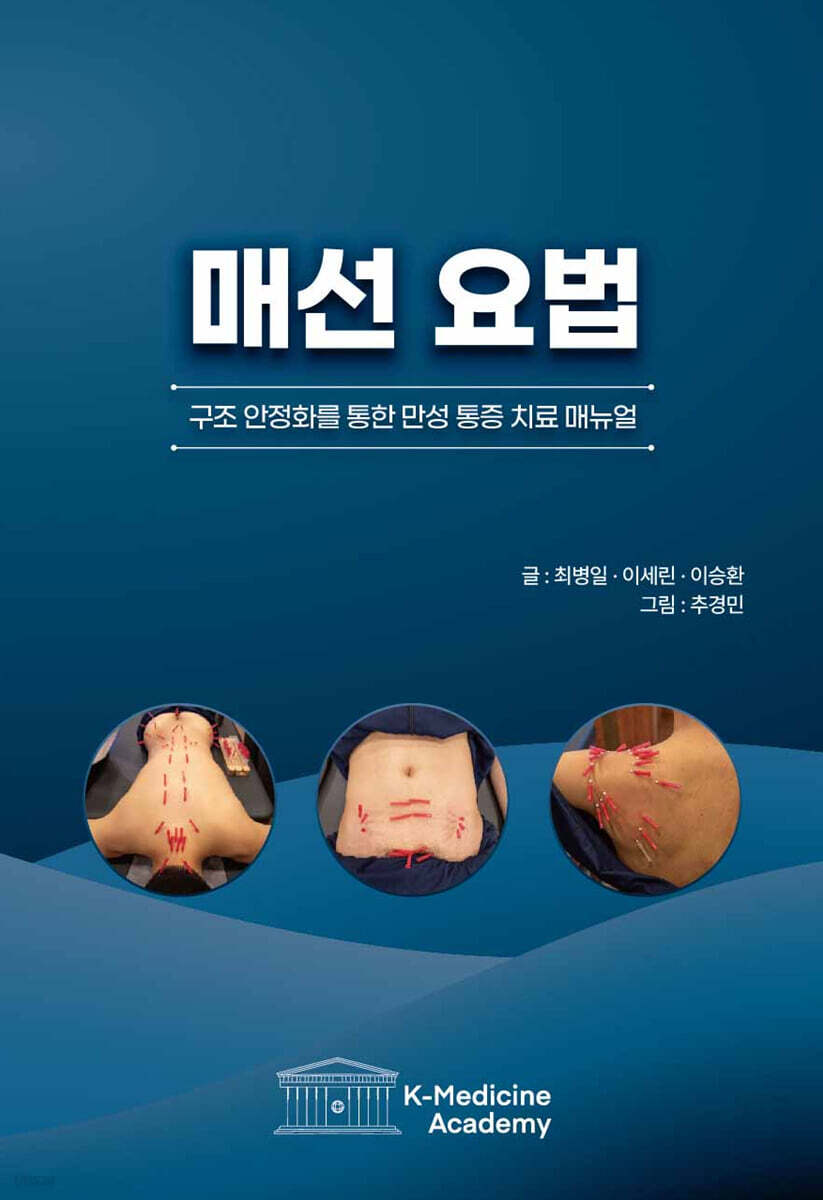
"Acupuncture Therapy: A Manual for Chronic Pain Treatment through Structural Stabilization" is a systematic guide to acupuncture therapy co-authored by Director Choi Byeong-il, Director Lee Se-rin, and Director Lee Seung-hwan, who have extensive clinical experience in the field of pain treatment.
This book comprehensively covers the theory and practice of acupuncture, which aims to restore structural stability and function to the musculoskeletal system. It will serve as a practical and specific clinical guide for medical professionals at home and abroad who wish to learn acupuncture.
Another great advantage is that it is structured so that acupuncture can be applied directly in clinical settings through abundant anatomical illustrations and actual procedure photos.
We hope that this book, recommended by renowned Korean medicine doctors and physicians both domestically and internationally, will serve as a strong bridge connecting the present and future of acupuncture.
"Acupuncture Therapy: A Manual for Chronic Pain Treatment through Structural Stabilization" is a systematic guide to acupuncture therapy co-authored by Director Choi Byeong-il, Director Lee Se-rin, and Director Lee Seung-hwan, who have extensive clinical experience in the field of pain treatment.
This book comprehensively covers the theory and practice of acupuncture, which aims to restore structural stability and function to the musculoskeletal system. It will serve as a practical and specific clinical guide for medical professionals at home and abroad who wish to learn acupuncture.
Another great advantage is that it is structured so that acupuncture can be applied directly in clinical settings through abundant anatomical illustrations and actual procedure photos.
We hope that this book, recommended by renowned Korean medicine doctors and physicians both domestically and internationally, will serve as a strong bridge connecting the present and future of acupuncture.
index
About the Author
Recommendation
congratulatory speech
preface
I.
Acupuncture
1.
Overview and History of Acupuncture
2.
Theoretical background of acupuncture treatment
1) The relationship between meridian theory and acupuncture treatment
2) Anatomical knowledge and acupuncture treatment
3) Application of trigger point and acupuncture treatment
3.
Mechanism of action of acupuncture
4.
The efficacy of acupuncture
1) Increased efficiency of Muscle Spindle & Golgi Tendon Organ Receptor
2) Fusimotor Reflex
3) Collagen Regeneration
4) Neovascularization
5) Lipolysis Effect
5.
Types and characteristics of thread
II.
Acupuncture treatment
1.
Preparation of threading tools and procedures
1) Main tools
2) Preparation for threading procedure
2.
caution
1) Precautions when receiving threading
2) Patient instructions after the procedure
3) Safety of threading procedure
3.
Human body reaction after thread insertion
1) A reaction in which the thread is absorbed into the body and creates collagen.
2) Foreign substance discharge reaction
3) The importance of patient notification before the procedure
III.
Chronic Pain and Acupuncture
1.
Definition and Classification of Chronic Pain
2.
Limitations of Chronic Pain Treatment and the Role of Acupuncture
1) Limitations of existing treatments
2) Role and benefits of acupuncture
3.
Key Principles of Acupuncture Therapy for Chronic Pain
1) The importance of full-body balance and core stabilization
2) Importance of the cervical spine: its relationship with the overall body shape and nervous system.
3) Application principles of acupuncture treatment
4) Treatment of the bursa over the cyst
* Pain Acupuncture Society Treatment Principles
IV.
The Reality of Acupuncture Therapy
1.
Cervical, thoracic, and lumbar regions
2.
pelvic area
3.
knee joint
4.
ankle
5.
shoulder joint
6.
elbow joint
7.
wrist joint
V.
Clinical Case Studies
VI.
References
Recommendation
congratulatory speech
preface
I.
Acupuncture
1.
Overview and History of Acupuncture
2.
Theoretical background of acupuncture treatment
1) The relationship between meridian theory and acupuncture treatment
2) Anatomical knowledge and acupuncture treatment
3) Application of trigger point and acupuncture treatment
3.
Mechanism of action of acupuncture
4.
The efficacy of acupuncture
1) Increased efficiency of Muscle Spindle & Golgi Tendon Organ Receptor
2) Fusimotor Reflex
3) Collagen Regeneration
4) Neovascularization
5) Lipolysis Effect
5.
Types and characteristics of thread
II.
Acupuncture treatment
1.
Preparation of threading tools and procedures
1) Main tools
2) Preparation for threading procedure
2.
caution
1) Precautions when receiving threading
2) Patient instructions after the procedure
3) Safety of threading procedure
3.
Human body reaction after thread insertion
1) A reaction in which the thread is absorbed into the body and creates collagen.
2) Foreign substance discharge reaction
3) The importance of patient notification before the procedure
III.
Chronic Pain and Acupuncture
1.
Definition and Classification of Chronic Pain
2.
Limitations of Chronic Pain Treatment and the Role of Acupuncture
1) Limitations of existing treatments
2) Role and benefits of acupuncture
3.
Key Principles of Acupuncture Therapy for Chronic Pain
1) The importance of full-body balance and core stabilization
2) Importance of the cervical spine: its relationship with the overall body shape and nervous system.
3) Application principles of acupuncture treatment
4) Treatment of the bursa over the cyst
* Pain Acupuncture Society Treatment Principles
IV.
The Reality of Acupuncture Therapy
1.
Cervical, thoracic, and lumbar regions
2.
pelvic area
3.
knee joint
4.
ankle
5.
shoulder joint
6.
elbow joint
7.
wrist joint
V.
Clinical Case Studies
VI.
References
Publisher's Review
[Author's Note]
[Pain Acupuncture Society Treatment Principles]
1.
A sufficient number of threads are used in one treatment (more than 100 threads are possible)
2.
Patients are informed in advance that they may experience a foreign body sensation, pain, or discomfort for approximately 3 to 7 days after the procedure, and that, although very rare, the thread may be pushed out of the body.
3.
Acupuncture is used in conjunction with hydrolysis to aid in hydrolysis and to provide moisture to soft tissues.
4.
Considering the tissue response and recovery of the acupuncture treatment and minimizing side effects, the treatment cycle is once every 2 to 3 weeks, and up to 10 or more treatments are possible depending on the severity of the symptoms.
5.
1-2 times a week, the patient's progress is observed and acupuncture and moxibustion treatments are supported.
congratulatory speech
We sincerely congratulate the publication of a book by Dr. Choi Byeong-il, a physician who has pioneered new horizons in the treatment of musculoskeletal pain, filled with his lifelong passion and insight.
To his son, who has grown up so quickly and is easily estranged, his father's acupuncture research has given him the gift of an invaluable 'time of encounter.'
Those days, when we discussed and studied together, even if only with the knowledge of a rookie medical student, are remembered as the warmest moments of my life, when father and son came to deeply understand each other, going beyond mere academic exchange.
When people only understood acupuncture as a traditional treatment method of inserting threads into acupoints, my father was already looking beyond that.
Correcting collapsed structures and restoring functional stability based on an anatomical understanding of the musculoskeletal system.
This was a great first step that went beyond the existing framework and changed the paradigm of treatment.
As a son and a junior following the same path as my father as a medical doctor, I am truly proud of this book, which contains the great journey of my father's life.
I sincerely hope that this book will inspire more medical professionals and help patients find relief from their suffering.
Son Choi Jun-ho
Professor of Neurosurgery, Seoul Asan Medical Center
Daughter-in-law Kwon Hyun-jung
Professor of Anesthesiology and Pain Medicine at Seoul Asan Medical Center
Daughter Choi Chan-hyo
Resident in the Department of Anesthesiology and Pain Medicine at Kyungpook National University
[Pain Acupuncture Society Treatment Principles]
1.
A sufficient number of threads are used in one treatment (more than 100 threads are possible)
2.
Patients are informed in advance that they may experience a foreign body sensation, pain, or discomfort for approximately 3 to 7 days after the procedure, and that, although very rare, the thread may be pushed out of the body.
3.
Acupuncture is used in conjunction with hydrolysis to aid in hydrolysis and to provide moisture to soft tissues.
4.
Considering the tissue response and recovery of the acupuncture treatment and minimizing side effects, the treatment cycle is once every 2 to 3 weeks, and up to 10 or more treatments are possible depending on the severity of the symptoms.
5.
1-2 times a week, the patient's progress is observed and acupuncture and moxibustion treatments are supported.
congratulatory speech
We sincerely congratulate the publication of a book by Dr. Choi Byeong-il, a physician who has pioneered new horizons in the treatment of musculoskeletal pain, filled with his lifelong passion and insight.
To his son, who has grown up so quickly and is easily estranged, his father's acupuncture research has given him the gift of an invaluable 'time of encounter.'
Those days, when we discussed and studied together, even if only with the knowledge of a rookie medical student, are remembered as the warmest moments of my life, when father and son came to deeply understand each other, going beyond mere academic exchange.
When people only understood acupuncture as a traditional treatment method of inserting threads into acupoints, my father was already looking beyond that.
Correcting collapsed structures and restoring functional stability based on an anatomical understanding of the musculoskeletal system.
This was a great first step that went beyond the existing framework and changed the paradigm of treatment.
As a son and a junior following the same path as my father as a medical doctor, I am truly proud of this book, which contains the great journey of my father's life.
I sincerely hope that this book will inspire more medical professionals and help patients find relief from their suffering.
Son Choi Jun-ho
Professor of Neurosurgery, Seoul Asan Medical Center
Daughter-in-law Kwon Hyun-jung
Professor of Anesthesiology and Pain Medicine at Seoul Asan Medical Center
Daughter Choi Chan-hyo
Resident in the Department of Anesthesiology and Pain Medicine at Kyungpook National University
GOODS SPECIFICS
- Date of issue: August 27, 2025
- Page count, weight, size: 160 pages | 150*220*20mm
- ISBN13: 9791198622372
- ISBN10: 1198622377
You may also like
카테고리
korean


korean

![GQ KOREA Mark (Monthly): December [2025]](http://librairie.coreenne.fr/cdn/shop/files/8ef265dbbfbf186523ed75ba7319009d.jpg?v=1765340328&width=3840)


