

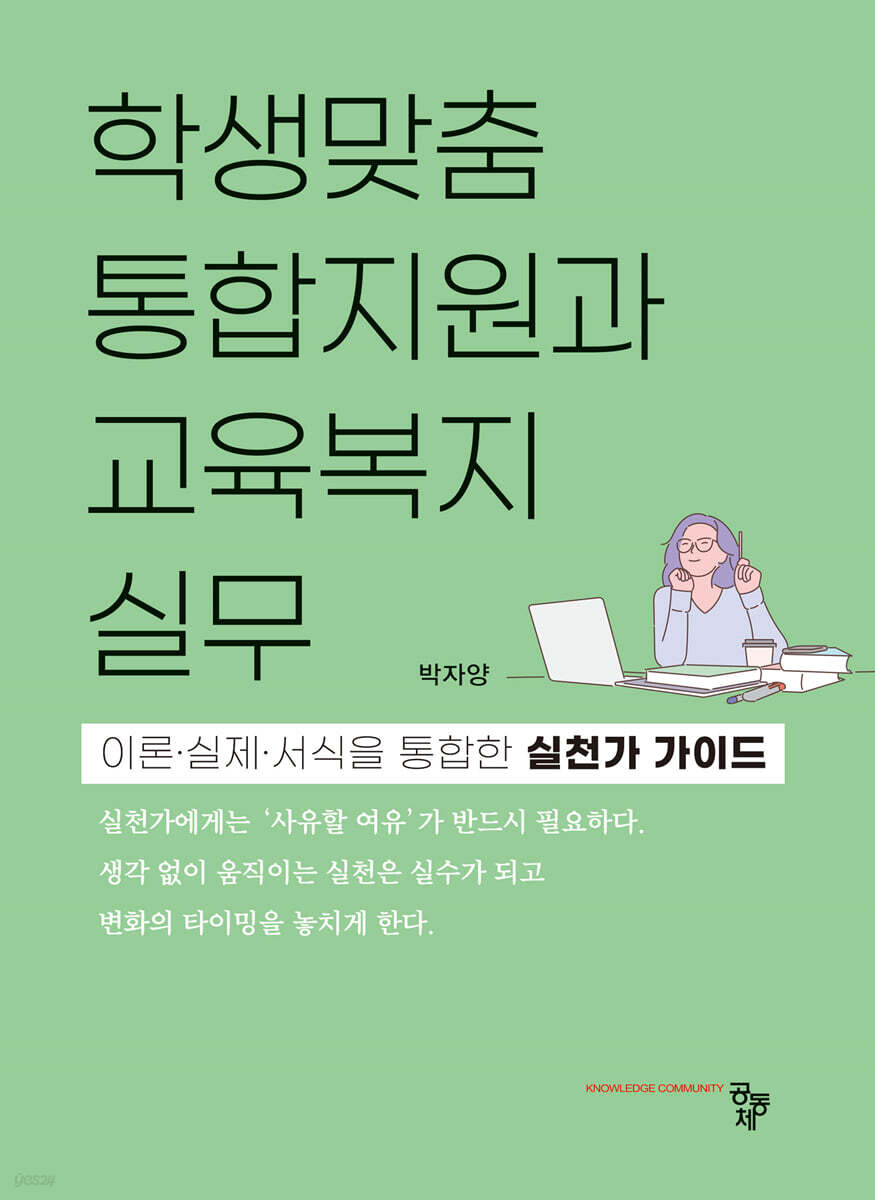
Customized integrated student support and educational welfare practice
 |
Description
Book Introduction
This book is for those practitioners.
Some may open this book as a new practitioner, some as a practitioner with long-standing concerns, and some at a loss as to how to help a single student.
Whatever your stance, I hope this book will make you think beyond "how to work" to "why we do this."
This book contains the flow and standards of case management, as well as forms and documents organized from a practitioner's perspective.
However, this does not mean that you must use the form contained here exactly as is.
Practitioners must be able to choose what they need now, given their own time and circumstances.
Records are tools for designing practices, not practices themselves.
Some may open this book as a new practitioner, some as a practitioner with long-standing concerns, and some at a loss as to how to help a single student.
Whatever your stance, I hope this book will make you think beyond "how to work" to "why we do this."
This book contains the flow and standards of case management, as well as forms and documents organized from a practitioner's perspective.
However, this does not mean that you must use the form contained here exactly as is.
Practitioners must be able to choose what they need now, given their own time and circumstances.
Records are tools for designing practices, not practices themselves.
index
Chapter 1: Understanding Educational Welfare and the Student-Tailored Integrated Support System (10)
Section 1: Philosophy and Trends of Educational Welfare 10
Section 2: Background and Key Summary of the Enactment of the "Student-Tailored Integrated Support Act" 13
Section 3: The Flow and Possibility of Reorganization of the Education Welfare Priority Support Project: Re-examining the Place of Education Welfare Practices in an Integrated Support System 16
Section 4: Overview of the Integrated Support System: Collaborative Structures Inside and Outside Schools and the Position of Educational Welfare 19
Chapter 2: The Role and Expertise of Educational Welfare Practitioners 24
Section 1: The Changing Role of Educational Social Workers: From Simple Supporters to Practical Professionals 25
Section 2: Identity and Core Functions of Educational Social Workers in Case Management 27
Section 3: The Role of the Coordinator within the Integrated Support Team and Crisis Response 29
Section 4: Five Core Competencies for Growing into a Practitioner 32
Chapter 3: Case Management Practices and Step-by-Step Strategies 38
Section 1: The Beginning of Connection: The Practice of Reading Signals 38
Section 2: Circumstances: Insight, Not Information 40
Section 3 Planning: Designing Interventions 42
Section 4: Intervention: The Beginning of Small but Concrete Change 45
Section 5: Evaluation: Time to Reflect on Practice and Plan for the Next Step 48
Section 6: Moments of Difficult Decisions: When Standards Shake, What Will Practitioners Judge? 52
Chapter 4: The Practice of Educational Social Workers Connecting Inside and Outside Schools 72
Section 1: From Information Sharing to Implementation Design: Rebuilding the Student-Tailored Integrated Support Team 74
Section 2: Coordination Capacity of Practitioners: How to Connect Schools, Homes, and Institutions 82
Section 3: The Flow of Crisis Intervention: 89 How to Get a Team to Respond, Not Just Make a Decision
Chapter 5: Formatting Tools for Practical Use 110
Section 1 Form 111 for Case Discovery and Assessment
Section 2 Document 116 for Intervention Planning and Implementation Review
Section 3: Minutes, Agenda Composition, and Practical Language of Recording 121
Section 4 Administrative Documents and Practical Language: The Art of Writing Agreements, Official Letters, and Consent Forms 125
Section 5: Case Management Designed with a Schedule 131
Section 6: Practice Begins with Design 135
Section 7: Student Case Study Conclusion and Follow-up Design 140
Chapter 6: Thematic Intervention Strategies and Interview Design for Case Management 148
Section 1: School Dropout Crisis: Truancy and School Maladjustment 149
Section 2: Emotional and Behavioral Problems: Interviews to Discover the Language of the Heart 153
Section 3: Sexual Issues: Interviews to Restore Boundaries 157
Section 4: Home Environment Issues: Things That Go Unsaid 160
Section 5: Safety and Life Crisis: Interviews that Respect the Language of Survival 164
Section 6: Risk Factors in Schools: Interviews to Recover Lost Sense in Relationships 169
Section 1: Philosophy and Trends of Educational Welfare 10
Section 2: Background and Key Summary of the Enactment of the "Student-Tailored Integrated Support Act" 13
Section 3: The Flow and Possibility of Reorganization of the Education Welfare Priority Support Project: Re-examining the Place of Education Welfare Practices in an Integrated Support System 16
Section 4: Overview of the Integrated Support System: Collaborative Structures Inside and Outside Schools and the Position of Educational Welfare 19
Chapter 2: The Role and Expertise of Educational Welfare Practitioners 24
Section 1: The Changing Role of Educational Social Workers: From Simple Supporters to Practical Professionals 25
Section 2: Identity and Core Functions of Educational Social Workers in Case Management 27
Section 3: The Role of the Coordinator within the Integrated Support Team and Crisis Response 29
Section 4: Five Core Competencies for Growing into a Practitioner 32
Chapter 3: Case Management Practices and Step-by-Step Strategies 38
Section 1: The Beginning of Connection: The Practice of Reading Signals 38
Section 2: Circumstances: Insight, Not Information 40
Section 3 Planning: Designing Interventions 42
Section 4: Intervention: The Beginning of Small but Concrete Change 45
Section 5: Evaluation: Time to Reflect on Practice and Plan for the Next Step 48
Section 6: Moments of Difficult Decisions: When Standards Shake, What Will Practitioners Judge? 52
Chapter 4: The Practice of Educational Social Workers Connecting Inside and Outside Schools 72
Section 1: From Information Sharing to Implementation Design: Rebuilding the Student-Tailored Integrated Support Team 74
Section 2: Coordination Capacity of Practitioners: How to Connect Schools, Homes, and Institutions 82
Section 3: The Flow of Crisis Intervention: 89 How to Get a Team to Respond, Not Just Make a Decision
Chapter 5: Formatting Tools for Practical Use 110
Section 1 Form 111 for Case Discovery and Assessment
Section 2 Document 116 for Intervention Planning and Implementation Review
Section 3: Minutes, Agenda Composition, and Practical Language of Recording 121
Section 4 Administrative Documents and Practical Language: The Art of Writing Agreements, Official Letters, and Consent Forms 125
Section 5: Case Management Designed with a Schedule 131
Section 6: Practice Begins with Design 135
Section 7: Student Case Study Conclusion and Follow-up Design 140
Chapter 6: Thematic Intervention Strategies and Interview Design for Case Management 148
Section 1: School Dropout Crisis: Truancy and School Maladjustment 149
Section 2: Emotional and Behavioral Problems: Interviews to Discover the Language of the Heart 153
Section 3: Sexual Issues: Interviews to Restore Boundaries 157
Section 4: Home Environment Issues: Things That Go Unsaid 160
Section 5: Safety and Life Crisis: Interviews that Respect the Language of Survival 164
Section 6: Risk Factors in Schools: Interviews to Recover Lost Sense in Relationships 169
GOODS SPECIFICS
- Date of issue: July 15, 2025
- Page count, weight, size: 176 pages | 175*240*20mm
- ISBN13: 9791167259509
- ISBN10: 1167259505
You may also like
카테고리
korean


korean

![GQ KOREA Mark (Monthly): December [2025]](http://librairie.coreenne.fr/cdn/shop/files/8ef265dbbfbf186523ed75ba7319009d.jpg?v=1765340328&width=3840)


