

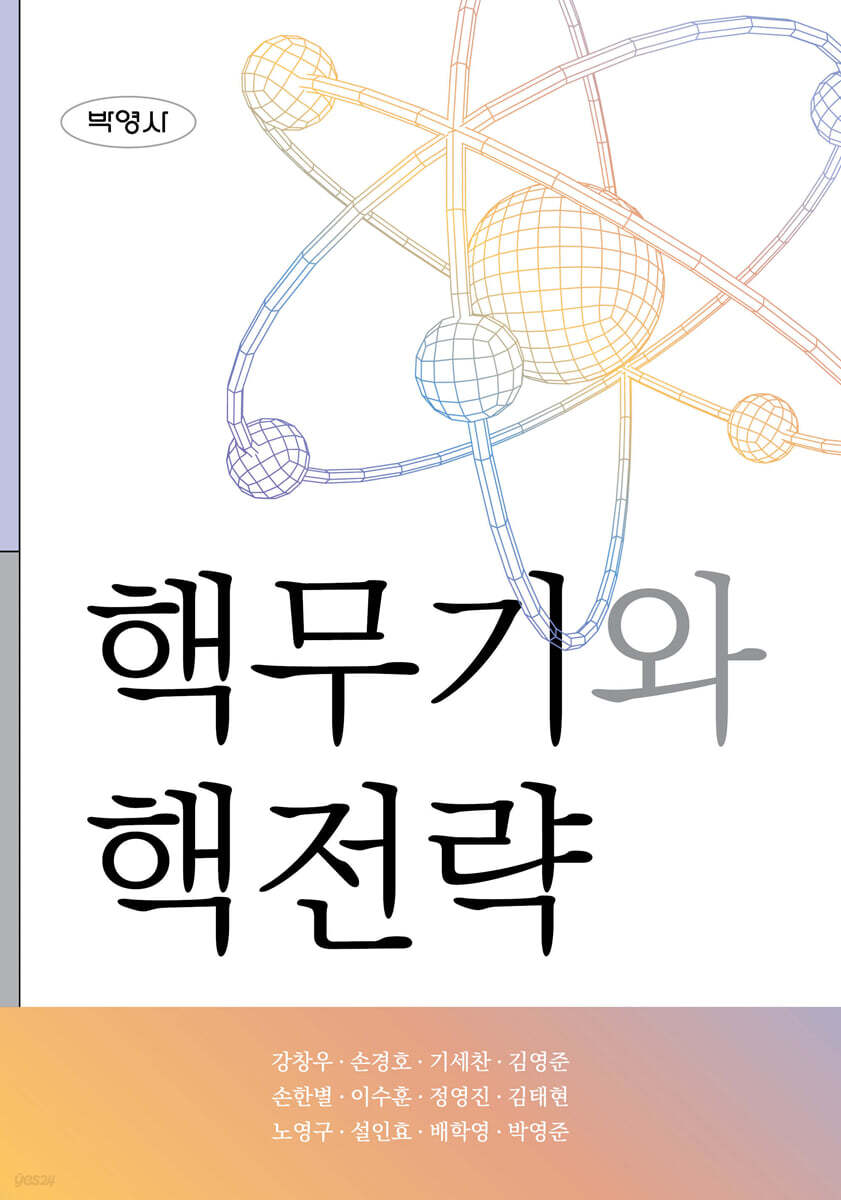
Nuclear weapons and nuclear strategy
 |
Description
Book Introduction
『Nuclear Weapons and Nuclear Strategy』 was written by 12 professors from the Department of Strategic Studies at the National Defense University, and comprehensively analyzes various topics related to nuclear weapons from engineering, historical, policy, and strategic perspectives.
index
Ⅰ Basic Theory of Nuclear Weapons
01.
Technical understanding of nuclear weapons.................................................................
3
02.
Nuclear weapons systems: nuclear triad, command, control, and communications, infrastructure, emerging technologies...........
33
Ⅱ History of Nuclear Development and Non-Proliferation and Nuclear Strategy Theory
03.
History of nuclear weapons development by country.............................................
55
04.
A History of Nuclear Strategy from the Cold War to the Post-Cold War..................................100
05.
History and Key Issues of the Nuclear Nonproliferation Regime..................................139
06.
Nuclear Strategy in the Third Nuclear Age..................................................168
07.
Integration of nuclear and conventional weapons..................................204
Ⅲ North Korea's Nuclear Development and Threats
08.
The History of North Korea's Nuclear Development..................................................239
09.
Challenges and Failures for North Korea's Denuclearization (History of Challenges and Failures for North Korea's Denuclearization).................
268
Ⅳ Korea's response strategy
10.
A Tailored Deterrence Strategy Using 21st Century Conventional Forces.......................317
11.
Korea-US Tailored Deterrence Strategy..................................................334
12.
South Korea's Military Nuclear Deterrence and Response Strategy.......................................377
13.
Shifting Global Nuclear Order and a New Look at South Korea's Nuclear Policy...................413
Index................................................................................................445
01.
Technical understanding of nuclear weapons.................................................................
3
02.
Nuclear weapons systems: nuclear triad, command, control, and communications, infrastructure, emerging technologies...........
33
Ⅱ History of Nuclear Development and Non-Proliferation and Nuclear Strategy Theory
03.
History of nuclear weapons development by country.............................................
55
04.
A History of Nuclear Strategy from the Cold War to the Post-Cold War..................................100
05.
History and Key Issues of the Nuclear Nonproliferation Regime..................................139
06.
Nuclear Strategy in the Third Nuclear Age..................................................168
07.
Integration of nuclear and conventional weapons..................................204
Ⅲ North Korea's Nuclear Development and Threats
08.
The History of North Korea's Nuclear Development..................................................239
09.
Challenges and Failures for North Korea's Denuclearization (History of Challenges and Failures for North Korea's Denuclearization).................
268
Ⅳ Korea's response strategy
10.
A Tailored Deterrence Strategy Using 21st Century Conventional Forces.......................317
11.
Korea-US Tailored Deterrence Strategy..................................................334
12.
South Korea's Military Nuclear Deterrence and Response Strategy.......................................377
13.
Shifting Global Nuclear Order and a New Look at South Korea's Nuclear Policy...................413
Index................................................................................................445
Publisher's Review
Prologue
Nuclear strategy of non-nuclear states
The security environment on the Korean Peninsula is rapidly changing due to North Korea's continued nuclear development and strategic military provocations.
To address this, the Ministry of National Defense established the Strategic Command in October 2024, focusing on training personnel capable of conducting specialized research on nuclear strategy and conducting practical military responses at the Ministry of National Defense, Joint Chiefs of Staff, and each military branch.
In response to this contemporary need, the Department of Strategic Studies at the National Defense University has been striving to provide systematic research and education on the North Korean nuclear threat.
However, currently, educational programs and textbooks that specialize in nuclear strategy in Korea are very limited, and academic approaches that reflect Korea's unique security environment are particularly lacking.
Therefore, this textbook is an introductory text designed to enable graduate students and security course students entering the National Defense University to comprehensively understand nuclear weapons systems and strategies. It comprehensively covers everything from the technical foundations of nuclear weapons to their strategic operation and military response strategies on the Korean Peninsula.
This textbook has three main purposes.
First, it is a record of the nuclear deterrence efforts of a nuclear-free country.
It contains a record of South Korea's strategic efforts to deter North Korea's nuclear threat without nuclear weapons.
South Korea finds itself in a unique position, rarely seen in the world, where it has responded to North Korea's nuclear threat by relying on the nuclear umbrella and conventional forces of major powers without possessing its own nuclear weapons.
In particular, the Strategic Command, established in 2024, is playing a role in systematizing and institutionalizing these efforts, and this textbook serves to comprehensively summarize the direction in which South Korea's nuclear response strategy is developing.
The South Korean military's nuclear response strategy can serve as an important case study for the international community, and this record will contribute to the further development of South Korea's security policy and military strategy.
Second, it serves as an introductory text to nuclear weapons systems and strategies for research purposes.
This book provides a basic overview of nuclear weapons systems and strategy.
For more systematic research, graduate school courses comprehensively cover everything from understanding the engineering principles of nuclear weapons to the historical evolution of nuclear strategy and the security dynamics created by North Korea's nuclear weapons on the Korean Peninsula.
This will serve as fundamental data for researchers to not only understand the physical principles of nuclear weapons, but also delve deeper into how nuclear strategy has evolved and what role it has played in the security environment of the Korean Peninsula.
Third, it provides basic knowledge about nuclear weapons to students at the National Defense University.
This textbook provides basic understanding and practical skills related to nuclear weapons.
The North Korean nuclear issue is a crucial element of South Korea's security, and personnel from many related ministries, including the Ministry of National Defense, are directly and indirectly involved in responding to the North Korean nuclear issue.
However, the reality is that personnel with specialized training in nuclear weapons are limited, and they have difficulty understanding the basic concepts of nuclear strategy and force operation.
This textbook will convey the core concepts of nuclear strategy to these individuals and help them apply them in practice.
This book was written by 12 professors from the Department of Strategic Studies at the National Defense University, and comprehensively analyzes various topics related to nuclear weapons from engineering, historical, policy, and strategic perspectives.
Part 1 covers the basic theory of nuclear weapons and the concept of nuclear strategy, covering the technical principles of nuclear weapons, the three-axis system, command and control systems (C4I), emerging technologies, and nuclear strategy.
Part 2 is about the history and strategic theory of nuclear development and non-proliferation, covering the history of nuclear development by country, the formation and issues of the nuclear non-proliferation regime, nuclear strategy during the Cold War and post-Cold War eras, and modern nuclear strategy theory.
Part 3 covers the history of North Korea's nuclear development and threats, the failure of North Korea's denuclearization efforts, and the military response.
Part 4 comprehensively covers South Korea's response strategy, including the history and lessons learned from nuclear response by non-nuclear states, the ROK-US extended deterrence strategy, and South Korea's nuclear deterrence and response strategy against North Korea.
This textbook will be a valuable reference not only for students majoring in nuclear strategy, but also for researchers, policymakers, and military strategists working in the fields of defense and security.
The security environment on the Korean Peninsula is likely to change rapidly in the future due to North Korea's nuclear development and changes in strategic operations.
Accordingly, the South Korean military and government must continue to research and develop new strategies, and the role of nuclear strategy experts will become increasingly important amid these changes.
This textbook systematically organizes basic concepts regarding nuclear weapons and serves as a foundational resource for an academic approach to South Korea's security policy and strategy. It is expected to play a significant role in future research and practical application.
We hope that this textbook will help researchers in the military and related organizations gain a deeper understanding of nuclear strategy and contribute to developing strategies to respond to the North Korean nuclear threat.
All authors from the Department of Strategic Studies, National Defense University
Nuclear strategy of non-nuclear states
The security environment on the Korean Peninsula is rapidly changing due to North Korea's continued nuclear development and strategic military provocations.
To address this, the Ministry of National Defense established the Strategic Command in October 2024, focusing on training personnel capable of conducting specialized research on nuclear strategy and conducting practical military responses at the Ministry of National Defense, Joint Chiefs of Staff, and each military branch.
In response to this contemporary need, the Department of Strategic Studies at the National Defense University has been striving to provide systematic research and education on the North Korean nuclear threat.
However, currently, educational programs and textbooks that specialize in nuclear strategy in Korea are very limited, and academic approaches that reflect Korea's unique security environment are particularly lacking.
Therefore, this textbook is an introductory text designed to enable graduate students and security course students entering the National Defense University to comprehensively understand nuclear weapons systems and strategies. It comprehensively covers everything from the technical foundations of nuclear weapons to their strategic operation and military response strategies on the Korean Peninsula.
This textbook has three main purposes.
First, it is a record of the nuclear deterrence efforts of a nuclear-free country.
It contains a record of South Korea's strategic efforts to deter North Korea's nuclear threat without nuclear weapons.
South Korea finds itself in a unique position, rarely seen in the world, where it has responded to North Korea's nuclear threat by relying on the nuclear umbrella and conventional forces of major powers without possessing its own nuclear weapons.
In particular, the Strategic Command, established in 2024, is playing a role in systematizing and institutionalizing these efforts, and this textbook serves to comprehensively summarize the direction in which South Korea's nuclear response strategy is developing.
The South Korean military's nuclear response strategy can serve as an important case study for the international community, and this record will contribute to the further development of South Korea's security policy and military strategy.
Second, it serves as an introductory text to nuclear weapons systems and strategies for research purposes.
This book provides a basic overview of nuclear weapons systems and strategy.
For more systematic research, graduate school courses comprehensively cover everything from understanding the engineering principles of nuclear weapons to the historical evolution of nuclear strategy and the security dynamics created by North Korea's nuclear weapons on the Korean Peninsula.
This will serve as fundamental data for researchers to not only understand the physical principles of nuclear weapons, but also delve deeper into how nuclear strategy has evolved and what role it has played in the security environment of the Korean Peninsula.
Third, it provides basic knowledge about nuclear weapons to students at the National Defense University.
This textbook provides basic understanding and practical skills related to nuclear weapons.
The North Korean nuclear issue is a crucial element of South Korea's security, and personnel from many related ministries, including the Ministry of National Defense, are directly and indirectly involved in responding to the North Korean nuclear issue.
However, the reality is that personnel with specialized training in nuclear weapons are limited, and they have difficulty understanding the basic concepts of nuclear strategy and force operation.
This textbook will convey the core concepts of nuclear strategy to these individuals and help them apply them in practice.
This book was written by 12 professors from the Department of Strategic Studies at the National Defense University, and comprehensively analyzes various topics related to nuclear weapons from engineering, historical, policy, and strategic perspectives.
Part 1 covers the basic theory of nuclear weapons and the concept of nuclear strategy, covering the technical principles of nuclear weapons, the three-axis system, command and control systems (C4I), emerging technologies, and nuclear strategy.
Part 2 is about the history and strategic theory of nuclear development and non-proliferation, covering the history of nuclear development by country, the formation and issues of the nuclear non-proliferation regime, nuclear strategy during the Cold War and post-Cold War eras, and modern nuclear strategy theory.
Part 3 covers the history of North Korea's nuclear development and threats, the failure of North Korea's denuclearization efforts, and the military response.
Part 4 comprehensively covers South Korea's response strategy, including the history and lessons learned from nuclear response by non-nuclear states, the ROK-US extended deterrence strategy, and South Korea's nuclear deterrence and response strategy against North Korea.
This textbook will be a valuable reference not only for students majoring in nuclear strategy, but also for researchers, policymakers, and military strategists working in the fields of defense and security.
The security environment on the Korean Peninsula is likely to change rapidly in the future due to North Korea's nuclear development and changes in strategic operations.
Accordingly, the South Korean military and government must continue to research and develop new strategies, and the role of nuclear strategy experts will become increasingly important amid these changes.
This textbook systematically organizes basic concepts regarding nuclear weapons and serves as a foundational resource for an academic approach to South Korea's security policy and strategy. It is expected to play a significant role in future research and practical application.
We hope that this textbook will help researchers in the military and related organizations gain a deeper understanding of nuclear strategy and contribute to developing strategies to respond to the North Korean nuclear threat.
All authors from the Department of Strategic Studies, National Defense University
GOODS SPECIFICS
- Date of issue: June 30, 2025
- Page count, weight, size: 464 pages | 176*248*30mm
- ISBN13: 9791130322940
- ISBN10: 1130322947
You may also like
카테고리
korean


korean

![GQ KOREA Mark (Monthly): December [2025]](http://librairie.coreenne.fr/cdn/shop/files/8ef265dbbfbf186523ed75ba7319009d.jpg?v=1765340328&width=3840)


