![[MK Edition] Bio Hegemony Competition](http://librairie.coreenne.fr/cdn/shop/files/7056ff84ebef7ad5621093c81378fb93.jpg?v=1765412454&width=3840)

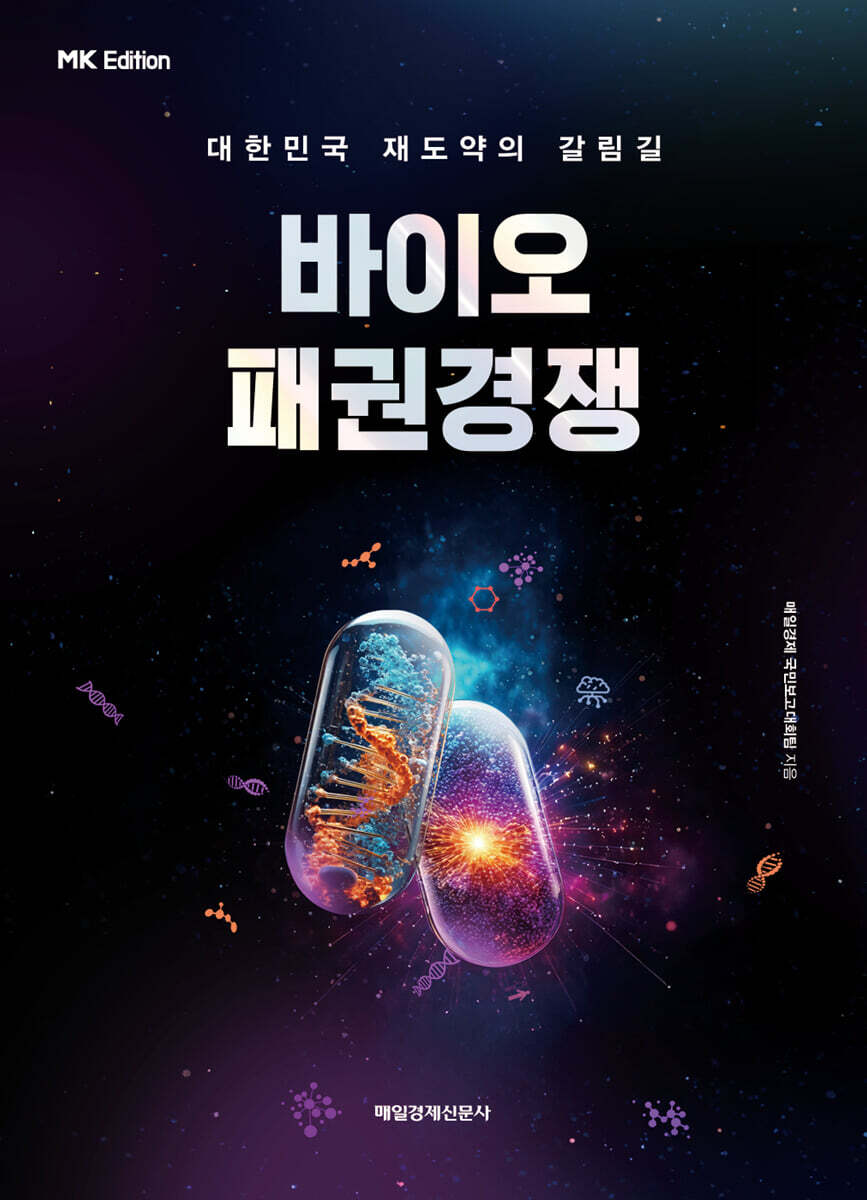
[MK Edition] Bio Hegemony Competition
 |
Description
Book Introduction
Read the key trends in the rapidly changing bio industry.
“How can we dominate the bio market?”
Strategic Insights for Preparing for the Era of Bio-Hegemony
Longevity and good health is a dream that mankind has long yearned for.
What was once a mere dream in the age of alchemy is now becoming a achievable goal thanks to the rapid advancements in modern science and biotechnology.
In particular, gene therapy, anti-aging technology, and artificial intelligence (AI)-based new drug development have emerged as key factors in extending human lifespan and revolutionizing health.
Now, the entire world is waging an all-out war to develop the bio-industry, viewing it as an essential requirement for next-generation national competitiveness.
The US, Europe, Japan, and even big tech companies are jumping into the competition for bio hegemony.
However, Korea still remains a manufacturing-centric economy, and if it fails to keep up with this trend, its very survival in the future could be threatened.
This book clearly presents the strategies needed for K-Bio to lead the world and the direction it should take.
The key is to gain insight into the present and future of the bio industry and to explore and forecast the direction in which Korea can win in global competition.
This book will be a must-read for managers, investors, and researchers interested in the bio industry, as well as anyone seeking to understand the future trends of the industry.
This book will reveal trends in the bio-hegemony competition, practical strategies for becoming a winner in the bio market, and more.
“How can we dominate the bio market?”
Strategic Insights for Preparing for the Era of Bio-Hegemony
Longevity and good health is a dream that mankind has long yearned for.
What was once a mere dream in the age of alchemy is now becoming a achievable goal thanks to the rapid advancements in modern science and biotechnology.
In particular, gene therapy, anti-aging technology, and artificial intelligence (AI)-based new drug development have emerged as key factors in extending human lifespan and revolutionizing health.
Now, the entire world is waging an all-out war to develop the bio-industry, viewing it as an essential requirement for next-generation national competitiveness.
The US, Europe, Japan, and even big tech companies are jumping into the competition for bio hegemony.
However, Korea still remains a manufacturing-centric economy, and if it fails to keep up with this trend, its very survival in the future could be threatened.
This book clearly presents the strategies needed for K-Bio to lead the world and the direction it should take.
The key is to gain insight into the present and future of the bio industry and to explore and forecast the direction in which Korea can win in global competition.
This book will be a must-read for managers, investors, and researchers interested in the bio industry, as well as anyone seeking to understand the future trends of the industry.
This book will reveal trends in the bio-hegemony competition, practical strategies for becoming a winner in the bio market, and more.
- You can preview some of the book's contents.
Preview
index
Preface: The K-Bio Development Strategy Can No Longer Be Delayed
Part 1: Next Chip War, Biowar
Chapter 1: Biowarfare, the Trigger Has Been Pulled
-The unleashed US bio-hegemony
-Europe's pursuit intensifies
China's biotech boom, targeting cutting-edge industries
Chapter 2: The Absolute Powerhouse, the United States
The world's largest market, the bio market, is also moving.
-The 'powerhouse' that monopolizes half of the global top 10
Chapter 3: America's Rival Europe
- Challenger of Bio's 'Pax Americana'
-Novo Nordisk, the gold mine for obesity treatment
Lonza Dominates the Global CDMO Industry
-Vaccine powerhouses who led the way to ending COVID-19
Chapter 4: Asia Building New Technologies
-“I will catch America” China’s growing size
-Moonshot 'Game Changer' Japan
-India, the world's pharmaceutical factory
Southeast Asia Targets the Niche Market of Endemic Disease Eradication
Chapter 5: K-Bio in Pursuit of Hegemony
"Korea is too small": Shifting focus from domestic demand to overseas markets
-Large companies rushing into next-generation food
Launch of the National Bio-Pharmaceutical Commission: Policy Speed Battle
Chapter 6: Global giants join the fray
Big tech merging with bio
- A bold challenge for traditional industries
[Interview] Patrick Hoever, President of Novartis International: "Korea's talent potential is enormous...We will become a biopowerhouse within five years."
[Interview] Kim Heung-yeol, Director of the Korea Research Institute of Bioscience and Biotechnology: "Cooperative ecosystems and digital transformation are key to K-bio's success."
Part 2: Customized Bios Rise
Chapter 1: Digital Bio Entering Everyday Life
Digital Health Dominates CES 2025
The Evolution of 'MedTech' Beyond Time and Space
-Faster and more accurate diagnostic AI
Wearable medical device 'Quantum Jump'
"Games are also medicine": The world of digital therapeutics
Chapter 2: The Dream Bio Proliferated by Data
Human Digital Twin: A Technology of Imagination Now a Reality
AI doctors are coming… the era of surgical robots
-Rush to capture niche markets with treatments
Global Big Deals Accelerate, Big Pharma Expands Market Share
Part 3: Why K-Bio?
Chapter 1: Low Growth vs. Securing a Growth Engine: Korea at a Crossroads
-Korea, where traditional manufacturing is the answer
-Bio is now changing the economic landscape.
Chapter 2: Korea's Growth Path Depends on Bio
-Quantitative growth from generics to biotechnology
A frog in a well on the world stage... Competitiveness that even China lags behind
-Bio is the only solution to securing a second Samsung Electronics.
[Interview] Kim Min-ji, CEO of Crossborder Partners: "K-Bio Needs to Strengthen Global Networking"
[Interview] Kim Ji-soo and Bae Jin-won, Research Fellows at the Korea Institute for Industrial Economics & Trade: "Building an Asian Supercluster After SMEs Build Competitiveness"
Part 4: Bio-Hegemony Victory Strategy
Chapter 1: Velocity - Data Big Bang, Industrial Speed Wars
Let's build the world's first government-certified data exchange.
-The 'Big 5' hospitals transform into startup midwives.
[Interview] Professor Baek Min-kyung of Seoul National University's Department of Biotechnology: "Spurring Protein Research...Taking on AI for New Drug Development"
[Interview] John Halamka, CEO of Mayo Clinic Platform: "AI-Driven Hospitals Are Coming"
[Interview] Professor Kim Deok-ho of Johns Hopkins University School of Medicine: "Artificial organs can reduce clinical trials by 30%."
Chapter 2: Venture - Jackpot New Drug Gamble
Korea's version of "Bio Stargate"... Breakthrough in public-private partnerships in new drug development
"Bio One Asia": Korea Takes the Lead in Integrated Clinical Trials
-Establishment of the Basic Science Jackpot Fund and groundbreaking support for original technologies.
-The bottleneck in new drug launches is so severe that review staff must double.
[Interview] Hong Seok-myeong, Patent Office Examiner: "Introducing a Fast Track for National Strategic Technologies and Licensing"
[Interview] Thomas Vega, Founder of Augmental: "We Must Unleash Human Productivity and Economic Potential with 'Dream Technology' Digital Bio."
[Interview] Jo Joo-hee, Director of the Clinical Epidemiology Research Center at Samsung Medical Center: "The Widening Health Gap... We Need to Address Digital Medical Illiteracy."
Chapter 3: Value Boost - Expanding Bio Territory
Break through the petrochemical crisis by mandating the use of white biotechnology.
- Green bio-accelerator pedal by relaxing genetic regulations
-Breaking the slack in corporate finances, easing requirements for technology-specific listings.
Intensifying biosecurity battles… Expanding self-sufficiency in raw materials
[Interview] Yasushi Kajii, President and CEO of Takeda Pharmaceutical Company, "Our goal is to commercialize the world's first pluripotent stem cell therapy."
[Interview] Seung-gu Lee, Director of the Synthetic Biology Lab at the Korea Research Institute of Bioscience and Biotechnology: "Synthetic biology is a game changer in the advanced bio era, and its utilization is increasing."
Chapter 4: Vitality - Anti-Aging Power
Establishing a national cell bank to dominate the cell therapy market.
From a plastic surgery powerhouse to an anti-aging powerhouse, K-medical tourism is being upgraded.
[Interview] Lee Byeong-geon, Advisor at GI Innovation: "Fostering the Medical Tourism Industry with Anti-Aging Treatments"
[Interview] Kim Dong-ik, Professor Emeritus of Sungkyunkwan University School of Medicine: "Aiming for clinical trials of anti-aging treatments by 2028."
[Interview] Seungwook Cho, CEO of Moniscell: "Fat is like stem cells, and we need to leverage it for medical innovation."
References
People who helped
Part 1: Next Chip War, Biowar
Chapter 1: Biowarfare, the Trigger Has Been Pulled
-The unleashed US bio-hegemony
-Europe's pursuit intensifies
China's biotech boom, targeting cutting-edge industries
Chapter 2: The Absolute Powerhouse, the United States
The world's largest market, the bio market, is also moving.
-The 'powerhouse' that monopolizes half of the global top 10
Chapter 3: America's Rival Europe
- Challenger of Bio's 'Pax Americana'
-Novo Nordisk, the gold mine for obesity treatment
Lonza Dominates the Global CDMO Industry
-Vaccine powerhouses who led the way to ending COVID-19
Chapter 4: Asia Building New Technologies
-“I will catch America” China’s growing size
-Moonshot 'Game Changer' Japan
-India, the world's pharmaceutical factory
Southeast Asia Targets the Niche Market of Endemic Disease Eradication
Chapter 5: K-Bio in Pursuit of Hegemony
"Korea is too small": Shifting focus from domestic demand to overseas markets
-Large companies rushing into next-generation food
Launch of the National Bio-Pharmaceutical Commission: Policy Speed Battle
Chapter 6: Global giants join the fray
Big tech merging with bio
- A bold challenge for traditional industries
[Interview] Patrick Hoever, President of Novartis International: "Korea's talent potential is enormous...We will become a biopowerhouse within five years."
[Interview] Kim Heung-yeol, Director of the Korea Research Institute of Bioscience and Biotechnology: "Cooperative ecosystems and digital transformation are key to K-bio's success."
Part 2: Customized Bios Rise
Chapter 1: Digital Bio Entering Everyday Life
Digital Health Dominates CES 2025
The Evolution of 'MedTech' Beyond Time and Space
-Faster and more accurate diagnostic AI
Wearable medical device 'Quantum Jump'
"Games are also medicine": The world of digital therapeutics
Chapter 2: The Dream Bio Proliferated by Data
Human Digital Twin: A Technology of Imagination Now a Reality
AI doctors are coming… the era of surgical robots
-Rush to capture niche markets with treatments
Global Big Deals Accelerate, Big Pharma Expands Market Share
Part 3: Why K-Bio?
Chapter 1: Low Growth vs. Securing a Growth Engine: Korea at a Crossroads
-Korea, where traditional manufacturing is the answer
-Bio is now changing the economic landscape.
Chapter 2: Korea's Growth Path Depends on Bio
-Quantitative growth from generics to biotechnology
A frog in a well on the world stage... Competitiveness that even China lags behind
-Bio is the only solution to securing a second Samsung Electronics.
[Interview] Kim Min-ji, CEO of Crossborder Partners: "K-Bio Needs to Strengthen Global Networking"
[Interview] Kim Ji-soo and Bae Jin-won, Research Fellows at the Korea Institute for Industrial Economics & Trade: "Building an Asian Supercluster After SMEs Build Competitiveness"
Part 4: Bio-Hegemony Victory Strategy
Chapter 1: Velocity - Data Big Bang, Industrial Speed Wars
Let's build the world's first government-certified data exchange.
-The 'Big 5' hospitals transform into startup midwives.
[Interview] Professor Baek Min-kyung of Seoul National University's Department of Biotechnology: "Spurring Protein Research...Taking on AI for New Drug Development"
[Interview] John Halamka, CEO of Mayo Clinic Platform: "AI-Driven Hospitals Are Coming"
[Interview] Professor Kim Deok-ho of Johns Hopkins University School of Medicine: "Artificial organs can reduce clinical trials by 30%."
Chapter 2: Venture - Jackpot New Drug Gamble
Korea's version of "Bio Stargate"... Breakthrough in public-private partnerships in new drug development
"Bio One Asia": Korea Takes the Lead in Integrated Clinical Trials
-Establishment of the Basic Science Jackpot Fund and groundbreaking support for original technologies.
-The bottleneck in new drug launches is so severe that review staff must double.
[Interview] Hong Seok-myeong, Patent Office Examiner: "Introducing a Fast Track for National Strategic Technologies and Licensing"
[Interview] Thomas Vega, Founder of Augmental: "We Must Unleash Human Productivity and Economic Potential with 'Dream Technology' Digital Bio."
[Interview] Jo Joo-hee, Director of the Clinical Epidemiology Research Center at Samsung Medical Center: "The Widening Health Gap... We Need to Address Digital Medical Illiteracy."
Chapter 3: Value Boost - Expanding Bio Territory
Break through the petrochemical crisis by mandating the use of white biotechnology.
- Green bio-accelerator pedal by relaxing genetic regulations
-Breaking the slack in corporate finances, easing requirements for technology-specific listings.
Intensifying biosecurity battles… Expanding self-sufficiency in raw materials
[Interview] Yasushi Kajii, President and CEO of Takeda Pharmaceutical Company, "Our goal is to commercialize the world's first pluripotent stem cell therapy."
[Interview] Seung-gu Lee, Director of the Synthetic Biology Lab at the Korea Research Institute of Bioscience and Biotechnology: "Synthetic biology is a game changer in the advanced bio era, and its utilization is increasing."
Chapter 4: Vitality - Anti-Aging Power
Establishing a national cell bank to dominate the cell therapy market.
From a plastic surgery powerhouse to an anti-aging powerhouse, K-medical tourism is being upgraded.
[Interview] Lee Byeong-geon, Advisor at GI Innovation: "Fostering the Medical Tourism Industry with Anti-Aging Treatments"
[Interview] Kim Dong-ik, Professor Emeritus of Sungkyunkwan University School of Medicine: "Aiming for clinical trials of anti-aging treatments by 2028."
[Interview] Seungwook Cho, CEO of Moniscell: "Fat is like stem cells, and we need to leverage it for medical innovation."
References
People who helped
Into the book
The United States is also making efforts in industrialization.
In 2020, the Defense Advanced Research Projects Agency (DARPA), a research institute under the Department of Defense, established a synthetic biology manufacturing research institute and invested $270 million in it.
The following year, the American Innovation and Competition Act designated synthetic biology as one of the top ten breakthrough technologies.
This is a legal basis for defining synthetic biology as a weapon for achieving 'bio-superiority'.
With the investment of big tech and large venture capital funds, it is estimated that there are currently around 800 synthetic biology companies in the United States.
--- p.28, from “The World’s Largest Market, Bio-Pando is Moving”
There is one striking commonality in the recent actions of big tech companies such as OpenAI, Google, Microsoft (MS), and Nvidia.
The point is that 'bio' is considered the food of the future.
Having invested massive amounts of money to secure fundamental models like generative AI, big tech companies are now targeting biotechnology as a potential lucrative industry with AI.
The reason is clear.
Biotechnology is a highly attractive investment target for big tech companies, as the healthcare market is expected to expand due to factors such as an aging population, the rise of chronic diseases, and the surge in demand for personalized medicine.
Moreover, the bio market itself is an industry based on large-scale data, such as genomic information and clinical data, and thus can generate significant synergy with the powerful digital assets of big tech companies, such as AI, machine learning, big data, cloud computing, and graphics processing units (GPUs).
--- p.69, from “Big Tech Fusing with Bio”
CES 2025, the world's largest information technology (IT) and home appliance exhibition held in Las Vegas, USA in January 2025, attracted the attention of the world with the introduction of a large number of innovative technologies centered on "digital healthcare."
This event showcased a variety of healthcare solutions that integrate cutting-edge technologies such as artificial intelligence (AI), the Internet of Things (IoT), and wearable devices. The growth of "personalized bio" was particularly notable. The most notable trend at CES 2025 was predictive healthcare systems that integrate AI and IoT.
A variety of technologies have been unveiled that focus on continuously monitoring and analyzing individual health data to proactively identify and prevent disease outbreaks.
For example, a representative technology is one that measures various bio-signals such as heart rate, body temperature, oxygen saturation, and respiration rate through wearable smart devices such as smartwatches, smart rings, and wearable patches, and prevents cardiovascular diseases in real time.
--- p.90, from “Digital Health Dominating CES 2025”
K-Bio is now moving beyond producing generic drugs for domestic consumption and expanding its export market.
The company is growing in size by successfully completing a series of large-scale technology exports to global pharmaceutical companies.
Looking at the current status of K-Bio's portfolio in 2023, companies that mainly produce synthetic pharmaceuticals, such as Daewoong Pharmaceutical, Kwangdong Pharmaceutical, Chong Kun Dang, and Yuhan Corporation, account for 46% of the total sales, showing that they are active as the main players in bio.
Medical device sales, including Samsung Medison, Seragem, SD Biosensor, and Osstem Implant, follow with 28% of total sales.
Companies with biopharmaceutical product lines, such as Celltrion, Samsung Bioepis, Hanmi Pharmaceutical, and Green Cross, account for 18%, while CDMO companies, such as Samsung BioLogics and Lotte BioLogics, account for 8%.
In the synthetic pharmaceutical sector, large companies have recently achieved success with new drugs while securing a stable source of revenue mainly from generics.
The domestic market is growing due to the steady increase in demand for pharmaceuticals caused by the aging population.
In addition, the market for specialized pharmaceuticals expanded with the systematization of the pharmaceutical distribution structure following the division of medical services.
Although growth was centered on large generic products, large pharmaceutical companies have recently been seeking to improve their constitution by increasing exports and developing new and improved combination drugs.
--- p.129, from “Quantitative Growth from Generics to Biotechnology”
'Anti-aging tourism' is attracting attention as an important growth engine that can revitalize the national economy.
The number of international patients visiting Korea has increased significantly in recent years, confirming the positive impact the medical tourism industry has on the national economy.
According to the International Medical Information Portal, the number of foreign patients visiting Korea is expected to reach an all-time high, increasing significantly from approximately 380,000 in 2018 to 610,000 in 2023.
This is evidence that Korean medical services are recognized internationally.
In 2020, when the COVID-19 pandemic was particularly severe, the number of foreign patients plummeted to 120,000, but it has since shown steady recovery and quickly surpassed previous levels.
The reliability and excellence of Korean medical care, coupled with the more stringent quarantine system and medical service management since the pandemic, have made Korea attractive to international patients.
In 2020, the Defense Advanced Research Projects Agency (DARPA), a research institute under the Department of Defense, established a synthetic biology manufacturing research institute and invested $270 million in it.
The following year, the American Innovation and Competition Act designated synthetic biology as one of the top ten breakthrough technologies.
This is a legal basis for defining synthetic biology as a weapon for achieving 'bio-superiority'.
With the investment of big tech and large venture capital funds, it is estimated that there are currently around 800 synthetic biology companies in the United States.
--- p.28, from “The World’s Largest Market, Bio-Pando is Moving”
There is one striking commonality in the recent actions of big tech companies such as OpenAI, Google, Microsoft (MS), and Nvidia.
The point is that 'bio' is considered the food of the future.
Having invested massive amounts of money to secure fundamental models like generative AI, big tech companies are now targeting biotechnology as a potential lucrative industry with AI.
The reason is clear.
Biotechnology is a highly attractive investment target for big tech companies, as the healthcare market is expected to expand due to factors such as an aging population, the rise of chronic diseases, and the surge in demand for personalized medicine.
Moreover, the bio market itself is an industry based on large-scale data, such as genomic information and clinical data, and thus can generate significant synergy with the powerful digital assets of big tech companies, such as AI, machine learning, big data, cloud computing, and graphics processing units (GPUs).
--- p.69, from “Big Tech Fusing with Bio”
CES 2025, the world's largest information technology (IT) and home appliance exhibition held in Las Vegas, USA in January 2025, attracted the attention of the world with the introduction of a large number of innovative technologies centered on "digital healthcare."
This event showcased a variety of healthcare solutions that integrate cutting-edge technologies such as artificial intelligence (AI), the Internet of Things (IoT), and wearable devices. The growth of "personalized bio" was particularly notable. The most notable trend at CES 2025 was predictive healthcare systems that integrate AI and IoT.
A variety of technologies have been unveiled that focus on continuously monitoring and analyzing individual health data to proactively identify and prevent disease outbreaks.
For example, a representative technology is one that measures various bio-signals such as heart rate, body temperature, oxygen saturation, and respiration rate through wearable smart devices such as smartwatches, smart rings, and wearable patches, and prevents cardiovascular diseases in real time.
--- p.90, from “Digital Health Dominating CES 2025”
K-Bio is now moving beyond producing generic drugs for domestic consumption and expanding its export market.
The company is growing in size by successfully completing a series of large-scale technology exports to global pharmaceutical companies.
Looking at the current status of K-Bio's portfolio in 2023, companies that mainly produce synthetic pharmaceuticals, such as Daewoong Pharmaceutical, Kwangdong Pharmaceutical, Chong Kun Dang, and Yuhan Corporation, account for 46% of the total sales, showing that they are active as the main players in bio.
Medical device sales, including Samsung Medison, Seragem, SD Biosensor, and Osstem Implant, follow with 28% of total sales.
Companies with biopharmaceutical product lines, such as Celltrion, Samsung Bioepis, Hanmi Pharmaceutical, and Green Cross, account for 18%, while CDMO companies, such as Samsung BioLogics and Lotte BioLogics, account for 8%.
In the synthetic pharmaceutical sector, large companies have recently achieved success with new drugs while securing a stable source of revenue mainly from generics.
The domestic market is growing due to the steady increase in demand for pharmaceuticals caused by the aging population.
In addition, the market for specialized pharmaceuticals expanded with the systematization of the pharmaceutical distribution structure following the division of medical services.
Although growth was centered on large generic products, large pharmaceutical companies have recently been seeking to improve their constitution by increasing exports and developing new and improved combination drugs.
--- p.129, from “Quantitative Growth from Generics to Biotechnology”
'Anti-aging tourism' is attracting attention as an important growth engine that can revitalize the national economy.
The number of international patients visiting Korea has increased significantly in recent years, confirming the positive impact the medical tourism industry has on the national economy.
According to the International Medical Information Portal, the number of foreign patients visiting Korea is expected to reach an all-time high, increasing significantly from approximately 380,000 in 2018 to 610,000 in 2023.
This is evidence that Korean medical services are recognized internationally.
In 2020, when the COVID-19 pandemic was particularly severe, the number of foreign patients plummeted to 120,000, but it has since shown steady recovery and quickly surpassed previous levels.
The reliability and excellence of Korean medical care, coupled with the more stringent quarantine system and medical service management since the pandemic, have made Korea attractive to international patients.
--- p.239, from “From a plastic surgery powerhouse to an anti-aging powerhouse”
Publisher's Review
In the 21st century, whoever controls bio will control the world.
A new war that will define the 21st century has begun.
Following the 'chip war' surrounding semiconductors, a 'bio war' surrounding biotechnology is now fiercely unfolding around the world.
Biotechnology has emerged as a new key to hegemony, swaying both economic and military power, and competition among countries to dominate this field is intensifying.
The United States has placed biotechnology at the top of its national security strategy, and China has declared itself a bio powerhouse and is making large-scale, government-led investments.
The European Union has also begun to actively restructure its industry through bio-innovation.
Biotechnology not only affects human health and quality of life, but is also a next-generation core driving force for the future economy and national defense.
Vaccine development, gene therapy, synthetic biology, and bio-artificial intelligence are becoming new battlegrounds for international competition, and the country that dominates these technologies is likely to dominate the global leadership for decades to come.
This book clearly explores the essence of the fiercely unfolding biowar and coolly analyzes the international status and crisis facing South Korea.
Can Korea replicate its success in the IT and semiconductor industries in the bio industry? What's needed now is a practical and concrete strategy, including regulatory innovation, talent development, and the establishment of a global cooperative network.
This book presents realistic solutions for winning the fierce biowar and explores ways for Korea to become a leader in the era of bio-superiority.
The bio revolution begins just for you.
Advances in biotechnology are now moving beyond simple medical treatment and ushering in an era of personalized medicine.
Precision medicine based on individual genetic information, gene therapy optimized for specific diseases, and the development of personalized vaccines are driving widespread changes across the medical, healthcare, and food industries.
This book closely examines the economic and social transformations that the era of personalized biotechnology will bring.
The proliferation of personalized biotechnology requires a new industrial ecosystem.
Traditional mass production and standardized treatment methods no longer work.
Customized solutions that take into account an individual's genetic characteristics and living environment are emerging as mainstream, and comprehensive preparation is essential, including building data infrastructure, artificial intelligence analysis, regulatory innovation, and establishing ethical standards.
This book presents the strategies Korea needs to leap forward as a leading nation in this massive trend.
For K-Bio to become competitive on the global stage, it must go beyond simple technological development and restructure the entire social system.
We present a national vision to foster talent, innovate policies, and lead global standards in the era of personalized biotechnology.
It provides essential insights for those working in the biotechnology industry, as well as policy makers and general readers.
K-Bio's Winning Strategy for Hegemony
The strategy for winning the race for bio-superiority is not simple.
This book presents a practical roadmap for K-Bio to become a global leader, focusing on six key tasks.
First, we must establish a foundation for the growth of the bio industry through regulatory innovation.
Second, we must foster world-class startups and unicorn companies to enhance the dynamism of the industrial ecosystem.
Third, we must systematically cultivate and support global-level bio-specialized talent.
Fourth, we must actively build networks and partnerships targeting the global market.
Fifth, we must accelerate biotechnology innovation through research and development (R&D) investment and strategic support at the national level.
Sixth, we must promote convergence and innovation across industries to maximize synergy with other industries, such as bio, ICT, and artificial intelligence.
This book explains in detail how these strategies should be organically linked, thereby exploring ways for Korea to emerge as a true victor in the battle for bio-superiority.
Now is the time to go beyond mere survival and take the initiative.
A comprehensive innovation in technology, talent, markets, and systems is needed, and this book will serve as a compass for that innovation.
A new war that will define the 21st century has begun.
Following the 'chip war' surrounding semiconductors, a 'bio war' surrounding biotechnology is now fiercely unfolding around the world.
Biotechnology has emerged as a new key to hegemony, swaying both economic and military power, and competition among countries to dominate this field is intensifying.
The United States has placed biotechnology at the top of its national security strategy, and China has declared itself a bio powerhouse and is making large-scale, government-led investments.
The European Union has also begun to actively restructure its industry through bio-innovation.
Biotechnology not only affects human health and quality of life, but is also a next-generation core driving force for the future economy and national defense.
Vaccine development, gene therapy, synthetic biology, and bio-artificial intelligence are becoming new battlegrounds for international competition, and the country that dominates these technologies is likely to dominate the global leadership for decades to come.
This book clearly explores the essence of the fiercely unfolding biowar and coolly analyzes the international status and crisis facing South Korea.
Can Korea replicate its success in the IT and semiconductor industries in the bio industry? What's needed now is a practical and concrete strategy, including regulatory innovation, talent development, and the establishment of a global cooperative network.
This book presents realistic solutions for winning the fierce biowar and explores ways for Korea to become a leader in the era of bio-superiority.
The bio revolution begins just for you.
Advances in biotechnology are now moving beyond simple medical treatment and ushering in an era of personalized medicine.
Precision medicine based on individual genetic information, gene therapy optimized for specific diseases, and the development of personalized vaccines are driving widespread changes across the medical, healthcare, and food industries.
This book closely examines the economic and social transformations that the era of personalized biotechnology will bring.
The proliferation of personalized biotechnology requires a new industrial ecosystem.
Traditional mass production and standardized treatment methods no longer work.
Customized solutions that take into account an individual's genetic characteristics and living environment are emerging as mainstream, and comprehensive preparation is essential, including building data infrastructure, artificial intelligence analysis, regulatory innovation, and establishing ethical standards.
This book presents the strategies Korea needs to leap forward as a leading nation in this massive trend.
For K-Bio to become competitive on the global stage, it must go beyond simple technological development and restructure the entire social system.
We present a national vision to foster talent, innovate policies, and lead global standards in the era of personalized biotechnology.
It provides essential insights for those working in the biotechnology industry, as well as policy makers and general readers.
K-Bio's Winning Strategy for Hegemony
The strategy for winning the race for bio-superiority is not simple.
This book presents a practical roadmap for K-Bio to become a global leader, focusing on six key tasks.
First, we must establish a foundation for the growth of the bio industry through regulatory innovation.
Second, we must foster world-class startups and unicorn companies to enhance the dynamism of the industrial ecosystem.
Third, we must systematically cultivate and support global-level bio-specialized talent.
Fourth, we must actively build networks and partnerships targeting the global market.
Fifth, we must accelerate biotechnology innovation through research and development (R&D) investment and strategic support at the national level.
Sixth, we must promote convergence and innovation across industries to maximize synergy with other industries, such as bio, ICT, and artificial intelligence.
This book explains in detail how these strategies should be organically linked, thereby exploring ways for Korea to emerge as a true victor in the battle for bio-superiority.
Now is the time to go beyond mere survival and take the initiative.
A comprehensive innovation in technology, talent, markets, and systems is needed, and this book will serve as a compass for that innovation.
GOODS SPECIFICS
- Date of issue: May 7, 2025
- Page count, weight, size: 256 pages | 614g | 172*238*17mm
- ISBN13: 9791164847716
- ISBN10: 1164847716
You may also like
카테고리
korean


korean

![GQ KOREA Mark (Monthly): December [2025]](http://librairie.coreenne.fr/cdn/shop/files/8ef265dbbfbf186523ed75ba7319009d.jpg?v=1765340328&width=3840)


