

International political paradigm
 |
Description
Book Introduction
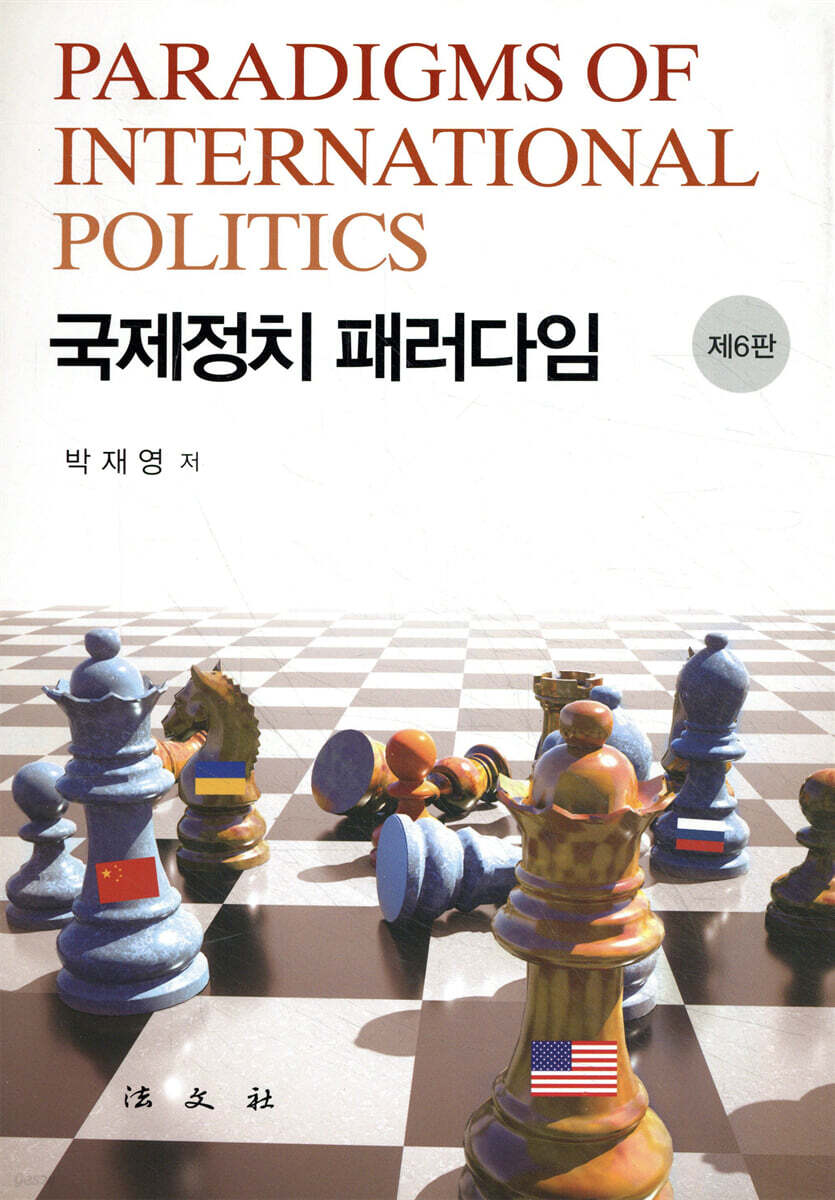
Various international political theories are fiercely debating why the ongoing war in Ukraine occurred.
On the other hand, as China, a rising new power, accumulates power comparable to that of the existing hegemon (dominant power), the United States, and changes occur in the distribution of power in the international system, there is a heated debate among various international political theories regarding whether this change will result in a war for hegemony between the two countries.
The greater significance and justification of this revised edition lies in introducing various theoretical perspectives on the causes of the Ukrainian war, as well as on the possibility of a hegemonic war between the United States and China.
On the other hand, as China, a rising new power, accumulates power comparable to that of the existing hegemon (dominant power), the United States, and changes occur in the distribution of power in the international system, there is a heated debate among various international political theories regarding whether this change will result in a war for hegemony between the two countries.
The greater significance and justification of this revised edition lies in introducing various theoretical perspectives on the causes of the Ukrainian war, as well as on the possibility of a hegemonic war between the United States and China.
- You can preview some of the book's contents.
Preview
index
Chapter 1: The Ukrainian War and International Political Theory
Section 1 Introduction
Section 2 Diagnosis of the Causes of War by Level of Analysis
Section 3 Conclusion
Chapter 2 Idealism: 1920s and 1930s
Section 1: Background of the Emergence of Idealism
Section 2: Assumptions and Core Contents of Idealism
Section 3 Idealism and the Collective Security System
Section 4 Criticism of Idealism
Section 5: The Applicability of Post-Cold War Idealism
Chapter 3: The Realism Paradigm
Section 1 Characteristics of the Realist Paradigm
Section 2 Traditional Realist Theory: 1940s–1960s
Section 3: Behavioral Realism: 1950s and 1960s
Section 4 Neorealism Theory: The 1980s
Section 5 Neoclassical Realism Theory
Section 6: Designation of the school
Section 7 Key Concepts of Realist Theory
Section 8: Realist Perspectives on Key Issues
Chapter 4 The Liberal Paradigm
Section 1 Characteristics of the Liberal Paradigm
Section 2 Foreign Policy Decision Theory
Section 3 Unified Theory
Section 4: Linkage Politics Theory 489
Section 5: Transnationalism and Transgovernmentalism
Section 6 Interdependence
Section 7: Global Society or World Society Theory
Section 8 Issue Paradigm
Section 9: International Society Theory
Section 10: Neoliberal Institutionalism Theory
Section 11: Theories of International Politics under the Liberal Paradigm of the Post-Cold War Era
Section 12: The Liberal Theory's Perspective on Major Issues
Chapter 5: The Structuralism Paradigm
Section 1 General Characteristics and Background
Section 2 Theoretical Assumptions
Section 3: Structuralist Theory's View of International Politics
Section 4 Differences from Traditional Marxism
Section 5 Various structuralist theories
Section 6: Solutions to the Problem of Inequality Between Countries in Other Paradigm Theories
Section 7 Criticism of Structuralist Theory
Section 8: Structuralist Perspectives on Key Issues
Chapter 6 The Reflective Paradigm
Section 1: Background of the Emergence of Reflectionism
Section 2 Reflective Theories
Section 3: Evaluation of Reflectionism
Section 1 Introduction
Section 2 Diagnosis of the Causes of War by Level of Analysis
Section 3 Conclusion
Chapter 2 Idealism: 1920s and 1930s
Section 1: Background of the Emergence of Idealism
Section 2: Assumptions and Core Contents of Idealism
Section 3 Idealism and the Collective Security System
Section 4 Criticism of Idealism
Section 5: The Applicability of Post-Cold War Idealism
Chapter 3: The Realism Paradigm
Section 1 Characteristics of the Realist Paradigm
Section 2 Traditional Realist Theory: 1940s–1960s
Section 3: Behavioral Realism: 1950s and 1960s
Section 4 Neorealism Theory: The 1980s
Section 5 Neoclassical Realism Theory
Section 6: Designation of the school
Section 7 Key Concepts of Realist Theory
Section 8: Realist Perspectives on Key Issues
Chapter 4 The Liberal Paradigm
Section 1 Characteristics of the Liberal Paradigm
Section 2 Foreign Policy Decision Theory
Section 3 Unified Theory
Section 4: Linkage Politics Theory 489
Section 5: Transnationalism and Transgovernmentalism
Section 6 Interdependence
Section 7: Global Society or World Society Theory
Section 8 Issue Paradigm
Section 9: International Society Theory
Section 10: Neoliberal Institutionalism Theory
Section 11: Theories of International Politics under the Liberal Paradigm of the Post-Cold War Era
Section 12: The Liberal Theory's Perspective on Major Issues
Chapter 5: The Structuralism Paradigm
Section 1 General Characteristics and Background
Section 2 Theoretical Assumptions
Section 3: Structuralist Theory's View of International Politics
Section 4 Differences from Traditional Marxism
Section 5 Various structuralist theories
Section 6: Solutions to the Problem of Inequality Between Countries in Other Paradigm Theories
Section 7 Criticism of Structuralist Theory
Section 8: Structuralist Perspectives on Key Issues
Chapter 6 The Reflective Paradigm
Section 1: Background of the Emergence of Reflectionism
Section 2 Reflective Theories
Section 3: Evaluation of Reflectionism
Publisher's Review
preface
These days, the world is in turmoil due to various conflicts.
According to a map of international conflicts by the Center for Prevention Action (CPA), part of the Council on Foreign Relations (CFR), a U.S. think tank specializing in foreign affairs, there are currently 28 ongoing conflicts around the world, although their intensity varies.
Among these conflict zones, one that is attracting global attention is the Middle East.
As the conflict between Palestine and Israel has drawn the attention of Lebanon, Yemen, and Iran, people around the world are watching the conflict with concern that it could spread throughout the Middle East.
Even more concerning than the conflict in the Middle East is the Russo-Ukrainian War (simply called the Ukrainian War), provoked by Russia, which began with the forcible annexation of the Crimean Peninsula in 2014 and launched a full-scale attack in 2022.
This war has been going on for two years and six months, killing countless people, destroying facilities, and creating a large number of refugees and displaced people. It has also raised concerns about nuclear war and the possibility of a third world war, keeping people around the world on edge.
Although not a military war, the intensifying competition and confrontation between the United States and China is raising tensions in the Indo-Pacific region.
While diplomatic efforts are being made between the two countries to manage these tensions, the fierce competition in the economic and technological sectors, as well as the deepening military tensions between the two countries over the South China Sea and Taiwan, raise concerns that this could soon escalate into armed conflict.
Reflecting this contemporary context, various international political theories are engaged in a fierce debate over why the ongoing Ukrainian war broke out.
On the other hand, as China, a rising new power, accumulates power comparable to that of the existing hegemon (dominant power), the United States, and changes occur in the distribution of power in the international system, there is a heated debate among various international political theories regarding whether this change will result in a war for hegemony between the two countries.
There is a difference between the former case, which is a post-facto explanation of a war that has already occurred, and the latter case, which is a prior prediction of whether a war for hegemony will break out.
However, as with all theories, the purpose of a theory is to explain the causal relationship of a specific phenomenon and to predict the future. Therefore, for anyone interested in international politics, it is not without significance to examine how the theory functions as a means of ex post explanation and ex ante prediction.
The greater significance and justification of this revised edition lies in introducing various theoretical perspectives on the causes of the Ukrainian war, as well as on the possibility of a hegemonic war between the United States and China.
These days, the world is in turmoil due to various conflicts.
According to a map of international conflicts by the Center for Prevention Action (CPA), part of the Council on Foreign Relations (CFR), a U.S. think tank specializing in foreign affairs, there are currently 28 ongoing conflicts around the world, although their intensity varies.
Among these conflict zones, one that is attracting global attention is the Middle East.
As the conflict between Palestine and Israel has drawn the attention of Lebanon, Yemen, and Iran, people around the world are watching the conflict with concern that it could spread throughout the Middle East.
Even more concerning than the conflict in the Middle East is the Russo-Ukrainian War (simply called the Ukrainian War), provoked by Russia, which began with the forcible annexation of the Crimean Peninsula in 2014 and launched a full-scale attack in 2022.
This war has been going on for two years and six months, killing countless people, destroying facilities, and creating a large number of refugees and displaced people. It has also raised concerns about nuclear war and the possibility of a third world war, keeping people around the world on edge.
Although not a military war, the intensifying competition and confrontation between the United States and China is raising tensions in the Indo-Pacific region.
While diplomatic efforts are being made between the two countries to manage these tensions, the fierce competition in the economic and technological sectors, as well as the deepening military tensions between the two countries over the South China Sea and Taiwan, raise concerns that this could soon escalate into armed conflict.
Reflecting this contemporary context, various international political theories are engaged in a fierce debate over why the ongoing Ukrainian war broke out.
On the other hand, as China, a rising new power, accumulates power comparable to that of the existing hegemon (dominant power), the United States, and changes occur in the distribution of power in the international system, there is a heated debate among various international political theories regarding whether this change will result in a war for hegemony between the two countries.
There is a difference between the former case, which is a post-facto explanation of a war that has already occurred, and the latter case, which is a prior prediction of whether a war for hegemony will break out.
However, as with all theories, the purpose of a theory is to explain the causal relationship of a specific phenomenon and to predict the future. Therefore, for anyone interested in international politics, it is not without significance to examine how the theory functions as a means of ex post explanation and ex ante prediction.
The greater significance and justification of this revised edition lies in introducing various theoretical perspectives on the causes of the Ukrainian war, as well as on the possibility of a hegemonic war between the United States and China.
GOODS SPECIFICS
- Date of issue: September 25, 2024
- Format: Hardcover book binding method guide
- Page count, weight, size: 928 pages | 176*248*40mm
- ISBN13: 9788918915531
- ISBN10: 8918915535
You may also like
카테고리
korean


korean

![ELLE 엘르 스페셜 에디션 A형 : 12월 [2025]](http://librairie.coreenne.fr/cdn/shop/files/b8e27a3de6c9538896439686c6b0e8fb.jpg?v=1766436872&width=3840)


