

Adolescent rationality and development
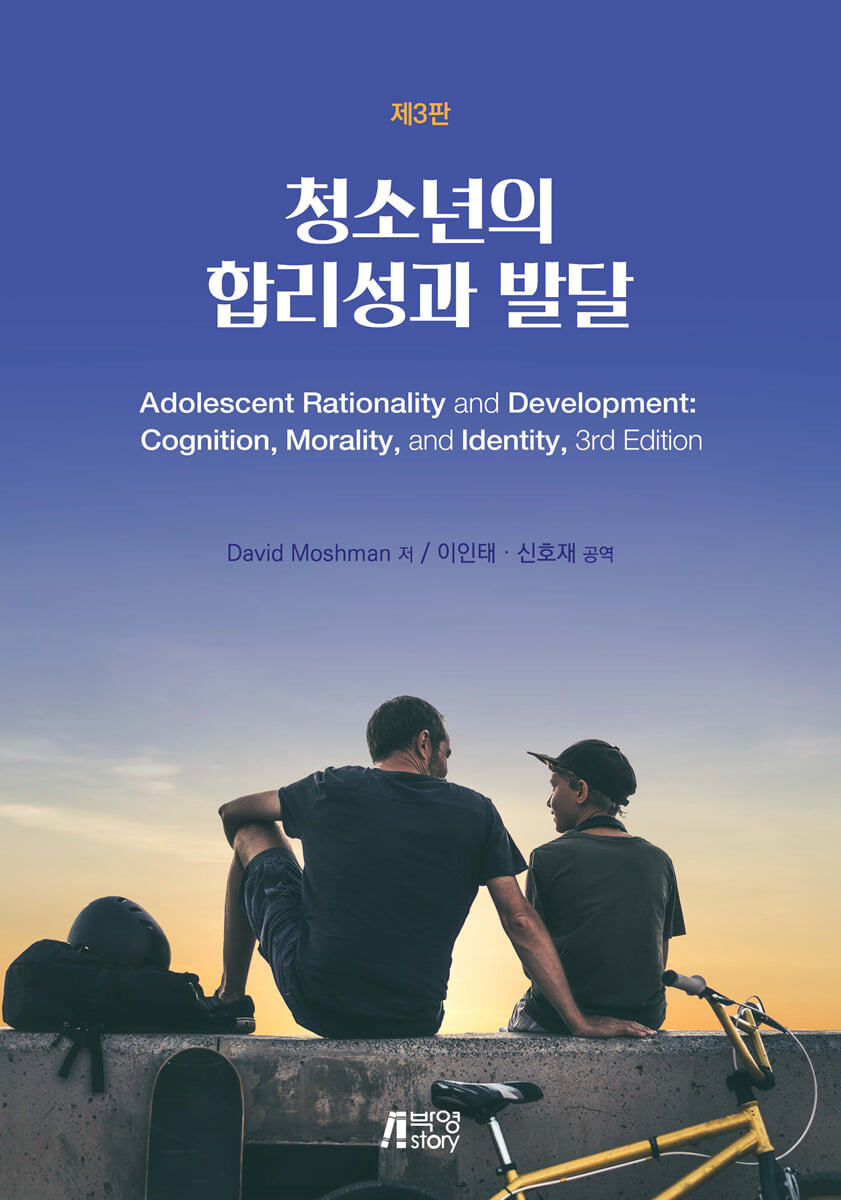 |
Description
Book Introduction
"Rationality and Development of Adolescents" is a book written with graduate students majoring in educational psychology or morality and character development in mind.
Therefore, it may be somewhat difficult for undergraduate students majoring in moral and ethical education at teacher training colleges or teachers' colleges to read.
Nonetheless, this book is a must-read for both teachers and students in education colleges, as it provides an in-depth look at the developmental differences between children and adolescents, and the process of development from lower elementary school students to upper elementary school students and middle school students.
His perspective provides insight into establishing a consistent, systematic, and rational educational plan for moral education in our country at the elementary and secondary levels.
Therefore, it may be somewhat difficult for undergraduate students majoring in moral and ethical education at teacher training colleges or teachers' colleges to read.
Nonetheless, this book is a must-read for both teachers and students in education colleges, as it provides an in-depth look at the developmental differences between children and adolescents, and the process of development from lower elementary school students to upper elementary school students and middle school students.
His perspective provides insight into establishing a consistent, systematic, and rational educational plan for moral education in our country at the elementary and secondary levels.
- You can preview some of the book's contents.
Preview
index
PART 1 Cognitive Development
Chapter 1: Piaget's Theory of Formal Operations 22
Chapter 2: Reasoning, Thinking, and Inference 44
Chapter 3: Metacognition and Epistemological Cognition 62
Chapter 4: The Composition of Rationality 76
PART 2 Moral Development
Chapter 5: Kohlberg's Theory of Moral Development 96
Chapter 6: Justice, Consideration, and Virtue 111
Chapter 7: Adopting Principles and Perspectives 125
Chapter 8: The Composition of Morality 141
PART 3: Formation of Identity
Chapter 9: Erikson's Identity Formation Theory 158
Chapter 10: Identity as a Theory of the Self 174
Chapter 11: Personal Identity and Social Identity 188
Chapter 12: The Construction of Identity 204
PART 4 Development after Childhood
Chapter 13: Rational Moral Identity 222
Chapter 14: Pluralistic Rational Constructivism 238
Chapter 15: Rationality, Freedom, and Education 252
Chapter 16: Adolescents as Young Adults 265
Glossary 283
Chapter 1: Piaget's Theory of Formal Operations 22
Chapter 2: Reasoning, Thinking, and Inference 44
Chapter 3: Metacognition and Epistemological Cognition 62
Chapter 4: The Composition of Rationality 76
PART 2 Moral Development
Chapter 5: Kohlberg's Theory of Moral Development 96
Chapter 6: Justice, Consideration, and Virtue 111
Chapter 7: Adopting Principles and Perspectives 125
Chapter 8: The Composition of Morality 141
PART 3: Formation of Identity
Chapter 9: Erikson's Identity Formation Theory 158
Chapter 10: Identity as a Theory of the Self 174
Chapter 11: Personal Identity and Social Identity 188
Chapter 12: The Construction of Identity 204
PART 4 Development after Childhood
Chapter 13: Rational Moral Identity 222
Chapter 14: Pluralistic Rational Constructivism 238
Chapter 15: Rationality, Freedom, and Education 252
Chapter 16: Adolescents as Young Adults 265
Glossary 283
Publisher's Review
Translator's Preface
If we were to pick out the key words that have been central to recent domestic and international discourses on morality and moral education, they would undoubtedly be emotions, intuition, and the 'innate' and 'innate' foundations that link these (which have drawn academic interest from a number of scholars, including Jonathan Haidt).
And within this trend, discussions of the cognitive aspects of morality, that is, attempts to emphasize moral judgment and reasoning, seem to be regarded as a rather old topic and a narrow discussion of morality (despite the fact that many scholars agree that it is still a very important topic).
However, the translators' basic opinion is that the emphasis on emotions, intuition, and moral foundations in explaining morality says little about human 'moral development', especially 'moral development' in the aspect of moral education.
That is, in the translators' view, an approach that focuses on innate and innate aspects provides a more comprehensive perspective for explaining our moral functioning, but it does not seem to say anything specifically about what shows the differences between children and adolescents or between children and adults in terms of development, that is, what is subject to qualitative change in the process of transitioning from childhood to adolescence or adulthood.
If we cannot say exactly what develops in the development of morality, it is also difficult to say what should be developed through moral education.
A comprehensive approach does not always lead to positive results.
Moral education still needs to be addressed in a focused manner.
This is especially true in societies like Korean society, where moral education is systematically taught as a subject.
Based on this problem awareness, the translators were searching for views and perspectives that could more appropriately explain the development of children and adolescents from the perspective of moral education, and they came across David Mosiman's book, Rationality and Development in Adolescence: Cognition, Morality, and Identity.
As the title of this book suggests, Mosiman argues that to fully explain human development, we must consider cognitive development, moral development, and identity formation, and that "rationality" is a key concept that permeates all three developmental aspects.
And to justify this point of view, he systematically argues why rationality should be considered a target of development in cognitive development, moral development, and identity formation by deeply analyzing the theories of the great developmental theorists Jean Piaget, Lawrence Kohlberg, and Erik Erikson.
As Mosiman states in the preface, this book was written with graduate students majoring in educational psychology or moral and character development in mind.
Therefore, it may be somewhat difficult for undergraduate students majoring in moral and ethical education at teacher training colleges or teachers' colleges to read.
Nonetheless, this book is a must-read for both teachers and students in education colleges, as it provides an in-depth look at the developmental differences between children and adolescents, and the process of development from lower elementary school students to upper elementary school students and middle school students.
His perspective provides insight into establishing a consistent, systematic, and rational educational plan for moral education in our country at the elementary and secondary levels.
Although we have done our best to preserve the scholarly value of this book, the translators cannot help but acknowledge the possibility of mistranslations due to poor linguistic skills and lack of background knowledge.
Any inaccurate explanations or mistranslations are entirely the responsibility of the translators.
I would like to express my gratitude to Cho Han-bin, Heo Eun-seon, Jang Han-bin, and Ahn Yu-jin, graduate students in the Department of Ethics Education at Kongju National University, and Jang Yun-ji, graduate student in the Graduate School of Education, who read this book several times and checked for typos to improve its readability.
Lastly, I would like to express my gratitude through the translator's preface to the many staff members of Park Young-sa and to Deputy Director Jo Jeong-bin for their consideration in bringing this book to publication.
Lee In-tae and Shin Ho-jae in Gongju
If we were to pick out the key words that have been central to recent domestic and international discourses on morality and moral education, they would undoubtedly be emotions, intuition, and the 'innate' and 'innate' foundations that link these (which have drawn academic interest from a number of scholars, including Jonathan Haidt).
And within this trend, discussions of the cognitive aspects of morality, that is, attempts to emphasize moral judgment and reasoning, seem to be regarded as a rather old topic and a narrow discussion of morality (despite the fact that many scholars agree that it is still a very important topic).
However, the translators' basic opinion is that the emphasis on emotions, intuition, and moral foundations in explaining morality says little about human 'moral development', especially 'moral development' in the aspect of moral education.
That is, in the translators' view, an approach that focuses on innate and innate aspects provides a more comprehensive perspective for explaining our moral functioning, but it does not seem to say anything specifically about what shows the differences between children and adolescents or between children and adults in terms of development, that is, what is subject to qualitative change in the process of transitioning from childhood to adolescence or adulthood.
If we cannot say exactly what develops in the development of morality, it is also difficult to say what should be developed through moral education.
A comprehensive approach does not always lead to positive results.
Moral education still needs to be addressed in a focused manner.
This is especially true in societies like Korean society, where moral education is systematically taught as a subject.
Based on this problem awareness, the translators were searching for views and perspectives that could more appropriately explain the development of children and adolescents from the perspective of moral education, and they came across David Mosiman's book, Rationality and Development in Adolescence: Cognition, Morality, and Identity.
As the title of this book suggests, Mosiman argues that to fully explain human development, we must consider cognitive development, moral development, and identity formation, and that "rationality" is a key concept that permeates all three developmental aspects.
And to justify this point of view, he systematically argues why rationality should be considered a target of development in cognitive development, moral development, and identity formation by deeply analyzing the theories of the great developmental theorists Jean Piaget, Lawrence Kohlberg, and Erik Erikson.
As Mosiman states in the preface, this book was written with graduate students majoring in educational psychology or moral and character development in mind.
Therefore, it may be somewhat difficult for undergraduate students majoring in moral and ethical education at teacher training colleges or teachers' colleges to read.
Nonetheless, this book is a must-read for both teachers and students in education colleges, as it provides an in-depth look at the developmental differences between children and adolescents, and the process of development from lower elementary school students to upper elementary school students and middle school students.
His perspective provides insight into establishing a consistent, systematic, and rational educational plan for moral education in our country at the elementary and secondary levels.
Although we have done our best to preserve the scholarly value of this book, the translators cannot help but acknowledge the possibility of mistranslations due to poor linguistic skills and lack of background knowledge.
Any inaccurate explanations or mistranslations are entirely the responsibility of the translators.
I would like to express my gratitude to Cho Han-bin, Heo Eun-seon, Jang Han-bin, and Ahn Yu-jin, graduate students in the Department of Ethics Education at Kongju National University, and Jang Yun-ji, graduate student in the Graduate School of Education, who read this book several times and checked for typos to improve its readability.
Lastly, I would like to express my gratitude through the translator's preface to the many staff members of Park Young-sa and to Deputy Director Jo Jeong-bin for their consideration in bringing this book to publication.
Lee In-tae and Shin Ho-jae in Gongju
GOODS SPECIFICS
- Date of issue: July 26, 2024
- Page count, weight, size: 296 pages | 176*248*20mm
- ISBN13: 9791165199982
You may also like
카테고리
korean


korean

![GQ KOREA Mark (Monthly): December [2025]](http://librairie.coreenne.fr/cdn/shop/files/8ef265dbbfbf186523ed75ba7319009d.jpg?v=1765340328&width=3840)


