

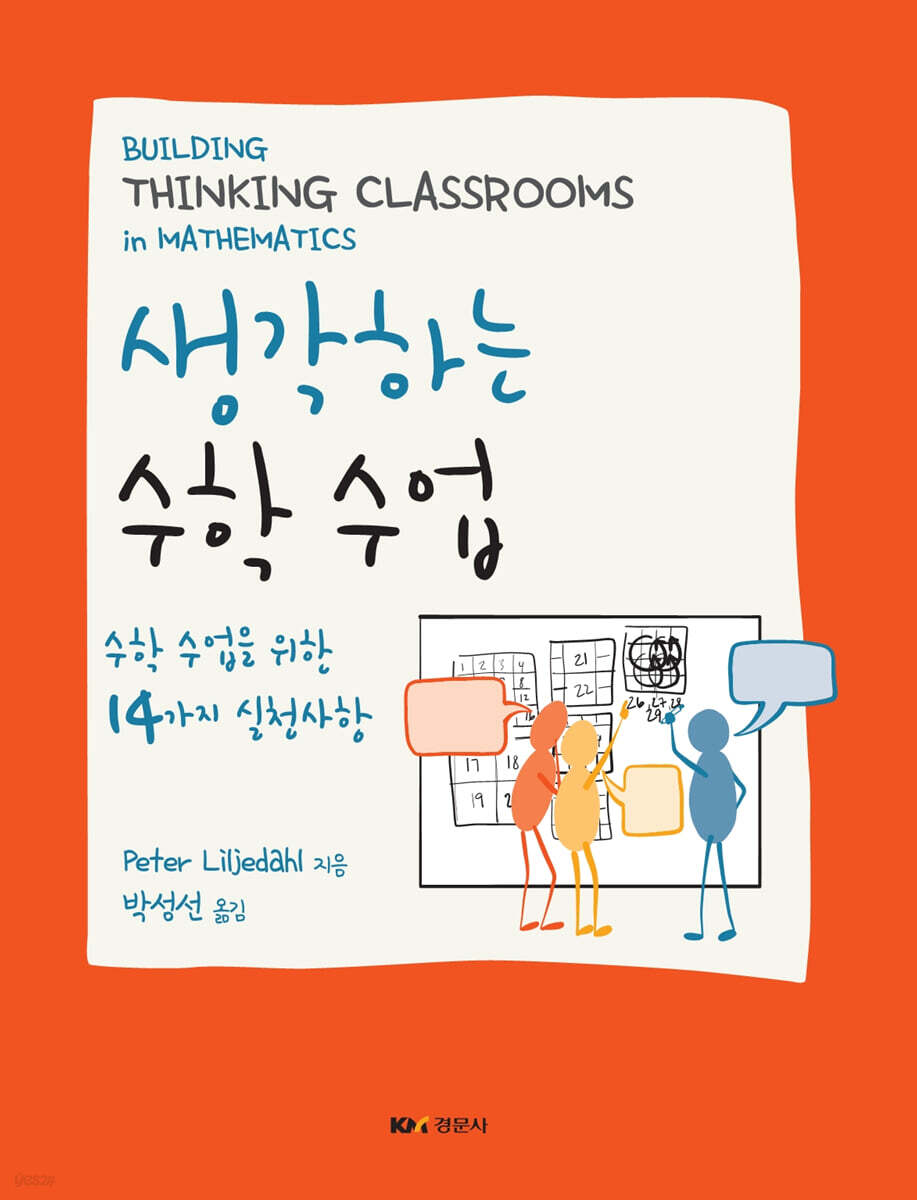
Thinking Math Class
 |
Description
Book Introduction
Professor Peter Liljedahl has published a practical guide based on 15 years of research.
This book presents 14 practical steps to create the optimal environment for deep, thoughtful mathematics learning.
By comprehensively implementing unique, research-based practices, we expect to create optimal conditions for learner-centered, deep mathematical thinking and learning, transforming mathematics classrooms into something completely different from previous classrooms.
This book presents 14 practical steps to create the optimal environment for deep, thoughtful mathematics learning.
By comprehensively implementing unique, research-based practices, we expect to create optimal conditions for learner-centered, deep mathematical thinking and learning, transforming mathematics classrooms into something completely different from previous classrooms.
- You can preview some of the book's contents.
Preview
index
Preface III
Recommendation V
Acknowledgments IX
Recommendations for this book XI
Introduction 1
Chapter 1: What Assignments Are Used in Thinking Classes? 21
Issue 22
Problem 27
Towards a Thinking Class 29
FAQ 34
Summary 40
Question to Think About 40
Apply 41
Chapter 2: How to Form Collaborative Small Groups in a Thinking Class? 43
Issue 44
Problem 45
Towards a Thinking Class 48
Actively participate in collaborative activities 51
Removing Social Barriers 52
Increased movement of knowledge 53
Increased enthusiasm for learning mathematics 54
Reduce social stress 54
FAQ 55
Summary 61
Question to Think About 62
Apply 62
Chapter 3: How should the space for student activities in a thinking class be organized? 63
Issue 64
Problem 64
Towards a Thinking Class 65
FAQ 71
Summary 74
Question to Think About 74
Apply 75
Chapter 4: How Should Furniture Be Arranged in a Thinking Class? 77
Issue 78
Problem 79
Towards a Thinking Class 79
FAQ 84
Summary 86
Question to Think About 86
Apply 87
Chapter 5: How to Answer Students' Questions in a Thinking Class? 89
Issue 90
Problem 91
Proximity Questions 91
Stop-Thinking Questions 94
Keep-Thinking Questions 94
Towards a Thinking Class 94
FAQ 99
Summary 103
Question to Think About 103
Apply 104
Chapter 6: When, Where, and How Should Assignments Be Presented in a Thinking Class? 107
Issue 108
Problem 108
Towards a Thinking Class 109
When will the assignment be presented? 110
Where should I present the assignment? 111
How to Present a Task? 113
FAQ 119
Summary 124
Question to Think About 124
Apply 125
Chapter 7: What Should Homework Be Like in a Thinking Class? 127
Issue 128
Problem 129
129 If you don't do your homework
130 cases of lying about doing homework
131 If you get help with your homework
132 If you do your homework alone
Towards a Thinking Class 134
FAQ 136
Summary 139
Question to Think About 140
Apply 140
Chapter 8: How Should Student Autonomy Be Promoted in Thinking Classes? 141
Issue 142
Problem 143
Towards a Thinking Class 143
FAQ 148
Summary 151
Question to Think About 151
Apply 152
Chapter 9: How to Use Hints and Advanced Assignments in Thinking Classes? 155
Issue 156
Problem 156
Towards a Thinking Class 157
Maintaining immersion by presenting challenging tasks 159
Maintain immersion by providing hints 167
Maintaining Engagement by Changing the Way You Engage 169
FAQ 171
Summary 177
Question to Think About 178
Apply 179
Chapter 10: How to Synthesize and Organize Lessons in a Thinking Class? 181
Issue 182
Problem 183
Towards a Thinking Class 183
FAQ 191
Summary 195
Question to Think About 195
Apply 196
Chapter 11: How to Get Students to Take Notes in a Thinking Class? 199
Issue 200
Problem 201
Towards a Thinking Class 206
FAQ 214
Summary 218
Question to Think About 219
Apply 219
Chapter 12: How to Assess in a Thinking Class? 221
Issue 222
Problem 223
Towards a Thinking Class 224
Existing evaluation criteria 224
Creating a New Evaluation Criteria 231
Utilizing the New Evaluation Criteria 233
FAQ 235
Summary 239
Question to Think About 239
Apply 240
Chapter 13: How to Conduct Formative Assessment in a Thinking Classroom? 243
Issue 244
Problem 245
Towards a Thinking Class 246
FAQ 255
Summary 262
Question to Think About 263
Apply 264
Chapter 14: How to Handle Grading in a Thinking Class? 265
Issue 266
Problem 267
Score-collecting paradigm 267
Data-Gathering Paradigm 271
Towards a Thinking Class 272
Grade Calculation 275
FAQ 280
Summary 291
Question to Think About 291
Apply 292
Chapter 15: Integrating 14 Practices for Thinking Classes 293
Study 294
Creating a Thinking Class 295
Toolbox #1 297
Toolbox #2 299
Toolbox #3 300
Toolbox #4 301
Translating collaborative learning into individual knowledge and action 302
Remaking Thinking Classes 307
Toolbox #1 309
Toolbox #2 310
Don't look at the trees, look at the forest 311
FAQ 312
Question to Think About 314
Reference 315
Search 321
Recommendation V
Acknowledgments IX
Recommendations for this book XI
Introduction 1
Chapter 1: What Assignments Are Used in Thinking Classes? 21
Issue 22
Problem 27
Towards a Thinking Class 29
FAQ 34
Summary 40
Question to Think About 40
Apply 41
Chapter 2: How to Form Collaborative Small Groups in a Thinking Class? 43
Issue 44
Problem 45
Towards a Thinking Class 48
Actively participate in collaborative activities 51
Removing Social Barriers 52
Increased movement of knowledge 53
Increased enthusiasm for learning mathematics 54
Reduce social stress 54
FAQ 55
Summary 61
Question to Think About 62
Apply 62
Chapter 3: How should the space for student activities in a thinking class be organized? 63
Issue 64
Problem 64
Towards a Thinking Class 65
FAQ 71
Summary 74
Question to Think About 74
Apply 75
Chapter 4: How Should Furniture Be Arranged in a Thinking Class? 77
Issue 78
Problem 79
Towards a Thinking Class 79
FAQ 84
Summary 86
Question to Think About 86
Apply 87
Chapter 5: How to Answer Students' Questions in a Thinking Class? 89
Issue 90
Problem 91
Proximity Questions 91
Stop-Thinking Questions 94
Keep-Thinking Questions 94
Towards a Thinking Class 94
FAQ 99
Summary 103
Question to Think About 103
Apply 104
Chapter 6: When, Where, and How Should Assignments Be Presented in a Thinking Class? 107
Issue 108
Problem 108
Towards a Thinking Class 109
When will the assignment be presented? 110
Where should I present the assignment? 111
How to Present a Task? 113
FAQ 119
Summary 124
Question to Think About 124
Apply 125
Chapter 7: What Should Homework Be Like in a Thinking Class? 127
Issue 128
Problem 129
129 If you don't do your homework
130 cases of lying about doing homework
131 If you get help with your homework
132 If you do your homework alone
Towards a Thinking Class 134
FAQ 136
Summary 139
Question to Think About 140
Apply 140
Chapter 8: How Should Student Autonomy Be Promoted in Thinking Classes? 141
Issue 142
Problem 143
Towards a Thinking Class 143
FAQ 148
Summary 151
Question to Think About 151
Apply 152
Chapter 9: How to Use Hints and Advanced Assignments in Thinking Classes? 155
Issue 156
Problem 156
Towards a Thinking Class 157
Maintaining immersion by presenting challenging tasks 159
Maintain immersion by providing hints 167
Maintaining Engagement by Changing the Way You Engage 169
FAQ 171
Summary 177
Question to Think About 178
Apply 179
Chapter 10: How to Synthesize and Organize Lessons in a Thinking Class? 181
Issue 182
Problem 183
Towards a Thinking Class 183
FAQ 191
Summary 195
Question to Think About 195
Apply 196
Chapter 11: How to Get Students to Take Notes in a Thinking Class? 199
Issue 200
Problem 201
Towards a Thinking Class 206
FAQ 214
Summary 218
Question to Think About 219
Apply 219
Chapter 12: How to Assess in a Thinking Class? 221
Issue 222
Problem 223
Towards a Thinking Class 224
Existing evaluation criteria 224
Creating a New Evaluation Criteria 231
Utilizing the New Evaluation Criteria 233
FAQ 235
Summary 239
Question to Think About 239
Apply 240
Chapter 13: How to Conduct Formative Assessment in a Thinking Classroom? 243
Issue 244
Problem 245
Towards a Thinking Class 246
FAQ 255
Summary 262
Question to Think About 263
Apply 264
Chapter 14: How to Handle Grading in a Thinking Class? 265
Issue 266
Problem 267
Score-collecting paradigm 267
Data-Gathering Paradigm 271
Towards a Thinking Class 272
Grade Calculation 275
FAQ 280
Summary 291
Question to Think About 291
Apply 292
Chapter 15: Integrating 14 Practices for Thinking Classes 293
Study 294
Creating a Thinking Class 295
Toolbox #1 297
Toolbox #2 299
Toolbox #3 300
Toolbox #4 301
Translating collaborative learning into individual knowledge and action 302
Remaking Thinking Classes 307
Toolbox #1 309
Toolbox #2 310
Don't look at the trees, look at the forest 311
FAQ 312
Question to Think About 314
Reference 315
Search 321
GOODS SPECIFICS
- Date of issue: March 11, 2024
- Page count, weight, size: 352 pages | 188*257*30mm
- ISBN13: 9791160736816
- ISBN10: 1160736812
You may also like
카테고리
korean


korean

![GQ KOREA Mark (Monthly): December [2025]](http://librairie.coreenne.fr/cdn/shop/files/8ef265dbbfbf186523ed75ba7319009d.jpg?v=1765340328&width=3840)


