

Who is Jesus to us now?
 |
Description
Book Introduction
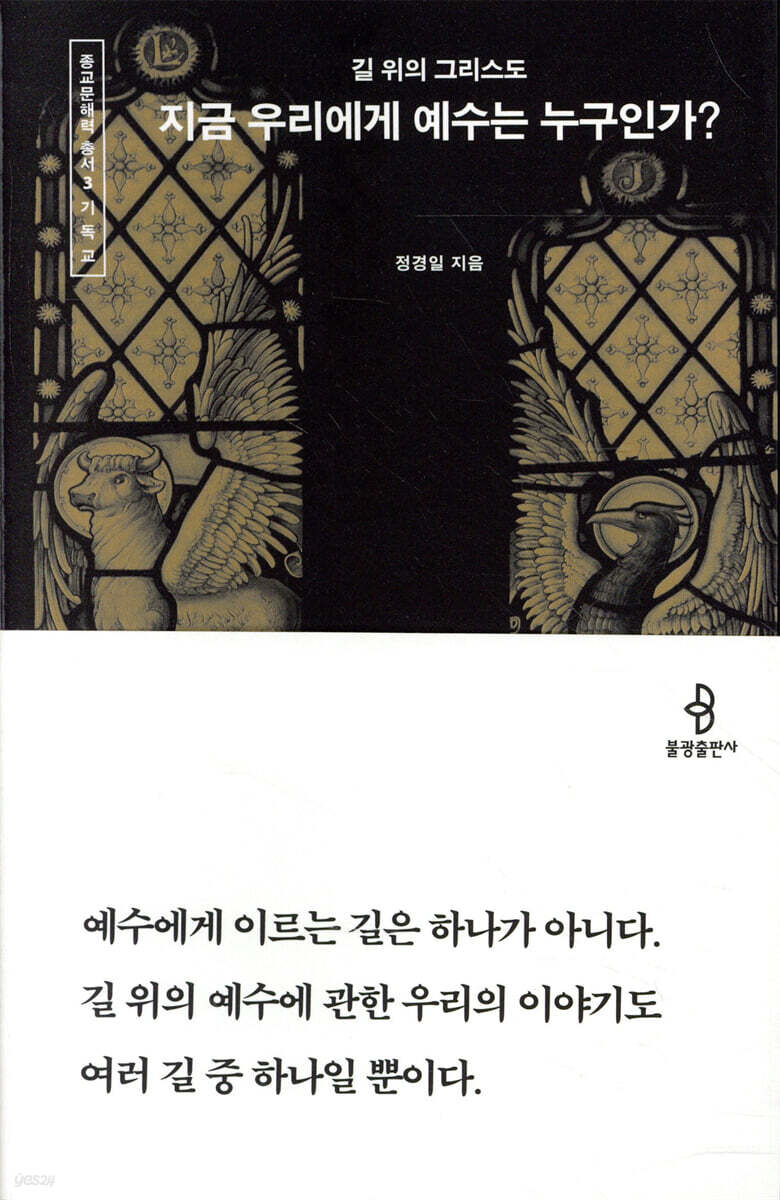
The most beloved in the history of human intelligence Core messages of world religions! The third book in the Religious Literacy Series Who is Jesus to us now? Is Christmas Jesus' birthday? Is Jesus a blond white man? Did the resurrection actually happen? A profound confession of 'the human Jesus', not 'Jesus alone'! This book is a portrait of Jesus for all those who mistake Jesus for a "blonde white guy." It is also a Christmas invitation for all who believe that Christmas is the true birthday of Jesus. And here is another story of Jesus' resurrection for all those who find it hard to believe. So, “Who is Jesus to us now?” is a question and an answer to all those who think of Jesus only as the “Son of God.” "Who is Jesus to Us Now?" is the third book in the "Religious Literacy Series," which cultivates religious sensitivity by viewing religion from the perspective of "understanding," rather than "faith." The author poses several questions to the name 'Jesus', who is more familiar than anyone else. Was he truly the blond, white man we know? Did his birthday actually fall on Christmas? Did he truly rise from the dead? The author presents persuasive answers to these questions, concise and clear, drawing on a multitude of perspectives, including history, culture, and faith. The book reinterprets Jesus within the political, religious, and cultural context of first-century Palestine, where he lived, and summons him to us as a spiritual teacher in the 21st century. It is about reviving the character who went on a spiritual adventure to liberate the 'Emperor God' who had been confined within the walls of the Jewish tradition and experience him as the 'Father' of all people. It vividly portrays why Jesus, who was not welcomed in the Jewish tradition and the Roman Empire, was welcomed as the Messiah of the poor and the marginalized. The love of Jesus, as described by the author based on the gospels of the four communities of Matthew, Mark, Luke, and John, is so powerful that it even creates the illusion that we have become people who remain in Jesus' love. This book, which tells the profound confession of the 'human Jesus', slowly but surely removes any resistance to Christianity. It also provides direction for our current concerns about the climate crisis, care democracy, and women's rights from the perspective of the 'human Jesus.' And then he comes back to us with one question: “Who is Jesus to us now?” The answer to this question can be found in “Who is Jesus to us now?” |
- You can preview some of the book's contents.
Preview
index
Publisher's Note: Now is Religious Literacy
Prologue: Another Story of Jesus
Chapter 1: The Faces of Jesus Jesus in the Bible
Jesus in History and Culture
“Let’s draw the face of Jesus as it is.”
Chapter 2 Jesus of Galilee
Galilee, the land of the Jewish Jesus and the cross
An ordinary name, an extraordinary birth
The Love of Joseph, the 'Father Who Wasn't a Father'
The Little Ones' First Christmas
Temptations and Struggles in the Desert
The Last Temptation
John the Humble Prophet
Jesus, a man who can make mistakes
Chapter 3: Subversive Wisdom
The History of Understanding God
“Jesus’ father was his mother!”
Beyond the walls of the temple
Happiness of the unfortunate
The 'Impossible Possibility' of Loving an Enemy
Mammon and God: You Cannot Serve Two Masters
Sabbath for man
COVID-19 and the 'Sunday Worship Crisis'
Chapter 4: The Kingdom of God: God's Dream
The World: A Place of Salvation
The Kingdom of God here and now
Unconditional hospitality and alternative families
Imagining a Care Democracy
Jesus and the female disciples
Erasing Women from the Church
A dream that lasted
Chapter 5: The Social Spirituality of Jesus
The Age of Exhaustion
In the world, beyond the world
A time of solitude and community
Identification: Society and Self
Jesus' Prayer
'Physiognomy in Action'
Mystery: Love in the Dark
Chapter 6: Love Leading to the Cross: Suffering and Passion
The 'Stop' of the Temple
Day of Debate
The Agony of Gethsemane
“Love goes to the cross”
Holy Saturday: A Time of Trauma and Grace
The Cross and Resurrection: Events and Symbols
Epilogue_Back on the Road: Christus Viator
(Christus Viator)
Prologue: Another Story of Jesus
Chapter 1: The Faces of Jesus Jesus in the Bible
Jesus in History and Culture
“Let’s draw the face of Jesus as it is.”
Chapter 2 Jesus of Galilee
Galilee, the land of the Jewish Jesus and the cross
An ordinary name, an extraordinary birth
The Love of Joseph, the 'Father Who Wasn't a Father'
The Little Ones' First Christmas
Temptations and Struggles in the Desert
The Last Temptation
John the Humble Prophet
Jesus, a man who can make mistakes
Chapter 3: Subversive Wisdom
The History of Understanding God
“Jesus’ father was his mother!”
Beyond the walls of the temple
Happiness of the unfortunate
The 'Impossible Possibility' of Loving an Enemy
Mammon and God: You Cannot Serve Two Masters
Sabbath for man
COVID-19 and the 'Sunday Worship Crisis'
Chapter 4: The Kingdom of God: God's Dream
The World: A Place of Salvation
The Kingdom of God here and now
Unconditional hospitality and alternative families
Imagining a Care Democracy
Jesus and the female disciples
Erasing Women from the Church
A dream that lasted
Chapter 5: The Social Spirituality of Jesus
The Age of Exhaustion
In the world, beyond the world
A time of solitude and community
Identification: Society and Self
Jesus' Prayer
'Physiognomy in Action'
Mystery: Love in the Dark
Chapter 6: Love Leading to the Cross: Suffering and Passion
The 'Stop' of the Temple
Day of Debate
The Agony of Gethsemane
“Love goes to the cross”
Holy Saturday: A Time of Trauma and Grace
The Cross and Resurrection: Events and Symbols
Epilogue_Back on the Road: Christus Viator
(Christus Viator)
Detailed image

Into the book
This is probably the face of Jesus most familiar to many, whether Christians or non-Christians.
Being familiar means that our typical image of Jesus has been 'Westernized' from the beginning.
Because the ‘white male son Jesus’ of the ‘white male father God’ was the image of Jesus that white Christians took for granted and imagined.
But was the actual historical Jesus white?
--- p.35
Most Jews expected a powerful political messiah like King David rather than a messiah who would suffer and share in their suffering.
When Jesus entered Jerusalem, the crowds who welcomed him and cheered reminded them of King David, and even the disciples felt the same way.
In this way, the Jews of Galilee, who suffered from double and triple oppression and exploitation in the land of the cross, on the one hand longed for rebellion, and on the other hand, they expected the Messiah.
And a baby was born.
It was Jesus.
--- p.55
Today's Christmas, December 25th, is not the actual birthday of Jesus.
No one knows the date of Jesus' birthday; December 25th was originally the birthday of Sol Invictus, the sun god worshipped before the Roman Emperor Constantine legalized Christianity in 313.
Although Christmas has pagan origins, the nativity drama reenacted each Christmas season symbolically reveals who Jesus was and who those who awaited him were.
--- p.67
The later Christian church turned the intimate and benevolent 'Abba' God that Jesus experienced and testified to back into a strict and authoritarian patriarchal 'emperor' God.
Eventually, the distance between God and humans grew wider again, and God, who is expressed in religious phrases such as “Oh, holy, eternal, omnipotent…”, became more like an absolute monarch who reigns over humans rather than a loving and warm father.
--- p.99
Throughout history, the church has forgotten the voluntary poverty of Jesus and has become wealthy, and the more wealth it has enjoyed, the more corrupt it has become.
Whenever the corruption of the church reached its peak, a movement of spiritual renewal arose, remembering the poverty of Jesus and trying to live according to the teachings of the Gospel.
The monastic movement was that.
The monastic movement requires three common vows from monks.
'Poverty, purity, and obedience'.
The problem is that monasticism was not free from the power of Mammon either.
As the order struggled to become poor, people moved by the visualization of the evangelical ideal of poverty gave money and material to the monastery, and so the poor order soon became a wealthy one.
--- p.128
Among Christians, there are many who consider the 'heaven of the afterlife' to be the Kingdom of God.
For them, the goal of faith and life is to believe in Jesus while alive and, as a result, go to heaven when they die.
Even today, they shout in the streets with harsh voices, “Heaven for Jesus, hell for unbelievers.”
But Jesus actually said very little about heaven in the afterlife.
--- p.152
Jesus identifies himself with social minorities and the weak.
Through this, Jesus teaches us that welcoming the minorities and the weak around us and within us is the same as welcoming Christ.
And it teaches that the path to salvation lies not in confessing religious doctrines or practicing rituals, but in welcoming and caring for minorities and the weak. --- p.
Page 165
Jesus desired 'salvation of the world', not 'salvation from the world'.
For him, the place of salvation was not outside the world, but within the world.
His calling and practice was to transcend the world within the world, that is, to transform the world into the kingdom of God.
--- p.197
The last week Jesus spent in Jerusalem was a series of confusing and shocking events for many, even his disciples.
When we read the Gospels that record those events, we see that Jesus planned his actions in Jerusalem very meticulously.
Jesus himself was the mastermind of the Jerusalem incident, which included his death on the cross.
--- p.225~226
The more painful and confusing the times become, the more we long for the Messiah.
What is important is ‘what kind of Messiah’ we are expecting and following.
There are political messiahs like Caesar or David who hold wealth and power in their hands, religious messiahs who dazzle the masses with mysticism and fanaticism, and 'suffering messiahs' like Jesus who suffer and grieve with the poor and powerless.
--- p.229
If Jesus knew with absolute certainty that he would rise again three days after his death, what was the significance of his agony and suffering before his death on the cross? The cross is difficult to understand, but the resurrection is even more so.
So Paul Tillich says that the cross is both an event and a symbol, while the resurrection is both a symbol and an event.
When it comes to the cross, the weight is placed on the historical fact that it actually happened, and when it comes to the resurrection, the weight is placed on its religious symbolism.
Being familiar means that our typical image of Jesus has been 'Westernized' from the beginning.
Because the ‘white male son Jesus’ of the ‘white male father God’ was the image of Jesus that white Christians took for granted and imagined.
But was the actual historical Jesus white?
--- p.35
Most Jews expected a powerful political messiah like King David rather than a messiah who would suffer and share in their suffering.
When Jesus entered Jerusalem, the crowds who welcomed him and cheered reminded them of King David, and even the disciples felt the same way.
In this way, the Jews of Galilee, who suffered from double and triple oppression and exploitation in the land of the cross, on the one hand longed for rebellion, and on the other hand, they expected the Messiah.
And a baby was born.
It was Jesus.
--- p.55
Today's Christmas, December 25th, is not the actual birthday of Jesus.
No one knows the date of Jesus' birthday; December 25th was originally the birthday of Sol Invictus, the sun god worshipped before the Roman Emperor Constantine legalized Christianity in 313.
Although Christmas has pagan origins, the nativity drama reenacted each Christmas season symbolically reveals who Jesus was and who those who awaited him were.
--- p.67
The later Christian church turned the intimate and benevolent 'Abba' God that Jesus experienced and testified to back into a strict and authoritarian patriarchal 'emperor' God.
Eventually, the distance between God and humans grew wider again, and God, who is expressed in religious phrases such as “Oh, holy, eternal, omnipotent…”, became more like an absolute monarch who reigns over humans rather than a loving and warm father.
--- p.99
Throughout history, the church has forgotten the voluntary poverty of Jesus and has become wealthy, and the more wealth it has enjoyed, the more corrupt it has become.
Whenever the corruption of the church reached its peak, a movement of spiritual renewal arose, remembering the poverty of Jesus and trying to live according to the teachings of the Gospel.
The monastic movement was that.
The monastic movement requires three common vows from monks.
'Poverty, purity, and obedience'.
The problem is that monasticism was not free from the power of Mammon either.
As the order struggled to become poor, people moved by the visualization of the evangelical ideal of poverty gave money and material to the monastery, and so the poor order soon became a wealthy one.
--- p.128
Among Christians, there are many who consider the 'heaven of the afterlife' to be the Kingdom of God.
For them, the goal of faith and life is to believe in Jesus while alive and, as a result, go to heaven when they die.
Even today, they shout in the streets with harsh voices, “Heaven for Jesus, hell for unbelievers.”
But Jesus actually said very little about heaven in the afterlife.
--- p.152
Jesus identifies himself with social minorities and the weak.
Through this, Jesus teaches us that welcoming the minorities and the weak around us and within us is the same as welcoming Christ.
And it teaches that the path to salvation lies not in confessing religious doctrines or practicing rituals, but in welcoming and caring for minorities and the weak. --- p.
Page 165
Jesus desired 'salvation of the world', not 'salvation from the world'.
For him, the place of salvation was not outside the world, but within the world.
His calling and practice was to transcend the world within the world, that is, to transform the world into the kingdom of God.
--- p.197
The last week Jesus spent in Jerusalem was a series of confusing and shocking events for many, even his disciples.
When we read the Gospels that record those events, we see that Jesus planned his actions in Jerusalem very meticulously.
Jesus himself was the mastermind of the Jerusalem incident, which included his death on the cross.
--- p.225~226
The more painful and confusing the times become, the more we long for the Messiah.
What is important is ‘what kind of Messiah’ we are expecting and following.
There are political messiahs like Caesar or David who hold wealth and power in their hands, religious messiahs who dazzle the masses with mysticism and fanaticism, and 'suffering messiahs' like Jesus who suffer and grieve with the poor and powerless.
--- p.229
If Jesus knew with absolute certainty that he would rise again three days after his death, what was the significance of his agony and suffering before his death on the cross? The cross is difficult to understand, but the resurrection is even more so.
So Paul Tillich says that the cross is both an event and a symbol, while the resurrection is both a symbol and an event.
When it comes to the cross, the weight is placed on the historical fact that it actually happened, and when it comes to the resurrection, the weight is placed on its religious symbolism.
--- p.251
Publisher's Review
◆ A perspective that empathizes with others: 'Religious Literacy Series' ◆
Literacy, which is used in many areas of society, is the ability to understand and utilize the meaning of words beyond the ability to know them.
Religious literacy is the ability to reinterpret and communicate religion from the perspective of "rational understanding" rather than "blind faith." The power of critical reflection and exploration in religious literacy provides a direction for choosing the right religion and practicing righteous faith.
Especially for us who live in a multi-religious and multi-cultural society, it is a force that increases ‘religious sensitivity’ to understand other religions and worldviews.
The 'Religious Literacy Series', published by Mind Lab with support from the Plato Academy Foundation, is an introductory series that fosters religious sensitivity through religious literacy.
In five books, including 『In Search of Ecstasy Within Me』(Religion), 『The Sufferings and Enlightenment of Life』(Buddhism), 『Who Is Jesus to Us Now?』(Christianity), 『An Apology for Islam』(Islam), and 『The Path to Mental Enlightenment Revealed by Sotaesan』(Won Buddhism), the core messages of the world's religions, which have been loved for the longest time in human intellectual history, are approached from a humanities perspective.
The 'Religious Literacy Series' focuses on the lives of the founders of each religion, including Buddha, Jesus, Muhammad, and Sotaesan, and provides a fresh interpretation of the fundamental questions of life they pondered and the answers to them.
And for us living in an era of post-religionism, climate change, pandemics, and the AI revolution, it shows us the meaning and value of religion, and the direction of a perspective that empathizes with differences.
Growing through mistakes and failures
Another story of 'human Jesus'
"Who is Jesus to Us Now?" is the third book in the "Religious Literacy Series," which cultivates religious sensitivity by viewing religion from the perspective of "understanding," rather than "faith."
This book is an attempt to take a step back from the blind faith that calls for 'only Jesus' and rationally understand 'the human Jesus.'
This book, which reinterprets metaphors and events from the words and actions of Jesus recorded in the four Gospels of Matthew, Mark, Luke, and John, is also another way to understand Jesus' love.
Kicked out the 'blonde white guy' image
Paint a new portrait of Jesus!
When we think of Jesus, there is an image that always comes to mind.
He is a white man with a gentle smile and wavy blond or brown hair.
As Christianity grew into a global religion, different faces of Jesus were depicted in different countries.
But the face of Jesus that is particularly familiar to us is that of a 'blonde white man'.
Why is that?
The image of a 'blonde white man' is vividly depicted in American artist Warner Salman's 1940 painting, "Head of Christ."
With over 500 million copies sold worldwide, it has become a familiar image for both Christian and non-Christian audiences.
The author said, “This means that the typical image of Jesus was ‘Westernized’ from the beginning.”
But was the actual historical Jesus white?
“This image of Jesus by Richard Neave, released in 2015, caused great controversy and backlash among Christians.
Using digital technology and forensic techniques, Neave created a portrait of Jesus that reflects the facial features of a first-century Palestinian man.
If you find this Jesus face—with its dark skin, round eyes, blunt nose, and curly hair—off-putting, you may want to consider whether your perceptions are subconsciously Westernized or racially biased.
What is historically clear is that Jesus was a Jewish youth from the Middle East.”
The author shatters our prejudice that Jesus' face is only imagined as a 'blonde white male'.
It introduces various faces of Jesus, including the sculpture of a woman hanging on a cross, “Christa,” which was shocking even to those who knew or believed in Jesus; the woodcut “The Christ of the Breadlines,” which depicts Jesus standing among the poor; and the work “Jesus and the Samaritan Woman at Jacob's Well,” created by a Buddhist artist.
The author, who analyzed that the face of Jesus is infinitely filled with artistic imagination according to culture, rejects the 'stuffed face of Jesus' and proposes the 'living face of Jesus' that is needed in this era.
“Only when we welcome and love the faces of the social minorities and the weak, the little ones of our time, will we finally see the face of Jesus, who is ‘alive in our streets.’”
Contrary to expectations of a powerful Messiah,
Choose love that suffers together!
The political and religious situation in the times in which Jesus lived was not very favorable for him.
Jesus was a 'traitor' in the Jewish tradition, and a 'rebel' in the Roman Empire who would overthrow their established power.
People at that time suffered from complex pain.
The political oppression of the Roman Empire and the Herodian kingdom, strict legalism, and the double and triple burden of taxes made the poor Jews sick in body and mind.
So they longed for a strong political leader, a Messiah.
The person who was born in this situation was Jesus.
“The more painful and chaotic the times become, the more we long for the Messiah.
What is important is ‘what kind of Messiah’ we are expecting and following.
“There are political messiahs like Caesar or David who hold wealth and power in their hands, religious messiahs who dazzle the masses with mysticism and fanaticism, and ‘suffering messiahs’ like Jesus who suffer and grieve with the poor and powerless.”
According to the author, Jesus chose love that shared the suffering of the poor over political leadership.
He was a Jew who sought to realize the 'Kingdom of God' on earth.
He was a man who hoped for 'salvation of the world', not 'salvation from the world'.
The author recalls and reflects on the love of Jesus in our lives.
"Each of these social practices—whether it's standing in solidarity with discriminated and hated minorities today, transitioning from a consumer civilization to an ecological civilization to overcome the climate crisis, striving to create a gender-equal church and society, or calling for peace in the face of war and violence—is a movement that ascends the steps of God's kingdom throughout history."
Literacy, which is used in many areas of society, is the ability to understand and utilize the meaning of words beyond the ability to know them.
Religious literacy is the ability to reinterpret and communicate religion from the perspective of "rational understanding" rather than "blind faith." The power of critical reflection and exploration in religious literacy provides a direction for choosing the right religion and practicing righteous faith.
Especially for us who live in a multi-religious and multi-cultural society, it is a force that increases ‘religious sensitivity’ to understand other religions and worldviews.
The 'Religious Literacy Series', published by Mind Lab with support from the Plato Academy Foundation, is an introductory series that fosters religious sensitivity through religious literacy.
In five books, including 『In Search of Ecstasy Within Me』(Religion), 『The Sufferings and Enlightenment of Life』(Buddhism), 『Who Is Jesus to Us Now?』(Christianity), 『An Apology for Islam』(Islam), and 『The Path to Mental Enlightenment Revealed by Sotaesan』(Won Buddhism), the core messages of the world's religions, which have been loved for the longest time in human intellectual history, are approached from a humanities perspective.
The 'Religious Literacy Series' focuses on the lives of the founders of each religion, including Buddha, Jesus, Muhammad, and Sotaesan, and provides a fresh interpretation of the fundamental questions of life they pondered and the answers to them.
And for us living in an era of post-religionism, climate change, pandemics, and the AI revolution, it shows us the meaning and value of religion, and the direction of a perspective that empathizes with differences.
Growing through mistakes and failures
Another story of 'human Jesus'
"Who is Jesus to Us Now?" is the third book in the "Religious Literacy Series," which cultivates religious sensitivity by viewing religion from the perspective of "understanding," rather than "faith."
This book is an attempt to take a step back from the blind faith that calls for 'only Jesus' and rationally understand 'the human Jesus.'
This book, which reinterprets metaphors and events from the words and actions of Jesus recorded in the four Gospels of Matthew, Mark, Luke, and John, is also another way to understand Jesus' love.
Kicked out the 'blonde white guy' image
Paint a new portrait of Jesus!
When we think of Jesus, there is an image that always comes to mind.
He is a white man with a gentle smile and wavy blond or brown hair.
As Christianity grew into a global religion, different faces of Jesus were depicted in different countries.
But the face of Jesus that is particularly familiar to us is that of a 'blonde white man'.
Why is that?
The image of a 'blonde white man' is vividly depicted in American artist Warner Salman's 1940 painting, "Head of Christ."
With over 500 million copies sold worldwide, it has become a familiar image for both Christian and non-Christian audiences.
The author said, “This means that the typical image of Jesus was ‘Westernized’ from the beginning.”
But was the actual historical Jesus white?
“This image of Jesus by Richard Neave, released in 2015, caused great controversy and backlash among Christians.
Using digital technology and forensic techniques, Neave created a portrait of Jesus that reflects the facial features of a first-century Palestinian man.
If you find this Jesus face—with its dark skin, round eyes, blunt nose, and curly hair—off-putting, you may want to consider whether your perceptions are subconsciously Westernized or racially biased.
What is historically clear is that Jesus was a Jewish youth from the Middle East.”
The author shatters our prejudice that Jesus' face is only imagined as a 'blonde white male'.
It introduces various faces of Jesus, including the sculpture of a woman hanging on a cross, “Christa,” which was shocking even to those who knew or believed in Jesus; the woodcut “The Christ of the Breadlines,” which depicts Jesus standing among the poor; and the work “Jesus and the Samaritan Woman at Jacob's Well,” created by a Buddhist artist.
The author, who analyzed that the face of Jesus is infinitely filled with artistic imagination according to culture, rejects the 'stuffed face of Jesus' and proposes the 'living face of Jesus' that is needed in this era.
“Only when we welcome and love the faces of the social minorities and the weak, the little ones of our time, will we finally see the face of Jesus, who is ‘alive in our streets.’”
Contrary to expectations of a powerful Messiah,
Choose love that suffers together!
The political and religious situation in the times in which Jesus lived was not very favorable for him.
Jesus was a 'traitor' in the Jewish tradition, and a 'rebel' in the Roman Empire who would overthrow their established power.
People at that time suffered from complex pain.
The political oppression of the Roman Empire and the Herodian kingdom, strict legalism, and the double and triple burden of taxes made the poor Jews sick in body and mind.
So they longed for a strong political leader, a Messiah.
The person who was born in this situation was Jesus.
“The more painful and chaotic the times become, the more we long for the Messiah.
What is important is ‘what kind of Messiah’ we are expecting and following.
“There are political messiahs like Caesar or David who hold wealth and power in their hands, religious messiahs who dazzle the masses with mysticism and fanaticism, and ‘suffering messiahs’ like Jesus who suffer and grieve with the poor and powerless.”
According to the author, Jesus chose love that shared the suffering of the poor over political leadership.
He was a Jew who sought to realize the 'Kingdom of God' on earth.
He was a man who hoped for 'salvation of the world', not 'salvation from the world'.
The author recalls and reflects on the love of Jesus in our lives.
"Each of these social practices—whether it's standing in solidarity with discriminated and hated minorities today, transitioning from a consumer civilization to an ecological civilization to overcome the climate crisis, striving to create a gender-equal church and society, or calling for peace in the face of war and violence—is a movement that ascends the steps of God's kingdom throughout history."
GOODS SPECIFICS
- Date of issue: March 8, 2024
- Page count, weight, size: 272 pages | 326g | 130*200*20mm
- ISBN13: 9791193454602
- ISBN10: 1193454603
You may also like
카테고리
korean


korean

![GQ KOREA Mark (Monthly): December [2025]](http://librairie.coreenne.fr/cdn/shop/files/8ef265dbbfbf186523ed75ba7319009d.jpg?v=1765340328&width=3840)


