

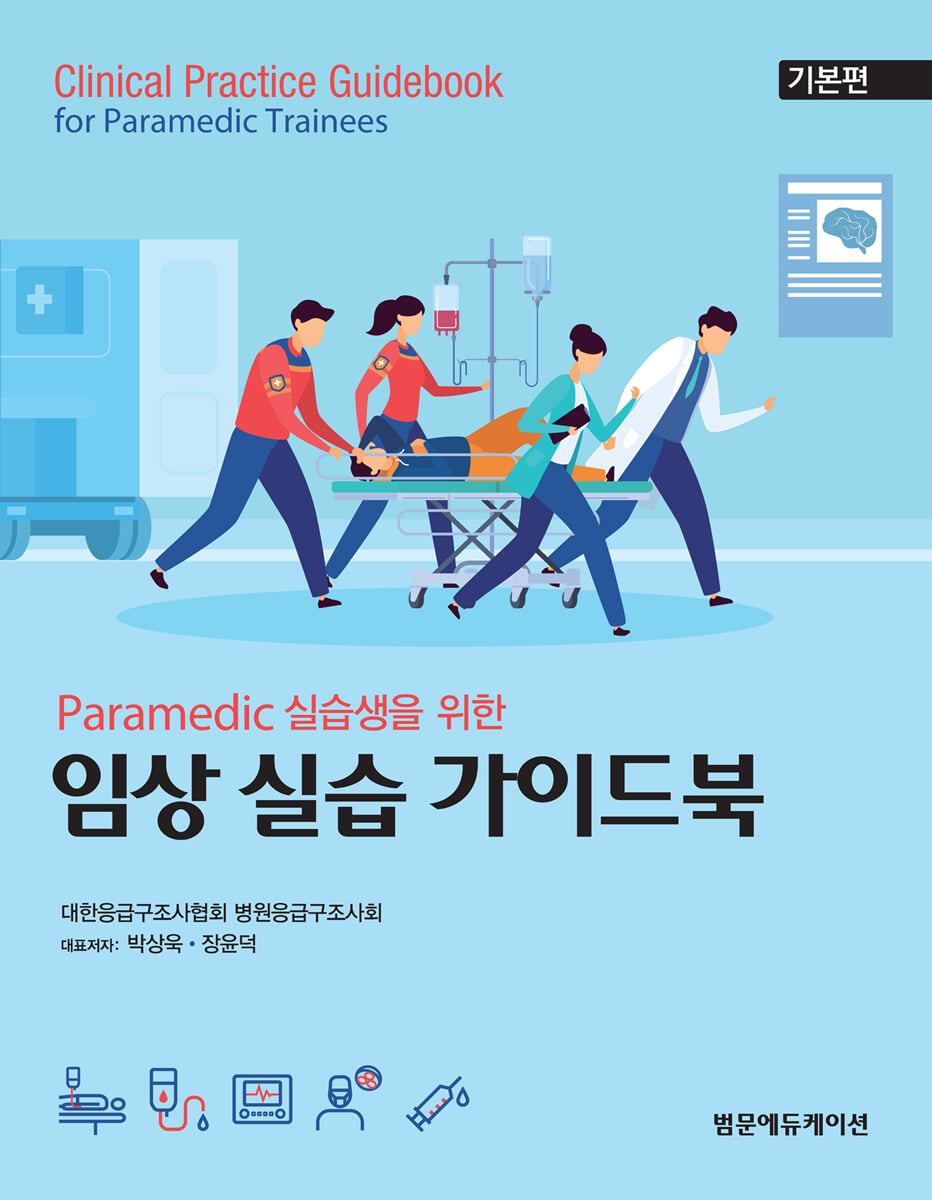
Clinical Practice Guidebook for Paramedic Trainees: Basic Edition
 |
Description
Book Introduction
Hospital clinical training is a very important time for future paramedics. They can observe various emergency patients and practice emergency techniques based on the theories learned in school.
However, it was unfortunate that the students in the clinical training were always confused due to the lack of an educational system that covered the entire clinical training process, which made it difficult to provide systematic practical training due to the diversity of hospitals and environments during the clinical training period, and the differences in the curriculum and capabilities of the instructors in each hospital.
Accordingly, the Hospital Emergency Medical Services Society collected opinions from hospital clinical practice instructors and wrote the “Clinical Practice Guidebook for Paramedic Trainees - Basic Edition.”
This textbook is organized step-by-step to cover the content that must be learned during the first four weeks of clinical practice.
First, here's what you need to prepare when starting your practice.
Second, diagnostic approaches to KTAS and various emergency patients.
Third, basic emergency techniques and basic emergency equipment by system.
Fourth, basic diagnostic tests and understanding.
Finally, medical terms and abbreviations needed during the practice, as well as various contents and formats, are included in the appendix.
The basic textbook currently includes practical content from the Medical Act and the Emergency Medical Services Act, as well as comprehensive information on emergency patients.
If we teach hospital clinical training with unified textbooks and educational content starting from regional and local emergency medical centers across the country where emergency medical technicians work, it will be of great help to students who are encountering patients for the first time in the unfamiliar environment of a hospital to adapt to the emergency room and observe and understand emergency patients, and it will provide them with the experience to grow into good emergency medical technicians in the field through four weeks of training.
However, it was unfortunate that the students in the clinical training were always confused due to the lack of an educational system that covered the entire clinical training process, which made it difficult to provide systematic practical training due to the diversity of hospitals and environments during the clinical training period, and the differences in the curriculum and capabilities of the instructors in each hospital.
Accordingly, the Hospital Emergency Medical Services Society collected opinions from hospital clinical practice instructors and wrote the “Clinical Practice Guidebook for Paramedic Trainees - Basic Edition.”
This textbook is organized step-by-step to cover the content that must be learned during the first four weeks of clinical practice.
First, here's what you need to prepare when starting your practice.
Second, diagnostic approaches to KTAS and various emergency patients.
Third, basic emergency techniques and basic emergency equipment by system.
Fourth, basic diagnostic tests and understanding.
Finally, medical terms and abbreviations needed during the practice, as well as various contents and formats, are included in the appendix.
The basic textbook currently includes practical content from the Medical Act and the Emergency Medical Services Act, as well as comprehensive information on emergency patients.
If we teach hospital clinical training with unified textbooks and educational content starting from regional and local emergency medical centers across the country where emergency medical technicians work, it will be of great help to students who are encountering patients for the first time in the unfamiliar environment of a hospital to adapt to the emergency room and observe and understand emergency patients, and it will provide them with the experience to grow into good emergency medical technicians in the field through four weeks of training.
- You can preview some of the book's contents.
Preview
index
Chapter 1 Clinical Practice Week 1: Beginning Clinical Practice 1
1.1 Orientation for Practice 2
1.
Orientation 2
2.
How to Use the Clinical Practice Guidebook 3
3.
Clinical Practice - Required Course 3
1.2 Emergency Room and Emergency Patient Care 4
1.
Hospital Introduction 4
2.
Introduction to the Emergency Room 4
3.
Emergency Patient Care Process 5
4.
Patient Encounter in the Emergency Room 6
1.3.
Basic Medical Terminology Assessment 10
1.
Evaluation Objective 10
2.
Evaluation Method 10
Chapter 2 Clinical Practice Week 2: Triage and Diagnostic Approaches to Emergency Patients 11
2.1 Emergency Room Patient Triage System 12
1.
Korean Emergency Patient Triage Tool (KTAS) 12
2. KTAS Classification Case 15
3. Practice KTAS classification 25
2.2 Diagnostic Approach to Internal Medicine Emergency Patients 32
1.
Understanding the Main Symptoms of Internal Medicine Patients 32
2.
33 System-specific questionnaires, appropriate medical history taking, and physical examinations for internal medicine patients
2.3 Diagnostic Approach to Trauma Emergency Patients 74
1.
Trauma system 74
2.
Approaching and Assessing Trauma Patients 76
3.
Trauma Severity Assessment Tool 78
2.4 Diagnostic Approach to Emergency Poisoning Patients 79
1.
Approaches to Toxic Substances and Poisoning Patients 79
2.
General Initial Treatment of Addicted Patients 82
3.
Emergency Toxicology Laboratory Operation 83
Chapter 3 Clinical Practice Week 3: Emergency Skills and Equipment 85
3.1 Basic Emergency Techniques 86
1.
Cardiovascular system 86
2.
Respiratory system 98
3.
Soft tissue 108
4.
Musculoskeletal system 115
5.
Digestive system 125
6.
Urinary system 129
3.2 Basic Emergency Equipment 135
1.
Emergency Patient Monitoring Device 135
Chapter 4 Clinical Practice Week 4: Understanding the Basics of Diagnostic Testing 145
4.1 Basic Understanding of Blood Tests 146
1.
Complete blood cell count (CBC) 146
2.
Arterial blood gas analysis (ABGA) 149
3.
Blood coagulation test 152
4.
Blood chemistry panel 154
5.
Cardiac enzyme test 161
6.
Ammonia and lactate test 162
7.
Blood Type and Cross-matching Test (ABO Typing & Cross-matching) 163
8.
Urinalysis 164
4.2 Basic Understanding of Image Inspection 165
1.
X-ray examination 165
2. CT scan 176
3. MRI examination 184
4.3 Basic Understanding of Electrocardiogram Examination 188
1.
Electrocardiogram 188
2.
Electrocardiography Basic Principles 194
3.
ECG Basic Configuration 197
supplement
1.
Medical Terminology 201
2.
Abbreviation 207
3.
Case Presentation Method 225
4.
Clinical Record Form 235
1.1 Orientation for Practice 2
1.
Orientation 2
2.
How to Use the Clinical Practice Guidebook 3
3.
Clinical Practice - Required Course 3
1.2 Emergency Room and Emergency Patient Care 4
1.
Hospital Introduction 4
2.
Introduction to the Emergency Room 4
3.
Emergency Patient Care Process 5
4.
Patient Encounter in the Emergency Room 6
1.3.
Basic Medical Terminology Assessment 10
1.
Evaluation Objective 10
2.
Evaluation Method 10
Chapter 2 Clinical Practice Week 2: Triage and Diagnostic Approaches to Emergency Patients 11
2.1 Emergency Room Patient Triage System 12
1.
Korean Emergency Patient Triage Tool (KTAS) 12
2. KTAS Classification Case 15
3. Practice KTAS classification 25
2.2 Diagnostic Approach to Internal Medicine Emergency Patients 32
1.
Understanding the Main Symptoms of Internal Medicine Patients 32
2.
33 System-specific questionnaires, appropriate medical history taking, and physical examinations for internal medicine patients
2.3 Diagnostic Approach to Trauma Emergency Patients 74
1.
Trauma system 74
2.
Approaching and Assessing Trauma Patients 76
3.
Trauma Severity Assessment Tool 78
2.4 Diagnostic Approach to Emergency Poisoning Patients 79
1.
Approaches to Toxic Substances and Poisoning Patients 79
2.
General Initial Treatment of Addicted Patients 82
3.
Emergency Toxicology Laboratory Operation 83
Chapter 3 Clinical Practice Week 3: Emergency Skills and Equipment 85
3.1 Basic Emergency Techniques 86
1.
Cardiovascular system 86
2.
Respiratory system 98
3.
Soft tissue 108
4.
Musculoskeletal system 115
5.
Digestive system 125
6.
Urinary system 129
3.2 Basic Emergency Equipment 135
1.
Emergency Patient Monitoring Device 135
Chapter 4 Clinical Practice Week 4: Understanding the Basics of Diagnostic Testing 145
4.1 Basic Understanding of Blood Tests 146
1.
Complete blood cell count (CBC) 146
2.
Arterial blood gas analysis (ABGA) 149
3.
Blood coagulation test 152
4.
Blood chemistry panel 154
5.
Cardiac enzyme test 161
6.
Ammonia and lactate test 162
7.
Blood Type and Cross-matching Test (ABO Typing & Cross-matching) 163
8.
Urinalysis 164
4.2 Basic Understanding of Image Inspection 165
1.
X-ray examination 165
2. CT scan 176
3. MRI examination 184
4.3 Basic Understanding of Electrocardiogram Examination 188
1.
Electrocardiogram 188
2.
Electrocardiography Basic Principles 194
3.
ECG Basic Configuration 197
supplement
1.
Medical Terminology 201
2.
Abbreviation 207
3.
Case Presentation Method 225
4.
Clinical Record Form 235
Detailed image
.jpg)
GOODS SPECIFICS
- Date of issue: February 1, 2024
- Page count, weight, size: 260 pages | 215*275*20mm
- ISBN13: 9791159434259
- ISBN10: 1159434255
You may also like
카테고리
korean


korean

![GQ KOREA Mark (Monthly): December [2025]](http://librairie.coreenne.fr/cdn/shop/files/8ef265dbbfbf186523ed75ba7319009d.jpg?v=1765340328&width=3840)


