

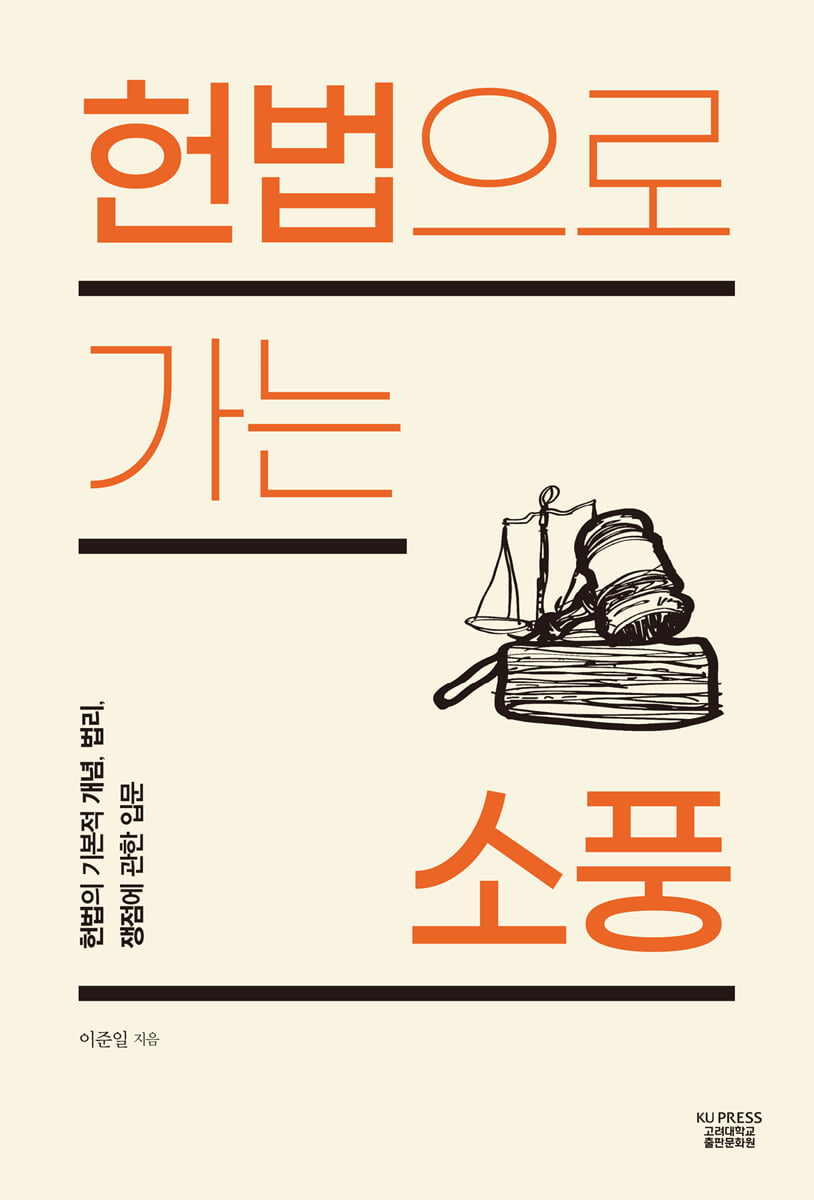
Picnic to the Constitution
 |
Description
Book Introduction
A book that explains the important concepts, legal principles, and issues of the Constitution in 20 easy-to-understand, yet scholarly, ways.
This book serves as both an introductory and general textbook for law school applicants, current law students, and the general public with an interest in the Constitution.
Constitutional rights that have constitutional status and effect because they are guaranteed by the Constitution are commonly called 'fundamental rights', and the ultimate purpose of guaranteeing these basic rights is to confirm and realize human dignity.
The grounds for human dignity can be presented in various ways, including from philosophical, religious, and ideological perspectives, but the concrete realization of the normative proposition that human dignity must be maintained is the ultimate goal of all fundamental rights guaranteed by the Constitution.
This book serves as both an introductory and general textbook for law school applicants, current law students, and the general public with an interest in the Constitution.
Constitutional rights that have constitutional status and effect because they are guaranteed by the Constitution are commonly called 'fundamental rights', and the ultimate purpose of guaranteeing these basic rights is to confirm and realize human dignity.
The grounds for human dignity can be presented in various ways, including from philosophical, religious, and ideological perspectives, but the concrete realization of the normative proposition that human dignity must be maintained is the ultimate goal of all fundamental rights guaranteed by the Constitution.
index
Chapter 1 What is the Constitution?
I.
Written Constitution
1.
Concepts and characteristics
2.
The substantive limitations of the written constitution
3.
Interpretation and application of the written constitution
4.
applied area
II.
customary constitution
1.
concept
2.
This is
III.
Constitutional justice
Chapter 2 Basic Principles of the Constitution
I.
The goal of the basic principles
II.
rule of law
1.
concept
2.
Derivative principle
III.
democracy
1.
concept
2.
direct democracy
3.
indirect democracy
4.
Is democracy liberal democracy?
III.
social welfare
1.
basic social rights
2.
social market economic order
IV.
pacifism
1.
concept
2.
Inter-Korean relations and peaceful unification
3.
International Relations and International Peace
V.
Cultural State Principle
1.
concept
2.
detail
Chapter 3 Constitutional Rights
I.
human dignity
1.
Human dignity as the ultimate goal of constitutional rights
2.
Freedom and equality as essential conditions for realizing human dignity
3.
The legal nature of the right to human dignity and worth
4.
Subject of constitutional rights
5.
The right to human dignity and worth as a supplementary fundamental right
II.
Liberty
1.
freedom
2.
Right to defense
3.
General liberty and individual liberty
4.
Enumerated and unenumerated individual liberties
III.
civil rights
1.
relative equality
2.
Subjective rights without protected legal interests
3.
Legal equality and factual equality
IV.
social rights
1.
Concept and subject
2.
Legal personality
3.
General and individual social rights
V.
Protection rights
1.
Duty to protect fundamental rights and right to protection
2.
Criminal legislation as a matter of protection
VI.
Procedural rights
1.
concept
2.
category
3.
Procedural and defensive rights
4.
Procedural rights and due process
5.
Procedural rights under the current Constitution
Chapter 4. Principles of the Constitution: The Principle of Reservation of Law and the Principle of Prohibition of Blanket Delegation of Legislation
I.
concept
1.
The abstractness and implication of the supreme normativity of the Constitution and the necessity of legal reservation
2.
Reservation of law under the current constitution
II.
Reservation of the law on fundamental rights
1.
Formative legal reservations of fundamental rights and restrictive legal reservations of fundamental rights
III.
Delegated legislation and the principle of prohibition of blanket delegated legislation
1.
The necessity of delegated legislation
2.
Specificity of delegation and the principle of prohibition of blanket delegation legislation
3.
Judgment criteria
IV.
The meaning of Article 75 of the Constitution regarding delegated legislation and administrative legislation
Chapter 5 Constitutional Principle 2: Principle of Proportionality
I.
concept
II.
Partial principle of the principle of proportionality
1.
Four-part principle
2.
Areas of judgment included in the partial principle
III.
Restrictions on fundamental rights and the principle of proportionality
1.
State action and the principle of proportionality
2.
Distinction between the principle of prohibition of excessive support and the principle of prohibition of under-support
3.
Criticism of the Constitutional Court's View on the Principle of Prohibition of Excessive Support
Chapter 6: Principle Three of the Constitution: The Principle of Equality
I.
concept
II.
Structure of equal review
1.
Step 1 - Composition of the comparison target
2.
Step 2 - Comparison of Comparable Objects: Confirming the Presence of Essential Differences
3.
Step 3 - Comparison of treatment with comparable entities
4.
Step 4 - Comparison of the Comparable Object and the Treatment
5.
Step 5 - Reasonableness of Unfavorable Treatment of Comparables
III.
Standards for Equal Review
1.
Strict and relaxed evaluation criteria
2.
Evaluation criteria and intensity
Chapter 7 Principle Four of the Constitution: The Principle of Clarity
I.
detail
II.
Judgment criteria
1.
The inevitability of a certain degree of ambiguity
2.
Differences in the degree of clarity depending on the nature of the legal provision
3.
The need for supplementary interpretation by judges
4.
An ordinary person with sound common sense and a sense of the law
5.
Overall and comprehensive judgment
III.
Ambiguity of legal provisions and constitutional interpretation of law
1.
The necessity of constitutionally consistent legal interpretation
2.
Methods of constitutionally compliant legal interpretation
Chapter 8. Five Principles of the Constitution: Non-retroactivity and the Principle of Trust Protection
I.
Concept and types of retroactive legislation
II.
Application of the principle of non-retroactivity
III.
Retroactive legislation and the principle of trust protection
Chapter 9 Types of Fundamental Rights and Restrictions on Fundamental Rights
I.
Distinction between the right to defense and the right to payment
1.
Right to defense
2.
Benefits
II.
Restrictions on the right to defense and the right to benefits
1.
Limitations on the right to defense
2.
Restrictions on the right to benefits and legislative inaction
3.
In the case of equal rights
III.
Justification of restrictions on the right to defense and the right to benefits
1.
Principle of prohibition of excessive support
2.
under-representation principle
3.
In the case of fundamental rights that include both the right to defense and the right to compensation
4.
In case of conflict of fundamental rights
5.
In the case of equal rights
Chapter 10 Conflict of Fundamental Rights
I.
concept
II.
Duty to protect fundamental rights and right to protection
III.
Ambassadorial effect of fundamental rights (third-party effect)
1.
Civil trials and the amnesty effect of fundamental rights
2.
Three aspects involved in the diplomatic effect of fundamental rights
3.
The difference between the duty to protect fundamental rights and the personal effect of fundamental rights
IV.
Guarantee of the right to claim compensation for damages resulting from illegal acts as a fundamental right
Chapter 11 Violations of Fundamental Rights and Remedies
I.
Limitations, infringements, and restrictions
II.
Violation of fundamental rights by the state and remedies
1.
Redress through constitutional review
2.
Redress through constitutional appeal
3.
Redress through the National Human Rights Commission
III.
Violation of fundamental rights by private individuals and remedies
1.
Redress through legislation protecting fundamental rights
2.
Remedy through the fundamental right to claim compensation for damages
3.
Relief of rights through judgments respecting fundamental rights
4.
Redress through the National Human Rights Commission I
Chapter 12 General Freedom of Action and Individual Freedom of Action
I.
freedom of action
II.
General freedom of action
1.
Meaning and necessity
2.
Constitutional basis
III.
individual freedom of action
1.
Freedom of personal activity
2.
Freedom of mental activity
3.
Freedom of economic activity
4.
Freedom of political activity
5.
Unenumerated individual freedom of action
Chapter 13 General Personal Rights and Individual Personal Rights
I.
Freedom of state
II.
General personality rights
III.
individual personality rights
1.
Right to life and physical integrity
2.
Freedom of secrecy
3.
right to self-determination
4.
Unlisted individual personality rights
Chapter 14 General Personal Rights and Individual Personal Rights Regarding Legal Status
I.
General personal rights and freedoms relating to legal status
II.
Individual liberty rights regarding legal status
1.
property rights
2.
Rights to Marriage and Family
3.
suffrage
4.
Right to hold public office
5.
Right to a trial
6.
State compensation claim
7.
Individual liberties with regard to unlisted legal status
III.
Basic rights and institutional guarantees
Chapter 15: Right to Safety and Environment
I.
Right to Safety
1.
concept
2.
Fundamental rights included in the right to safety
II.
Right to the Environment
1.
Functions of fundamental rights included in the right to the environment
2.
The relationship between environmental rights and safety rights
III.
Climate Crisis, Safety, and the Environment
1.
climate crisis
2.
Climate Crisis and the Right to Safety
3.
Climate Crisis and Environmental Rights
Chapter 16: Basic Labor Rights and Workers under the Constitution
I.
Constitutional basis
II.
Interpretation
1.
Expansion of the concept of worker
2.
The three labor rights of civil servant workers
3.
Work and Equality
III.
Evaluation criteria
1.
Restrictions on the three labor rights as freedoms
2.
The nature of social rights included in the three labor rights
IV.
Conflict between labor rights and basic rights
Chapter 17 Presidential and Parliamentary Systems
I.
Classification criteria and characteristics
II.
Historical background
1.
Historical background of the parliamentary cabinet system
2.
Historical background of the presidential system
III.
Korean context
1.
Division of North and South Korea
2.
regionalism
3.
The tradition of unicameralism
4.
single country
5.
Abolition of the constitutional monarchy
IV.
South Korea's presidential system
Chapter 18 Powers of the National Assembly
I.
Constitutional status of the National Assembly
1.
Principles of medical progress
2.
Privileges and Duties of Members of the National Assembly
II.
legislative power
1.
legislative procedures
2.
Dispositional law
III.
Budget deliberation voting rights
1.
Distinction between budget and law
2.
Tax law principle
3.
Other financial powers
IV.
State control
1.
Right to state investigation and audit
2.
Impeachment power
3.
The right to recommend the dismissal of the Prime Minister and State Council members
V.
Autonomy
Chapter 19 Powers of the President
I.
Constitutional status of the President
1.
Head of State, Head of Government, Chairman of the State Council
2.
Non-prosecution privilege
II.
The right to a national referendum and the right to a national emergency
1.
right to a referendum
2.
National emergency powers
III.
Powers as head of the executive branch
IV.
Powers as head of state
V.
Administrative legislative power
VI.
Presidential agencies and advisory bodies
1.
Board of Audit and Inspection
2.
Presidential advisory body
Chapter 20: The Supreme Court and the Constitutional Court
I.
Dualization of the judiciary
1.
General courts and constitutional courts
2.
Judicial independence
3.
Democracy of the judiciary
II.
Norm control
1.
Dualization of normative control
2.
Specific normative control and the presumption of justice
3.
Exclusive right to review the constitutionality of statutory orders
III.
Deformation decision
1.
The concept and necessity of transformational decision
2.
The authority to decide on changes to the law and to interpret the law
3.
Legal binding force of the decision to modify
IV.
Court of Appeal
1.
Constitutional appeal system
2.
The legitimacy of the constitutional petition
3.
Exclusion of trials as subjects of constitutional appeals
Appendix - Constitution of the Republic of Korea (1987.
10.
29.
Effective: 1988.
2. 25.)
Search
I.
Written Constitution
1.
Concepts and characteristics
2.
The substantive limitations of the written constitution
3.
Interpretation and application of the written constitution
4.
applied area
II.
customary constitution
1.
concept
2.
This is
III.
Constitutional justice
Chapter 2 Basic Principles of the Constitution
I.
The goal of the basic principles
II.
rule of law
1.
concept
2.
Derivative principle
III.
democracy
1.
concept
2.
direct democracy
3.
indirect democracy
4.
Is democracy liberal democracy?
III.
social welfare
1.
basic social rights
2.
social market economic order
IV.
pacifism
1.
concept
2.
Inter-Korean relations and peaceful unification
3.
International Relations and International Peace
V.
Cultural State Principle
1.
concept
2.
detail
Chapter 3 Constitutional Rights
I.
human dignity
1.
Human dignity as the ultimate goal of constitutional rights
2.
Freedom and equality as essential conditions for realizing human dignity
3.
The legal nature of the right to human dignity and worth
4.
Subject of constitutional rights
5.
The right to human dignity and worth as a supplementary fundamental right
II.
Liberty
1.
freedom
2.
Right to defense
3.
General liberty and individual liberty
4.
Enumerated and unenumerated individual liberties
III.
civil rights
1.
relative equality
2.
Subjective rights without protected legal interests
3.
Legal equality and factual equality
IV.
social rights
1.
Concept and subject
2.
Legal personality
3.
General and individual social rights
V.
Protection rights
1.
Duty to protect fundamental rights and right to protection
2.
Criminal legislation as a matter of protection
VI.
Procedural rights
1.
concept
2.
category
3.
Procedural and defensive rights
4.
Procedural rights and due process
5.
Procedural rights under the current Constitution
Chapter 4. Principles of the Constitution: The Principle of Reservation of Law and the Principle of Prohibition of Blanket Delegation of Legislation
I.
concept
1.
The abstractness and implication of the supreme normativity of the Constitution and the necessity of legal reservation
2.
Reservation of law under the current constitution
II.
Reservation of the law on fundamental rights
1.
Formative legal reservations of fundamental rights and restrictive legal reservations of fundamental rights
III.
Delegated legislation and the principle of prohibition of blanket delegated legislation
1.
The necessity of delegated legislation
2.
Specificity of delegation and the principle of prohibition of blanket delegation legislation
3.
Judgment criteria
IV.
The meaning of Article 75 of the Constitution regarding delegated legislation and administrative legislation
Chapter 5 Constitutional Principle 2: Principle of Proportionality
I.
concept
II.
Partial principle of the principle of proportionality
1.
Four-part principle
2.
Areas of judgment included in the partial principle
III.
Restrictions on fundamental rights and the principle of proportionality
1.
State action and the principle of proportionality
2.
Distinction between the principle of prohibition of excessive support and the principle of prohibition of under-support
3.
Criticism of the Constitutional Court's View on the Principle of Prohibition of Excessive Support
Chapter 6: Principle Three of the Constitution: The Principle of Equality
I.
concept
II.
Structure of equal review
1.
Step 1 - Composition of the comparison target
2.
Step 2 - Comparison of Comparable Objects: Confirming the Presence of Essential Differences
3.
Step 3 - Comparison of treatment with comparable entities
4.
Step 4 - Comparison of the Comparable Object and the Treatment
5.
Step 5 - Reasonableness of Unfavorable Treatment of Comparables
III.
Standards for Equal Review
1.
Strict and relaxed evaluation criteria
2.
Evaluation criteria and intensity
Chapter 7 Principle Four of the Constitution: The Principle of Clarity
I.
detail
II.
Judgment criteria
1.
The inevitability of a certain degree of ambiguity
2.
Differences in the degree of clarity depending on the nature of the legal provision
3.
The need for supplementary interpretation by judges
4.
An ordinary person with sound common sense and a sense of the law
5.
Overall and comprehensive judgment
III.
Ambiguity of legal provisions and constitutional interpretation of law
1.
The necessity of constitutionally consistent legal interpretation
2.
Methods of constitutionally compliant legal interpretation
Chapter 8. Five Principles of the Constitution: Non-retroactivity and the Principle of Trust Protection
I.
Concept and types of retroactive legislation
II.
Application of the principle of non-retroactivity
III.
Retroactive legislation and the principle of trust protection
Chapter 9 Types of Fundamental Rights and Restrictions on Fundamental Rights
I.
Distinction between the right to defense and the right to payment
1.
Right to defense
2.
Benefits
II.
Restrictions on the right to defense and the right to benefits
1.
Limitations on the right to defense
2.
Restrictions on the right to benefits and legislative inaction
3.
In the case of equal rights
III.
Justification of restrictions on the right to defense and the right to benefits
1.
Principle of prohibition of excessive support
2.
under-representation principle
3.
In the case of fundamental rights that include both the right to defense and the right to compensation
4.
In case of conflict of fundamental rights
5.
In the case of equal rights
Chapter 10 Conflict of Fundamental Rights
I.
concept
II.
Duty to protect fundamental rights and right to protection
III.
Ambassadorial effect of fundamental rights (third-party effect)
1.
Civil trials and the amnesty effect of fundamental rights
2.
Three aspects involved in the diplomatic effect of fundamental rights
3.
The difference between the duty to protect fundamental rights and the personal effect of fundamental rights
IV.
Guarantee of the right to claim compensation for damages resulting from illegal acts as a fundamental right
Chapter 11 Violations of Fundamental Rights and Remedies
I.
Limitations, infringements, and restrictions
II.
Violation of fundamental rights by the state and remedies
1.
Redress through constitutional review
2.
Redress through constitutional appeal
3.
Redress through the National Human Rights Commission
III.
Violation of fundamental rights by private individuals and remedies
1.
Redress through legislation protecting fundamental rights
2.
Remedy through the fundamental right to claim compensation for damages
3.
Relief of rights through judgments respecting fundamental rights
4.
Redress through the National Human Rights Commission I
Chapter 12 General Freedom of Action and Individual Freedom of Action
I.
freedom of action
II.
General freedom of action
1.
Meaning and necessity
2.
Constitutional basis
III.
individual freedom of action
1.
Freedom of personal activity
2.
Freedom of mental activity
3.
Freedom of economic activity
4.
Freedom of political activity
5.
Unenumerated individual freedom of action
Chapter 13 General Personal Rights and Individual Personal Rights
I.
Freedom of state
II.
General personality rights
III.
individual personality rights
1.
Right to life and physical integrity
2.
Freedom of secrecy
3.
right to self-determination
4.
Unlisted individual personality rights
Chapter 14 General Personal Rights and Individual Personal Rights Regarding Legal Status
I.
General personal rights and freedoms relating to legal status
II.
Individual liberty rights regarding legal status
1.
property rights
2.
Rights to Marriage and Family
3.
suffrage
4.
Right to hold public office
5.
Right to a trial
6.
State compensation claim
7.
Individual liberties with regard to unlisted legal status
III.
Basic rights and institutional guarantees
Chapter 15: Right to Safety and Environment
I.
Right to Safety
1.
concept
2.
Fundamental rights included in the right to safety
II.
Right to the Environment
1.
Functions of fundamental rights included in the right to the environment
2.
The relationship between environmental rights and safety rights
III.
Climate Crisis, Safety, and the Environment
1.
climate crisis
2.
Climate Crisis and the Right to Safety
3.
Climate Crisis and Environmental Rights
Chapter 16: Basic Labor Rights and Workers under the Constitution
I.
Constitutional basis
II.
Interpretation
1.
Expansion of the concept of worker
2.
The three labor rights of civil servant workers
3.
Work and Equality
III.
Evaluation criteria
1.
Restrictions on the three labor rights as freedoms
2.
The nature of social rights included in the three labor rights
IV.
Conflict between labor rights and basic rights
Chapter 17 Presidential and Parliamentary Systems
I.
Classification criteria and characteristics
II.
Historical background
1.
Historical background of the parliamentary cabinet system
2.
Historical background of the presidential system
III.
Korean context
1.
Division of North and South Korea
2.
regionalism
3.
The tradition of unicameralism
4.
single country
5.
Abolition of the constitutional monarchy
IV.
South Korea's presidential system
Chapter 18 Powers of the National Assembly
I.
Constitutional status of the National Assembly
1.
Principles of medical progress
2.
Privileges and Duties of Members of the National Assembly
II.
legislative power
1.
legislative procedures
2.
Dispositional law
III.
Budget deliberation voting rights
1.
Distinction between budget and law
2.
Tax law principle
3.
Other financial powers
IV.
State control
1.
Right to state investigation and audit
2.
Impeachment power
3.
The right to recommend the dismissal of the Prime Minister and State Council members
V.
Autonomy
Chapter 19 Powers of the President
I.
Constitutional status of the President
1.
Head of State, Head of Government, Chairman of the State Council
2.
Non-prosecution privilege
II.
The right to a national referendum and the right to a national emergency
1.
right to a referendum
2.
National emergency powers
III.
Powers as head of the executive branch
IV.
Powers as head of state
V.
Administrative legislative power
VI.
Presidential agencies and advisory bodies
1.
Board of Audit and Inspection
2.
Presidential advisory body
Chapter 20: The Supreme Court and the Constitutional Court
I.
Dualization of the judiciary
1.
General courts and constitutional courts
2.
Judicial independence
3.
Democracy of the judiciary
II.
Norm control
1.
Dualization of normative control
2.
Specific normative control and the presumption of justice
3.
Exclusive right to review the constitutionality of statutory orders
III.
Deformation decision
1.
The concept and necessity of transformational decision
2.
The authority to decide on changes to the law and to interpret the law
3.
Legal binding force of the decision to modify
IV.
Court of Appeal
1.
Constitutional appeal system
2.
The legitimacy of the constitutional petition
3.
Exclusion of trials as subjects of constitutional appeals
Appendix - Constitution of the Republic of Korea (1987.
10.
29.
Effective: 1988.
2. 25.)
Search
GOODS SPECIFICS
- Date of issue: September 5, 2023
- Page count, weight, size: 360 pages | 152*224*22mm
- ISBN13: 9791169560436
You may also like
카테고리
korean


korean

![GQ KOREA Mark (Monthly): December [2025]](http://librairie.coreenne.fr/cdn/shop/files/8ef265dbbfbf186523ed75ba7319009d.jpg?v=1765340328&width=3840)


