

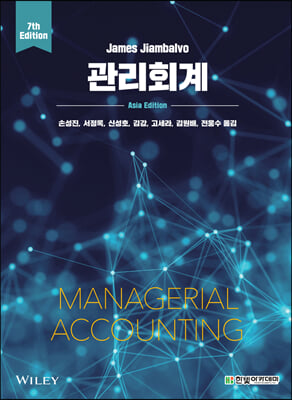
Management Accounting
 |
Description
Book Introduction
The purpose of 『Management Accounting, 7th Edition』 is to cultivate fundamental management accounting thinking and motivate students to study with interest.
Based on the author's extensive teaching experience and the insights of professors who used the old edition as a textbook, the following points were focused on.
Based on the author's extensive teaching experience and the insights of professors who used the old edition as a textbook, the following points were focused on.
index
1 Management Accounting in the Information Age
1.1 Purpose of Management Accounting
1.2 Cost Concepts Used in Planning, Control, and Decision-Making
1.3 Two Core Concepts of Management Accounting
1.4 The Information Age and Management Accounting
1.5 Ethical Issues in Management Decision-Making
1.6 The Director of Management Accounting as the Chief Accounting Officer
2. Individual cost system for manufacturing and service industries
2.1 Cost Classification in Manufacturing
2.2 Product Cost Information for Financial Reporting and Decision Making
2.3 Product cost on the financial statements
2.4 Understanding the Product Cost Flow
2.5 Income Statement and Cost of Goods
2.6 Types of Product Costing Systems
2.7 Individual Costs and Financial Statements
2.8 Individual Cost Calculation System
2.9? Eastlake Motorboat Co.'s Individual Cost Information Utilization Case Study
2.10? The relationship between work costs and the cost flow of work in progress, products, and cost of goods sold.
2.11 Manufacturing Indirect Cost Allocation: In-Depth Study
2.12 Projected distribution rate
2.13 Individual cost calculation for service companies
2.14 Innovative Manufacturing Techniques and Product Costing Systems
3 Comprehensive cost calculation
3.1? Differences between the individual costing system and the comprehensive costing system
3.2 Product and Cost Flow
3.3 Calculating cost per unit
3.4 Calculation and Application of Cost per Unit of Finished Goods Conversion - Example of a Mixed Process
3.5 Manufacturing Cost Report
3.6 Basic Procedures for Comprehensive Cost Calculation: Summary
3.7 Kent Chemistry Case: Answering Stacy's Questions
3.8 Process Replacement Cost Processing Method: Packaging Process Example
3.9 Comprehensive cost calculation and incremental analysis
3.10 “You have to measure to manage!” and the manufacturing process
4. Cost-Operation-Profit Analysis
4.1 Basic patterns of cost behavior
4.2 Cost estimation method
4.3 Cost-Operation-Profit Analysis
4.4 CVP Analysis for Multiple Products
4.5 Assumptions of CVP Analysis
4.6? CodeConnect Case Review: Answers to Mary's Questions
4.7 Operating Leverage
4.8 Constraints
5 Variable Costing
5.1?Full cost accounting and variable cost accounting
5.2 The Impact of Total Costing and Variable Costing on Profitability: The Case of Klausentube
5.3 Advantages of Variable Costing in Internal Reporting
5.4? Variable costing limits profit adjustments based on production volume fluctuations.
6 Cost Allocation and Activity-Based Costing
6.1 Purpose of Cost Allocation
6.2 Cost allocation process
6.3 Distribution of support sector costs
6.4 Problems with cost allocation
6.5 Activity-based costing
6.6 Activity-based cost management
6.7 Remember, “What you measure, you manage!”
7. Use of cost information in management decision making
7.1 Incremental Analysis
7.2 Analysis of Decisions Faced by Managers
7.3 Decision-making including joint costs
7.4 Qualitative Considerations in Decision Analysis
8 Pricing, Customer Profitability Analysis, and Activity-Based Pricing
8.1 Profit-maximizing price
8.2 Special Order Pricing
8.3 Cost-plus pricing
8.4 Target Costing
8.5 Customer Profitability Analysis: A Case Study of a PR Office
8.6 Customer Profitability and Performance Measurements
8.7 Activity-Based Pricing Determination
9 Capital Budgeting and Other Long-Term Decisions
9.1 Capital Budgeting Decisions
9.2 Evaluating Investment Opportunities: The Time Value of Money Method
9.3 Consideration of “non-monetary benefits” in investment decisions
9.4 Estimating the Required Rate of Return
9.5 Additional Considerations on Cash Flow
9.6 Other long-term decisions
9.7 A Simple Approach to Capital Budgeting
9.8 Conflicts between Performance Evaluation and Capital Budgeting
10 Budget Planning and Control
10.1 Using the Budget in Planning and Control
10.2 Budget Preparation
10.3 Comprehensive Budget
10.4 Use of computers in budgeting procedures
10.5 Budget Control
10.6 Investigation into budget differences
10.7 The conflict between planning and control in the budget
10.8 Evaluation, Measurement, and Management Behavior
10.9 Preston Joystick Case Review
11 Standard Cost and Variance Analysis
11.1 Standard Cost
11.2 Standard Cost Variance Analysis
11.3 Direct material cost variance
11.4 Direct labor cost variance
11.5 Manufacturing overhead cost difference
11.6?Test Your Knowledge: Comprehensive Example
11.7 Analysis of Standard Cost Variances
11.8 Differences from Responsibility Accounting
12 Decentralization and Performance Evaluation
12.1 Why Companies Decentralize
12.2 Why does the company evaluate the performance of subordinate departments and their managers?
12.3 Cost Center, Profit Center, and Investment Center
12.4 Evaluation of investment focus by ROI
12.5 Performance Evaluation Using Economic Value Added (EVA)
12.6 Performance Evaluation Using the Balanced Scorecard
12.7 Development of a Strategy Map for the Balanced Scorecard
12.8 Key Elements of a Successful Balanced Scorecard: Targets, Initiatives, Accountability, Funding, and Top Management Support
■ Search
1.1 Purpose of Management Accounting
1.2 Cost Concepts Used in Planning, Control, and Decision-Making
1.3 Two Core Concepts of Management Accounting
1.4 The Information Age and Management Accounting
1.5 Ethical Issues in Management Decision-Making
1.6 The Director of Management Accounting as the Chief Accounting Officer
2. Individual cost system for manufacturing and service industries
2.1 Cost Classification in Manufacturing
2.2 Product Cost Information for Financial Reporting and Decision Making
2.3 Product cost on the financial statements
2.4 Understanding the Product Cost Flow
2.5 Income Statement and Cost of Goods
2.6 Types of Product Costing Systems
2.7 Individual Costs and Financial Statements
2.8 Individual Cost Calculation System
2.9? Eastlake Motorboat Co.'s Individual Cost Information Utilization Case Study
2.10? The relationship between work costs and the cost flow of work in progress, products, and cost of goods sold.
2.11 Manufacturing Indirect Cost Allocation: In-Depth Study
2.12 Projected distribution rate
2.13 Individual cost calculation for service companies
2.14 Innovative Manufacturing Techniques and Product Costing Systems
3 Comprehensive cost calculation
3.1? Differences between the individual costing system and the comprehensive costing system
3.2 Product and Cost Flow
3.3 Calculating cost per unit
3.4 Calculation and Application of Cost per Unit of Finished Goods Conversion - Example of a Mixed Process
3.5 Manufacturing Cost Report
3.6 Basic Procedures for Comprehensive Cost Calculation: Summary
3.7 Kent Chemistry Case: Answering Stacy's Questions
3.8 Process Replacement Cost Processing Method: Packaging Process Example
3.9 Comprehensive cost calculation and incremental analysis
3.10 “You have to measure to manage!” and the manufacturing process
4. Cost-Operation-Profit Analysis
4.1 Basic patterns of cost behavior
4.2 Cost estimation method
4.3 Cost-Operation-Profit Analysis
4.4 CVP Analysis for Multiple Products
4.5 Assumptions of CVP Analysis
4.6? CodeConnect Case Review: Answers to Mary's Questions
4.7 Operating Leverage
4.8 Constraints
5 Variable Costing
5.1?Full cost accounting and variable cost accounting
5.2 The Impact of Total Costing and Variable Costing on Profitability: The Case of Klausentube
5.3 Advantages of Variable Costing in Internal Reporting
5.4? Variable costing limits profit adjustments based on production volume fluctuations.
6 Cost Allocation and Activity-Based Costing
6.1 Purpose of Cost Allocation
6.2 Cost allocation process
6.3 Distribution of support sector costs
6.4 Problems with cost allocation
6.5 Activity-based costing
6.6 Activity-based cost management
6.7 Remember, “What you measure, you manage!”
7. Use of cost information in management decision making
7.1 Incremental Analysis
7.2 Analysis of Decisions Faced by Managers
7.3 Decision-making including joint costs
7.4 Qualitative Considerations in Decision Analysis
8 Pricing, Customer Profitability Analysis, and Activity-Based Pricing
8.1 Profit-maximizing price
8.2 Special Order Pricing
8.3 Cost-plus pricing
8.4 Target Costing
8.5 Customer Profitability Analysis: A Case Study of a PR Office
8.6 Customer Profitability and Performance Measurements
8.7 Activity-Based Pricing Determination
9 Capital Budgeting and Other Long-Term Decisions
9.1 Capital Budgeting Decisions
9.2 Evaluating Investment Opportunities: The Time Value of Money Method
9.3 Consideration of “non-monetary benefits” in investment decisions
9.4 Estimating the Required Rate of Return
9.5 Additional Considerations on Cash Flow
9.6 Other long-term decisions
9.7 A Simple Approach to Capital Budgeting
9.8 Conflicts between Performance Evaluation and Capital Budgeting
10 Budget Planning and Control
10.1 Using the Budget in Planning and Control
10.2 Budget Preparation
10.3 Comprehensive Budget
10.4 Use of computers in budgeting procedures
10.5 Budget Control
10.6 Investigation into budget differences
10.7 The conflict between planning and control in the budget
10.8 Evaluation, Measurement, and Management Behavior
10.9 Preston Joystick Case Review
11 Standard Cost and Variance Analysis
11.1 Standard Cost
11.2 Standard Cost Variance Analysis
11.3 Direct material cost variance
11.4 Direct labor cost variance
11.5 Manufacturing overhead cost difference
11.6?Test Your Knowledge: Comprehensive Example
11.7 Analysis of Standard Cost Variances
11.8 Differences from Responsibility Accounting
12 Decentralization and Performance Evaluation
12.1 Why Companies Decentralize
12.2 Why does the company evaluate the performance of subordinate departments and their managers?
12.3 Cost Center, Profit Center, and Investment Center
12.4 Evaluation of investment focus by ROI
12.5 Performance Evaluation Using Economic Value Added (EVA)
12.6 Performance Evaluation Using the Balanced Scorecard
12.7 Development of a Strategy Map for the Balanced Scorecard
12.8 Key Elements of a Successful Balanced Scorecard: Targets, Initiatives, Accountability, Funding, and Top Management Support
■ Search
Publisher's Review
The purpose of 『Management Accounting, 7th Edition』 is to cultivate fundamental management accounting thinking and motivate students to study with interest.
Based on the author's extensive teaching experience and the insights of professors who used the old edition as a textbook, the following points were focused on.
· Most students will likely become managers, not accountants.
· Importance of decision-making
· You Get What You Measure
· Integrating data analysis into various management accounting concepts and techniques.
· Apply management accounting concepts and techniques to actual work sites
· Clarity, conciseness, and up-to-dateness
· Provides ample opportunities to verify acquired knowledge
This textbook has the following features:
① Most students are expected to become managers, not accountants.
Most students who first learn management accounting assume that they will become managers of organizations, not accountants.
Therefore, this textbook focuses on the perspective of students who are studying management accounting for the first time, and avoids explaining complex concepts.
② Importance of decision-making
This textbook consists of three chapters (Chapters 7, 8, and 9) related to the decision-making process.
③ You Get What You Measure
This textbook introduces the content by applying the concepts of each chapter to the proposition, “You get what you measure.”
In particular, Chapter 12 focuses on performance measurement.
④ Incorporating data analysis into various management accounting concepts and techniques.
This textbook places 'Data Analytics in Action' in the text of each chapter to help readers understand the relevant concepts.
⑤ Applying management accounting concepts and techniques to actual fields
In each chapter, we added 'Link to Practice' and 'CASE' to provide opportunities to think about various problems that managers in the field may face.
⑥ Clarity, conciseness, and up-to-dateness
This textbook is structured to fit the lecture volume of one semester, and also introduces various management innovation techniques such as 'Thoery of Constraints,' 'Economic Value Added (EVA),' 'The Balanced Scorecard,' 'Strategy Maps,' 'Activity-Based Costing,' and 'Activity-Based Management.'
⑦ Providing ample opportunities to verify learned knowledge
The latter part of each chapter contains 'Test
Based on the author's extensive teaching experience and the insights of professors who used the old edition as a textbook, the following points were focused on.
· Most students will likely become managers, not accountants.
· Importance of decision-making
· You Get What You Measure
· Integrating data analysis into various management accounting concepts and techniques.
· Apply management accounting concepts and techniques to actual work sites
· Clarity, conciseness, and up-to-dateness
· Provides ample opportunities to verify acquired knowledge
This textbook has the following features:
① Most students are expected to become managers, not accountants.
Most students who first learn management accounting assume that they will become managers of organizations, not accountants.
Therefore, this textbook focuses on the perspective of students who are studying management accounting for the first time, and avoids explaining complex concepts.
② Importance of decision-making
This textbook consists of three chapters (Chapters 7, 8, and 9) related to the decision-making process.
③ You Get What You Measure
This textbook introduces the content by applying the concepts of each chapter to the proposition, “You get what you measure.”
In particular, Chapter 12 focuses on performance measurement.
④ Incorporating data analysis into various management accounting concepts and techniques.
This textbook places 'Data Analytics in Action' in the text of each chapter to help readers understand the relevant concepts.
⑤ Applying management accounting concepts and techniques to actual fields
In each chapter, we added 'Link to Practice' and 'CASE' to provide opportunities to think about various problems that managers in the field may face.
⑥ Clarity, conciseness, and up-to-dateness
This textbook is structured to fit the lecture volume of one semester, and also introduces various management innovation techniques such as 'Thoery of Constraints,' 'Economic Value Added (EVA),' 'The Balanced Scorecard,' 'Strategy Maps,' 'Activity-Based Costing,' and 'Activity-Based Management.'
⑦ Providing ample opportunities to verify learned knowledge
The latter part of each chapter contains 'Test
GOODS SPECIFICS
- Date of issue: September 1, 2023
- Page count, weight, size: 572 pages | 188*257*23mm
- ISBN13: 9791156646761
You may also like
카테고리
korean


korean

![GQ KOREA Mark (Monthly): December [2025]](http://librairie.coreenne.fr/cdn/shop/files/8ef265dbbfbf186523ed75ba7319009d.jpg?v=1765340328&width=3840)


