

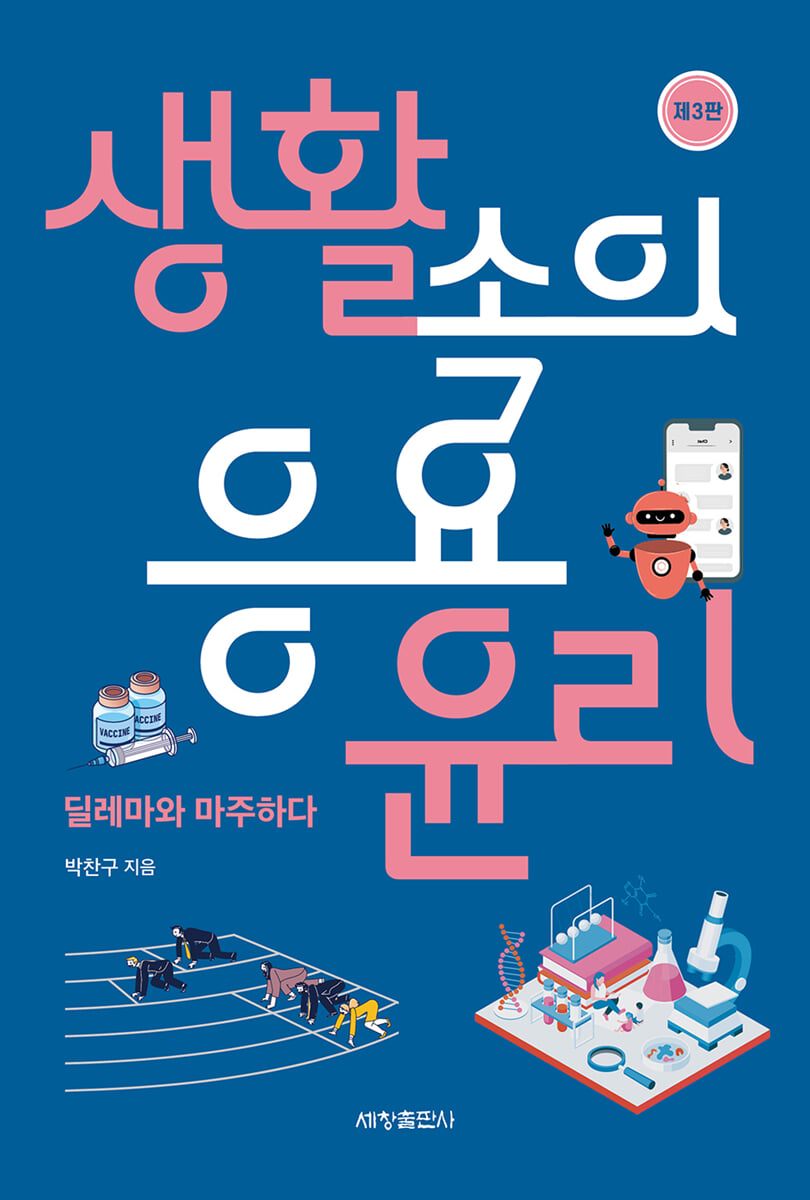
Applied ethics in everyday life
 |
Description
Book Introduction
Applied ethics is an attempt to find alternatives or solutions to ethical problems that arise in each area of social life by examining them based on basic ethical principles and representative theories.
Ethics is originally oriented toward practice, but while theoretical ethics primarily deals with purely theoretical aspects, applied ethics has a stronger practical character because it directly addresses ethical issues that arise in specific life situations.
So studying applied ethics can have a huge impact on how we navigate the ethical dilemmas we face in real life.
This book consists of 16 chapters covering each topic of applied ethics, including Chapter 1, which introduces ethical theories.
Each chapter contains independent content, so readers will have no difficulty understanding it no matter what order they read it in according to their interests.
In particular, for this third edition, a new chapter, “Information Ethics (2): Artificial Intelligence and SNS Ethics in the Non-Face-to-Face Era,” was added to keep pace with recent issues.
Each chapter is structured as follows: an introduction with a "film story" that hints at the core topic of the chapter, the main text briefly introducing current issues and controversies in the field, and finally presenting recent dilemma cases that can serve as topics for discussion.
The topics of discussion also narrowed the gap between our real lives and ethical theory by drawing on recent examples such as the "right to refuse to wear a mask" and the "protest against disabled people riding the subway."
Ethics is originally oriented toward practice, but while theoretical ethics primarily deals with purely theoretical aspects, applied ethics has a stronger practical character because it directly addresses ethical issues that arise in specific life situations.
So studying applied ethics can have a huge impact on how we navigate the ethical dilemmas we face in real life.
This book consists of 16 chapters covering each topic of applied ethics, including Chapter 1, which introduces ethical theories.
Each chapter contains independent content, so readers will have no difficulty understanding it no matter what order they read it in according to their interests.
In particular, for this third edition, a new chapter, “Information Ethics (2): Artificial Intelligence and SNS Ethics in the Non-Face-to-Face Era,” was added to keep pace with recent issues.
Each chapter is structured as follows: an introduction with a "film story" that hints at the core topic of the chapter, the main text briefly introducing current issues and controversies in the field, and finally presenting recent dilemma cases that can serve as topics for discussion.
The topics of discussion also narrowed the gap between our real lives and ethical theory by drawing on recent examples such as the "right to refuse to wear a mask" and the "protest against disabled people riding the subway."
- You can preview some of the book's contents.
Preview
index
Chapter 1: Ethical Theories
1.
Trends in contemporary applied ethics
2.
Major theories of applied ethics
3.
The basic position of this book
Questions to consider
Application Cases of Utilitarianism and Kantianism: The Controversy over the Scope of Ethics
Applying Ethical Principles to Dilemma Cases
Chapter 2: Family Ethics: A Re-Evaluation of the Meaning of Family and Family Ethics
1.
The crisis of the modern family and the changing family structure
2.
Is it necessary to get married?
3.
A renewed appreciation of the importance of family and traditional family ethics
4.
Family is the beginning and source of ethics!
Questions to consider
Marriage Culture in a Capitalist Society: The Current State of Our Family Crisis Today - Confessions of Moral Teachers
Chapter 3: Sexual Ethics: Fulfillment of Desire or Encounter of Personality?
1.
Various positions on sexual ethics
2.
Pleasure, desire, and human alienation
3.
The true meaning of sex is ultimately the meeting of personalities!
4.
The remaining question is: is it good to suppress sexual desire?
Questions to consider
The controversy over the approval and banning of 'real dolls (sex dolls)'
The reality of prostitution and sex education in Korea
Chapter 4: Gender Equality Ethics: The Justification and Challenges of Achieving Gender Equality
1.
Do differences between men and women come from genetics or from the environment?
2.
The necessity of a women's liberation movement
3.
Towards true gender equality
Questions to consider
Are the temperamental differences between men and women innate or acquired? The controversy surrounding the film "Kim Ji-young, Born 1982"
Chapter 5 Economic Ethics (1): Distributive Justice and the Problem of Poverty
1.
The significance of economic ethics
2.
The principle of just distribution
3.
What is the way to end poverty?
Questions to consider
The Real Cause of 'Absolute Poverty'
Why should we provide foreign aid?
Semi-basement, daycare center, and three mothers and daughters
Chapter 6: Economic Ethics (2): Globalization and Neoliberalism
1.
A Brief History of Capitalism
2.
Are globalization and neoliberalism good or bad?
3.
A paradigm shift: "Happiness Economics"
Questions to consider
To correct income inequality
South Korea's income concentration is the highest in Asia.
The era where 'dragons can no longer fly from streams' is over.
Chapter 7: Environmental Ethics: The Flow of Environmental Ethics Discourse and Key Issues
1.
Currents of Contemporary American Environmental Ethics Discourse
2.
Key issues and controversies in environmental ethics discourse
3.
Practical tasks for overcoming the environmental crisis
Questions to consider
Korea, a poor country in responding to the climate crisis
Europe's energy crisis
Chapter 8 Bioethics (1): Euthanasia and Withdrawal of Life-Sustaining Treatment
1.
Is euthanasia permissible?
2.
Is it ethically justifiable to discontinue futile life-sustaining treatment?
Questions to consider
European trends toward euthanasia
UK euthanasia bill rejected
Chapter 9 Bioethics (2): Brain Death and Organ Transplantation
1.
The Meaning of Brain Death and the Need for Brain Death Recognition
2.
Is brain death the complete death of a human being?
3.
Problems related to organ transplantation
Questions to consider
Controversy over the criteria for long-term distribution
Does organ distribution give priority to donor applicants?
Practices and Problems of Living Organ Transplantation in Korea
Chapter 10: Bioethics (3): Human Cloning and Embryonic Stem Cell Research
1.
Problems associated with human cloning
2.
Problems related to human embryo cloning (embryonic stem cell research)
3.
Genome editing and the designer baby controversy
Questions to consider
Human cloning: No need to fear
Human embryo research is absolutely unacceptable.
The movie "Gattaca" and gene-edited babies
Chapter 11 Bioethics (4): Animal Rights
1.
Various Perspectives on the Status of Animals 248
2.
Can Animals Be Given Moral Status?: A Reinterpretation of Kant's Ethics 257
Questions to consider
Should we become vegetarian?
Our ambivalent attitude toward animals
How much animal testing is necessary?
Chapter 12 Information Ethics (1): Computer Ethics, Internet Ethics, Cyber Ethics
1.
Background of the Information Ethics Issue
2.
Approaches and challenges of information ethics
3.
The Fourth Industrial Revolution and the Need for AI Ethics
Questions to consider
Problems with big data
Advice from IT experts for children's education
Robot Ethics Charter and Intelligent Information Society Ethics Charter
Chapter 13: Information Ethics (2): Artificial Intelligence and SNS Ethics in the Contactless Era
1.
Changes in Life in the COVID-19 Era
2.
Human Relationships in the Contactless Era and the Problem of Chatbots
3.
The Ethical Challenges of Artificial Intelligence and Social Media
Questions to consider
The Problem Left Behind by the AI Chatbot 'Iruda'
Principles for the Ethics of AI Chatbots
Chapter 14 Research Ethics
1.
Reasons for the delay in research ethics
2.
The Causes and Problems of the Hwang Woo-suk Case
3.
Key Areas of Research Ethics and Research Misconduct
4.
The Pervasiveness of Plagiarism and the Importance of Research Ethics Education
Questions to consider
Why Learning Ethics Are Disappearing in Middle and High Schools
Research ethics and scholarly conscience in a capitalist society
Code of Ethics for Scientists and Engineers
Chapter 15: Science and Ethics
1.
The relationship between science and ethics
2.
The nature of the scientific method and the true spirit of science
3.
Two Dimensions of Ethics Required in Science
4.
Social Responsibility of Scientists
Questions to consider
The right to refuse vaccination
The Origins of the Nuremberg Code
Chapter 16: Punishment and Ethics: Should the Death Penalty Be Abolished?
1.
Arguments for abolishing the death penalty
2.
Arguments for retaining the death penalty
3.
Penal theory and the death penalty
4.
Current Status and Challenges of the Death Penalty in Korea
Questions to consider
Kant's position on the death penalty
Why the defendant in the Ulsan Sisters Murder Case was sentenced to death
The Hwaseong Serial Murders and the Statute of Limitations
1.
Trends in contemporary applied ethics
2.
Major theories of applied ethics
3.
The basic position of this book
Questions to consider
Application Cases of Utilitarianism and Kantianism: The Controversy over the Scope of Ethics
Applying Ethical Principles to Dilemma Cases
Chapter 2: Family Ethics: A Re-Evaluation of the Meaning of Family and Family Ethics
1.
The crisis of the modern family and the changing family structure
2.
Is it necessary to get married?
3.
A renewed appreciation of the importance of family and traditional family ethics
4.
Family is the beginning and source of ethics!
Questions to consider
Marriage Culture in a Capitalist Society: The Current State of Our Family Crisis Today - Confessions of Moral Teachers
Chapter 3: Sexual Ethics: Fulfillment of Desire or Encounter of Personality?
1.
Various positions on sexual ethics
2.
Pleasure, desire, and human alienation
3.
The true meaning of sex is ultimately the meeting of personalities!
4.
The remaining question is: is it good to suppress sexual desire?
Questions to consider
The controversy over the approval and banning of 'real dolls (sex dolls)'
The reality of prostitution and sex education in Korea
Chapter 4: Gender Equality Ethics: The Justification and Challenges of Achieving Gender Equality
1.
Do differences between men and women come from genetics or from the environment?
2.
The necessity of a women's liberation movement
3.
Towards true gender equality
Questions to consider
Are the temperamental differences between men and women innate or acquired? The controversy surrounding the film "Kim Ji-young, Born 1982"
Chapter 5 Economic Ethics (1): Distributive Justice and the Problem of Poverty
1.
The significance of economic ethics
2.
The principle of just distribution
3.
What is the way to end poverty?
Questions to consider
The Real Cause of 'Absolute Poverty'
Why should we provide foreign aid?
Semi-basement, daycare center, and three mothers and daughters
Chapter 6: Economic Ethics (2): Globalization and Neoliberalism
1.
A Brief History of Capitalism
2.
Are globalization and neoliberalism good or bad?
3.
A paradigm shift: "Happiness Economics"
Questions to consider
To correct income inequality
South Korea's income concentration is the highest in Asia.
The era where 'dragons can no longer fly from streams' is over.
Chapter 7: Environmental Ethics: The Flow of Environmental Ethics Discourse and Key Issues
1.
Currents of Contemporary American Environmental Ethics Discourse
2.
Key issues and controversies in environmental ethics discourse
3.
Practical tasks for overcoming the environmental crisis
Questions to consider
Korea, a poor country in responding to the climate crisis
Europe's energy crisis
Chapter 8 Bioethics (1): Euthanasia and Withdrawal of Life-Sustaining Treatment
1.
Is euthanasia permissible?
2.
Is it ethically justifiable to discontinue futile life-sustaining treatment?
Questions to consider
European trends toward euthanasia
UK euthanasia bill rejected
Chapter 9 Bioethics (2): Brain Death and Organ Transplantation
1.
The Meaning of Brain Death and the Need for Brain Death Recognition
2.
Is brain death the complete death of a human being?
3.
Problems related to organ transplantation
Questions to consider
Controversy over the criteria for long-term distribution
Does organ distribution give priority to donor applicants?
Practices and Problems of Living Organ Transplantation in Korea
Chapter 10: Bioethics (3): Human Cloning and Embryonic Stem Cell Research
1.
Problems associated with human cloning
2.
Problems related to human embryo cloning (embryonic stem cell research)
3.
Genome editing and the designer baby controversy
Questions to consider
Human cloning: No need to fear
Human embryo research is absolutely unacceptable.
The movie "Gattaca" and gene-edited babies
Chapter 11 Bioethics (4): Animal Rights
1.
Various Perspectives on the Status of Animals 248
2.
Can Animals Be Given Moral Status?: A Reinterpretation of Kant's Ethics 257
Questions to consider
Should we become vegetarian?
Our ambivalent attitude toward animals
How much animal testing is necessary?
Chapter 12 Information Ethics (1): Computer Ethics, Internet Ethics, Cyber Ethics
1.
Background of the Information Ethics Issue
2.
Approaches and challenges of information ethics
3.
The Fourth Industrial Revolution and the Need for AI Ethics
Questions to consider
Problems with big data
Advice from IT experts for children's education
Robot Ethics Charter and Intelligent Information Society Ethics Charter
Chapter 13: Information Ethics (2): Artificial Intelligence and SNS Ethics in the Contactless Era
1.
Changes in Life in the COVID-19 Era
2.
Human Relationships in the Contactless Era and the Problem of Chatbots
3.
The Ethical Challenges of Artificial Intelligence and Social Media
Questions to consider
The Problem Left Behind by the AI Chatbot 'Iruda'
Principles for the Ethics of AI Chatbots
Chapter 14 Research Ethics
1.
Reasons for the delay in research ethics
2.
The Causes and Problems of the Hwang Woo-suk Case
3.
Key Areas of Research Ethics and Research Misconduct
4.
The Pervasiveness of Plagiarism and the Importance of Research Ethics Education
Questions to consider
Why Learning Ethics Are Disappearing in Middle and High Schools
Research ethics and scholarly conscience in a capitalist society
Code of Ethics for Scientists and Engineers
Chapter 15: Science and Ethics
1.
The relationship between science and ethics
2.
The nature of the scientific method and the true spirit of science
3.
Two Dimensions of Ethics Required in Science
4.
Social Responsibility of Scientists
Questions to consider
The right to refuse vaccination
The Origins of the Nuremberg Code
Chapter 16: Punishment and Ethics: Should the Death Penalty Be Abolished?
1.
Arguments for abolishing the death penalty
2.
Arguments for retaining the death penalty
3.
Penal theory and the death penalty
4.
Current Status and Challenges of the Death Penalty in Korea
Questions to consider
Kant's position on the death penalty
Why the defendant in the Ulsan Sisters Murder Case was sentenced to death
The Hwaseong Serial Murders and the Statute of Limitations
Into the book
Virtue ethics generally focuses on models of character that are widely recognized as virtuous rather than on moral principles that determine the rightness or wrongness of actions.
Because in today's complex situations, it is believed that a person with refined sensibilities and broad insight, that is, a person with practical wisdom, can make sound moral judgments rather than someone who relies on fixed principles or rules.
--- p.25
If someone uses the opposite sex as a mere means to pursue sexual pleasure, he is not only alienating the other person, but also alienating himself.
By treating the meeting between a man and a woman, which symbolizes the most ideal form that a meeting between two people can achieve, as a mere means of self-centered pleasure, he not only limits his own possibilities in life, but also ends up becoming cynical, saying, "In the end, all relationships between men and women are like that."
--- pp.69~70
If the existing male-dominated society was a factor that forced women to live in social life under structurally unequal conditions, policies should be put in place to improve this.
[…] We must establish institutional mechanisms and a culture that practically guarantees parental leave to men as well.
Because this is the way to achieve true human equality.
--- p.97
It has been believed that as the economy grows more and the gross national product (GNP) increases, the happiness of the people also increases.
But many studies on happiness tell a different truth.
More income leads to greater happiness until your income level no longer meets your basic needs, but after you reach a basic standard of living, increased income does not necessarily lead to increased happiness.
--- p.140
According to them, a truly dignified death is not euthanasia, which artificially shortens an irreversible human life and leads to death, but rather a natural death that is achieved by stopping medically meaningless life-prolonging treatment when irreversible death is imminent despite receiving the best medical treatment possible to enable a humane life.
At this point, even if life-prolonging treatment is stopped because it cannot be extended any further, it does not shorten life.
--- p.190
While scientists currently claim that they will only study genome editing in embryos for serious diseases, critics worry that if the technology is allowed, it will be used for purposes beyond treating serious diseases and disabilities, such as improving desirable traits, or for eugenic purposes that enhance and improve the normal body and mind.
--- p.235
Of course, just because we cannot grant animals the same moral status as humans, it does not mean that we can treat them carelessly.
No, it's quite the opposite.
Kant also viewed torturing animals, causing them great suffering, and treating them inhumanely as acts that diminish our own humanity, similar to violating our duties to ourselves.
--- p.259
The digitalization of human life through the internet and smartphones had some worried that it would disrupt human relationships. However, thanks to this, we were able to continue economic and social activities even during the COVID-19 pandemic, which disrupted face-to-face contact and interpersonal interactions.
While the COVID-19 crisis has blocked and closed off many physical spaces, the digital space, on the other hand, has become wider and more closely connected.
--- p.298
The advent of the atomic bomb is a prime example of how science and technology can no longer claim to be value-neutral.
Science and technology have now moved into the very heart of the realm of social action, where everyone must take responsibility for their actions.
In the sense that those with great power cannot help but be held accountable for their increased power, scientists and engineers have also become conscious of their social responsibility for the results of their research.
Because in today's complex situations, it is believed that a person with refined sensibilities and broad insight, that is, a person with practical wisdom, can make sound moral judgments rather than someone who relies on fixed principles or rules.
--- p.25
If someone uses the opposite sex as a mere means to pursue sexual pleasure, he is not only alienating the other person, but also alienating himself.
By treating the meeting between a man and a woman, which symbolizes the most ideal form that a meeting between two people can achieve, as a mere means of self-centered pleasure, he not only limits his own possibilities in life, but also ends up becoming cynical, saying, "In the end, all relationships between men and women are like that."
--- pp.69~70
If the existing male-dominated society was a factor that forced women to live in social life under structurally unequal conditions, policies should be put in place to improve this.
[…] We must establish institutional mechanisms and a culture that practically guarantees parental leave to men as well.
Because this is the way to achieve true human equality.
--- p.97
It has been believed that as the economy grows more and the gross national product (GNP) increases, the happiness of the people also increases.
But many studies on happiness tell a different truth.
More income leads to greater happiness until your income level no longer meets your basic needs, but after you reach a basic standard of living, increased income does not necessarily lead to increased happiness.
--- p.140
According to them, a truly dignified death is not euthanasia, which artificially shortens an irreversible human life and leads to death, but rather a natural death that is achieved by stopping medically meaningless life-prolonging treatment when irreversible death is imminent despite receiving the best medical treatment possible to enable a humane life.
At this point, even if life-prolonging treatment is stopped because it cannot be extended any further, it does not shorten life.
--- p.190
While scientists currently claim that they will only study genome editing in embryos for serious diseases, critics worry that if the technology is allowed, it will be used for purposes beyond treating serious diseases and disabilities, such as improving desirable traits, or for eugenic purposes that enhance and improve the normal body and mind.
--- p.235
Of course, just because we cannot grant animals the same moral status as humans, it does not mean that we can treat them carelessly.
No, it's quite the opposite.
Kant also viewed torturing animals, causing them great suffering, and treating them inhumanely as acts that diminish our own humanity, similar to violating our duties to ourselves.
--- p.259
The digitalization of human life through the internet and smartphones had some worried that it would disrupt human relationships. However, thanks to this, we were able to continue economic and social activities even during the COVID-19 pandemic, which disrupted face-to-face contact and interpersonal interactions.
While the COVID-19 crisis has blocked and closed off many physical spaces, the digital space, on the other hand, has become wider and more closely connected.
--- p.298
The advent of the atomic bomb is a prime example of how science and technology can no longer claim to be value-neutral.
Science and technology have now moved into the very heart of the realm of social action, where everyone must take responsibility for their actions.
In the sense that those with great power cannot help but be held accountable for their increased power, scientists and engineers have also become conscious of their social responsibility for the results of their research.
--- p.351
GOODS SPECIFICS
- Date of issue: January 20, 2023
- Page count, weight, size: 392 pages | 576g | 153*224*20mm
- ISBN13: 9791166841569
- ISBN10: 1166841561
You may also like
카테고리
korean


korean

![ELLE 엘르 스페셜 에디션 A형 : 12월 [2025]](http://librairie.coreenne.fr/cdn/shop/files/b8e27a3de6c9538896439686c6b0e8fb.jpg?v=1766436872&width=3840)


