

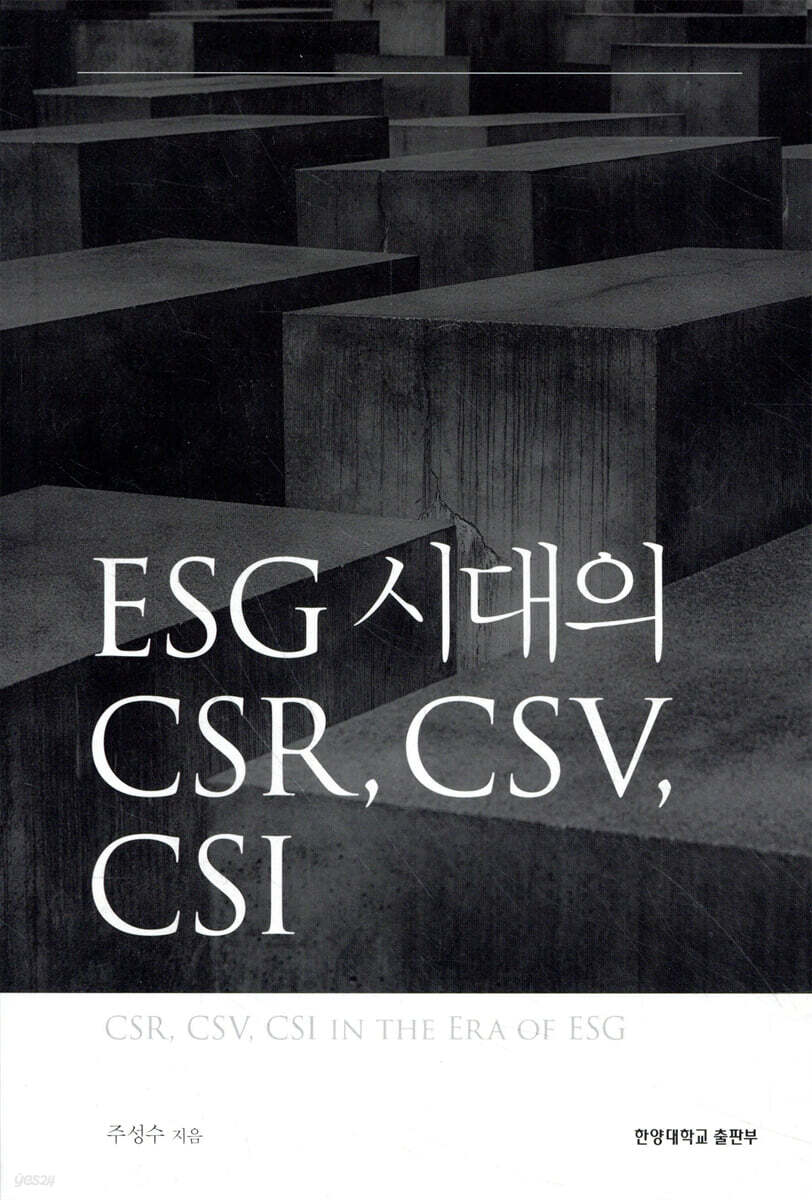
CSR, CSV, and CSI in the ESG Era
 |
Description
Book Introduction
Twenty years ago, when the author published the book “Corporate Citizenship,” the social responsibility of Korean companies had entered its initial stage of charitable and well-intentioned social contribution.
It was seen that corporate CSR activities remained at a defensive and passive stage and had a long way to go to achieve advanced 'corporate citizenship'.
Twenty years later, Korean companies are rapidly advancing from beginner to intermediate to advanced, and are enthusiastically embracing the global ESG paradigm.
Korean companies have decades of experience adapting to global changes, from CSR to CSV, before they even began to passively embrace the global ESG paradigm.
Current global ESG pressures are driving a shift from a passive, CSR-centric "risk mitigation" approach to proactive, "value creation" initiatives like CSV or inclusive business. Unlike traditional approaches, CSI strategies incorporate ESG systems centered on ESG management or ESG investment. They also prioritize CIV (Corporate Impact Venturing) over corporate philanthropy, or CSV and inclusive business practices.
Some large corporations have repeatedly committed the outdated practice of making donations or making social contributions as if they were paying for their sins after causing serious problems such as accounting fraud, collusion between government and business, money laundering, and environmental pollution.
There were suspicions that CSR was being used for green washing and social washing.
The ESG era is now forcing companies to move beyond defensive risk management approaches and transform into proactive, innovative value creators and impact-creators.
It is unclear whether Korean and global companies, now in the ESG era, will successfully navigate the path to ESG integration, swept up in the economic crisis brought on by the COVID-19 pandemic and the war in Ukraine.
However, the harsh reality is that there is no way to survive in the mid- to long-term without a paradigm shift toward ESG.
This book aims to introduce the "Corporate Social Impact" (CSI) paradigm, which innovates and strengthens corporate social responsibility to save people and the planet from the perspectives of global competition, climate crisis, and human security.
I hope that discussions will actively progress on the limitations of traditional CSR and the recent trends in CSV and new CSI.
It was seen that corporate CSR activities remained at a defensive and passive stage and had a long way to go to achieve advanced 'corporate citizenship'.
Twenty years later, Korean companies are rapidly advancing from beginner to intermediate to advanced, and are enthusiastically embracing the global ESG paradigm.
Korean companies have decades of experience adapting to global changes, from CSR to CSV, before they even began to passively embrace the global ESG paradigm.
Current global ESG pressures are driving a shift from a passive, CSR-centric "risk mitigation" approach to proactive, "value creation" initiatives like CSV or inclusive business. Unlike traditional approaches, CSI strategies incorporate ESG systems centered on ESG management or ESG investment. They also prioritize CIV (Corporate Impact Venturing) over corporate philanthropy, or CSV and inclusive business practices.
Some large corporations have repeatedly committed the outdated practice of making donations or making social contributions as if they were paying for their sins after causing serious problems such as accounting fraud, collusion between government and business, money laundering, and environmental pollution.
There were suspicions that CSR was being used for green washing and social washing.
The ESG era is now forcing companies to move beyond defensive risk management approaches and transform into proactive, innovative value creators and impact-creators.
It is unclear whether Korean and global companies, now in the ESG era, will successfully navigate the path to ESG integration, swept up in the economic crisis brought on by the COVID-19 pandemic and the war in Ukraine.
However, the harsh reality is that there is no way to survive in the mid- to long-term without a paradigm shift toward ESG.
This book aims to introduce the "Corporate Social Impact" (CSI) paradigm, which innovates and strengthens corporate social responsibility to save people and the planet from the perspectives of global competition, climate crisis, and human security.
I hope that discussions will actively progress on the limitations of traditional CSR and the recent trends in CSV and new CSI.
index
introduction
Chapter 1: Responsibility and Investment for People and the Planet
1. ESG Investment Paradigm
2. CSV and CSI in the ESG Era
3. ESG and Corporate Stakeholders
Chapter 2: CSR, CSV, and CSI in the ESG Era
1. Companies in the ESG Era
2.
Corporate Social Impact (CSI)
3.
Corporate Citizenship?: The Development of CSR, CSV, and CSI
4. CSV and CSI Innovation Cases
Chapter 3: Global Citizenship and Multinational Corporations
1.
Global Corporate Citizenship
2.
Global Corporate Citizenship Initiative
3.
Corporate Sustainability Reporting
4.
Human Rights?: Corporate Responsibility to People
Chapter 4 Corporate Social Impact (CSI)
1.
Corporate Social Impact (CSI) Strategy
2. Case Study of CSI Strategy Innovation
3.
Corporate Social Impact Investor Alliance
4.
Corporate Social Impact (CSI) and SDGs
5.
Partnership between Business and Social Economy
Chapter 5: Climate Justice and Climate Investment
1.
Global Climate Governance
2.
Climate Justice and Climate Action
3.
Climate Finance and Climate Investment
4.
Climate Finance Public-Private Partnership
Chapter 6: ESG, CSI, CSV, and Climate Investment in Korea
1.
Corporate Citizenship?: CSR, CSV, CSI
2. ESG Status and ESG Investment Challenges
3.
Carbon Neutrality and a Just Transition
4.
Conclusion
References
Search
Chapter 1: Responsibility and Investment for People and the Planet
1. ESG Investment Paradigm
2. CSV and CSI in the ESG Era
3. ESG and Corporate Stakeholders
Chapter 2: CSR, CSV, and CSI in the ESG Era
1. Companies in the ESG Era
2.
Corporate Social Impact (CSI)
3.
Corporate Citizenship?: The Development of CSR, CSV, and CSI
4. CSV and CSI Innovation Cases
Chapter 3: Global Citizenship and Multinational Corporations
1.
Global Corporate Citizenship
2.
Global Corporate Citizenship Initiative
3.
Corporate Sustainability Reporting
4.
Human Rights?: Corporate Responsibility to People
Chapter 4 Corporate Social Impact (CSI)
1.
Corporate Social Impact (CSI) Strategy
2. Case Study of CSI Strategy Innovation
3.
Corporate Social Impact Investor Alliance
4.
Corporate Social Impact (CSI) and SDGs
5.
Partnership between Business and Social Economy
Chapter 5: Climate Justice and Climate Investment
1.
Global Climate Governance
2.
Climate Justice and Climate Action
3.
Climate Finance and Climate Investment
4.
Climate Finance Public-Private Partnership
Chapter 6: ESG, CSI, CSV, and Climate Investment in Korea
1.
Corporate Citizenship?: CSR, CSV, CSI
2. ESG Status and ESG Investment Challenges
3.
Carbon Neutrality and a Just Transition
4.
Conclusion
References
Search
GOODS SPECIFICS
- Publication date: December 15, 2022
- Page count, weight, size: 440 pages | 644g | 152*225*23mm
- ISBN13: 9788972187578
- ISBN10: 8972187577
You may also like
카테고리
korean


korean

![GQ KOREA Mark (Monthly): December [2025]](http://librairie.coreenne.fr/cdn/shop/files/8ef265dbbfbf186523ed75ba7319009d.jpg?v=1765340328&width=3840)


