

Counseling techniques for children and adolescents using tools
 |
Description
Book Introduction
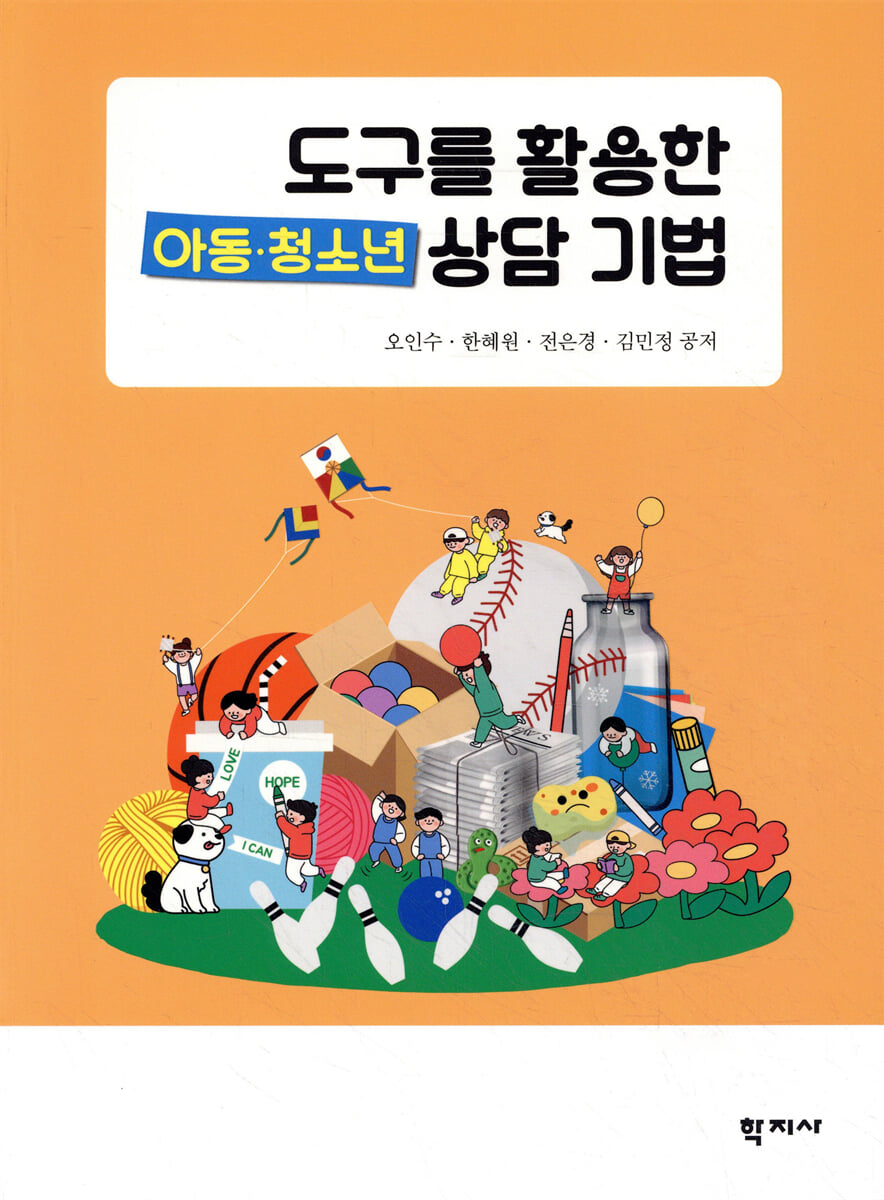
We present ways to build psychological connections with children and adolescents using 17 different, easily accessible tools.
It is designed to help you easily understand the counseling stages through five-cut illustrations and explanations, and the main activities of each chapter are presented in detailed abbreviations to help you learn specific counseling methods.
In addition, specific tips presented in individual/group counseling are described so that they can be easily learned and applied in actual counseling situations with children and adolescents.
It is designed to help you easily understand the counseling stages through five-cut illustrations and explanations, and the main activities of each chapter are presented in detailed abbreviations to help you learn specific counseling methods.
In addition, specific tips presented in individual/group counseling are described so that they can be easily learned and applied in actual counseling situations with children and adolescents.
index
preface
Composition and Usage
Part 1: Changes in Children and Adolescents and the Use of Tools
1.
Cognitive changes in children and adolescents
2.
Emotional changes in children and adolescents
3.
Social changes in children and adolescents
4.
Physical changes in children and adolescents
5.
Counseling for children and adolescents using tools
Counseling Techniques Using Part 2 Tools
1.
Counseling techniques using Post-it notes
ㆍLet's change my thoughts!
ㆍWhy was that?
ㆍStory Mini Book
2.
Newspaper-based counseling techniques
ㆍLet go of your emotions!
Newspaper collage
ㆍValue tag
3.
Counseling techniques using colored paper
ㆍWe are a colored paper family
ㆍColorful mosaic
ㆍEast, West, South, North Talk
4.
Counseling techniques using paper cups
ㆍSMART Tower Stacking
ㆍHealing the wounds in your heart
ㆍGrowth savings bank
5.
Counseling techniques using boxes
ㆍMind First Aid Kit
ㆍI'm worried
ㆍPositive dice
6.
Counseling techniques using envelopes
ㆍ2 masks
ㆍFly away! Stress
ㆍThe envelope containing me
7.
Counseling techniques using balloons
ㆍAnger, be small
ㆍThoughts are bursting!
ㆍBalloon breathing method
8.
Counseling techniques using clay
ㆍIntroducing my family
ㆍMy soft heart
ㆍFilling a hole in your heart
9.
Counseling techniques using thread/string
ㆍOur hearts are united again!
ㆍWorry Beauty Salon
ㆍWith each step towards the goal
10.
Counseling techniques using balls
ㆍConversation is the main attack
ㆍPlump! Bouncy recovery ball
ㆍEmotional dodgeball
11.
Counseling techniques using plastic bottles
ㆍMaking a positive magic bottle
ㆍPET bottle bowling
ㆍBottle cap relationship map
12.
Sponge-based counseling techniques
ㆍEraser of my heart
Burnout Sponge
Grow! Sponge Flower Pot
13.
Counseling techniques using wooden chopsticks
ㆍMaking a magic wand
ㆍFamily doll role play
ㆍQuestion bar
14.
Counseling techniques using chairs
ㆍEmpty chair technique
ㆍTwo chairs
ㆍThree chairs
15.
Food-based counseling techniques
ㆍSweet school
ㆍMy Emotion Burrito
ㆍM & M Rage Game
16.
Counseling techniques using various tools
ㆍSunglasses of my heart
ㆍMind Prescription
ㆍCreate your own badge
17.
Counseling techniques using apps
ㆍ Forming habits
ㆍ Emotional Diary
ㆍ Express your emotions through characters!
Composition and Usage
Part 1: Changes in Children and Adolescents and the Use of Tools
1.
Cognitive changes in children and adolescents
2.
Emotional changes in children and adolescents
3.
Social changes in children and adolescents
4.
Physical changes in children and adolescents
5.
Counseling for children and adolescents using tools
Counseling Techniques Using Part 2 Tools
1.
Counseling techniques using Post-it notes
ㆍLet's change my thoughts!
ㆍWhy was that?
ㆍStory Mini Book
2.
Newspaper-based counseling techniques
ㆍLet go of your emotions!
Newspaper collage
ㆍValue tag
3.
Counseling techniques using colored paper
ㆍWe are a colored paper family
ㆍColorful mosaic
ㆍEast, West, South, North Talk
4.
Counseling techniques using paper cups
ㆍSMART Tower Stacking
ㆍHealing the wounds in your heart
ㆍGrowth savings bank
5.
Counseling techniques using boxes
ㆍMind First Aid Kit
ㆍI'm worried
ㆍPositive dice
6.
Counseling techniques using envelopes
ㆍ2 masks
ㆍFly away! Stress
ㆍThe envelope containing me
7.
Counseling techniques using balloons
ㆍAnger, be small
ㆍThoughts are bursting!
ㆍBalloon breathing method
8.
Counseling techniques using clay
ㆍIntroducing my family
ㆍMy soft heart
ㆍFilling a hole in your heart
9.
Counseling techniques using thread/string
ㆍOur hearts are united again!
ㆍWorry Beauty Salon
ㆍWith each step towards the goal
10.
Counseling techniques using balls
ㆍConversation is the main attack
ㆍPlump! Bouncy recovery ball
ㆍEmotional dodgeball
11.
Counseling techniques using plastic bottles
ㆍMaking a positive magic bottle
ㆍPET bottle bowling
ㆍBottle cap relationship map
12.
Sponge-based counseling techniques
ㆍEraser of my heart
Burnout Sponge
Grow! Sponge Flower Pot
13.
Counseling techniques using wooden chopsticks
ㆍMaking a magic wand
ㆍFamily doll role play
ㆍQuestion bar
14.
Counseling techniques using chairs
ㆍEmpty chair technique
ㆍTwo chairs
ㆍThree chairs
15.
Food-based counseling techniques
ㆍSweet school
ㆍMy Emotion Burrito
ㆍM & M Rage Game
16.
Counseling techniques using various tools
ㆍSunglasses of my heart
ㆍMind Prescription
ㆍCreate your own badge
17.
Counseling techniques using apps
ㆍ Forming habits
ㆍ Emotional Diary
ㆍ Express your emotions through characters!
Detailed image
Publisher's Review
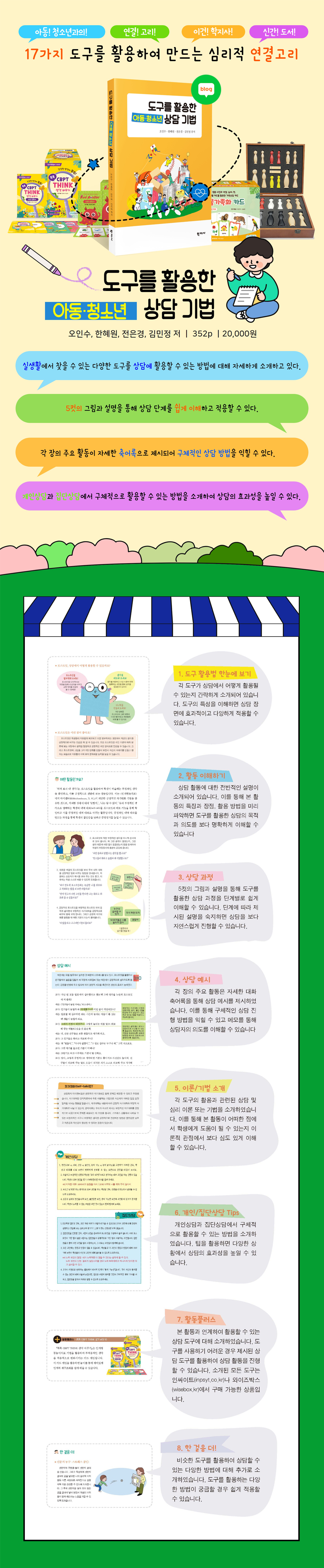
- It provides a detailed introduction to how to utilize various tools found in real life in counseling.
- You can easily understand and apply the consultation steps through 5-cut pictures and explanations.
- The main activities of each chapter are presented in detail in abbreviated form, allowing you to learn specific counseling methods.
- You can increase the effectiveness of counseling by introducing methods that can be specifically utilized in individual and group counseling.
Counseling theories and techniques for children and adolescents
Links for application
The counselor faces the client, and the teacher deals with the student.
In this way, counseling is a process of bringing about change by facing the other person.
The Chinese character '相', which means facing each other, is shaped like the character '目' looking at a tree (木).
So, it is said that the original meaning of 相 was “to look closely” or “to observe.”
Because you have to look closely to know if it is good wood.
This is in line with the basic counseling principle that 'seeing' nonverbal messages is more important in communicating with others than 'hearing' verbal messages.
When counseling children and adolescents, it is especially important to 'look' at them compared to adults.
Because verbal expression is limited, emotions and thoughts are unconsciously expressed through facial expressions and gestures.
Counselors talk to clients, and teachers talk to students.
In this way, counseling is a process of bringing about change through storytelling.
The Chinese character '談', meaning story, is a symbol of sparks (炎) flying through words (言).
It involves passionate conversation, like a negotiation where a decision is made after a heated debate.
However, in the case of children and adolescents, seeking change through words in this way is often limited.
Children and adolescents have difficulty expressing themselves and understanding themselves through abstract language because their language development is not as complete as that of adults.
Therefore, while counseling for adults primarily involves language-mediated change, for children and adolescents, tools, which are specific mediators that facilitate this verbal interaction, are needed to facilitate change.
This book introduces various tools to help overcome the limitations of verbal interaction with children and adolescents during the counseling process.
As Piaget (J.) argued, children's thinking is facilitated through concrete operations.
When we engage in activities that involve touching and manipulating things with our hands rather than using abstract language, our thinking is facilitated, we express our emotions more easily, and we express ourselves better.
So, in the case of children and adolescents, the word 相? rather than 相談 may better express the characteristics of child and adolescent counseling.
Most counseling theories and techniques have been developed and studied with the assumption of adult counseling.
That's why techniques that work for adults are often not effective for children and adolescents.
To effectively counsel children and adolescents, you must connect with them psychologically.
This book introduces various methods to create that connection using tools.
"Child and Adolescent Counseling Techniques Using Tools" introduces methods for creating psychological connections with children and adolescents using 17 different, easily accessible tools.
This book is designed to help you easily understand the counseling stages through five-panel illustrations and explanations. Each chapter's main activities are presented in detailed abbreviations, which can help you learn specific counseling methods.
In addition, specific tips presented in individual/group counseling are described so that they can be easily learned and applied in actual counseling situations with children and adolescents.
We can provide training on the topic of “Practical Child and Adolescent Counseling Techniques Using Tools” for counselors (professional counselors, professional counselors, child and adolescent counselors) or teachers (elementary and secondary school teachers).
The author of this book will personally teach the course, and training based on case studies is available for various practical applications in the field.
If you are interested in conducting training at Wee Center, please contact us at the email address below and we will provide you with further information.
Email address: listener.hyewon@gmail.com (Han Hye-won)
- You can easily understand and apply the consultation steps through 5-cut pictures and explanations.
- The main activities of each chapter are presented in detail in abbreviated form, allowing you to learn specific counseling methods.
- You can increase the effectiveness of counseling by introducing methods that can be specifically utilized in individual and group counseling.
Counseling theories and techniques for children and adolescents
Links for application
The counselor faces the client, and the teacher deals with the student.
In this way, counseling is a process of bringing about change by facing the other person.
The Chinese character '相', which means facing each other, is shaped like the character '目' looking at a tree (木).
So, it is said that the original meaning of 相 was “to look closely” or “to observe.”
Because you have to look closely to know if it is good wood.
This is in line with the basic counseling principle that 'seeing' nonverbal messages is more important in communicating with others than 'hearing' verbal messages.
When counseling children and adolescents, it is especially important to 'look' at them compared to adults.
Because verbal expression is limited, emotions and thoughts are unconsciously expressed through facial expressions and gestures.
Counselors talk to clients, and teachers talk to students.
In this way, counseling is a process of bringing about change through storytelling.
The Chinese character '談', meaning story, is a symbol of sparks (炎) flying through words (言).
It involves passionate conversation, like a negotiation where a decision is made after a heated debate.
However, in the case of children and adolescents, seeking change through words in this way is often limited.
Children and adolescents have difficulty expressing themselves and understanding themselves through abstract language because their language development is not as complete as that of adults.
Therefore, while counseling for adults primarily involves language-mediated change, for children and adolescents, tools, which are specific mediators that facilitate this verbal interaction, are needed to facilitate change.
This book introduces various tools to help overcome the limitations of verbal interaction with children and adolescents during the counseling process.
As Piaget (J.) argued, children's thinking is facilitated through concrete operations.
When we engage in activities that involve touching and manipulating things with our hands rather than using abstract language, our thinking is facilitated, we express our emotions more easily, and we express ourselves better.
So, in the case of children and adolescents, the word 相? rather than 相談 may better express the characteristics of child and adolescent counseling.
Most counseling theories and techniques have been developed and studied with the assumption of adult counseling.
That's why techniques that work for adults are often not effective for children and adolescents.
To effectively counsel children and adolescents, you must connect with them psychologically.
This book introduces various methods to create that connection using tools.
"Child and Adolescent Counseling Techniques Using Tools" introduces methods for creating psychological connections with children and adolescents using 17 different, easily accessible tools.
This book is designed to help you easily understand the counseling stages through five-panel illustrations and explanations. Each chapter's main activities are presented in detailed abbreviations, which can help you learn specific counseling methods.
In addition, specific tips presented in individual/group counseling are described so that they can be easily learned and applied in actual counseling situations with children and adolescents.
We can provide training on the topic of “Practical Child and Adolescent Counseling Techniques Using Tools” for counselors (professional counselors, professional counselors, child and adolescent counselors) or teachers (elementary and secondary school teachers).
The author of this book will personally teach the course, and training based on case studies is available for various practical applications in the field.
If you are interested in conducting training at Wee Center, please contact us at the email address below and we will provide you with further information.
Email address: listener.hyewon@gmail.com (Han Hye-won)
GOODS SPECIFICS
- Publication date: February 25, 2022
- Page count, weight, size: 352 pages | 738g | 188*254*15mm
- ISBN13: 9788999726019
- ISBN10: 8999726010
You may also like
카테고리
korean


korean

![GQ KOREA Mark (Monthly): December [2025]](http://librairie.coreenne.fr/cdn/shop/files/8ef265dbbfbf186523ed75ba7319009d.jpg?v=1765340328&width=3840)


