

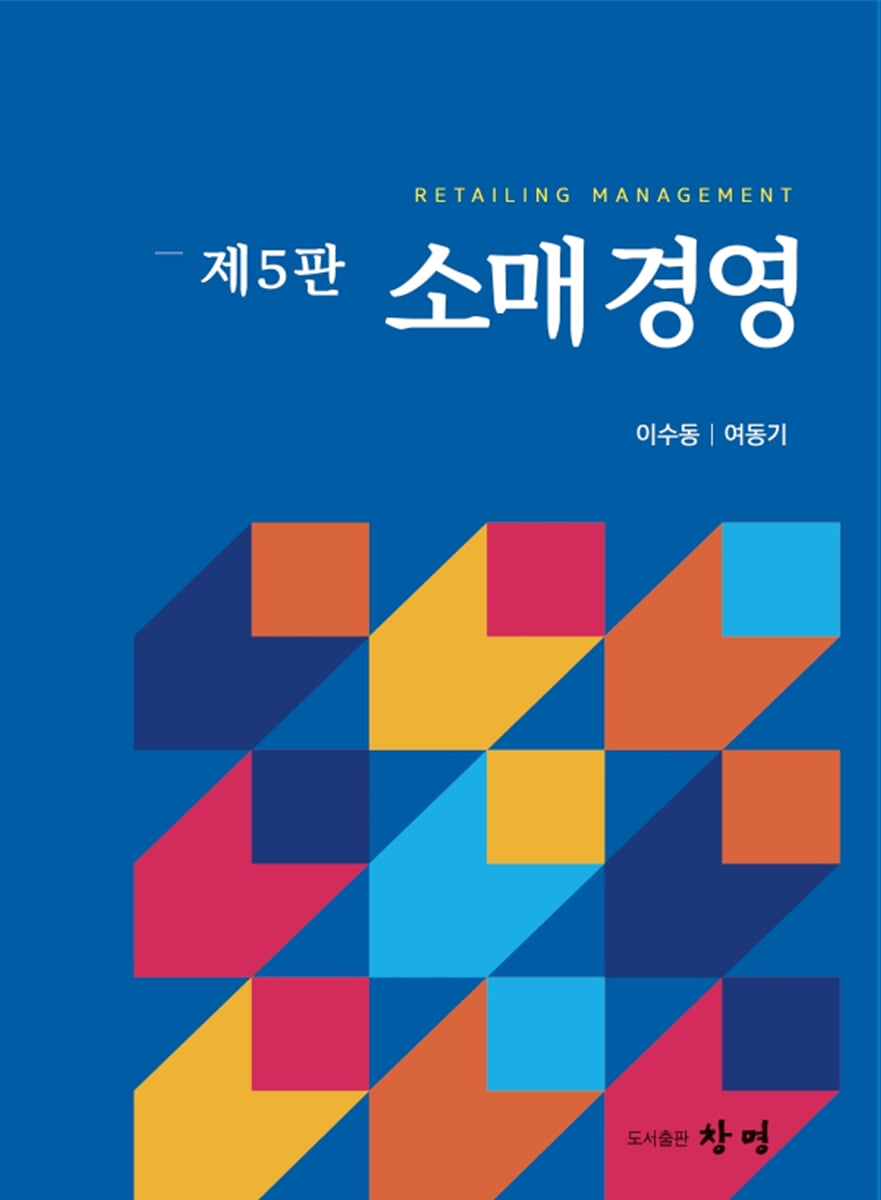
Retail Management
 |
Description
Book Introduction
In the future, the distribution industry must strengthen its logistics platform by applying cutting-edge new technologies, such as big data analysis and the Internet of Things (IoT), as well as intelligent software, to enhance the efficiency of its logistics system.
Big data analysis, in particular, predicts customer purchasing patterns and demands, enabling inventory management, marketing strategy planning, and faster delivery.
Innovation in the distribution industry's logistics platform to strengthen related technologies is expected to continue. This fifth edition of "Retail Management" actively reflects the paradigm shift in distribution caused by COVID-19, consumer mobility due to contactless interactions, and the latest trends.
Big data analysis, in particular, predicts customer purchasing patterns and demands, enabling inventory management, marketing strategy planning, and faster delivery.
Innovation in the distribution industry's logistics platform to strengthen related technologies is expected to continue. This fifth edition of "Retail Management" actively reflects the paradigm shift in distribution caused by COVID-19, consumer mobility due to contactless interactions, and the latest trends.
index
Chapter 01: Basic Understanding of Retail Distribution Management
1.
Retail Functions and Classification / 6
1.1 Definition of Retail / 6
1.2 Retail Functions / 7
1.3 Offline Retailer Classification / 9
1.4 Online Retailer Classification / 11
2.
Retail Decision-Making System / 13
2.1 Margin and Inventory Turnover / 13
2.2 Product Assortment and Diversity / 15
2.3 Location and Spatial Convenience / 16
2.4 Customer Service / 16
3.
Key Strategic Issues and Trends in Retail / 17
3.1 Accelerating Omnichannel Customer Experience / 17
3.2 The Era of "Quick Commerce": The Faster and Faster / 21
3.3 Polarization in Retail / 22
3.4 Increased Retail Power in Packaged Consumer Goods Channels / 25
3.5 The Expanded Role of Retail Brands / 26
3.6 Increasing importance of convenience / 27
3.7 The Growing Importance of Store Positioning / 27
3.8 The establishment of a contactless consumption culture due to COVID-19 / 28
4.
The Changing Role of Retailers and the Strengthening of Online Sales / 29
4.1 The Changing Role of Retailers / 29
4.2 The Growing Influence of Retailers / 30
4.3 Strengthening and Prospects Online / 33
■ Practice Problems / 35
■ References / 35
Chapter 02: Retail Industry Development Theory and History
1.
Theory on Retail Development / 42
1.1 Accordion Theory / 43
1.2 The Wheel of Retailing / 44
1.3 Dialectic Theory / 46
1.4 Vacuum zone theory / 47
1.5 Retail Life Cycle Theory / 48
1.6 Limitations of Existing Theories / 49
2.
Characteristics and History of Retail Business / 50
2.1 Department store / 51
2.2 Supermarket / 53
2.3 General merchandise store (GMS) / 55
2.4 Convenience store (CVS: convenience store) / 56
2.5 Specialty Store / 60
3.
Characteristics of Price Destruction Retailing / 60
3.1 Large discount stores (DS: discount stores) / 60
3.2 Hypermarket / 61
3.3 Super Center / 62
3.4 Power Center / 63
3.5 Membership Wholesale Club (MWC) / 64
3.6 Category Killer / 67
3.7 Outlet Store / 68
4.
The Evolution and Development of Online Retail / 71
4.1 Current Status and Trends of the Online Retail Market / 71
4.2 Evolution and Outlook of Online Retail / 72
■ Practice Problems / 75
■ References / 75
Chapter 03 Retail Marketing Strategy Planning
1.
Retail Marketing Strategy / 80
1.1 Changes in the Distribution Environment and Analysis Methods / 80
1.2 Target Market Selection and Store Location Planning / 81
1.3 Developing a Value Chain Strategy / 82
1.4 Distribution Company Strategy System and Implementation Methods / 84
2.
Product Management Strategy / 86
2.1 Product Mix Strategy / 86
2.2 Retail Mix Strategy / 89
2.3 Product Management Strategy / 91
3.
Price Management Strategy / 95
3.1 Price Management Characteristics / 95
3.2 Open Pricing System / 97
3.3 Price Reduction Types / 98
3.4 Types of Retail Price Management / 99
3.5 Economic Price Knowledge / 102
4.
Competitive Strategies in Retail / 105
4.1 Types of Retail Competition / 105
4.2 Positioning Strategy / 106
4.3 Product Life Cycle Management / 107
5. Digital Transformation (DT) and Distribution 4.0 / 109
■ Practice Problems / 112
■ References / 112
Chapter 04 Distribution Information and Customer Management Strategy
1.
The Importance of Distribution Information Technology / 119
2.
Key Information Technologies in the Distribution Industry / 122
2.1 Point of Sale (POS) / 123
2.2 Electronic Data Interchange (EDI) / 124
2.3 Quick Response (QR) System / 126
2.4 Automated Ordering System (CAO) / 131
2.5 Cross-docking / 133
2.6 Supplier-Driven Inventory Management (VMI) / 136
3.
Customer Management Strategies and Implementation Methods / 138
3.1 Customer Management Concepts and Methods / 138
3.2 Customer Management Implementation Method / 141
3.3 Expected Benefits of Customer Management / 142
■ Practice Problems / 149
■ References / 149
Chapter 05 Online Distribution Strategy
1.
Classification and Characteristics of Online Retailers / 154
1.1 Current Status and Characteristics of Online Distribution / 154
1.2 Classification and Characteristics of Online Retailers / 155
1.3 Types and Characteristics of Non-Store Retailers / 157
2.
Characteristics and Operational Models of Online Shopping Malls / 163
2.1 Classification and Types of Online Shopping Malls / 163
2.2 Features of Online Shopping Malls / 166
2.3 Consumer Benefits of Online Shopping / 167
2.4 Key Success Factors for Online Shopping Malls / 173
3.
Characteristics and Operational Structure of Home Shopping / 174
3.1 Current Status and Characteristics of TV Home Shopping / 174
3.2 T-Commerce Operational Forms / 178
4.
The Concept and Types of Social Commerce / 179
4.1 Defining Social Commerce / 179
4.2 Types of Social Commerce / 180
4.3 Differences Between Traditional Offline and Social Commerce / 183
4.4 Traditional Retailers' Response to Social Commerce / 184
5.
The Current State and Forms of Live Commerce / 185
5.1 Live Commerce Concept and Current Status / 185
5.2 Live Commerce Operation Types / 186
5.3 China's Live Commerce Market / 187
■ Practice Problems / 189
■ References / 189
Chapter 06 Omnichannel and Distribution 4.0
1.
Distribution Platform Transition to Omnichannel / 194
1.1 The Concept and Definition of Omnichannel / 194
1.2 How to Build an Omnichannel / 197
1.3 The Evolution of Omnichannel / 199
2.
Distribution 4.0 and Retail Tech / 202
2.1 The Advent and Characteristics of Distribution 4.0 / 202
2.2 The Rise and Cases of Retail Tech / 204
2.3 Changes in Distribution Due to Distribution 4.0 / 206
■ Practice Problems / 209
■ References / 209
Chapter 07: Commercial Area Analysis and Location Strategy
1.
Commercial Area Analysis and Site Selection / 214
1.1 The Importance of Commercial Area Analysis and Site Selection / 214
1.2 Characteristics and Analysis Methods of Commercial Areas / 215
1.3 Retail Store Location Selection Principles / 218
2.
Factors Influencing Site Selection / 221
2.1 Geographic and Economic Factors / 221
2.2 Product Features / 224
2.3 Considerations when Selecting a Site / 225
3.
Concepts and Evaluation Methods of Commercial Area Analysis / 228
3.1 Factors to Consider When Determining Commercial Areas / 228
3.2 The Need for Commercial Area Analysis / 230
3.3 Commercial Area Analysis Model and Method / 231
3.4 Commercial Area Evaluation Methods / 237
4.
Complex Shopping Mall Location and Characteristics / 241
■ Practice Problems / 243
■ References / 243
Chapter 08 Merchandising Planning
1.
Merchandising Strategy / 248
1.1 Understanding Merchandising / 248
1.2 Strategic Direction of Merchandising / 252
2.
Retailer Brand Strategy / 255
2.1 The Concept and Characteristics of Private Brands (PBs) / 255
2.2 PB Product Development Method / 259
2.3 The Impact of Private Brand Product Growth on Distribution Channels / 262
2.4 Expanding Direct Sourcing of Overseas Products / 265
2.5 Expanding Distribution and Manufacturing Collaboration Brands / 266
3.
Product Purchase and Purchasing Management / 267
3.1 Concepts of Purchasing and Purchase Management / 267
3.2 Department Store Product Purchase Patterns / 268
■ Practice Problems / 273
■ References / 273
Chapter 09 Product Category Management
1.
The Concept of Product Category Management / 279
1.1 Meaning of Product Categories / 279
1.2 Definition of Category Management / 280
2.
The Need for Product Category Management / 284
2.1 The Need for Category Management / 284
2.2 Comparing Brand Management and Category Management / 285
3.
The Role of Product Categories / 288
3.1 Customer-Centric Category Roles / 288
3.2 Retailer-Centric Category Roles / 288
4.
Product Category Management Step / 292
4.1 Definition and Prerequisites of Management Stages / 292
4.2 8 Steps to Product Category Management / 292
■ Practice Problems / 303
■ References / 303
Chapter 10 Logistics Management and SCM
1.
Understanding Logistics / 310
1.1 The Meaning and Importance of Logistics / 310
1.2 Integration of Logistics Activities / 315
2.
Logistics Decision Making / 320
2.1 Decision-making on Customer Service Levels / 321
2.2 Determining the Order Processing Level / 326
2.3 Inventory Management and Control / 327
2.4 Choosing a Transportation Method / 331
2.5 Warehouse Functions and Decision-Making / 335
3.
The Concept of Third-Party Logistics / 338
3.1 The Concept and Effects of Third-Party Logistics / 338
3.2 Distribution Industry and Third-Party Logistics / 341
3.3 Online Distribution and Third-Party Logistics / 343
4. SCM Concept and Implementation Plan / 345
4.1 The Concept and Importance of SCM / 345
4.2 Success Factors for SCM / 351
4.3 Components of SCM / 352
4.4 SCM Implementation Plan / 354
■ Practice Problems / 356
■ References / 356
Chapter 11 Store Operations and Human Resources Management
1.
Retail Store Structure and Concept / 362
1.1 Considerations for Store Analysis / 362
1.2 Retail Store Structure / 363
1.3 Convenience of Retail Stores / 364
1.4 Retail Store Layout / 365
2.
In-Store Merchandising / 367
2.1 In-store operations at self-service stores / 367
2.2 In-store work at a hospitality retail outlet / 368
2.3 Retail Store Display Management / 369
2.4 Retail Store Indoor Environment Management / 369
2.5 Store Design and Consumer Response / 370
2.6 Background Music and Consumer Response / 371
2.7 Vendor Management / 372
2.8 In-Store Sales Promotion / 372
3.
Product Display and Store Order Management / 375
3.1 Product Display Methods / 376
3.2 Functions and Principles of Display / 376
3.3 Types of Product Display / 378
3.4 Store Order Management / 379
4.
Store Consumer Management / 382
5.
Store Staffing Management / 386
5.1 The Role of Store Staff in Retail / 386
5.2 Compensation System for Store Staff / 387
5.3 Contents of Store Personnel Management / 387
6.
Smart Store Key Technologies / 391
6.1 Digital Technologies for Enhancing Consumer Experience / 391
6.2 Key Measures for Building a Digital Store / 393
■ Practice Problems / 399
■ References / 399
Chapter 12 Management Objectives and Profit Management
1.
Management Performance Management Plan / 405
1.1 Management Performance Management Tasks / 405
1.2 Key Performance Management Areas / 406
2.
Management Objectives and Profit Management / 410
2.1 Financial Goals in Retail / 410
2.2 Understanding Management Profits / 411
2.3 How to Earn Store Profits / 414
2.4 Factors Affecting Store Profits / 415
3.
How to Establish a Business Profit Plan / 416
3.1 Basic Management Plan / 416
3.2 Management Profit Planning Formula / 419
3.3 Ways to Improve Investment Returns / 420
4.
Loss Management / 422
4.1 The Concept of Loss Management / 422
4.2 Causes and Solutions for Loss / 422
5.
Price Management / 427
5.1 Definition and Determination of Price / 427
5.2 Changes in price / 427
6.
Store Efficiency Analysis / 429
6.1 Store aisle and display area / 429
6.2 Analysis of Consumer Trends by Consumer Retention Time / 429
6.3 Increase in-store sales by extending consumer dwell time / 430
■ Practice Problems / 432
■ References / 432
■ Search / 43
1.
Retail Functions and Classification / 6
1.1 Definition of Retail / 6
1.2 Retail Functions / 7
1.3 Offline Retailer Classification / 9
1.4 Online Retailer Classification / 11
2.
Retail Decision-Making System / 13
2.1 Margin and Inventory Turnover / 13
2.2 Product Assortment and Diversity / 15
2.3 Location and Spatial Convenience / 16
2.4 Customer Service / 16
3.
Key Strategic Issues and Trends in Retail / 17
3.1 Accelerating Omnichannel Customer Experience / 17
3.2 The Era of "Quick Commerce": The Faster and Faster / 21
3.3 Polarization in Retail / 22
3.4 Increased Retail Power in Packaged Consumer Goods Channels / 25
3.5 The Expanded Role of Retail Brands / 26
3.6 Increasing importance of convenience / 27
3.7 The Growing Importance of Store Positioning / 27
3.8 The establishment of a contactless consumption culture due to COVID-19 / 28
4.
The Changing Role of Retailers and the Strengthening of Online Sales / 29
4.1 The Changing Role of Retailers / 29
4.2 The Growing Influence of Retailers / 30
4.3 Strengthening and Prospects Online / 33
■ Practice Problems / 35
■ References / 35
Chapter 02: Retail Industry Development Theory and History
1.
Theory on Retail Development / 42
1.1 Accordion Theory / 43
1.2 The Wheel of Retailing / 44
1.3 Dialectic Theory / 46
1.4 Vacuum zone theory / 47
1.5 Retail Life Cycle Theory / 48
1.6 Limitations of Existing Theories / 49
2.
Characteristics and History of Retail Business / 50
2.1 Department store / 51
2.2 Supermarket / 53
2.3 General merchandise store (GMS) / 55
2.4 Convenience store (CVS: convenience store) / 56
2.5 Specialty Store / 60
3.
Characteristics of Price Destruction Retailing / 60
3.1 Large discount stores (DS: discount stores) / 60
3.2 Hypermarket / 61
3.3 Super Center / 62
3.4 Power Center / 63
3.5 Membership Wholesale Club (MWC) / 64
3.6 Category Killer / 67
3.7 Outlet Store / 68
4.
The Evolution and Development of Online Retail / 71
4.1 Current Status and Trends of the Online Retail Market / 71
4.2 Evolution and Outlook of Online Retail / 72
■ Practice Problems / 75
■ References / 75
Chapter 03 Retail Marketing Strategy Planning
1.
Retail Marketing Strategy / 80
1.1 Changes in the Distribution Environment and Analysis Methods / 80
1.2 Target Market Selection and Store Location Planning / 81
1.3 Developing a Value Chain Strategy / 82
1.4 Distribution Company Strategy System and Implementation Methods / 84
2.
Product Management Strategy / 86
2.1 Product Mix Strategy / 86
2.2 Retail Mix Strategy / 89
2.3 Product Management Strategy / 91
3.
Price Management Strategy / 95
3.1 Price Management Characteristics / 95
3.2 Open Pricing System / 97
3.3 Price Reduction Types / 98
3.4 Types of Retail Price Management / 99
3.5 Economic Price Knowledge / 102
4.
Competitive Strategies in Retail / 105
4.1 Types of Retail Competition / 105
4.2 Positioning Strategy / 106
4.3 Product Life Cycle Management / 107
5. Digital Transformation (DT) and Distribution 4.0 / 109
■ Practice Problems / 112
■ References / 112
Chapter 04 Distribution Information and Customer Management Strategy
1.
The Importance of Distribution Information Technology / 119
2.
Key Information Technologies in the Distribution Industry / 122
2.1 Point of Sale (POS) / 123
2.2 Electronic Data Interchange (EDI) / 124
2.3 Quick Response (QR) System / 126
2.4 Automated Ordering System (CAO) / 131
2.5 Cross-docking / 133
2.6 Supplier-Driven Inventory Management (VMI) / 136
3.
Customer Management Strategies and Implementation Methods / 138
3.1 Customer Management Concepts and Methods / 138
3.2 Customer Management Implementation Method / 141
3.3 Expected Benefits of Customer Management / 142
■ Practice Problems / 149
■ References / 149
Chapter 05 Online Distribution Strategy
1.
Classification and Characteristics of Online Retailers / 154
1.1 Current Status and Characteristics of Online Distribution / 154
1.2 Classification and Characteristics of Online Retailers / 155
1.3 Types and Characteristics of Non-Store Retailers / 157
2.
Characteristics and Operational Models of Online Shopping Malls / 163
2.1 Classification and Types of Online Shopping Malls / 163
2.2 Features of Online Shopping Malls / 166
2.3 Consumer Benefits of Online Shopping / 167
2.4 Key Success Factors for Online Shopping Malls / 173
3.
Characteristics and Operational Structure of Home Shopping / 174
3.1 Current Status and Characteristics of TV Home Shopping / 174
3.2 T-Commerce Operational Forms / 178
4.
The Concept and Types of Social Commerce / 179
4.1 Defining Social Commerce / 179
4.2 Types of Social Commerce / 180
4.3 Differences Between Traditional Offline and Social Commerce / 183
4.4 Traditional Retailers' Response to Social Commerce / 184
5.
The Current State and Forms of Live Commerce / 185
5.1 Live Commerce Concept and Current Status / 185
5.2 Live Commerce Operation Types / 186
5.3 China's Live Commerce Market / 187
■ Practice Problems / 189
■ References / 189
Chapter 06 Omnichannel and Distribution 4.0
1.
Distribution Platform Transition to Omnichannel / 194
1.1 The Concept and Definition of Omnichannel / 194
1.2 How to Build an Omnichannel / 197
1.3 The Evolution of Omnichannel / 199
2.
Distribution 4.0 and Retail Tech / 202
2.1 The Advent and Characteristics of Distribution 4.0 / 202
2.2 The Rise and Cases of Retail Tech / 204
2.3 Changes in Distribution Due to Distribution 4.0 / 206
■ Practice Problems / 209
■ References / 209
Chapter 07: Commercial Area Analysis and Location Strategy
1.
Commercial Area Analysis and Site Selection / 214
1.1 The Importance of Commercial Area Analysis and Site Selection / 214
1.2 Characteristics and Analysis Methods of Commercial Areas / 215
1.3 Retail Store Location Selection Principles / 218
2.
Factors Influencing Site Selection / 221
2.1 Geographic and Economic Factors / 221
2.2 Product Features / 224
2.3 Considerations when Selecting a Site / 225
3.
Concepts and Evaluation Methods of Commercial Area Analysis / 228
3.1 Factors to Consider When Determining Commercial Areas / 228
3.2 The Need for Commercial Area Analysis / 230
3.3 Commercial Area Analysis Model and Method / 231
3.4 Commercial Area Evaluation Methods / 237
4.
Complex Shopping Mall Location and Characteristics / 241
■ Practice Problems / 243
■ References / 243
Chapter 08 Merchandising Planning
1.
Merchandising Strategy / 248
1.1 Understanding Merchandising / 248
1.2 Strategic Direction of Merchandising / 252
2.
Retailer Brand Strategy / 255
2.1 The Concept and Characteristics of Private Brands (PBs) / 255
2.2 PB Product Development Method / 259
2.3 The Impact of Private Brand Product Growth on Distribution Channels / 262
2.4 Expanding Direct Sourcing of Overseas Products / 265
2.5 Expanding Distribution and Manufacturing Collaboration Brands / 266
3.
Product Purchase and Purchasing Management / 267
3.1 Concepts of Purchasing and Purchase Management / 267
3.2 Department Store Product Purchase Patterns / 268
■ Practice Problems / 273
■ References / 273
Chapter 09 Product Category Management
1.
The Concept of Product Category Management / 279
1.1 Meaning of Product Categories / 279
1.2 Definition of Category Management / 280
2.
The Need for Product Category Management / 284
2.1 The Need for Category Management / 284
2.2 Comparing Brand Management and Category Management / 285
3.
The Role of Product Categories / 288
3.1 Customer-Centric Category Roles / 288
3.2 Retailer-Centric Category Roles / 288
4.
Product Category Management Step / 292
4.1 Definition and Prerequisites of Management Stages / 292
4.2 8 Steps to Product Category Management / 292
■ Practice Problems / 303
■ References / 303
Chapter 10 Logistics Management and SCM
1.
Understanding Logistics / 310
1.1 The Meaning and Importance of Logistics / 310
1.2 Integration of Logistics Activities / 315
2.
Logistics Decision Making / 320
2.1 Decision-making on Customer Service Levels / 321
2.2 Determining the Order Processing Level / 326
2.3 Inventory Management and Control / 327
2.4 Choosing a Transportation Method / 331
2.5 Warehouse Functions and Decision-Making / 335
3.
The Concept of Third-Party Logistics / 338
3.1 The Concept and Effects of Third-Party Logistics / 338
3.2 Distribution Industry and Third-Party Logistics / 341
3.3 Online Distribution and Third-Party Logistics / 343
4. SCM Concept and Implementation Plan / 345
4.1 The Concept and Importance of SCM / 345
4.2 Success Factors for SCM / 351
4.3 Components of SCM / 352
4.4 SCM Implementation Plan / 354
■ Practice Problems / 356
■ References / 356
Chapter 11 Store Operations and Human Resources Management
1.
Retail Store Structure and Concept / 362
1.1 Considerations for Store Analysis / 362
1.2 Retail Store Structure / 363
1.3 Convenience of Retail Stores / 364
1.4 Retail Store Layout / 365
2.
In-Store Merchandising / 367
2.1 In-store operations at self-service stores / 367
2.2 In-store work at a hospitality retail outlet / 368
2.3 Retail Store Display Management / 369
2.4 Retail Store Indoor Environment Management / 369
2.5 Store Design and Consumer Response / 370
2.6 Background Music and Consumer Response / 371
2.7 Vendor Management / 372
2.8 In-Store Sales Promotion / 372
3.
Product Display and Store Order Management / 375
3.1 Product Display Methods / 376
3.2 Functions and Principles of Display / 376
3.3 Types of Product Display / 378
3.4 Store Order Management / 379
4.
Store Consumer Management / 382
5.
Store Staffing Management / 386
5.1 The Role of Store Staff in Retail / 386
5.2 Compensation System for Store Staff / 387
5.3 Contents of Store Personnel Management / 387
6.
Smart Store Key Technologies / 391
6.1 Digital Technologies for Enhancing Consumer Experience / 391
6.2 Key Measures for Building a Digital Store / 393
■ Practice Problems / 399
■ References / 399
Chapter 12 Management Objectives and Profit Management
1.
Management Performance Management Plan / 405
1.1 Management Performance Management Tasks / 405
1.2 Key Performance Management Areas / 406
2.
Management Objectives and Profit Management / 410
2.1 Financial Goals in Retail / 410
2.2 Understanding Management Profits / 411
2.3 How to Earn Store Profits / 414
2.4 Factors Affecting Store Profits / 415
3.
How to Establish a Business Profit Plan / 416
3.1 Basic Management Plan / 416
3.2 Management Profit Planning Formula / 419
3.3 Ways to Improve Investment Returns / 420
4.
Loss Management / 422
4.1 The Concept of Loss Management / 422
4.2 Causes and Solutions for Loss / 422
5.
Price Management / 427
5.1 Definition and Determination of Price / 427
5.2 Changes in price / 427
6.
Store Efficiency Analysis / 429
6.1 Store aisle and display area / 429
6.2 Analysis of Consumer Trends by Consumer Retention Time / 429
6.3 Increase in-store sales by extending consumer dwell time / 430
■ Practice Problems / 432
■ References / 432
■ Search / 43
Publisher's Review
Preface to the Fifth Edition
The global pandemic COVID-19 in 2020 brought about a powerful paradigm shift in distribution, unprecedented in its history.
While the evolution and development of distribution, which can be explained to some extent, can be seen to have taken place so far, COVID-19 has presented changes that are difficult to explain theoretically.
However, rather than saying that this is a change that should not have come, it would be more accurate to say that the upcoming change has been brought forward by COVID-19.
The biggest changes in distribution can be summarized into three main points:
First, the era of contactless interaction due to COVID-19 has clearly differentiated the joys and sorrows of the distribution industry.
Online has been growing steadily for a long time, but the era of non-face-to-face interaction has brought about a rapid increase.
In particular, rather than simply explaining it as online growth, the online penetration rate of food, which had been considered the last online bastion, has increased, and the online usage rate of middle-aged and older people in their 50s and older has also increased rapidly.
However, the situation is more serious than expected for existing distribution powerhouses such as department stores, duty-free shops, and large marts due to the refrain from outdoor activities and non-face-to-face interactions.
Second, the rapid application of digital transformation (DT) has increased.
Offline distribution, where direct customer contact is difficult due to non-face-to-face interactions, is strengthening product recommendations and marketing through big data-based customer-product-channel analysis. In-store, various digital technologies such as smart carts and self-checkout counters are being applied to enhance the "customer experience," thereby increasing the frequency of store visits and driving cross-selling.
Third, the reorganization of the online market has accelerated.
The online market landscape is changing due to the acquisition of eBay Korea by Shinsegae/E-Mart and the sale of first-generation online retailers such as Interpark, Auction, and Danawa. In addition, the three social commerce companies Coupang, Tmon, and WeMakePrice are converting to open markets, which is causing a big blow to the existing comprehensive mall 11th Street and online shopping malls affiliated with TV home shopping.
Fourth, platform-based online companies such as Naver, Kakao, and Coupang are entering the full-scale e-commerce market and further strengthening their positions, leading the existing open and online markets.
Finally, new distribution services are emerging.
Live commerce is expanding to compensate for the decline in offline distribution due to non-face-to-face interactions and the weakness of online experiences. In particular, the dawn delivery service that started with Market Kurly is now entering the era of even faster delivery, or "quick commerce."
Unlike the offline distribution market, which is stagnant, the online shopping market is still experiencing explosive growth.
The growth of online retail is intensifying competition among domestic and international online and offline retailers for online leadership.
The core competitiveness of online business lies in delivery.
As the online market expands, differentiated logistics and delivery services that can deliver products to consumers faster, safer, and more accurately have become essential.
The domestic and international distribution industries are continuing to pursue technological innovation, focusing not only on delivery speed but also on achieving logistics efficiency through fulfillment at existing logistics centers.
In particular, logistics platform innovation is progressing more rapidly and sophisticatedly under the influence of the Fourth Industrial Revolution.
Industry leaders are building advanced systems, including the introduction of logistics robots, and are striving to build fulfillment systems specialized for online logistics.
Therefore, in the future, the distribution industry must strengthen its logistics platform by applying cutting-edge new technologies such as big data analysis and the Internet of Things (IoT) and intelligent software to enhance the efficiency of its logistics system.
Big data analysis, in particular, predicts customer purchasing patterns and demands, enabling inventory management, marketing strategy planning, and faster delivery.
Innovation in the distribution industry's logistics platform to strengthen related technologies is expected to continue. This fifth edition of Retail Management actively reflects the paradigm shift in distribution caused by COVID-19, consumer mobility due to contactless interactions, and the latest trends.
Chapter 1 reorganizes the existing offline retail-centered classification into offline and online retail, and adds new content on the increasingly rapid pace of "quick commerce" and the non-face-to-face (untact) consumption culture resulting from COVID-19.
Chapter 2 includes new information on the evolution and development prospects of online retail, and Chapter 3 includes new information on digital transformation (DT) and Distribution 4.0, accelerated by the Fourth Industrial Revolution.
Chapter 4 includes the latest data-driven customer management strategies, and Chapter 5 has been completely revised to cover the characteristics and strategies of online distribution in general. In particular, new content has been added on T-Commerce and Live Commerce, which are emerging trends.
Chapter 6 has revised and updated the existing mobile and omnichannel content to reflect the latest trends, and newly added Distribution 4.0 and Retail Tech.
Chapter 7, Commercial Area Analysis and Location Strategy, has been revised to reflect the latest trends, and new information on the location and characteristics of complex shopping malls has been added. Chapter 8, Merchandising Planning, has some additional content on 52-week merchandising operations and collaborative brands between distributors and manufacturers.
Chapter 9 Product Category Management, Chapter 10 Logistics Management and SCM, Chapter 11 Store Operations and Human Resources Management, and Chapter 12 Management Objectives and Profit Management reflect the latest content. In particular, Chapter 11 Store Operations and Human Resources Management includes new technologies, operational plans, and case studies related to the recent trend of "digital stores."
I would like to express my gratitude to CEO Kim Sa-seol and the staff of Changmyeong Publishing for their generous support in bringing out the fifth edition.
November 2021
Lee Soo-dong and Yeo Dong-gi
The global pandemic COVID-19 in 2020 brought about a powerful paradigm shift in distribution, unprecedented in its history.
While the evolution and development of distribution, which can be explained to some extent, can be seen to have taken place so far, COVID-19 has presented changes that are difficult to explain theoretically.
However, rather than saying that this is a change that should not have come, it would be more accurate to say that the upcoming change has been brought forward by COVID-19.
The biggest changes in distribution can be summarized into three main points:
First, the era of contactless interaction due to COVID-19 has clearly differentiated the joys and sorrows of the distribution industry.
Online has been growing steadily for a long time, but the era of non-face-to-face interaction has brought about a rapid increase.
In particular, rather than simply explaining it as online growth, the online penetration rate of food, which had been considered the last online bastion, has increased, and the online usage rate of middle-aged and older people in their 50s and older has also increased rapidly.
However, the situation is more serious than expected for existing distribution powerhouses such as department stores, duty-free shops, and large marts due to the refrain from outdoor activities and non-face-to-face interactions.
Second, the rapid application of digital transformation (DT) has increased.
Offline distribution, where direct customer contact is difficult due to non-face-to-face interactions, is strengthening product recommendations and marketing through big data-based customer-product-channel analysis. In-store, various digital technologies such as smart carts and self-checkout counters are being applied to enhance the "customer experience," thereby increasing the frequency of store visits and driving cross-selling.
Third, the reorganization of the online market has accelerated.
The online market landscape is changing due to the acquisition of eBay Korea by Shinsegae/E-Mart and the sale of first-generation online retailers such as Interpark, Auction, and Danawa. In addition, the three social commerce companies Coupang, Tmon, and WeMakePrice are converting to open markets, which is causing a big blow to the existing comprehensive mall 11th Street and online shopping malls affiliated with TV home shopping.
Fourth, platform-based online companies such as Naver, Kakao, and Coupang are entering the full-scale e-commerce market and further strengthening their positions, leading the existing open and online markets.
Finally, new distribution services are emerging.
Live commerce is expanding to compensate for the decline in offline distribution due to non-face-to-face interactions and the weakness of online experiences. In particular, the dawn delivery service that started with Market Kurly is now entering the era of even faster delivery, or "quick commerce."
Unlike the offline distribution market, which is stagnant, the online shopping market is still experiencing explosive growth.
The growth of online retail is intensifying competition among domestic and international online and offline retailers for online leadership.
The core competitiveness of online business lies in delivery.
As the online market expands, differentiated logistics and delivery services that can deliver products to consumers faster, safer, and more accurately have become essential.
The domestic and international distribution industries are continuing to pursue technological innovation, focusing not only on delivery speed but also on achieving logistics efficiency through fulfillment at existing logistics centers.
In particular, logistics platform innovation is progressing more rapidly and sophisticatedly under the influence of the Fourth Industrial Revolution.
Industry leaders are building advanced systems, including the introduction of logistics robots, and are striving to build fulfillment systems specialized for online logistics.
Therefore, in the future, the distribution industry must strengthen its logistics platform by applying cutting-edge new technologies such as big data analysis and the Internet of Things (IoT) and intelligent software to enhance the efficiency of its logistics system.
Big data analysis, in particular, predicts customer purchasing patterns and demands, enabling inventory management, marketing strategy planning, and faster delivery.
Innovation in the distribution industry's logistics platform to strengthen related technologies is expected to continue. This fifth edition of Retail Management actively reflects the paradigm shift in distribution caused by COVID-19, consumer mobility due to contactless interactions, and the latest trends.
Chapter 1 reorganizes the existing offline retail-centered classification into offline and online retail, and adds new content on the increasingly rapid pace of "quick commerce" and the non-face-to-face (untact) consumption culture resulting from COVID-19.
Chapter 2 includes new information on the evolution and development prospects of online retail, and Chapter 3 includes new information on digital transformation (DT) and Distribution 4.0, accelerated by the Fourth Industrial Revolution.
Chapter 4 includes the latest data-driven customer management strategies, and Chapter 5 has been completely revised to cover the characteristics and strategies of online distribution in general. In particular, new content has been added on T-Commerce and Live Commerce, which are emerging trends.
Chapter 6 has revised and updated the existing mobile and omnichannel content to reflect the latest trends, and newly added Distribution 4.0 and Retail Tech.
Chapter 7, Commercial Area Analysis and Location Strategy, has been revised to reflect the latest trends, and new information on the location and characteristics of complex shopping malls has been added. Chapter 8, Merchandising Planning, has some additional content on 52-week merchandising operations and collaborative brands between distributors and manufacturers.
Chapter 9 Product Category Management, Chapter 10 Logistics Management and SCM, Chapter 11 Store Operations and Human Resources Management, and Chapter 12 Management Objectives and Profit Management reflect the latest content. In particular, Chapter 11 Store Operations and Human Resources Management includes new technologies, operational plans, and case studies related to the recent trend of "digital stores."
I would like to express my gratitude to CEO Kim Sa-seol and the staff of Changmyeong Publishing for their generous support in bringing out the fifth edition.
November 2021
Lee Soo-dong and Yeo Dong-gi
GOODS SPECIFICS
- Publication date: February 18, 2022
- Format: Hardcover book binding method guide
- Page count, weight, size: 433 pages | 188*257*30mm
- ISBN13: 9791188109210
- ISBN10: 1188109219
You may also like
카테고리
korean


korean

![GQ KOREA Mark (Monthly): December [2025]](http://librairie.coreenne.fr/cdn/shop/files/8ef265dbbfbf186523ed75ba7319009d.jpg?v=1765340328&width=3840)


