

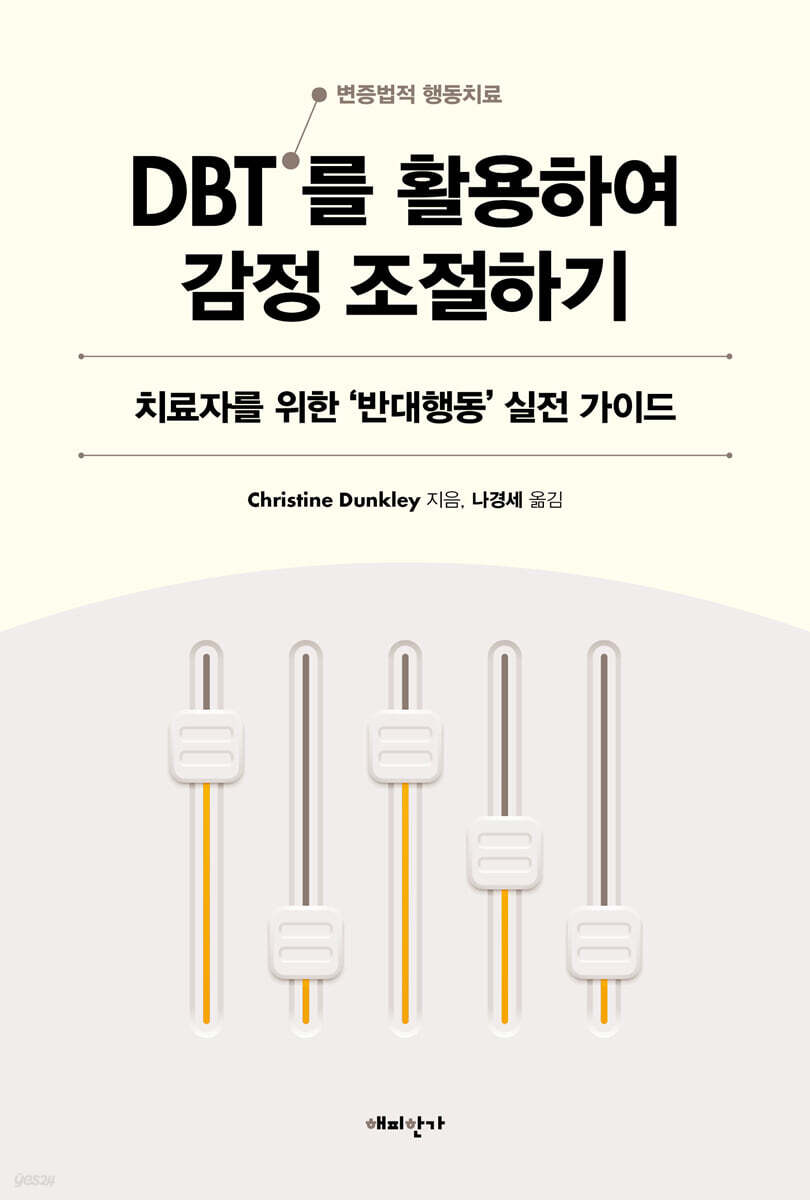
Regulating Emotions Using Dialectical Behavior Therapy (DBT)
 |
Description
Book Introduction
Regulating Your Emotions with Dialectical Behavior Therapy (DBT) is a practical guide to DBT's "oppositional action" technique.
In counter-behavior therapy, we help clients develop skills to up-regulate or down-regulate their emotions as needed.
This technique helps clients who have learned to fear or avoid painful emotions develop emotional literacy.
Part A of the text describes emotion theory, how to acknowledge emotions, and how Linehan's "oppositional action" technique can be used to regulate problematic responses.
Examples, analogies, and clinical texts are provided to illustrate key points that can be shared with clients. It also demonstrates how DBT therapists conceptualize emotions through chain analysis.
Part B describes each basic emotion and its signature characteristics.
Session scenarios are presented to demonstrate how the therapist can teach counter-behaviors, facilitate behavioral rehearsal, and provide corrective feedback.
Drawing on the author's extensive experience, he also offers tips to help you address key issues specific to each emotion.
Anyone who wants to learn a behavioral approach to emotions, whether they are a psychologist, nurse, social worker, psychiatrist, counselor, cognitive therapist, correctional officer, or occupational therapist, will find this book engaging and engaging.
Those who have already received DBT training will find this book an easy way to approach emotion regulation.
In counter-behavior therapy, we help clients develop skills to up-regulate or down-regulate their emotions as needed.
This technique helps clients who have learned to fear or avoid painful emotions develop emotional literacy.
Part A of the text describes emotion theory, how to acknowledge emotions, and how Linehan's "oppositional action" technique can be used to regulate problematic responses.
Examples, analogies, and clinical texts are provided to illustrate key points that can be shared with clients. It also demonstrates how DBT therapists conceptualize emotions through chain analysis.
Part B describes each basic emotion and its signature characteristics.
Session scenarios are presented to demonstrate how the therapist can teach counter-behaviors, facilitate behavioral rehearsal, and provide corrective feedback.
Drawing on the author's extensive experience, he also offers tips to help you address key issues specific to each emotion.
Anyone who wants to learn a behavioral approach to emotions, whether they are a psychologist, nurse, social worker, psychiatrist, counselor, cognitive therapist, correctional officer, or occupational therapist, will find this book engaging and engaging.
Those who have already received DBT training will find this book an easy way to approach emotion regulation.
index
Translator's Preface
Acknowledgements
introduction
Part A: Emotion Regulation Theory
1 Emotional regulation and dialectics
2 Functions and Forms of Emotions
3. Theory of 'Opposition'
4. Acknowledging your feelings
5 Problem Solving
Part B: Practical Emotion Regulation
6 Sadness
Episode 7
8 Fear and Anxiety
9 Joy
10 Guilt
11 Shame
12 Disgust
13 Envy and Jealousy
14 Secondary Emotions and Concomitants
index
Acknowledgements
introduction
Part A: Emotion Regulation Theory
1 Emotional regulation and dialectics
2 Functions and Forms of Emotions
3. Theory of 'Opposition'
4. Acknowledging your feelings
5 Problem Solving
Part B: Practical Emotion Regulation
6 Sadness
Episode 7
8 Fear and Anxiety
9 Joy
10 Guilt
11 Shame
12 Disgust
13 Envy and Jealousy
14 Secondary Emotions and Concomitants
index
GOODS SPECIFICS
- Date of issue: January 31, 2022
- Page count, weight, size: 266 pages | 152*225*15mm
- ISBN13: 9791197486913
- ISBN10: 1197486917
You may also like
카테고리
korean


korean

![ELLE 엘르 스페셜 에디션 A형 : 12월 [2025]](http://librairie.coreenne.fr/cdn/shop/files/b8e27a3de6c9538896439686c6b0e8fb.jpg?v=1766436872&width=3840)


