

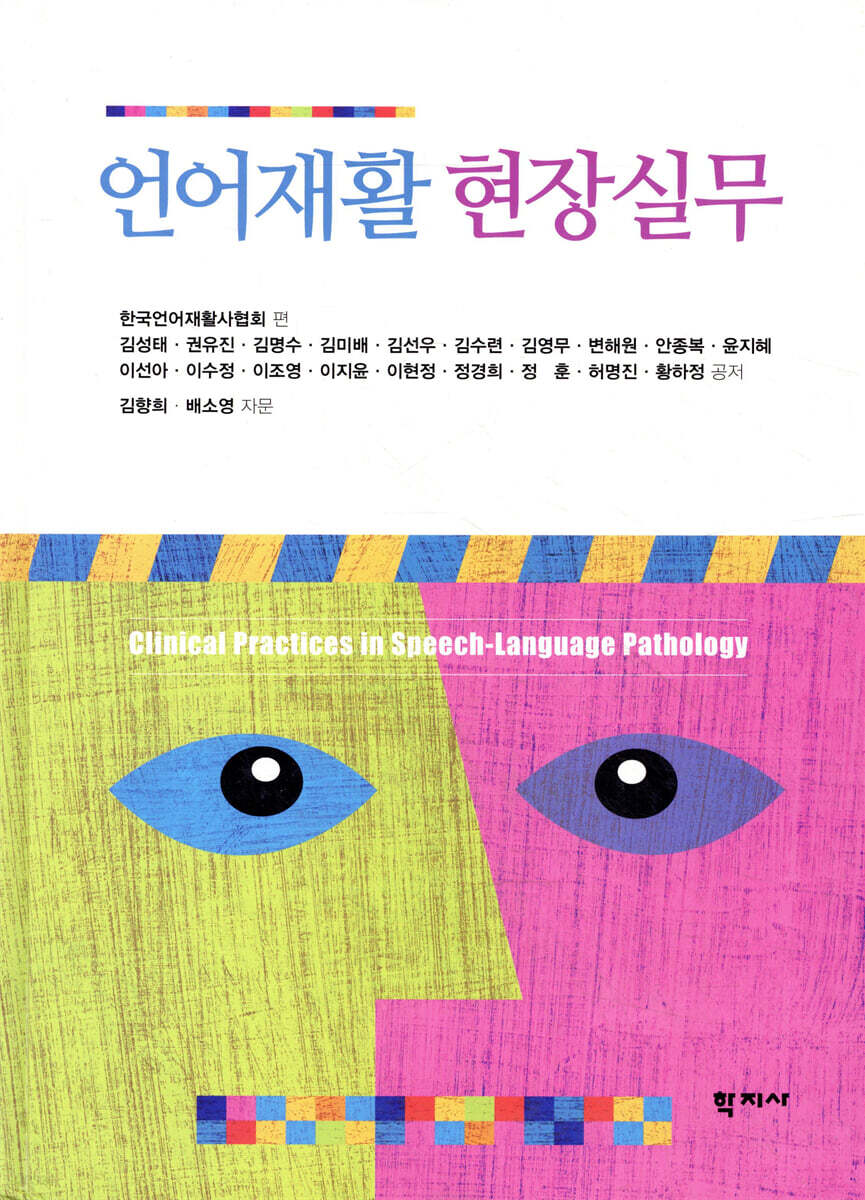
Language rehabilitation field practice
 |
Description
index
preface
Part 1 General Provisions
Chapter 1: Definition, Role, Qualifications, and Future Prospects of Speech-Language Pathologists
1.
Speech-Language Pathology and Speech-Language Pathologist
2.
Speech-Language Pathologist Certification System
3.
Speech-language pathologists' work environments and employment status
4.
Future prospects for speech-language pathologists
Chapter 2 Laws Related to Language Rehabilitation
1.
Legal common sense
2.
Laws related to speech therapists
3.
conclusion
Chapter 3 Vouchers
1.
Developmental Rehabilitation Service Project
2.
Language Development Support Project
3.
Community Service Investment Project
4.
Other businesses
Part 2 Practice
Chapter 4: Language Rehabilitation Practices by Field: School Environment
1.
Language rehabilitation environment and subject characteristics
2.
Service Delivery Models and the Role of Speech-Language Therapists
Chapter 5: Language Rehabilitation Practices by Field: Multicultural Support Environments
1.
Language rehabilitation environment and subject characteristics
2.
Service Delivery Models and the Role of Speech-Language Therapists
Chapter 6: Language Rehabilitation Practices by Field: Welfare Center Environment
1.
Language rehabilitation environment and subject characteristics
2.
Service Delivery Models and the Role of Speech-Language Therapists
Chapter 7: Language Rehabilitation Practices by Field: The Environment of a Private Language Rehabilitation Center
1.
Language rehabilitation environment and subject characteristics
2.
Service Delivery Models and the Role of Speech-Language Therapists
Chapter 8: Language Rehabilitation Practices by Field: Hospital Environment
1.
Language rehabilitation environment and subject characteristics
2.
Service Delivery Models and the Role of Speech-Language Therapists
Part 3: General Theory
Chapter 9 Language Development Disorders
Ⅰ.
Infants and toddlers with autism spectrum disorder (hospital)
1.
core knowledge
2.
assessment
3.
intervention plan
4.
counseling
5.
Questions and Answers (Q&A)
6.
future plan
Ⅱ.
Preschool-age simple language impairment (welfare center)
1.
core knowledge
2.
assessment
3.
intervention plan
4.
counseling
5.
Questions and Answers (Q&A)
6.
future plan
Ⅲ.
Social communication disorder (welfare center)
1.
core knowledge
2.
assessment
3.
intervention plan
4.
counseling
5.
Questions and Answers (Q&A)
6.
future plan
Ⅳ.
School-age children with intellectual disabilities (opened language rehabilitation center)
1.
core knowledge
2.
assessment
3.
intervention plan
4.
counseling
5.
Questions and Answers (Q&A)
6.
future plan
Chapter 10 Articulatory and Phonological Disorders
1.
core knowledge
2.
assessment
3.
intervention plan
4.
counseling
5.
Questions and Answers (Q&A)
Chapter 11 Fluency Disorders
Ⅰ.
Case 1: A preschool-age child who stutters
1.
core knowledge
2.
assessment
3.
intervention plan
4.
counseling
5.
Questions and Answers (Q&A)
6.
future plan
Ⅱ.
Case 2: A school-age child who stutters (elementary school student)
1.
core knowledge
2.
assessment
3.
intervention plan
4.
counseling
5.
Questions and Answers (Q&A)
6.
future plan
Ⅲ.
Case 3: A youth who stutters
1.
core knowledge
2.
assessment
3.
intervention plan
4.
counseling
5.
Questions and Answers (Q&A)
6.
future plan
Ⅳ.
Case 4: Adults who stutter
1.
core knowledge
2.
assessment
3.
intervention plan
4.
counseling
5.
Questions and Answers (Q&A)
6.
future plan
Chapter 12 Voice Disorders
Ⅰ.
Case 1: Childhood voice disorder (pediatric vocal nodules)
1.
core knowledge
2.
assessment
3.
intervention plan
4.
counseling
5.
Questions and Answers (Q&A)
6.
future plan
Ⅱ.
Case 2: Adolescent voice disorder (mutational dysphonia)
1.
core knowledge
2.
assessment
3.
intervention plan
4.
counseling
5.
Questions and Answers (Q&A)
6.
future plan
Ⅲ.
Case 3: Adult voice disorder (vocal polyp)
1.
core knowledge
2.
assessment
3.
intervention plan
4.
counseling
5.
Questions and Answers (Q&A)
6.
future plan
Ⅳ.
Case 4: Adult voice disorder (Reinke's edema)
1.
core knowledge
2.
assessment
3.
intervention plan
4.
counseling
5.
Questions and Answers (Q&A)
6.
future plan
V.
Case 5: Voice Disorder in Old Age (Geriatric Voice Disorder)
1.
core knowledge
2.
assessment
3.
intervention plan
4.
counseling
5.
Questions and Answers (Q&A)
6.
future plan
Chapter 13 Neurolanguage Disorders
Ⅰ.
Case 1: Flaccid dysarthria (Rehabilitation Medicine)
1.
core knowledge
2.
assessment
3.
intervention plan
4.
counseling
5.
Questions and Answers (Q&A)
6.
future plan
Ⅱ.
Case 2: Anomia (Rehabilitation Medicine)
1.
core knowledge
2.
assessment
3.
intervention plan
4.
counseling
5.
Questions and Answers (Q&A)
6.
future plan
Ⅲ.
Case 3: Global aphasia (neurology)
1.
core knowledge
2.
assessment
3.
intervention plan
4.
counseling
5.
Questions and Answers (Q&A)
6.
future plan
Ⅳ.
Case 4: Communication Disorder Due to Alzheimer's Disease (Nursing Home)
1.
core knowledge
2.
assessment
3.
intervention plan
4.
counseling
5.
Questions and Answers (Q&A)
6.
future plan
V.
Case 5: Wernicke's aphasia (welfare center)
1.
core knowledge
2.
assessment
3.
intervention plan
4.
counseling
5.
Questions and Answers (Q&A)
6.
future plan
Ⅵ.
Case 6: A patient with hypokinetic dysarthria suspected of Parkinson's disease dementia (welfare center)
1.
core knowledge
2.
assessment
3.
intervention plan
4.
counseling
5.
Questions and Answers (Q&A)
6.
future plan
Chapter 14 Swallowing Disorders
I.
Swallowing disorders in cerebral palsy
1.
core knowledge
2.
assessment
3.
intervention plan
4.
counseling
5.
Questions and Answers (Q&A)
6.
future plan
II.
Swallowing disorders in traumatic brain injury
1.
core knowledge
2.
assessment
3.
intervention plan
4.
counseling
5.
Questions and Answers (Q&A)
6.
future plan
III.
Dysphagia due to stroke (pseudobulbar palsy)
1.
core knowledge
2.
assessment
3.
intervention plan
4.
counseling
5.
Questions and Answers (Q&A)
6.
future plan
IV.
Dysphagia due to stroke (bulbar paralysis)
1.
core knowledge
2.
assessment
3.
intervention plan
4.
counseling
5.
Questions and Answers (Q&A)
6.
future plan
V.
Dysphagia in Parkinson's disease
1.
core knowledge
2.
assessment
3.
intervention plan
4.
counseling
5.
Questions and Answers (Q&A)
6.
future plan
VI.
Dysphagia in dementia
1.
core knowledge
2.
assessment
3.
intervention plan
4.
counseling
5.
Questions and Answers (Q&A)
6.
future plan
Chapter 15 Hearing Impairment
Ⅰ.
Infants and toddlers
1.
core knowledge
2.
assessment
3.
intervention plan
4.
counseling
5.
Questions and Answers (Q&A)
6.
future plan
Ⅱ.
childhood
1.
core knowledge
2.
assessment
3.
intervention plan
4.
counseling
5.
Questions and Answers (Q&A)
6.
future plan
Ⅲ.
Adulthood and old age
1.
core knowledge
2.
assessment
3.
intervention plan
4.
counseling
5.
Questions and Answers (Q&A)
6.
future plan
Part 4 Research Practice
Chapter 16: Research Methods and Design
1.
Hypothesis setting
2.
Research design
3.
Data collection
4.
Analysis and interpretation of data
5.
Reporting of results
6.
Considerations in Speech Therapy Research Design and Statistical Testing
Appendix Related Laws
Appendix 1.
Welfare of Persons with Disabilities Act
Appendix 2.
Enforcement Decree of the Welfare of Persons with Disabilities Act
Appendix 3.
Enforcement Decree of the Welfare of Persons with Disabilities Act
Search
Part 1 General Provisions
Chapter 1: Definition, Role, Qualifications, and Future Prospects of Speech-Language Pathologists
1.
Speech-Language Pathology and Speech-Language Pathologist
2.
Speech-Language Pathologist Certification System
3.
Speech-language pathologists' work environments and employment status
4.
Future prospects for speech-language pathologists
Chapter 2 Laws Related to Language Rehabilitation
1.
Legal common sense
2.
Laws related to speech therapists
3.
conclusion
Chapter 3 Vouchers
1.
Developmental Rehabilitation Service Project
2.
Language Development Support Project
3.
Community Service Investment Project
4.
Other businesses
Part 2 Practice
Chapter 4: Language Rehabilitation Practices by Field: School Environment
1.
Language rehabilitation environment and subject characteristics
2.
Service Delivery Models and the Role of Speech-Language Therapists
Chapter 5: Language Rehabilitation Practices by Field: Multicultural Support Environments
1.
Language rehabilitation environment and subject characteristics
2.
Service Delivery Models and the Role of Speech-Language Therapists
Chapter 6: Language Rehabilitation Practices by Field: Welfare Center Environment
1.
Language rehabilitation environment and subject characteristics
2.
Service Delivery Models and the Role of Speech-Language Therapists
Chapter 7: Language Rehabilitation Practices by Field: The Environment of a Private Language Rehabilitation Center
1.
Language rehabilitation environment and subject characteristics
2.
Service Delivery Models and the Role of Speech-Language Therapists
Chapter 8: Language Rehabilitation Practices by Field: Hospital Environment
1.
Language rehabilitation environment and subject characteristics
2.
Service Delivery Models and the Role of Speech-Language Therapists
Part 3: General Theory
Chapter 9 Language Development Disorders
Ⅰ.
Infants and toddlers with autism spectrum disorder (hospital)
1.
core knowledge
2.
assessment
3.
intervention plan
4.
counseling
5.
Questions and Answers (Q&A)
6.
future plan
Ⅱ.
Preschool-age simple language impairment (welfare center)
1.
core knowledge
2.
assessment
3.
intervention plan
4.
counseling
5.
Questions and Answers (Q&A)
6.
future plan
Ⅲ.
Social communication disorder (welfare center)
1.
core knowledge
2.
assessment
3.
intervention plan
4.
counseling
5.
Questions and Answers (Q&A)
6.
future plan
Ⅳ.
School-age children with intellectual disabilities (opened language rehabilitation center)
1.
core knowledge
2.
assessment
3.
intervention plan
4.
counseling
5.
Questions and Answers (Q&A)
6.
future plan
Chapter 10 Articulatory and Phonological Disorders
1.
core knowledge
2.
assessment
3.
intervention plan
4.
counseling
5.
Questions and Answers (Q&A)
Chapter 11 Fluency Disorders
Ⅰ.
Case 1: A preschool-age child who stutters
1.
core knowledge
2.
assessment
3.
intervention plan
4.
counseling
5.
Questions and Answers (Q&A)
6.
future plan
Ⅱ.
Case 2: A school-age child who stutters (elementary school student)
1.
core knowledge
2.
assessment
3.
intervention plan
4.
counseling
5.
Questions and Answers (Q&A)
6.
future plan
Ⅲ.
Case 3: A youth who stutters
1.
core knowledge
2.
assessment
3.
intervention plan
4.
counseling
5.
Questions and Answers (Q&A)
6.
future plan
Ⅳ.
Case 4: Adults who stutter
1.
core knowledge
2.
assessment
3.
intervention plan
4.
counseling
5.
Questions and Answers (Q&A)
6.
future plan
Chapter 12 Voice Disorders
Ⅰ.
Case 1: Childhood voice disorder (pediatric vocal nodules)
1.
core knowledge
2.
assessment
3.
intervention plan
4.
counseling
5.
Questions and Answers (Q&A)
6.
future plan
Ⅱ.
Case 2: Adolescent voice disorder (mutational dysphonia)
1.
core knowledge
2.
assessment
3.
intervention plan
4.
counseling
5.
Questions and Answers (Q&A)
6.
future plan
Ⅲ.
Case 3: Adult voice disorder (vocal polyp)
1.
core knowledge
2.
assessment
3.
intervention plan
4.
counseling
5.
Questions and Answers (Q&A)
6.
future plan
Ⅳ.
Case 4: Adult voice disorder (Reinke's edema)
1.
core knowledge
2.
assessment
3.
intervention plan
4.
counseling
5.
Questions and Answers (Q&A)
6.
future plan
V.
Case 5: Voice Disorder in Old Age (Geriatric Voice Disorder)
1.
core knowledge
2.
assessment
3.
intervention plan
4.
counseling
5.
Questions and Answers (Q&A)
6.
future plan
Chapter 13 Neurolanguage Disorders
Ⅰ.
Case 1: Flaccid dysarthria (Rehabilitation Medicine)
1.
core knowledge
2.
assessment
3.
intervention plan
4.
counseling
5.
Questions and Answers (Q&A)
6.
future plan
Ⅱ.
Case 2: Anomia (Rehabilitation Medicine)
1.
core knowledge
2.
assessment
3.
intervention plan
4.
counseling
5.
Questions and Answers (Q&A)
6.
future plan
Ⅲ.
Case 3: Global aphasia (neurology)
1.
core knowledge
2.
assessment
3.
intervention plan
4.
counseling
5.
Questions and Answers (Q&A)
6.
future plan
Ⅳ.
Case 4: Communication Disorder Due to Alzheimer's Disease (Nursing Home)
1.
core knowledge
2.
assessment
3.
intervention plan
4.
counseling
5.
Questions and Answers (Q&A)
6.
future plan
V.
Case 5: Wernicke's aphasia (welfare center)
1.
core knowledge
2.
assessment
3.
intervention plan
4.
counseling
5.
Questions and Answers (Q&A)
6.
future plan
Ⅵ.
Case 6: A patient with hypokinetic dysarthria suspected of Parkinson's disease dementia (welfare center)
1.
core knowledge
2.
assessment
3.
intervention plan
4.
counseling
5.
Questions and Answers (Q&A)
6.
future plan
Chapter 14 Swallowing Disorders
I.
Swallowing disorders in cerebral palsy
1.
core knowledge
2.
assessment
3.
intervention plan
4.
counseling
5.
Questions and Answers (Q&A)
6.
future plan
II.
Swallowing disorders in traumatic brain injury
1.
core knowledge
2.
assessment
3.
intervention plan
4.
counseling
5.
Questions and Answers (Q&A)
6.
future plan
III.
Dysphagia due to stroke (pseudobulbar palsy)
1.
core knowledge
2.
assessment
3.
intervention plan
4.
counseling
5.
Questions and Answers (Q&A)
6.
future plan
IV.
Dysphagia due to stroke (bulbar paralysis)
1.
core knowledge
2.
assessment
3.
intervention plan
4.
counseling
5.
Questions and Answers (Q&A)
6.
future plan
V.
Dysphagia in Parkinson's disease
1.
core knowledge
2.
assessment
3.
intervention plan
4.
counseling
5.
Questions and Answers (Q&A)
6.
future plan
VI.
Dysphagia in dementia
1.
core knowledge
2.
assessment
3.
intervention plan
4.
counseling
5.
Questions and Answers (Q&A)
6.
future plan
Chapter 15 Hearing Impairment
Ⅰ.
Infants and toddlers
1.
core knowledge
2.
assessment
3.
intervention plan
4.
counseling
5.
Questions and Answers (Q&A)
6.
future plan
Ⅱ.
childhood
1.
core knowledge
2.
assessment
3.
intervention plan
4.
counseling
5.
Questions and Answers (Q&A)
6.
future plan
Ⅲ.
Adulthood and old age
1.
core knowledge
2.
assessment
3.
intervention plan
4.
counseling
5.
Questions and Answers (Q&A)
6.
future plan
Part 4 Research Practice
Chapter 16: Research Methods and Design
1.
Hypothesis setting
2.
Research design
3.
Data collection
4.
Analysis and interpretation of data
5.
Reporting of results
6.
Considerations in Speech Therapy Research Design and Statistical Testing
Appendix Related Laws
Appendix 1.
Welfare of Persons with Disabilities Act
Appendix 2.
Enforcement Decree of the Welfare of Persons with Disabilities Act
Appendix 3.
Enforcement Decree of the Welfare of Persons with Disabilities Act
Search
GOODS SPECIFICS
- Date of issue: August 30, 2019
- Page count, weight, size: 525 pages | 195*265*35mm
- ISBN13: 9788999718915
- ISBN10: 8999718913
You may also like
카테고리
korean


korean

![ELLE 엘르 스페셜 에디션 A형 : 12월 [2025]](http://librairie.coreenne.fr/cdn/shop/files/b8e27a3de6c9538896439686c6b0e8fb.jpg?v=1766436872&width=3840)


