

Molecular Biochemical Principles of Toxicology
 |
Description
Book Introduction
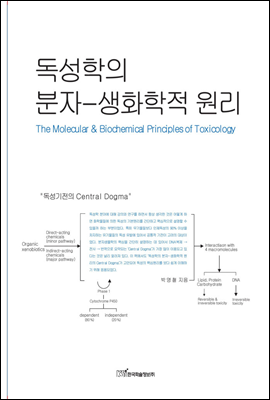
This book covers the fundamental principles of toxicity caused by organic substances in the body from the perspectives of molecular biology and biochemistry. According to the International Agency for Research on Cancer (IARC) classification of 61 human carcinogens, more than 90% are organic substances.
The book discusses the 'Central Dogma', the molecular-biochemical principles of toxicology for organic substances, through the Central Dogma, which is the most widely used explanatory method, and the approach to the molecular-biochemical principles of toxicology also includes content on the activity and inhibition of enzymes related to the dynamics of toxic substances in the body.
The book discusses the 'Central Dogma', the molecular-biochemical principles of toxicology for organic substances, through the Central Dogma, which is the most widely used explanatory method, and the approach to the molecular-biochemical principles of toxicology also includes content on the activity and inhibition of enzymes related to the dynamics of toxic substances in the body.
index
Chapter 1: Molecular-Biochemical Principles of Toxicology and the Central Dogma
1.
Molecular-Biochemical Principles of Toxicology and the Central Dogma
2.
Chemical bonds and chemical properties for toxicity expression
3.
Concept and Classification of Organic Chemicals and Toxic Substances
4.
The concept of biotransformation
Chapter 2 Phase I Reaction - Cytochrome P450-Dependent Biotransformation
1.
Discovery and classification of cytochrome P450
2.
Structure (topology) and substrate specificity of cytochrome P450
3.
Specificity of P450 in tissues, cells, and organelles
4.
Cytochrome P450 catalytic cycle
5.
Four major catalytic reactions by P450s
6.
P450 genes and induction mechanisms
7.
P450 activation inhibition mechanism
8.
Toxicants-drug metabolism enzyme families: CYP1, 2, 3
9.
P450 expression in extrahepatic tissues - CYP1, CYP2, and CYP3 families
10.
Induction and enzymatic degradation of P450
Chapter 3 Phase I Reaction - Biotransformation by Major Enzymes Other than Cytochrome P450
1.
Flavin mono-oxygenase
2.
Epoxide hydrolase
3.
Monoamine oxidase
4.
Ethanol-decomposing enzymes, including alcohol dehydrogenase and acetaldehyde dehydrogenase
5.
Quinone reductase
6.
Xanthine oxidoreductase
Chapter 4 Biotransformation by Phase II Reaction
1.
Glucuronic acid conjugation
2.
Sulfate conjugation
3.
Acetylation conjugation
4.
Methylation
5.
Amino acid conjugation
6. GSH conjugation reaction
7.
Gene-coordinate regulation of phase I and phase II responses
Chapter 5 Bioactivation - Reactive Intermediates
1.
Reactive intermediates-Electrophilic metabolites
2.
Carbon-centered radical and redox-active species
Chapter 6 Toxicodynamics - Reactive intermediates and their interactions with DNA, lipids, proteins, etc.
1.
DNA damage caused by active intermediate metabolites
2.
Protein and lipid damage caused by active intermediate metabolites
Chapter 7 Chemical Carcinogenesis
1.
multistage theory of carcinogenesis
2.
A Deeper Understanding of Carcinogenesis
References
index
1.
Molecular-Biochemical Principles of Toxicology and the Central Dogma
2.
Chemical bonds and chemical properties for toxicity expression
3.
Concept and Classification of Organic Chemicals and Toxic Substances
4.
The concept of biotransformation
Chapter 2 Phase I Reaction - Cytochrome P450-Dependent Biotransformation
1.
Discovery and classification of cytochrome P450
2.
Structure (topology) and substrate specificity of cytochrome P450
3.
Specificity of P450 in tissues, cells, and organelles
4.
Cytochrome P450 catalytic cycle
5.
Four major catalytic reactions by P450s
6.
P450 genes and induction mechanisms
7.
P450 activation inhibition mechanism
8.
Toxicants-drug metabolism enzyme families: CYP1, 2, 3
9.
P450 expression in extrahepatic tissues - CYP1, CYP2, and CYP3 families
10.
Induction and enzymatic degradation of P450
Chapter 3 Phase I Reaction - Biotransformation by Major Enzymes Other than Cytochrome P450
1.
Flavin mono-oxygenase
2.
Epoxide hydrolase
3.
Monoamine oxidase
4.
Ethanol-decomposing enzymes, including alcohol dehydrogenase and acetaldehyde dehydrogenase
5.
Quinone reductase
6.
Xanthine oxidoreductase
Chapter 4 Biotransformation by Phase II Reaction
1.
Glucuronic acid conjugation
2.
Sulfate conjugation
3.
Acetylation conjugation
4.
Methylation
5.
Amino acid conjugation
6. GSH conjugation reaction
7.
Gene-coordinate regulation of phase I and phase II responses
Chapter 5 Bioactivation - Reactive Intermediates
1.
Reactive intermediates-Electrophilic metabolites
2.
Carbon-centered radical and redox-active species
Chapter 6 Toxicodynamics - Reactive intermediates and their interactions with DNA, lipids, proteins, etc.
1.
DNA damage caused by active intermediate metabolites
2.
Protein and lipid damage caused by active intermediate metabolites
Chapter 7 Chemical Carcinogenesis
1.
multistage theory of carcinogenesis
2.
A Deeper Understanding of Carcinogenesis
References
index
GOODS SPECIFICS
- Date of issue: July 30, 2010
- Page count, weight, size: 514 pages | 965g | 172*150*35mm
- ISBN13: 9788926812594
- ISBN10: 8926812596
You may also like
카테고리
korean


korean

![ELLE 엘르 스페셜 에디션 A형 : 12월 [2025]](http://librairie.coreenne.fr/cdn/shop/files/b8e27a3de6c9538896439686c6b0e8fb.jpg?v=1766436872&width=3840)


