

One-point MFT
 |
Description
Book Introduction
This book was planned with a focus on 'responding to cases where oral function is difficult', which requires practical response in daily clinical practice.
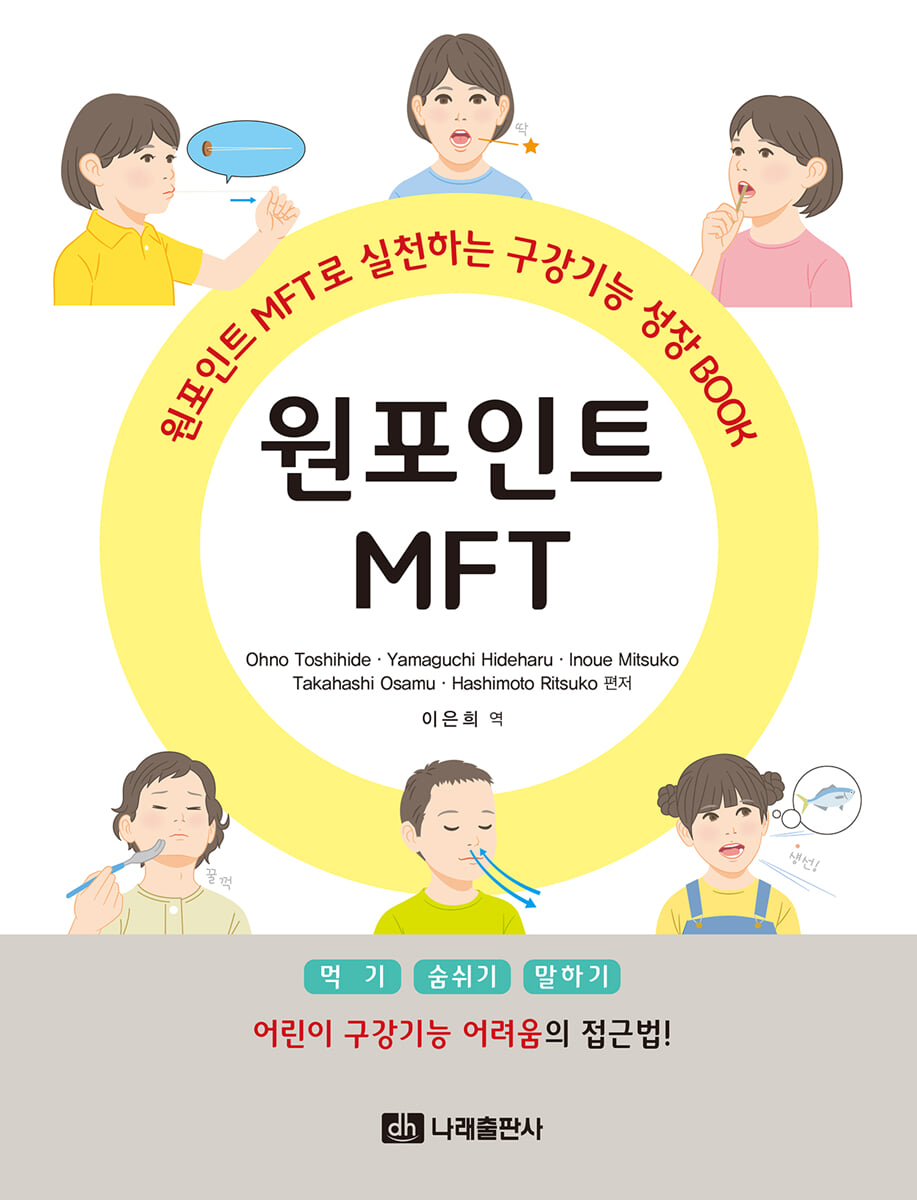
This book provides detailed explanations of the causes and countermeasures for 'difficulties in eating', 'difficulties in breathing', and 'difficulties in speaking', which are frequently seen from infancy to school age, and includes one-point MFT utilizing part of MFT, explanatory media necessary for guidance, and Q&A for guardians.
It also consists of a field-oriented practical guide based on the history and evolution of Japanese MFT and the reality of clinical application.
This book provides detailed explanations of the causes and countermeasures for 'difficulties in eating', 'difficulties in breathing', and 'difficulties in speaking', which are frequently seen from infancy to school age, and includes one-point MFT utilizing part of MFT, explanatory media necessary for guidance, and Q&A for guardians.
It also consists of a field-oriented practical guide based on the history and evolution of Japanese MFT and the reality of clinical application.
- You can preview some of the book's contents.
Preview
index
Chapter 1: Aren't you having trouble with this?
Advice on oral function difficulties
Having trouble eating? - Concerned about how to eat
■ Cases where eating function is difficult and corresponding chart
■ What is the problem with ‘how to eat’?
■ Difficulty in eating function, what to observe and evaluate?
Things to check through questionnaire
Things to check in and around the mouth
If you can, try it! Observe the dining scene
■ Causes and support methods for those who find 'eating' difficult
If it is believed that the cause is due to living environment
If you think the cause is in the form
If the function is believed to be the cause
■ 'One Point MFT' recommended for children who have poor eating habits
■ If you have difficulty eating - Finishing
What if you have difficulty breathing? - Always keep your mouth open
■ Chart for cases of respiratory difficulties and response
■ What is the problem with ‘always having your mouth open’?
■ Causes of ‘always opening your mouth’
■ What should be observed and evaluated when respiratory function is difficult?
Things to check through questionnaire
Things to check in and around the mouth
■ Possible causes and support methods for 'always having your mouth open'
If the cause is thought to be a nasopharyngeal disease
If you think the cause is malocclusion
The muscles around the mouth (mainly the orbicularis oculi) are weak, making it impossible to keep the lips closed.
■ I'd recommend "One Point MFT" to children who "always have their mouths open"!
■ Functional training for cases where you 'always have your mouth open' that can be done in everyday life
■ In case of difficulty in breathing - Conclusion
Do you have difficulty speaking? - Are you concerned about pronunciation?
■ Cases where speaking is difficult and corresponding chart
■ What could be the problem with ‘pronunciation’?
■ If pronunciation is difficult, what should be observed and evaluated?
Things to check by observing and listening to children's pronunciation
Things to know - Pronunciation checkpoints
Check inside and around the mouth
Things to observe other than pronunciation
■ Why does it sound that way? Possible causes and support methods
There is a fundamental problem with the vocal organs.
If accompanied by a tongue-sticking habit
Because pronunciation is still in its developmental stages, there are sounds that cannot be pronounced yet.
The 'habit' of mispronunciation is being learned.
There is developmental delay or developmental disability
I have hearing problems and ENT problems.
■ You can do it at the dentist! Build a foundation for oral function to help you pronounce words well.
■ If you have difficulty speaking - Summary
Chapter 2: Good Oral Habits to Know
■ Understanding oral habits and their relationship
■ Representative oral habits
tongue sticking out habit
Mouth breathing
lip closure insufficiency
Low-level theory
Thumb sucking (sucking wall)
labial wall (absorbent wall)
■ Abnormal attachment of the lingual frenulum related to oral habits
Chapter 3 Oral Function and MFT
■ What is MFT?
Purpose of doing MFT
MFT applied in various fields
■ MFT composition
What to do with MFT
MFT's map order
■ Effects of MFT
MFT-based dentition and occlusion guidance
Concurrent MFT and orthodontic treatment
Chapter 4: One-Point MFT for Use in the Clinic
Q&A on the first step to starting MFT
What you need to know before implementing MFT
Q1 At what age should I start approaching oral function?
Q2 How should we divide MFT's 'Full Program' and 'One-Point MFT'?
Q3 How can we make guardians and patients who are unaware of oral function problems aware?
Q4 What information would be good to know about a patient with cleft lip (always open mouth) before guiding them?
Q5 What are the key points to consider when first explaining oral function problems to guardians and patients?
Q6 How do you guide the tongue sticking out habit?
Q7 Which lip exercise should I choose among the various ones?
Q8 How should I perform MFT for a patient who has had a hysterectomy?
Q9 How can I continue training and make it a habit?
Practical Guide - One-Point MFT for Use in the Clinic
■ What to tell patients and guardians before giving instructions
■ Easy-to-Introduce Exercises into 'One Point MFT'
Fat tongue/skinny tongue
Tip (Tip and Stick)
Lip Tracer
Spot (spot position)
Popping (tongue popping)
Open and Close
Tongue drag (drag back)
Bite (Bite & Massage)
Gum training (chewing gum practice)
Posture
Lip exercise
Chapter 5: Q&A on Oral Function and Oral Habits That Can Be Explained to Parents
Q1 When and how can I stop thumb sucking?
Q2 What are the problems with continuing to use a pacifier?
Q3 How should I deal with nail biting?
Q4 I do not eat meat or vegetables containing fiber.
Is there any way to make it easier to eat well?
Q5 It takes a long time to eat. What should I do?
Q6 Is there a relationship between ‘always keeping your mouth open’ and cavities or gingivitis?
Q7 My lips are always rough because I lick them.
Q8 I feel like my kindergarten friends are teasing me about my pronunciation.
How should I approach this?
Column
■ The relationship between ‘habits’ and malocclusion
■ To learn more about MFT
■ Addressing oral function in educational settings
Advice on oral function difficulties
Having trouble eating? - Concerned about how to eat
■ Cases where eating function is difficult and corresponding chart
■ What is the problem with ‘how to eat’?
■ Difficulty in eating function, what to observe and evaluate?
Things to check through questionnaire
Things to check in and around the mouth
If you can, try it! Observe the dining scene
■ Causes and support methods for those who find 'eating' difficult
If it is believed that the cause is due to living environment
If you think the cause is in the form
If the function is believed to be the cause
■ 'One Point MFT' recommended for children who have poor eating habits
■ If you have difficulty eating - Finishing
What if you have difficulty breathing? - Always keep your mouth open
■ Chart for cases of respiratory difficulties and response
■ What is the problem with ‘always having your mouth open’?
■ Causes of ‘always opening your mouth’
■ What should be observed and evaluated when respiratory function is difficult?
Things to check through questionnaire
Things to check in and around the mouth
■ Possible causes and support methods for 'always having your mouth open'
If the cause is thought to be a nasopharyngeal disease
If you think the cause is malocclusion
The muscles around the mouth (mainly the orbicularis oculi) are weak, making it impossible to keep the lips closed.
■ I'd recommend "One Point MFT" to children who "always have their mouths open"!
■ Functional training for cases where you 'always have your mouth open' that can be done in everyday life
■ In case of difficulty in breathing - Conclusion
Do you have difficulty speaking? - Are you concerned about pronunciation?
■ Cases where speaking is difficult and corresponding chart
■ What could be the problem with ‘pronunciation’?
■ If pronunciation is difficult, what should be observed and evaluated?
Things to check by observing and listening to children's pronunciation
Things to know - Pronunciation checkpoints
Check inside and around the mouth
Things to observe other than pronunciation
■ Why does it sound that way? Possible causes and support methods
There is a fundamental problem with the vocal organs.
If accompanied by a tongue-sticking habit
Because pronunciation is still in its developmental stages, there are sounds that cannot be pronounced yet.
The 'habit' of mispronunciation is being learned.
There is developmental delay or developmental disability
I have hearing problems and ENT problems.
■ You can do it at the dentist! Build a foundation for oral function to help you pronounce words well.
■ If you have difficulty speaking - Summary
Chapter 2: Good Oral Habits to Know
■ Understanding oral habits and their relationship
■ Representative oral habits
tongue sticking out habit
Mouth breathing
lip closure insufficiency
Low-level theory
Thumb sucking (sucking wall)
labial wall (absorbent wall)
■ Abnormal attachment of the lingual frenulum related to oral habits
Chapter 3 Oral Function and MFT
■ What is MFT?
Purpose of doing MFT
MFT applied in various fields
■ MFT composition
What to do with MFT
MFT's map order
■ Effects of MFT
MFT-based dentition and occlusion guidance
Concurrent MFT and orthodontic treatment
Chapter 4: One-Point MFT for Use in the Clinic
Q&A on the first step to starting MFT
What you need to know before implementing MFT
Q1 At what age should I start approaching oral function?
Q2 How should we divide MFT's 'Full Program' and 'One-Point MFT'?
Q3 How can we make guardians and patients who are unaware of oral function problems aware?
Q4 What information would be good to know about a patient with cleft lip (always open mouth) before guiding them?
Q5 What are the key points to consider when first explaining oral function problems to guardians and patients?
Q6 How do you guide the tongue sticking out habit?
Q7 Which lip exercise should I choose among the various ones?
Q8 How should I perform MFT for a patient who has had a hysterectomy?
Q9 How can I continue training and make it a habit?
Practical Guide - One-Point MFT for Use in the Clinic
■ What to tell patients and guardians before giving instructions
■ Easy-to-Introduce Exercises into 'One Point MFT'
Fat tongue/skinny tongue
Tip (Tip and Stick)
Lip Tracer
Spot (spot position)
Popping (tongue popping)
Open and Close
Tongue drag (drag back)
Bite (Bite & Massage)
Gum training (chewing gum practice)
Posture
Lip exercise
Chapter 5: Q&A on Oral Function and Oral Habits That Can Be Explained to Parents
Q1 When and how can I stop thumb sucking?
Q2 What are the problems with continuing to use a pacifier?
Q3 How should I deal with nail biting?
Q4 I do not eat meat or vegetables containing fiber.
Is there any way to make it easier to eat well?
Q5 It takes a long time to eat. What should I do?
Q6 Is there a relationship between ‘always keeping your mouth open’ and cavities or gingivitis?
Q7 My lips are always rough because I lick them.
Q8 I feel like my kindergarten friends are teasing me about my pronunciation.
How should I approach this?
Column
■ The relationship between ‘habits’ and malocclusion
■ To learn more about MFT
■ Addressing oral function in educational settings
Publisher's Review
*The need for books
MFT (oral myofunctional therapy) was developed by Alfred P.
It started with Rogers' publication of his oral muscle training method in 1918-1919.
Afterwards, Richard H.
Barrett and William E.
Zickefoose, etc. were clinically improved and established as oral myofunctional therapy, and about 40 years have passed since training sessions began in Japan in 1979-1980.
Unlike the independent practice model in the United States, Japan has established a complete system within a clinic where dentists and dental hygienists work together, and the MFT that has evolved into the Japanese model has formed its own unique value in line with the needs of the clinical field.
With the 2018 revision of the insurance system, oral function training became covered by health insurance, with the inclusion of 'oral function developmental delay' and 'oral function hypoplasia', leading to a surge in demand in clinical settings and social interest.
As a result, the need for personnel and guidelines to respond to oral function problems encountered in general dentistry has increased.
*Features of this book
This book was planned with a focus on 'responding to cases where oral function is difficult', which requires practical response in daily clinical practice.
This book provides detailed explanations of the causes and countermeasures for 'difficulties in eating', 'difficulties in breathing', and 'difficulties in speaking', which are frequently seen from infancy to school age, and includes one-point MFT utilizing part of MFT, explanatory media necessary for guidance, and Q&A for guardians.
It also consists of a field-oriented practical guide based on the history and evolution of Japanese MFT and the reality of clinical application.
* Recommended for
This book is suitable for dentists and dental hygienists who want to learn about oral function or introduce MFT into their practice.
It is also useful for clinicians who are encountering oral function problems for the first time in general dentistry, and for those who want to systematically approach eating, breathing, and pronunciation problems in infants and school-aged children.
*Expected effect
This book will enable clinicians to diagnose, observe, and evaluate oral function problems and provide actionable, one-point MFT to patients and their caregivers.
By improving our oral function response capabilities, we can provide more specific and reliable treatment to patients and their guardians, and we hope that oral function response will become a more enjoyable practice in everyday clinical practice.
MFT (oral myofunctional therapy) was developed by Alfred P.
It started with Rogers' publication of his oral muscle training method in 1918-1919.
Afterwards, Richard H.
Barrett and William E.
Zickefoose, etc. were clinically improved and established as oral myofunctional therapy, and about 40 years have passed since training sessions began in Japan in 1979-1980.
Unlike the independent practice model in the United States, Japan has established a complete system within a clinic where dentists and dental hygienists work together, and the MFT that has evolved into the Japanese model has formed its own unique value in line with the needs of the clinical field.
With the 2018 revision of the insurance system, oral function training became covered by health insurance, with the inclusion of 'oral function developmental delay' and 'oral function hypoplasia', leading to a surge in demand in clinical settings and social interest.
As a result, the need for personnel and guidelines to respond to oral function problems encountered in general dentistry has increased.
*Features of this book
This book was planned with a focus on 'responding to cases where oral function is difficult', which requires practical response in daily clinical practice.
This book provides detailed explanations of the causes and countermeasures for 'difficulties in eating', 'difficulties in breathing', and 'difficulties in speaking', which are frequently seen from infancy to school age, and includes one-point MFT utilizing part of MFT, explanatory media necessary for guidance, and Q&A for guardians.
It also consists of a field-oriented practical guide based on the history and evolution of Japanese MFT and the reality of clinical application.
* Recommended for
This book is suitable for dentists and dental hygienists who want to learn about oral function or introduce MFT into their practice.
It is also useful for clinicians who are encountering oral function problems for the first time in general dentistry, and for those who want to systematically approach eating, breathing, and pronunciation problems in infants and school-aged children.
*Expected effect
This book will enable clinicians to diagnose, observe, and evaluate oral function problems and provide actionable, one-point MFT to patients and their caregivers.
By improving our oral function response capabilities, we can provide more specific and reliable treatment to patients and their guardians, and we hope that oral function response will become a more enjoyable practice in everyday clinical practice.
GOODS SPECIFICS
- Date of issue: October 5, 2025
- Page count, weight, size: 128 pages | 214*280*20mm
- ISBN13: 9791171331956
- ISBN10: 1171331959
You may also like
카테고리
korean


korean

![ELLE 엘르 스페셜 에디션 A형 : 12월 [2025]](http://librairie.coreenne.fr/cdn/shop/files/b8e27a3de6c9538896439686c6b0e8fb.jpg?v=1766436872&width=3840)


