

Rehabilitation Exercise Anatomy
 |
Description
Book Introduction
The First Step to Understanding the Body: An Introduction to Anatomy for Rehabilitation Instructors
For instructors who teach exercise, anatomy is a prerequisite, not an option.
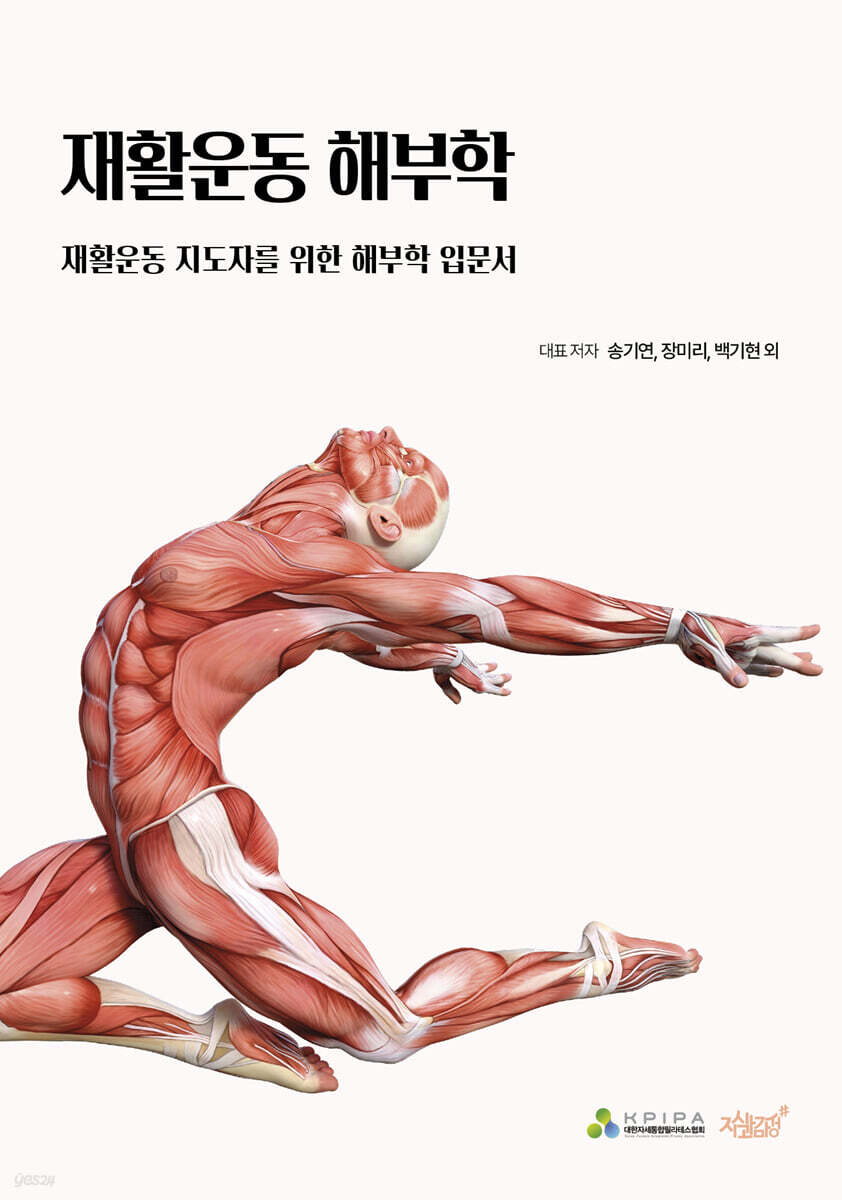
This book is an introductory book on field anatomy that focuses on the interpretation of movement and understanding of function, rather than simple memorization of structure.
By connecting anatomy and rehabilitation exercise as a single language, it helps build the anatomical thinking skills necessary for rehabilitation exercise from posture assessment to movement analysis and exercise prescription from the ground up.
For instructors who teach exercise, anatomy is a prerequisite, not an option.
This book is an introductory book on field anatomy that focuses on the interpretation of movement and understanding of function, rather than simple memorization of structure.
By connecting anatomy and rehabilitation exercise as a single language, it helps build the anatomical thinking skills necessary for rehabilitation exercise from posture assessment to movement analysis and exercise prescription from the ground up.
- You can preview some of the book's contents.
Preview
index
Author's Note
1.
Basic Medical Terminology
Directional Terms
Planes and Axis of the Human Body
Movement of the coronal plane
Movement in the sagittal plane
Movement in the transverse plane
2.
Basic Human Anatomy
Skeletal System
Articular System
Synovial Joints and Major Structures
Axial Skeleton
Vertebral Column
Sacrum, Coccyx
Thoracic Cage
Bone of Upper Limb
Shoulder Complex
Clavicle
Scapula
humerus
Shoulder Joint
Ulna, Radius
Carpal Bone
Joint of Upper Limb
Elbow Joint
Radioulnar Joint
Wrist Joint
Bone of Lower Limb
Structure of the Pelvic
Hip Bone
Femur
Pelvic Girdle
Hip Joint
Pelvic Tilting
Patella
Tibia & Fibula
Knee Joint
Classification of Chain Exercises (Open vs. Closed Kinetic Chain Exercises)
Tarsal Bone
Ankle Joint
3.
Joint Disorders
Osteoarthritis
Rheumatoid Arthritis
Gouty Arthritis
4.
Functional Anatomy and Kinesiology
Muscular System
Structure of Muscles
Classification of Skeletal Muscle Fibers
Structure of Skeletal Muscle
Types of Muscle Contraction
Shoulder Joint
Power House
Core Muscle
Respiratory
Lumbopelvic Core Stabilization System
Anterior pelvic tilt and kyphosis
Posterior pelvic tilt and kyphoscoliosis
5.
Pathological Movement and Compensatory Patterns
Muscle Imbalance
Pathological Muscle Contraction
Upper crossed syndrome
Lower Crossed Syndrome
Fundamental Principles of Rehabilitation Exercise
6.
Posture Assessment and Analysis
Understanding Posture
Static Posture Assessment
7.
Postural Assessment in Practice
Frontal Plane Postural Assessment Practice - Frontal and Posterior Focus
Sagittal Plane Postural Assessment Practice - Lateral Alignment Focus
Anatomy, the first step to understanding the body
References
1.
Basic Medical Terminology
Directional Terms
Planes and Axis of the Human Body
Movement of the coronal plane
Movement in the sagittal plane
Movement in the transverse plane
2.
Basic Human Anatomy
Skeletal System
Articular System
Synovial Joints and Major Structures
Axial Skeleton
Vertebral Column
Sacrum, Coccyx
Thoracic Cage
Bone of Upper Limb
Shoulder Complex
Clavicle
Scapula
humerus
Shoulder Joint
Ulna, Radius
Carpal Bone
Joint of Upper Limb
Elbow Joint
Radioulnar Joint
Wrist Joint
Bone of Lower Limb
Structure of the Pelvic
Hip Bone
Femur
Pelvic Girdle
Hip Joint
Pelvic Tilting
Patella
Tibia & Fibula
Knee Joint
Classification of Chain Exercises (Open vs. Closed Kinetic Chain Exercises)
Tarsal Bone
Ankle Joint
3.
Joint Disorders
Osteoarthritis
Rheumatoid Arthritis
Gouty Arthritis
4.
Functional Anatomy and Kinesiology
Muscular System
Structure of Muscles
Classification of Skeletal Muscle Fibers
Structure of Skeletal Muscle
Types of Muscle Contraction
Shoulder Joint
Power House
Core Muscle
Respiratory
Lumbopelvic Core Stabilization System
Anterior pelvic tilt and kyphosis
Posterior pelvic tilt and kyphoscoliosis
5.
Pathological Movement and Compensatory Patterns
Muscle Imbalance
Pathological Muscle Contraction
Upper crossed syndrome
Lower Crossed Syndrome
Fundamental Principles of Rehabilitation Exercise
6.
Posture Assessment and Analysis
Understanding Posture
Static Posture Assessment
7.
Postural Assessment in Practice
Frontal Plane Postural Assessment Practice - Frontal and Posterior Focus
Sagittal Plane Postural Assessment Practice - Lateral Alignment Focus
Anatomy, the first step to understanding the body
References
Publisher's Review
The human body shape is never a fixed frame.
Even with the same forward tilt and the same curved back, the shape can appear completely different depending on occupation, lifestyle, exercise history, and even daily posture patterns.
In order to read the changes in the body that cannot be judged by appearance alone, we must develop an eye that interprets structure and understands function, not just appearance.
That's where anatomy comes in.
For rehabilitation exercise instructors, anatomy is not an option, but a 'prerequisite'.
Because it is the basic language for scientifically analyzing each person's unique body, accurately identifying movement problems, and designing an individualized approach accordingly.
This book was created to impart practical anatomical thinking skills to all exercise professionals in the field who dream of becoming rehabilitation exercise specialists, physical therapists who want to advance in clinical practice, and university students.
I sincerely hope that anatomy, which has often felt complex and difficult, will become a little more familiar and that it will become an opportunity to understand the bodies of patients and clients more deeply.
- All instructors of the Korea Posture Integrated Pilates Association
Even with the same forward tilt and the same curved back, the shape can appear completely different depending on occupation, lifestyle, exercise history, and even daily posture patterns.
In order to read the changes in the body that cannot be judged by appearance alone, we must develop an eye that interprets structure and understands function, not just appearance.
That's where anatomy comes in.
For rehabilitation exercise instructors, anatomy is not an option, but a 'prerequisite'.
Because it is the basic language for scientifically analyzing each person's unique body, accurately identifying movement problems, and designing an individualized approach accordingly.
This book was created to impart practical anatomical thinking skills to all exercise professionals in the field who dream of becoming rehabilitation exercise specialists, physical therapists who want to advance in clinical practice, and university students.
I sincerely hope that anatomy, which has often felt complex and difficult, will become a little more familiar and that it will become an opportunity to understand the bodies of patients and clients more deeply.
- All instructors of the Korea Posture Integrated Pilates Association
GOODS SPECIFICS
- Date of issue: August 18, 2025
- Page count, weight, size: 312 pages | 172*245*30mm
- ISBN13: 9791139227383
- ISBN10: 1139227386
You may also like
카테고리
korean


korean

![GQ KOREA Mark (Monthly): December [2025]](http://librairie.coreenne.fr/cdn/shop/files/8ef265dbbfbf186523ed75ba7319009d.jpg?v=1765340328&width=3840)


