

JASPER Model for Children with Autism
 |
Description
Book Introduction
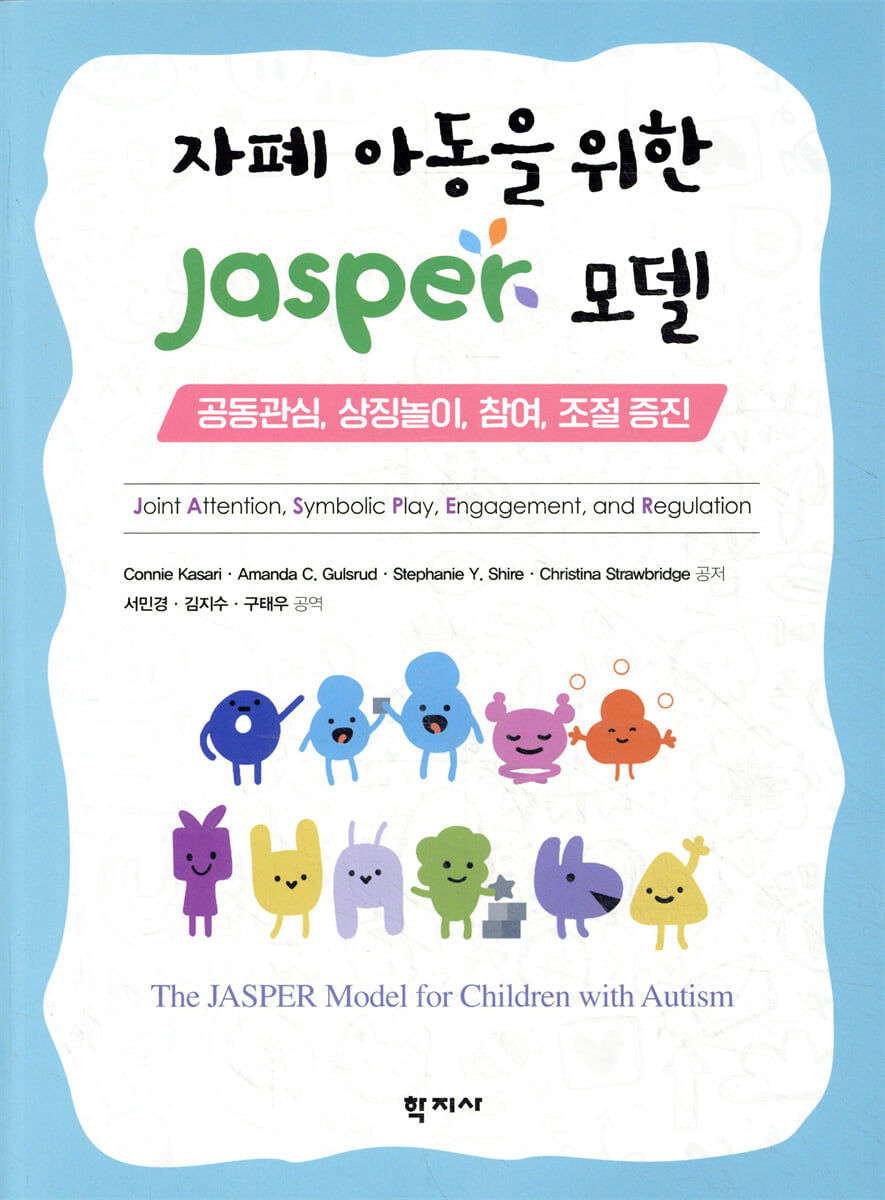
The JASPER Model for Children with Autism is a practice-oriented program designed for practical application. It goes beyond a simple introduction to theory and provides specific, systematic guidance on intervention implementation procedures, play material composition, step-by-step teaching strategies, and evaluation methods.
It is designed so that various practitioners, such as therapists, special education teachers, speech therapists, behavior analysts, and parents, can effectively utilize it in their respective environments.
It also provides specific guidance for parents and caregivers who want to practice consistent interaction styles.
It is designed so that various practitioners, such as therapists, special education teachers, speech therapists, behavior analysts, and parents, can effectively utilize it in their respective environments.
It also provides specific guidance for parents and caregivers who want to practice consistent interaction styles.
index
Part 1: Introduction to the JASPER Model
Chapter 1: What is the JASPER Model?
1.
Introduction
2.
Arbitration Details
3.
Arbitration framework
4.
4 areas
5.
evaluation
6.
strategy
7.
conclusion
Chapter 2: Key Areas of the JASPER Model
1.
Introduction
2.
participation
3.
From simple play to symbolic play
4.
social communication
5.
adjustment
6.
conclusion
Part 2: Setting Target Technologies
Chapter 3 SPACE Evaluation
1.
Introduction
2. SPACE Information
3. Application of SPACE evaluation
4.
General Questions
5. SPACE form
6.
Grading method
7.
conclusion
Chapter 4: Identifying Mastered and Targeted Skills
1.
Introduction
2.
Setting target technology
3.
Targeted technologies by area
4.
Target skill setting practice
5.
conclusion
Preparing for Part 3 Play Session
Chapter 5: JASPER'S PLAY ROUTINE
1.
Introduction
2.
Description of the play routine
3.
Components of a play routine
4.
Characteristics of play routines
5.
Become an equal and active play partner within the play routine.
6.
conclusion
Chapter 6: Setting Up JASPER's Play Routine
1.
Introduction
2.
Choosing Toys and Play Behaviors
3.
Choose your communication
4.
Setting up a play routine
5.
What happens when you set up a play routine?
Common difficulties
6.
conclusion
Chapter 7: Preparing the JASPER Environment
1.
Introduction
2.
Using the environment to support children's goals
3.
Preparing the Play Area
4.
Establishing a play routine
5.
Maintaining the environment throughout the routine
6.
Common environmental difficulties
7.
conclusion
Chapter 8: Laying the Foundation for Participation and Moderation
1.
Introduction
2.
Apply visual routines and support
3.
Transitioning into and out of sessions
4.
Using natural reinforcers
5.
Understanding the Promotion System
6.
Set clear expectations
7. ACT Problem Solving Framework
8.
General difficulties related to participation and moderation support
9.
conclusion
Part 4 Play
Chapter 9: Imitating and Demonstrating Play
1.
Introduction
2.
Imitation and modeling as a response to children
3.
Imitation Guidelines
4.
Demonstration Instructions
5.
Recognizing children's reactions to adult demonstrations
6.
Striking a Balance Between Imitation and Demonstration
7.
General difficulties associated with imitating and demonstrating
8.
conclusion
Chapter 10: Setting up basic play
1.
Introduction
2.
Basic principles of play
3.
The role of adults in establishing play routines
4.
Check if the basic play is set up properly
5.
Restart your play routine
6.
Supporting children's play pace
7.
Common difficulties encountered when setting up basic play
8.
conclusion
Chapter 11: Expanding Your Play Routine
1.
Introduction
2.
The principle of expansion
3.
Preparing the environment for play expansion
4.
Wait for the child to expand the play
5.
Additional support for expanding play
6.
Continuing the play routine after expansion
7.
Enrich your play routine
8.
Common difficulties encountered when expanding play
9.
conclusion
Part 5: Communication
Chapter 12: Core Communication Strategies
1.
Introduction
2.
Look for signals that indicate communication intent.
3.
Emulating and Expanding on Productive Communication
4.
Demonstrate language skills when it's your turn
5.
Common difficulties encountered in communication
6.
conclusion
Chapter 13: Programming for Gestures and Language
1.
Introduction
2.
Principles of Programming
3.
Preparing for Programming
4.
Presenting Opportunities Through Programming
5.
Recognizing Your Child's Reactions
6.
Providing quality programming and facilitation
7.
Common difficulties encountered in programming
8.
conclusion
Chapter 14: Using the Voice Output Device
1.
Introduction
2.
Prepare your communication device
3.
Using speech production devices in play sessions
4.
Common difficulties encountered when using speech production devices
5.
conclusion
Solving Part 6 Problems
Chapter 15: Apply to Participate
1.
Introduction
2.
Evaluate participation
3.
Develop a plan to increase participation
4.
Check the effect
5.
conclusion
Chapter 16: Support for Adjustment
1.
Introduction
2.
Evaluate the control
3.
Making a plan to improve control
4.
Check the effect
5.
conclusion
Chapter 17: Supporting Productive Play When Restricted and Repetitive Behaviors Occur
1.
Introduction
2.
Assessing the quality of play
3.
Making a Plan to Promote Productive Play
4.
Responding to rigidity
5.
Responding to limited interest
6.
Responding to repetitive behaviors
7.
Responding to sensory-related behaviors
8.
Check the effect
9.
conclusion
Part 7 Conclusion
Chapter 18: Putting It All Together
1.
outline
2.
Integrating strategies
3.
Continuously monitor your child's progress
4. JASPER Training
5.
Beyond the basics
6.
General Questions
7.
conclusion
supplement
Appendix A Strategy Checklist
Appendix B Practice Problem Answers
Appendix C Toy Box
References
Search
Chapter 1: What is the JASPER Model?
1.
Introduction
2.
Arbitration Details
3.
Arbitration framework
4.
4 areas
5.
evaluation
6.
strategy
7.
conclusion
Chapter 2: Key Areas of the JASPER Model
1.
Introduction
2.
participation
3.
From simple play to symbolic play
4.
social communication
5.
adjustment
6.
conclusion
Part 2: Setting Target Technologies
Chapter 3 SPACE Evaluation
1.
Introduction
2. SPACE Information
3. Application of SPACE evaluation
4.
General Questions
5. SPACE form
6.
Grading method
7.
conclusion
Chapter 4: Identifying Mastered and Targeted Skills
1.
Introduction
2.
Setting target technology
3.
Targeted technologies by area
4.
Target skill setting practice
5.
conclusion
Preparing for Part 3 Play Session
Chapter 5: JASPER'S PLAY ROUTINE
1.
Introduction
2.
Description of the play routine
3.
Components of a play routine
4.
Characteristics of play routines
5.
Become an equal and active play partner within the play routine.
6.
conclusion
Chapter 6: Setting Up JASPER's Play Routine
1.
Introduction
2.
Choosing Toys and Play Behaviors
3.
Choose your communication
4.
Setting up a play routine
5.
What happens when you set up a play routine?
Common difficulties
6.
conclusion
Chapter 7: Preparing the JASPER Environment
1.
Introduction
2.
Using the environment to support children's goals
3.
Preparing the Play Area
4.
Establishing a play routine
5.
Maintaining the environment throughout the routine
6.
Common environmental difficulties
7.
conclusion
Chapter 8: Laying the Foundation for Participation and Moderation
1.
Introduction
2.
Apply visual routines and support
3.
Transitioning into and out of sessions
4.
Using natural reinforcers
5.
Understanding the Promotion System
6.
Set clear expectations
7. ACT Problem Solving Framework
8.
General difficulties related to participation and moderation support
9.
conclusion
Part 4 Play
Chapter 9: Imitating and Demonstrating Play
1.
Introduction
2.
Imitation and modeling as a response to children
3.
Imitation Guidelines
4.
Demonstration Instructions
5.
Recognizing children's reactions to adult demonstrations
6.
Striking a Balance Between Imitation and Demonstration
7.
General difficulties associated with imitating and demonstrating
8.
conclusion
Chapter 10: Setting up basic play
1.
Introduction
2.
Basic principles of play
3.
The role of adults in establishing play routines
4.
Check if the basic play is set up properly
5.
Restart your play routine
6.
Supporting children's play pace
7.
Common difficulties encountered when setting up basic play
8.
conclusion
Chapter 11: Expanding Your Play Routine
1.
Introduction
2.
The principle of expansion
3.
Preparing the environment for play expansion
4.
Wait for the child to expand the play
5.
Additional support for expanding play
6.
Continuing the play routine after expansion
7.
Enrich your play routine
8.
Common difficulties encountered when expanding play
9.
conclusion
Part 5: Communication
Chapter 12: Core Communication Strategies
1.
Introduction
2.
Look for signals that indicate communication intent.
3.
Emulating and Expanding on Productive Communication
4.
Demonstrate language skills when it's your turn
5.
Common difficulties encountered in communication
6.
conclusion
Chapter 13: Programming for Gestures and Language
1.
Introduction
2.
Principles of Programming
3.
Preparing for Programming
4.
Presenting Opportunities Through Programming
5.
Recognizing Your Child's Reactions
6.
Providing quality programming and facilitation
7.
Common difficulties encountered in programming
8.
conclusion
Chapter 14: Using the Voice Output Device
1.
Introduction
2.
Prepare your communication device
3.
Using speech production devices in play sessions
4.
Common difficulties encountered when using speech production devices
5.
conclusion
Solving Part 6 Problems
Chapter 15: Apply to Participate
1.
Introduction
2.
Evaluate participation
3.
Develop a plan to increase participation
4.
Check the effect
5.
conclusion
Chapter 16: Support for Adjustment
1.
Introduction
2.
Evaluate the control
3.
Making a plan to improve control
4.
Check the effect
5.
conclusion
Chapter 17: Supporting Productive Play When Restricted and Repetitive Behaviors Occur
1.
Introduction
2.
Assessing the quality of play
3.
Making a Plan to Promote Productive Play
4.
Responding to rigidity
5.
Responding to limited interest
6.
Responding to repetitive behaviors
7.
Responding to sensory-related behaviors
8.
Check the effect
9.
conclusion
Part 7 Conclusion
Chapter 18: Putting It All Together
1.
outline
2.
Integrating strategies
3.
Continuously monitor your child's progress
4. JASPER Training
5.
Beyond the basics
6.
General Questions
7.
conclusion
supplement
Appendix A Strategy Checklist
Appendix B Practice Problem Answers
Appendix C Toy Box
References
Search
Publisher's Review
Based on the JASPER model, which has been verified through research,
Designing Social and Play Development in Children with Autism
“Where and what should we start to promote the development of children with autism?
“Early intervention is important, but what types of intervention are actually effective?”
The JASPER Model for Children with Autism is a play-based intervention guide that answers these fundamental questions based on scientific evidence and clinical experience.
This book is written by Connie Carson, an authority on autism research at UCLA.
Based on the JASPER (Joint Attention, Symbolic Play, Engagement and Regulation) model developed by Professor Kasari, this book presents strategies to bring about practical changes in children with autism spectrum disorder (ASD) who have difficulties in social interaction and play development.
The JASPER Model for Children with Autism is a practice-oriented program designed for practical application. It goes beyond a simple introduction to theory and provides specific, systematic guidance on intervention implementation procedures, play material composition, step-by-step teaching strategies, and evaluation methods.
It is designed so that various practitioners, such as therapists, special education teachers, speech therapists, behavior analysts, and parents, can effectively utilize it in their respective environments.
It also provides specific guidance for parents and caregivers who want to practice consistent interaction styles.
Above all, this book systematically captures the core of the JASPER approach, which respects children's spontaneous actions and promotes natural interaction in play situations.
This is also deeply connected to the domestic early childhood education and early childhood special education fields that pursue a play-centered and child-centered curriculum.
Unlike traditional static and training-oriented interventions, JASPER guides development based on children's interests and initiative.
The JASPER Model for Children with Autism is not simply a behavioral guide or training manual.
As a practical resource encompassing developmental theory, clinical strategies, and parental involvement, it serves as a practical guide to profoundly changing the interactions and play of children with autism.
A more important question than 'what to teach' is 'how to be together'.
This book answers that question and will be your companion in taking the first step toward changing child development.
Designing Social and Play Development in Children with Autism
“Where and what should we start to promote the development of children with autism?
“Early intervention is important, but what types of intervention are actually effective?”
The JASPER Model for Children with Autism is a play-based intervention guide that answers these fundamental questions based on scientific evidence and clinical experience.
This book is written by Connie Carson, an authority on autism research at UCLA.
Based on the JASPER (Joint Attention, Symbolic Play, Engagement and Regulation) model developed by Professor Kasari, this book presents strategies to bring about practical changes in children with autism spectrum disorder (ASD) who have difficulties in social interaction and play development.
The JASPER Model for Children with Autism is a practice-oriented program designed for practical application. It goes beyond a simple introduction to theory and provides specific, systematic guidance on intervention implementation procedures, play material composition, step-by-step teaching strategies, and evaluation methods.
It is designed so that various practitioners, such as therapists, special education teachers, speech therapists, behavior analysts, and parents, can effectively utilize it in their respective environments.
It also provides specific guidance for parents and caregivers who want to practice consistent interaction styles.
Above all, this book systematically captures the core of the JASPER approach, which respects children's spontaneous actions and promotes natural interaction in play situations.
This is also deeply connected to the domestic early childhood education and early childhood special education fields that pursue a play-centered and child-centered curriculum.
Unlike traditional static and training-oriented interventions, JASPER guides development based on children's interests and initiative.
The JASPER Model for Children with Autism is not simply a behavioral guide or training manual.
As a practical resource encompassing developmental theory, clinical strategies, and parental involvement, it serves as a practical guide to profoundly changing the interactions and play of children with autism.
A more important question than 'what to teach' is 'how to be together'.
This book answers that question and will be your companion in taking the first step toward changing child development.
GOODS SPECIFICS
- Date of issue: June 30, 2025
- Format: Paperback book binding method guide
- Page count, weight, size: 464 pages | 188*255*19mm
- ISBN13: 9788999734557
You may also like
카테고리
korean


korean

![GQ KOREA Mark (Monthly): December [2025]](http://librairie.coreenne.fr/cdn/shop/files/8ef265dbbfbf186523ed75ba7319009d.jpg?v=1765340328&width=3840)


