

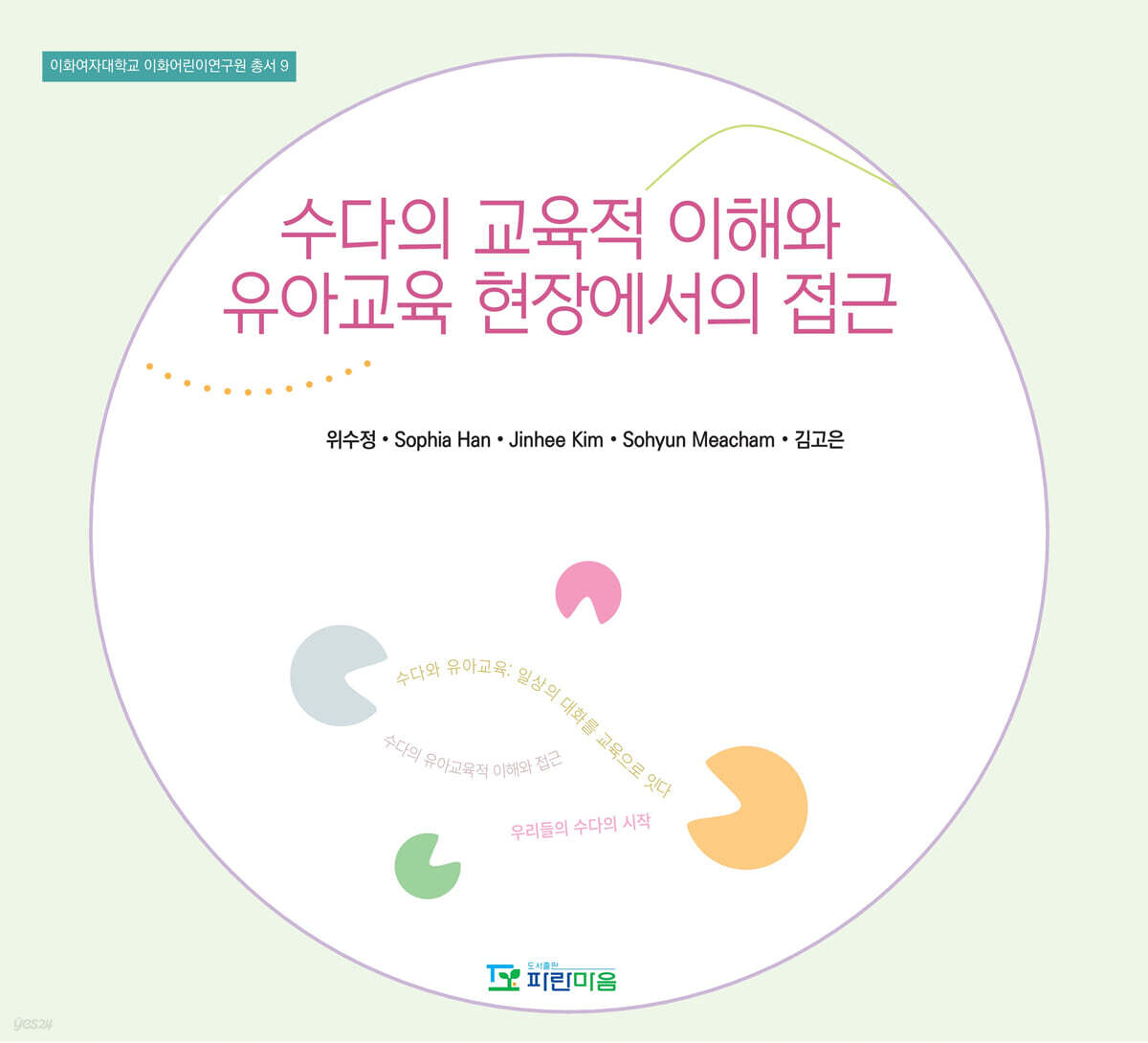
Educational Understanding of Chatter and Approaches in Early Childhood Education
 |
Description
Book Introduction
As any Korean knows, chatting is more than just the act of talking.
Chatting is a process of starting a relationship, organizing thoughts, and expanding each other's perspectives.
We are continuously conducting various attempts and research to share the value of these conversations and the experiences we have reaffirmed with educators in other countries.
We first introduced chatter as a new qualitative research method and have been continuously developing it.
Chatting is a process of starting a relationship, organizing thoughts, and expanding each other's perspectives.
We are continuously conducting various attempts and research to share the value of these conversations and the experiences we have reaffirmed with educators in other countries.
We first introduced chatter as a new qualitative research method and have been continuously developing it.
index
Enter: The Beginning of Our Chat
Chapter 1: The Power of Chatter We Didn't Know
What is chatter?
Why is 'suda' used with 'tremble'?
The true meaning of chatter
What does it mean to know something well even though you don't seem to know how to talk?
Yes, Chatter!: Authors' Chatter Journey
Chatter found on a chatter trip
_Chatter in a relationship
_It seems like useless and purposeless chatter.
however
The power of chatter
Chatting Deeply Connected to Korean Culture: Chatting from a Post-Western, Post-Colonial Perspective
The Difference Between Chat and Western Small Talk
Chatting in early childhood education
Concluding Chapter 1 of Chat
Chatter Chapter 2 Children's Chatter, Children's Play
Image of children chatting, playing, and learning
_Chatter in daily life
_Chatter in Play
_Chatter during the project process
Suda: Conversational Education for Children about Korean Culture
_Havruta and Chat
_Platicas and Chatter in Latin Culture
_Talk stories and chats about Hawaiian culture
_Children's chatter in a classroom influenced by the Reggio Emilia approach
_Children's Chatter in Korean Culture
A classroom where chatter is encouraged as play
Chatter as Exploratory Language, Chatter as a Research Method for Children
Concluding Chapter 2 of Chat
Chapter 3: A Teacher Chatting with Children
Sharing stories between children and teachers
Children's Conversations and the Teacher's Role: Connection, Extension, and Interaction
Theoretical Background of the Child-Teacher Chat Approach
_Relationship-oriented approach
_Dialogue Pedagogy
The Essential Meaning of Chatter and the Role of Listening Pedagogy
The Child-Teacher Chat Approach: Making Conversations Fun and Easy—"Like Chat"
Applying a Chatty Approach to Child-Teacher Conversations
_Chatting within a play-centered curriculum
_Suggestions for child-teacher chatter
The changes in conversation and dialogue between children and teachers due to chatter
_It's Not a Light Chat: Efforts for Relationships
_Chat that seems chaotic and the teacher's sense of responsibility
_Chatter and Class Management
Concluding Chapter 3 of Chat
Chapter 4: Play is for children, and chatting is for teachers.
The world teachers live in
Chat as a teacher's play
The diversity and flexibility of teachers' chatter
_The beginning of the chat
_Serious Chat
Teacher education through chatter
_Teacher's knowledge and chatter
_When the in-house teacher learning community and chatter met
Creating an institutional culture that encourages teacher conversation
_When Chatty Leadership is Needed
_Teachers who grow together through chatter
Concluding Chapter 4 of Chat
Chat Room 5: Gather everyone who wants to chat!
Why do teachers chat 'outside' the institution?
_A bamboo forest-like space created by chatter
_The opportunities for growth and learning that chatter opens up
_From the Well to the World: The Beginning of Teacher Networking and Collaboration, Chat
Who do teachers chat with outside the institution?
_Chatting that takes place in relationships with family, friends, classmates, teachers, etc.
_Deepening relationships through chatting with teachers from other institutions
_MZ Generation Teachers: Expanding Relationships Through Online Chat
How can teachers working in different institutions connect with each other?
Balancing Spontaneity and Semi-Spontaneity: The First Step to a Teacher Chatroom
Beyond the Formal Framework: The Potential of Extra-Institutional Teacher Learning Communities Connected by Chat
What would a "teacher-learning community outside the institution" based on chatter look like?
The Vitality of Chatter: The Endless Power of Storytelling Created by Voluntary Participation and Flexibility
The Paradox of Chatter: Deep Discussion and Reflection in Casual Conversation
_The power that sustains the chat community: Chat open to everyone
Concluding Chapter 5 of Chat
Exit: Our Never-ending Chat
References
Chapter 1: The Power of Chatter We Didn't Know
What is chatter?
Why is 'suda' used with 'tremble'?
The true meaning of chatter
What does it mean to know something well even though you don't seem to know how to talk?
Yes, Chatter!: Authors' Chatter Journey
Chatter found on a chatter trip
_Chatter in a relationship
_It seems like useless and purposeless chatter.
however
The power of chatter
Chatting Deeply Connected to Korean Culture: Chatting from a Post-Western, Post-Colonial Perspective
The Difference Between Chat and Western Small Talk
Chatting in early childhood education
Concluding Chapter 1 of Chat
Chatter Chapter 2 Children's Chatter, Children's Play
Image of children chatting, playing, and learning
_Chatter in daily life
_Chatter in Play
_Chatter during the project process
Suda: Conversational Education for Children about Korean Culture
_Havruta and Chat
_Platicas and Chatter in Latin Culture
_Talk stories and chats about Hawaiian culture
_Children's chatter in a classroom influenced by the Reggio Emilia approach
_Children's Chatter in Korean Culture
A classroom where chatter is encouraged as play
Chatter as Exploratory Language, Chatter as a Research Method for Children
Concluding Chapter 2 of Chat
Chapter 3: A Teacher Chatting with Children
Sharing stories between children and teachers
Children's Conversations and the Teacher's Role: Connection, Extension, and Interaction
Theoretical Background of the Child-Teacher Chat Approach
_Relationship-oriented approach
_Dialogue Pedagogy
The Essential Meaning of Chatter and the Role of Listening Pedagogy
The Child-Teacher Chat Approach: Making Conversations Fun and Easy—"Like Chat"
Applying a Chatty Approach to Child-Teacher Conversations
_Chatting within a play-centered curriculum
_Suggestions for child-teacher chatter
The changes in conversation and dialogue between children and teachers due to chatter
_It's Not a Light Chat: Efforts for Relationships
_Chat that seems chaotic and the teacher's sense of responsibility
_Chatter and Class Management
Concluding Chapter 3 of Chat
Chapter 4: Play is for children, and chatting is for teachers.
The world teachers live in
Chat as a teacher's play
The diversity and flexibility of teachers' chatter
_The beginning of the chat
_Serious Chat
Teacher education through chatter
_Teacher's knowledge and chatter
_When the in-house teacher learning community and chatter met
Creating an institutional culture that encourages teacher conversation
_When Chatty Leadership is Needed
_Teachers who grow together through chatter
Concluding Chapter 4 of Chat
Chat Room 5: Gather everyone who wants to chat!
Why do teachers chat 'outside' the institution?
_A bamboo forest-like space created by chatter
_The opportunities for growth and learning that chatter opens up
_From the Well to the World: The Beginning of Teacher Networking and Collaboration, Chat
Who do teachers chat with outside the institution?
_Chatting that takes place in relationships with family, friends, classmates, teachers, etc.
_Deepening relationships through chatting with teachers from other institutions
_MZ Generation Teachers: Expanding Relationships Through Online Chat
How can teachers working in different institutions connect with each other?
Balancing Spontaneity and Semi-Spontaneity: The First Step to a Teacher Chatroom
Beyond the Formal Framework: The Potential of Extra-Institutional Teacher Learning Communities Connected by Chat
What would a "teacher-learning community outside the institution" based on chatter look like?
The Vitality of Chatter: The Endless Power of Storytelling Created by Voluntary Participation and Flexibility
The Paradox of Chatter: Deep Discussion and Reflection in Casual Conversation
_The power that sustains the chat community: Chat open to everyone
Concluding Chapter 5 of Chat
Exit: Our Never-ending Chat
References
Publisher's Review
This book is composed of five chapters of small talk, as follows.
Chapter 1 of Chatter.
The power of chatter we didn't know about
Chatter is always present in our lives, but we don't consciously recognize its power and value.
Just as we are not always conscious of the air we breathe.
This chapter compares the positive aspects of small talk with the differences in conversational styles in other cultures, and reinterprets the importance of small talk in the home and society.
Chapter 2 of Chatter.
Children's chatter and play
The classroom can get noisy when children are having fun.
But before you say, "Be quiet!", why not listen to see if learning is occurring naturally amidst the noise? Drawing on the insights of a play-centered curriculum, we'll explore how chatter within play can support children's learning and interest.
Chapter 3 of Chatter.
Teacher chatting with children
Conversations between teachers and children are often limited to set topics, questions, and appropriate responses.
However, a child's thinking can be expanded infinitely.
This chapter discusses how richer and more meaningful learning can occur when teacher-child conversations shift to a more conversational approach.
Chapter 4 of Chatter.
Play is for children, chatting is for teachers.
Just as play is important to children, so is gossip to teachers.
This chapter connects teachers' chatter to the professional learning community within the institution, illustrating the process by which teachers learn and grow through each other's experiences and reexamining the institutional culture that fosters such chatter.
Chapter 5 of Chatter.
People who want to chat, gather together!
Chatting is the beginning of a relationship.
Chatting among teachers has the power to support and grow each other, both inside and outside the institution.
This chapter examines the process of achieving emotional connection and collaborative reflection through conversation and how to put this into practice.
Chapter 1 of Chatter.
The power of chatter we didn't know about
Chatter is always present in our lives, but we don't consciously recognize its power and value.
Just as we are not always conscious of the air we breathe.
This chapter compares the positive aspects of small talk with the differences in conversational styles in other cultures, and reinterprets the importance of small talk in the home and society.
Chapter 2 of Chatter.
Children's chatter and play
The classroom can get noisy when children are having fun.
But before you say, "Be quiet!", why not listen to see if learning is occurring naturally amidst the noise? Drawing on the insights of a play-centered curriculum, we'll explore how chatter within play can support children's learning and interest.
Chapter 3 of Chatter.
Teacher chatting with children
Conversations between teachers and children are often limited to set topics, questions, and appropriate responses.
However, a child's thinking can be expanded infinitely.
This chapter discusses how richer and more meaningful learning can occur when teacher-child conversations shift to a more conversational approach.
Chapter 4 of Chatter.
Play is for children, chatting is for teachers.
Just as play is important to children, so is gossip to teachers.
This chapter connects teachers' chatter to the professional learning community within the institution, illustrating the process by which teachers learn and grow through each other's experiences and reexamining the institutional culture that fosters such chatter.
Chapter 5 of Chatter.
People who want to chat, gather together!
Chatting is the beginning of a relationship.
Chatting among teachers has the power to support and grow each other, both inside and outside the institution.
This chapter examines the process of achieving emotional connection and collaborative reflection through conversation and how to put this into practice.
GOODS SPECIFICS
- Date of issue: May 30, 2025
- Page count, weight, size: 152 pages | 418g | 230*205*8mm
- ISBN13: 9791190935562
- ISBN10: 1190935562
You may also like
카테고리
korean


korean

![ELLE 엘르 스페셜 에디션 A형 : 12월 [2025]](http://librairie.coreenne.fr/cdn/shop/files/b8e27a3de6c9538896439686c6b0e8fb.jpg?v=1766436872&width=3840)


